
How to Stop Living Paycheck to Paycheck
 By Jade Warshaw
Key Takeaways
- Living paycheck to paycheck means your money’s gone as fast as it comes in. There’s no breathing room and no savings, and you’re just surviving from one payday to the next.
- You can break the paycheck-to-paycheck cycle by getting on a budget, taking care of your Four Walls first, cutting extra expenses, building an emergency fund, and increasing your income.
- Even if you make more money, you have to live below your means and set financial goals to make progress.
You know the feeling: Payday hits, and the money’s already spoken for. Bills, gas, groceries . . . maybe even a little Friday-night takeout to celebrate. And just like that, your bank account’s almost empty again.
That’s living paycheck to paycheck. It means you’re always counting down to the next payday, never getting ahead, with nothing left to save. I’ve been there. And I want you to know, you don’t have to stay stuck.
Quick Answer
To stop living paycheck to paycheck, make a zero-based budget and give every dollar a job. Cut unnecessary expenses, save $1,000 for emergencies, and start paying off debt. Then look for ways to increase your income so you can finally start getting ahead.The way out starts with a plan for your money. I’ll show you how to break the cycle, take control of your money, and finally start moving toward the life you want.
How Do You Stop Living Paycheck to Paycheck?
You can stop living paycheck to paycheck by making a budget, covering your basic needs, cutting expenses and working toward specific financial goals. Here are nine steps to help you break the cycle and start getting ahead.
1. Get on a budget.
If you’ve been living paycheck to paycheck, the first step is to make a zero-based budget so you know exactly where every dollar is going. I’m not talking about a rough idea—I mean knowing exactly where every single dollar lands.
A zero-based budget shows you the full picture, helps you take control, and gives you a plan to stop the money stress. So if you’re not already budgeting, it’s time to start.
Trust me, you’ll notice spending habits you didn’t even know you had. (I spent how much on eating out last month?) Then you can make the changes you need to not only cover the basics but also plan for your future.
Another way to think about budgeting is that it’s custom organization for your money. And if you’re living the paycheck-to-paycheck life, your money needs some organizing. Don’t put it off. Create your first budget. Like, right now.
Here's a Tip
Plan your bills around your paydays. Make sure each paycheck covers the bills due before the next payday so you’re not caught off guard.
2. Give and save first, then cover your Four Walls.
When you set up your budget, write down your monthly income first. Then plan for giving and saving (or paying off debt) before anything else. If you don’t have an emergency fund, focus on saving $1,000 (that’s Baby Step 1). If you’ve got $1,000, put your extra money toward your debt (Baby Step 2).
Next, budget for your Four Walls (your basic, essential expenses)—in this order:
- Food
- Utilities
- Shelter
- Transportation
Covering your Four Walls means making sure your family gets fed, your lights stay on, you have a roof over your heads, and you’ve got gas in the car to get to work. Once those are handled, list your remaining expenses in order of importance.
And remember, if money’s tight, your Four Walls come before extra debt payments. The goal is to have a plan so you’re not hitting the end of the month panicked and coming up short.
3. Cut extra expenses.
One of the fastest ways to free up money in your budget is to cut back on things you don’t need. Once you’ve made a budget, you might be shocked to see just how much is slipping through the cracks.
Cut back your spending (or cut things out completely) to start freeing up money so you’re not stuck in survival mode every month. Comb through your budget and see what you can do without.
Here’s a big one: Stop eating out. (Yes, I’m coming directly for you.) But seriously, meal planning will help you avoid the temptation of ordering food because you’ll know what’s for dinner back home. Plus, you’ll spend less on groceries when you know exactly what you need to buy for the week, which frees up space in your budget and your fridge.
I know making sacrifices hurts, especially if you’re not used to telling yourself no. But this is a short-term sacrifice for a long-term gain. We’re learning good money habits and going after big goals—so that later, you can do as much of that fun stuff (like eating out and traveling) as you want! And I predict you’ll realize during this journey that you can actually be content with less.
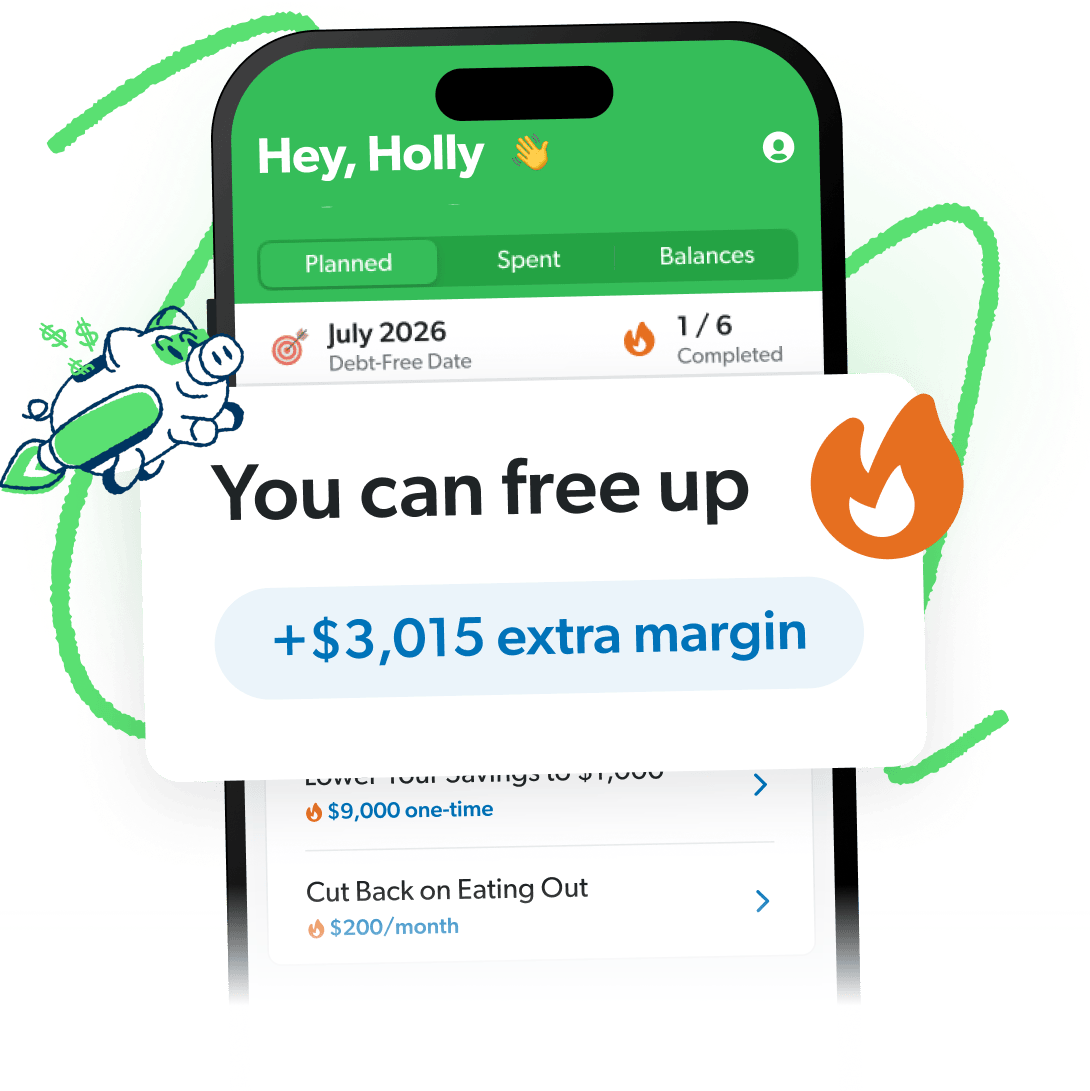
The Budgeting App That Finds Hidden Margin
You’ve got more margin than you think. EveryDollar helps you find it in minutes so you can start making real money progress, really fast.
4. Build an emergency fund.
Start building your emergency fund by saving $1,000 as fast as you can. If you’re living paycheck to paycheck, chances are, you’re only one layoff or flat tire away from a full-blown crisis. That’s why you need an emergency fund! It’s your safety net for those “life happens” moments.
That might seem like a lot right now, but once you’ve cut some expenses out of your budget, you’ll be able to save up faster than you think. In fact, most folks are able to save $1,000 in 30 days!
And take it from me, knowing you have this buffer between you and life will help you sleep waaay better at night. Because you know if you get into a jam, you can pay cash—instead of going into debt to cover it . . . which brings me to my next point.
5. Pay off your debt.
To get out of debt, stop borrowing money and start paying off what you owe using the debt snowball method. Debt keeps you stuck, paying for last year’s Christmas in June and that beach trip in December. It’s one of the biggest reasons you’re living paycheck to paycheck—those payments are eating up your income. But you don’t have to stay in that cycle. It’s time to break free!
First, stop taking on any kind of new debt. Cut up those credit cards. Say no to the buy now, pay later option at checkout. (If you have to split up that sweater into “four easy payments,” you can’t afford it.)
Next, knock out your current debt using the debt snowball. It’s the fastest way to build momentum because you start with your smallest debt and stack up wins quick. I used this method myself to pay off a mountain of debt, and let me tell you, it works.
And just think: How much of your money goes to debt payments every month? That’s how much extra you can have in your budget when your debt is gone! Goodbye, payments. Hello, progress.
6. Increase your income.
If you’ve set a budget and dialed back the spending, but you’re still barely able to make ends meet, you probably need to increase your income.
Are you able to work extra shifts or longer hours? Are you a freelancer who can take on more clients? Do you need to look into getting a better-paying job altogether?
Maybe the answer is taking on a side hustle (or two). Some great options for making extra money are waiting tables, driving for Uber or Lyft, being a barista, or working at a call center. It’s even better if you can use your own skills and interests to serve people.
My favorite side hustles while paying off debt were babysitting, cleaning houses, giving music lessons, dog sitting, building websites, and making wedding cakes. And who knows? That side hustle could turn into your full-time hustle. Whatever you choose, the point is to get more cash flowing into your budget.
Dustin, a member of THE Ramsey Baby Steps Facebook Community, took on extra jobs to get out of debt and stop living paycheck to paycheck.
“I have a very well-paying, full-time job, and when I started the journey, I worked at Olive Garden at nights and on weekends,” he said. “Look at jobs where you get paid tips like waitresses, coffee shop, bar tending, whatever it takes.”
“I have a very well-paying, full-time job, and when I started the journey, I worked at Olive Garden at nights and on weekends. Look at jobs where you get paid tips like waitresses, coffee shop, bar tending, whatever it takes.” — Dustin
7. Live below your means.
Living below your means starts with spending less than you make—even when your income goes up. This one may seem like common sense, but don’t skip over it! Earning more money doesn’t make you a better manager of your money.
Don’t increase your income just to keep living a lifestyle you can’t afford. If you aren’t careful, a bump in pay can make you bump up your standards of living (that’s called lifestyle creep). When you suddenly have more money in your bank account than you’ve ever had before, you start spending more than you ever have before.
The key is telling your money what to do—on purpose, every single month. That means making a plan for every dollar, sticking to your budget, and choosing contentment over comparison.
8. Save up for big purchases.
When you have a big purchase coming up, set up a sinking fund and save a little at a time instead of spending money you don’t have. Nothing keeps you stuck in the paycheck-to-paycheck cycle like letting impatience call the shots. When you chase instant gratification and drop cash on big purchases you didn’t plan for, you rob your future self of peace and progress.
If you know something’s coming up (like a tire upgrade or back-to-school expenses), start setting money aside now. That way, when the time comes, you’re ready—and your budget isn’t wrecked.
And listen, if you’re still getting your emergency fund in place or working on paying off debt, now’s not the time for pricey vacations, impulse buys or “but it’s on sale!” splurges. You don’t need it right now. Say no today so you can say yes to something better later.
9. Set specific financial goals.
Set a specific financial goal so you have something to work toward. It’ll help you stay motivated when things get hard. And I know firsthand just how hard it is to stop living paycheck to paycheck. But remember your why. I always say: The stronger the why, the stronger the try.
If you’re not already, get clear on your money goals. Whether you want to travel during retirement, give your children a better life, or buy that condo on the beach—having a specific goal in mind keeps you motivated to keep going.
My husband and I knew we had to break the debt cycle because we wanted to create a home for our kids and ourselves where money didn’t create angst. We wanted money to create ease. But maybe you need to think more short term than that right now and just imagine a life where there’s no fear of overdraft fees or your card getting declined.
Remember your why when you’re working that extra shift delivering groceries, holding back from hitting Add to Cart, and making your own coffee at home. Making big changes with your money and your life is tough. But you are tougher. Let your vision of where you want to be push you to keep going. I promise it’s worth it.
How Do You Get Ahead After You Stop Living Paycheck to Paycheck?
You start getting ahead by sticking to your budget, keeping your expenses down, and finding ways to increase your income. You don’t have to stay stuck in the stress of just getting by. You can break the paycheck-to-paycheck cycle.
I’ve been where you are, and I’m telling you: When you get intentional with your money, everything changes.
No matter where you’re at with money, you can get better. And EveryDollar can help you get started! EveryDollar helps you find extra margin every month so you can start making real money progress, really fast.
Next Steps
- Make a zero-based budget. Give every dollar a job, starting with giving, saving and covering your Four Walls.
- Start making progress. Cut unnecessary expenses, build your $1,000 starter emergency fund, and pay off debt with the debt snowball.
- Download EveryDollar to make a plan for your money and find extra margin in your budget.
Frequently Asked Questions
-
What does it mean to live paycheck to paycheck?
-
Living paycheck to paycheck means your money is gone as fast as it comes in. You have no breathing room and nothing left to save, and you’re always counting down to the next payday. It’s exhausting. But here’s the good news: You don’t have to stay stuck
-
Can you stop living paycheck to paycheck if you make more money?
-
Yes, making more money can help you break the paycheck-to-paycheck cycle—but only if you keep your spending under control. A bigger paycheck won’t do you much good if you spend every extra dollar. Keep making a budget and living below your means so that extra income helps you get ahead.
-
What is a good budgeting method for someone living paycheck to paycheck?
-
A zero-based budget is a great place to start because it gives every dollar a job. Write down your monthly income, plan for giving and saving (or paying off debt), then cover your Four Walls: food, utilities, shelter and transportation. You’ll see exactly where your money’s going and can start making changes to get ahead.
-
Should you pay off debt or save first when you live paycheck to paycheck?
-
Start by saving $1,000 for your starter emergency fund. That gives you a buffer for unexpected expenses—like a car repair or broken fridge—so you don’t have to reach for a credit card. Then stop taking on new debt and use the debt snowball to pay off what you owe, starting with your smallest debt.
Get Weekly Insights Delivered Straight to Your Inbox
Did you find this article helpful? Share it!

About the author
Jade Warshaw

Get proven Ramsey answers fast.