


“I paid off $121,000 in 28
months. I feel strong! The
burden is gone!”


Baby Step 2 is all about debt. You’ve been told debt is normal—or that you need it to build credit. But that lie keeps you living paycheck to paycheck, wondering when it’ll end. The truth is, debt is a burden, not a tool.
Here’s what you’ll find on this page: how to pay off debt, how the debt snowball works, how long it takes, and answers to the most common questions before you get started.

Baby Step 2 is where you pay off all debt (except your mortgage) using the debt snowball method. List out your debts from smallest balance to largest (ignore the interest rate) and attack the smallest balance first while making minimum payments on the rest. As you pay off each balance, roll that payment into the payment on the next debt until you’re debt-free! It takes most families 18–24 months to get rid of their debt with the debt snowball.
Debts included in Baby Step 2:
Not included: The mortgage. It doesn’t belong in your debt snowball because you’ll tackle it separately, in Baby Step 6, once every other debt is gone.

Quick wins create momentum. As soon you as pay off that first balance, you’ll feel motivated to pay off the next—and the next. And as your payment grows, each one is easier to knock out.
When you don’t have payments, you have more money to save, invest, and build the life you want. Millions have changed their money habits this way. You can too.


The debt snowball method, combined with your EveryDollar budget, is the fastest way to pay off debt. Whether you’ve got student loans, credit card debt, car payments or all of the above, you can get rid of debt—one step at a time.
You’ve probably heard of another method, the debt avalanche, where you pay off debts starting with the balance with the highest interest rate. On paper, it saves you a little more in interest. But personal finance isn’t just math—it’s behavior. If this was about math, you probably wouldn’t have gone into debt in the first place.
The debt snowball has you pay off your smallest balance first, regardless of interest rate. That quick win keeps you motivated, and the momentum builds as you knock out each debt. The avalanche method might save you a few extra dollars, but if you lose steam and quit halfway through, those savings don’t matter. The debt snowball gets people to the finish line—and finishing is what actually gets you debt-free.

Pop your numbers into the Debt Snowball Calculator to see your debt-free date. And stay with us—we have a few smart tips below to help you knock it out even faster.

You can’t climb out of a hole by digging out the bottom. That means saying no to more debt! Cut up the credit cards and stop borrowing so your income can finally start working for you.
If you don’t tell your money where to go, you’ll always wonder where it went. Ramsey’s budgeting app EveryDollar can help you find extra money hiding in your spending. And that gives you more money to throw at your debt.
If you tend to overspend on food, you’re not alone. With grocery prices on the rise, it’s even more important to be careful about your food budget. Meal planning tames your food budget in two big ways: First, you head to the store with a plan and if you stick to it, you’ll only buy what you need for the meals you’ve planned. Second, since you know what you’ll be having for each meal, you’re less tempted to swing by the drive-thru.
Do you have a few things sitting around collecting dust while your debt is collecting interest? Sell what you’re not using and turn all that clutter into cash. You’ll lighten up your space and knock out a balance at the same time.
Paying off debt can feel like a grind. But the extra dollars you earn from a side hustle like pet sitting, tutoring or grocery delivery can move your debt-free date closer than you think.
We know it sounds weird to dip into your savings, but that’s what paying off debt is all about—being weird! Use any nonretirement savings above your $1,000 starter emergency fund (Baby Step 1) to knock out as much debt as you can. Once you’ve kicked debt to the curb, you’ll rebuild your savings in Baby Step 3.
If you’re on Baby Step 2, every dollar in debt payments is a dollar that isn’t building your future. Investing while you’re still in debt is like trying to fill a bucket with a hole in it—you’re pouring money in the top and watching it drain out the bottom.
Debt is charging you 7%, 15%, sometimes 20%+ in interest. Investing might earn you 10–12% on a good year, so that high interest debt is keeping you from building real wealth.
That’s why we say to pause investing until you’re debt-free. Yes, that even includes your employer match. It’ll be there waiting for you at Baby Step 4, and you’ll catch up fast once debt isn’t eating your income.
That’s the math. But the real reason we tell you to pause investing in Baby Step 2 is intensity. Half your effort on debt and half on investing means neither one gets what it needs. So go all in! Attack that debt with everything you’ve got until it’s gone.
Paying off debt is hard work, and not everyone will understand your goal. Make sure you have a few people in your life to cheer you on.
“I paid off $121,000 in 28
months. I feel strong! The
burden is gone!”

“Now, we talk more about our money, we make decisions together, and it’s not stressful anymore.”


“Budgeting gives you a true picture of your finances—of your life—so you can pick what you can do and plan all the good stuff.”


“I cried the first time we finished a month and actually had money left over. That had never happened before.”


“We’re not stressed anymore. Our journey’s in our hands now. We get to choose what we want to do.”


“There’s freedom on the other side of debt. You don’t have to live like everyone else. I wanted something different for my family.”

Baby Step 2 comes right after you’ve saved your $1,000 starter emergency fund (Baby Step 1). Once you’ve kicked debt to the curb for good, you’ll save 3–6 months of expenses (Baby Step 3), then move on to investing 15% for retirement (Baby Step 4), saving for college (Baby Step 5), and paying off the house (Baby Step 6). Then you’re ready to build wealth and give in Baby Step 7. That’s the goal of Dave Ramsey’s 7 Baby Steps—to set you free to live and give like no one else.
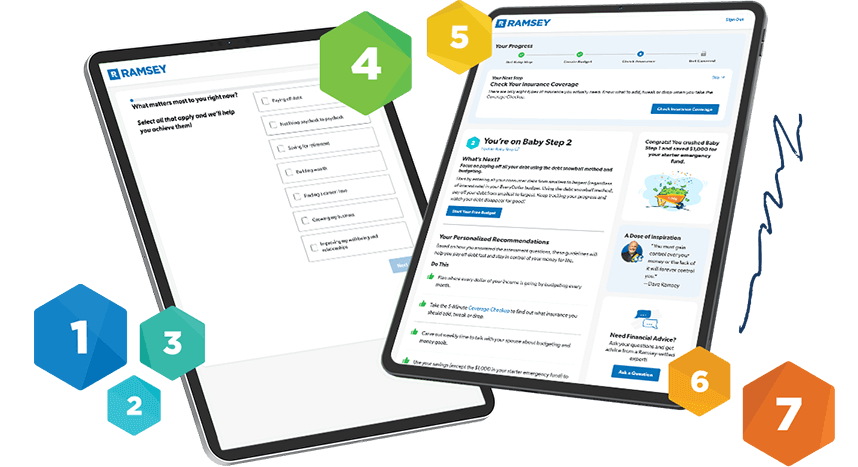

Debt payments and a guess-as-you-go budget aren’t getting you anywhere. Break out of paycheck-to-paycheck living and the stress of wondering if you’ll make it to the next payday. That’s no way to live, and you don’t have to stay there another day.
Baby Step 2 is part of Ramsey’s 7 Baby Steps—the plan millions of families have used to escape debt and build wealth that lasts. Make sure you’re in the right place by taking our Get Started Assessment today.
The debt snowball is built on motivation, not math. Paying off your smallest debt first gives you a quick win and frees up cash fast—creating momentum that builds like a snowball rolling downhill until every debt is gone.
Most people who go all in pay off all their debt (except the house) in 18–24 months. That timeline holds when you pair the debt snowball with a real, written budget—because a budget tells your money where to go instead of leaving you to wonder where it went.
No. Pause all investing, even the match. While you’re in Baby Step 2, all your energy and money go toward debt. It’s only temporary. Once you’re debt-free with a full emergency fund, you’ll more than make up for the time off.
The debt snowball is the fastest way out of credit card debt. Cut up the cards, get on a budget, and control your spending. Skip balance transfers, personal loans and new credit cards. Those just dig the hole deeper.
Tax debt always goes to the top of your snowball, regardless of the balance. The IRS can take money from you first and ask questions later, so settle up with them before tackling anything else on your list.
Yes, but keep $1,000 back for your starter emergency fund first. Use the rest of your nonretirement savings to attack nonmortgage debt. Never touch retirement funds unless you’re facing bankruptcy or foreclosure. The tax hit and penalties will cost you more than the debt itself.
Yes, pause your snowball until your emergency fund is rebuilt. Make minimum payments on your debt in the meantime. Once you’re back to $1,000 in savings, restart your debt snowball right where you left off.
You can’t budget alone in a marriage. Money decisions are made together, every month, before it begins. Sit down for a real Budget Committee Meeting, not a debt lecture. Agree on one small win first.
Call your creditors before they call you. Explain your situation and ask about hardship programs or payment plans. Keep your budget and Four Walls (food, shelter, utilities, transportation) locked in, then throw every extra dollar you can find at your smallest balance.
Try our Ask Ramsey tool, powered by Ramsey AI. And to speed up your debt payoff journey, create your budget in EveryDollar and get personalized recommendations to keep the momentum going.