
How to Cancel a Credit Card
 By Jade Warshaw
Key Takeaways
- Canceling a credit card takes action: Cut up the card, pay the balance down to zero, cancel any automatic payments, close the account with the issuer, and get it in writing.
- You don’t have to wait until your card’s balance is zero to stop using it—cut that thing up today and start attacking what you owe.
- Credit card companies may try to keep you around with rewards, waived fees or scare tactics about your credit score, but stand your ground against those jokers and close the account for good.
- Closing a credit card can ding your credit score, but don’t let a three-digit number run the show—you can live life just fine without one.
Let me start off by saying I'm proud of you! Even thinking about breaking up with your credit cards and canceling those accounts means you're on the right track. And if you've already decided you're done with credit for good, even better!
Quick Answer
To cancel a credit card, pay the balance down to zero, cancel any automatic payments tied to that card, and call your issuer to officially close the account. And listen, cutting up the card doesn’t close it! Until you make that call and get it in writing, that account is still open.Now, I know there are plenty of “experts” trying to steer you in the opposite direction. But they just want your monthly payments. I, on the other hand, want you to have zero payments. Trust me, saying goodbye to your credit card is 100% worth it!
And I'm going to walk you through exactly how to do that—step by step.
How Do You Close a Credit Card Account?
To kick that credit card to the curb for good, cut it up, pay the balance down to zero, cancel any automatic payments, call your issuer to close the account, and get it in writing.
Now, that process can be a bit tricky—mostly because credit card companies don't want to lose you as a customer. After all, they've been pocketing your hard-earned money like it's their business (’cause it is!).
But the more you know about the process, the easier it'll be to make sure you come out ahead. So, let’s walk through how to cancel a credit card in seven steps.
1. Cut up your credit card.
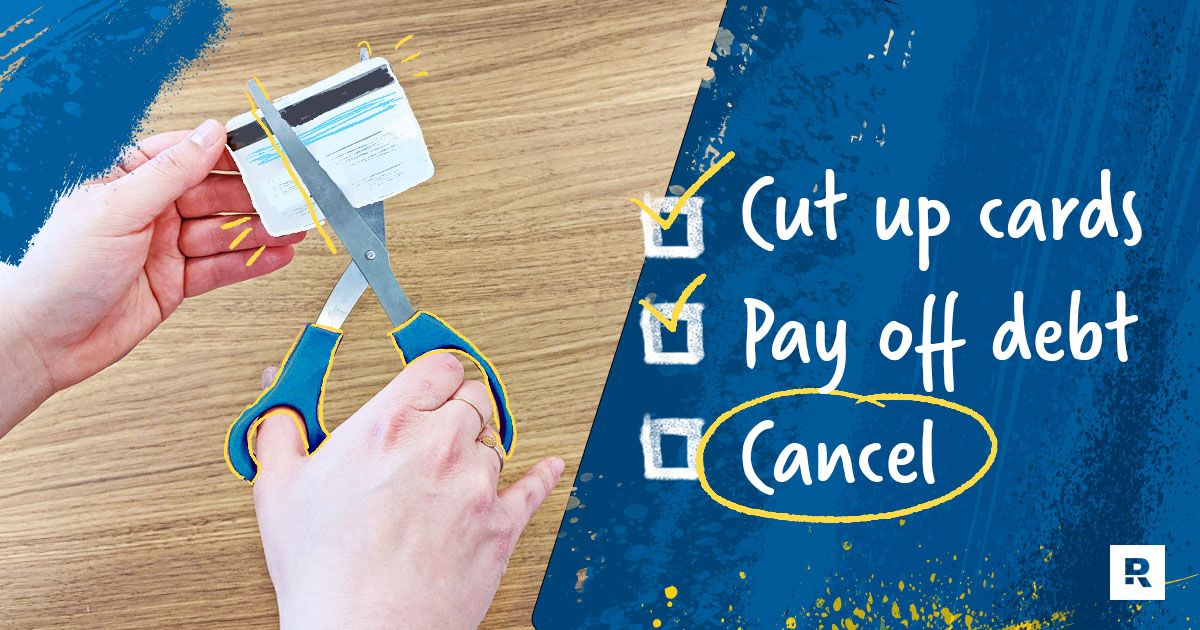
First things first: If you're serious about ditching credit, it's time to literally cut off your access to credit—by cutting up your credit cards. So, if you haven't already, get out your heavy-duty scissors and get to snippin'! Cut up and cut off those no-good pieces of plastic.
Not only is it a great way to take out your anger on what these cards have done to your finances, it's also the most important step toward debt freedom!
And just so you know, you don't need to pay off your credit card before you cut it up. In fact, getting rid of the actual card doesn't affect your current balance. It just keeps you from adding to it. Think of it like blocking your ex's number after a bad breakup. Cutting up your credit cards means you and credit are officially over. Like T-Swift said, “We are never ever ever getting back together!”
2. Pay off your credit card balance.
Before you can officially close your credit card account, you’ve got to pay that balance all the way down to zero. That’s right—just because you shred your cards and vow to never use them again, doesn't mean they're out of your life just yet.
So, whether you owe $500 or $25,000, start putting every single extra dollar you have toward knocking it out. And if you've got more than one credit card balance to tackle, use the debt snowball method to pay them off one by one. This is the method my husband and I used to knock out almost a dozen credit cards, and it works if you work it!
I'm not going to lie—paying off credit card debt isn't easy. But you can do it! And you'll get there a lot faster when you make (and stick to) a zero-based budget. After all, a budget is self-care! It's you deciding for yourself that you care about where your money goes. Every dollar you save, every extra hour you work—it all counts. Because when you have a plan for your money, you can make more progress toward your goal.
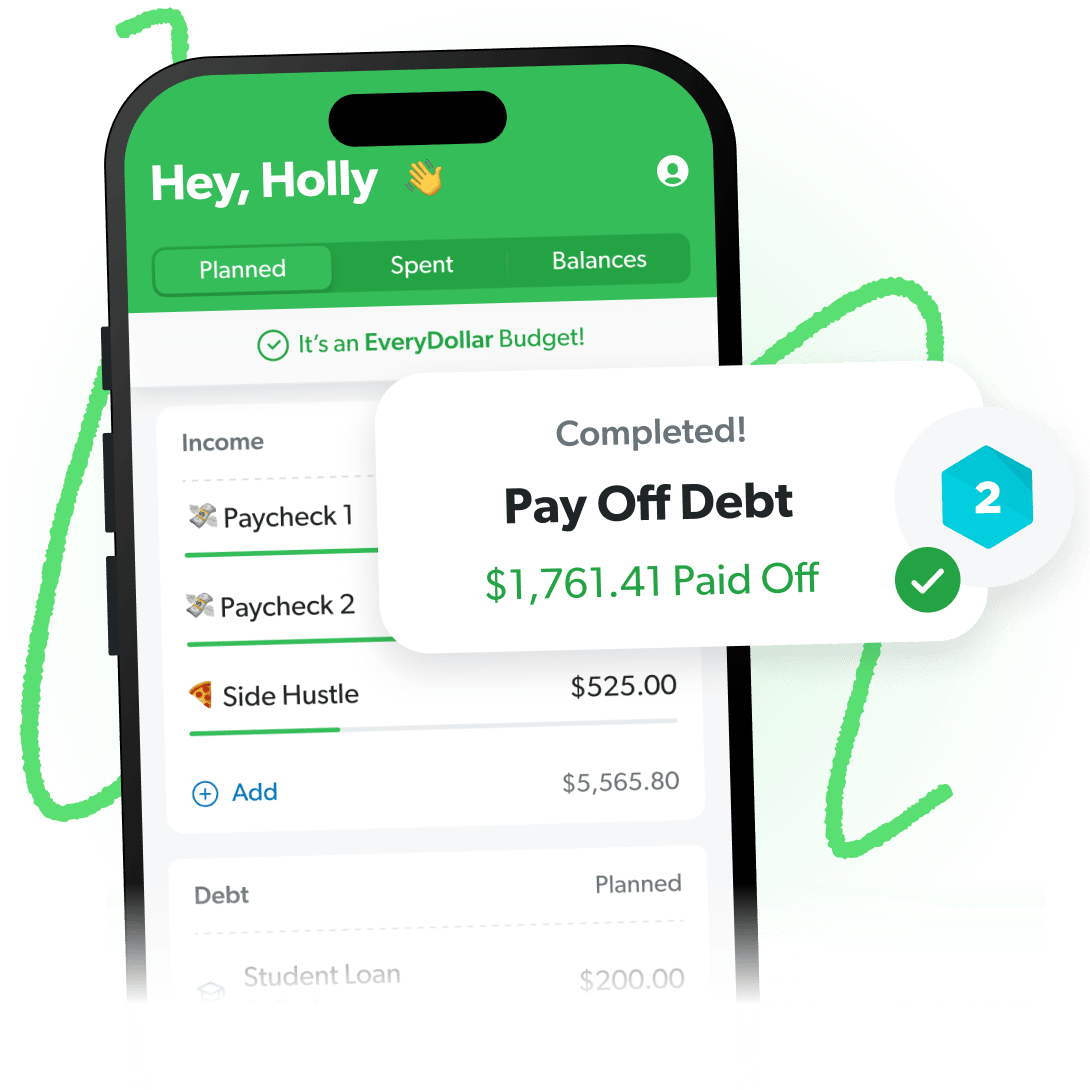
Ditch Debt Faster With EveryDollar
A lifetime of minimum payments? No thanks. The EveryDollar budgeting app helps you find extra margin every month so you can be debt-free faster!
3. Cancel or update any automated payments.
Next up: Take a close look at your credit card statement and track down any sneaky subscriptions or monthly bills that are automatically billed to your card. I'm talking about your Netflix, Spotify, gym membership, cell phone—anything you've set on autopilot.
Before you cancel the card, go through your accounts one by one and update your payment details. This is your chance to catch those old magazine subscriptions you forgot about three years ago too! If you skip this step, you could end up missing payments and racking up unnecessary fees—not what we want on your road to being debt-free.
Here's a pro tip: Make a list of every recurring charge on your statement, then switch each one to your checking account or debit card. That way there are no surprises (or service interruptions) once your credit card is officially history.
4. Call your credit card company, bank or issuer.
Once your card is fully paid off and you've removed any recurring charges from the card, get out your phone and call up your credit card's customer service number (or the number of whoever issued the card). Make sure they know you're canceling your credit card account—not that you're “thinking about it” or you're “wondering if you could.” You're canceling your account. Period.
Be ready to stand your ground. Customer service reps have been trained for this exact moment and probably won't let you off the hook too easily. They'll do all they can to keep you on the line and try to change your mind. (Believe it or not, they even have a script for people who follow our plan—the Baby Steps.)
Here's a Tip
Don’t let those jokers take you for a ride! Be polite but be firm: “I’m not interested in any offers. I want to close my account.” And if they keep pushing, just keep repeating yourself. You don’t owe them an explanation or a debate—your answer is no.
Don't be surprised if they try to scare you with gimmicks like, “You'll lose all your hard-earned rewards points,” “Your FICO score will never be the same,” or “No more cash-back bonuses for you.”
Once they realize you're way smarter than that, they'll probably try to win you over with some freebies like, “We'll give you 5,000 airline miles,” “What if we waive your annual fee?” or even, “How about no fees?”
Whatever you do, don't fall for any of it. They're not trying to shower you with gifts. They're trying to keep the thousands of dollars in revenue you represent. Because when they see you, all they see are dollar signs. And I don't know about you, but I refuse to support a product that profits off people staying stuck in debt!
Can I cancel my credit card online?
It depends on the company. Some let you close your account online, while others still make you pick up the phone. You'd think in this digital age you'd be able to close a credit card with a few clicks, right? But every company handles it differently.
So, check your issuer's website to see if online cancellation is an option. If it is, go ahead and use it—just make sure you follow every step they require so you don't accidentally leave the account open.
5. Get confirmation in writing.
No matter what you do, you want written confirmation from the credit card company that your account is officially closed. You need to see the evidence!
It also helps to keep your own record of any conversations you've had with the credit card company. Be as detailed as possible. (Remember what your English teacher said: who, what, when, where and why.) Having these details will come in handy just in case the credit card company tries to get all funky fresh and give you any trouble down the road.
So, use your notes to write a certified letter (which gives you proof the credit card company received it) with the details of your conversation, including date, time, names and any confirmation numbers you received. Make sure to request a written statement that shows your balance is all clear and your account is completely closed.
6. Double-check your credit report.
After you've closed your account and received written confirmation, check your credit report. Why bother? Because mistakes happen, and you want to make sure the account is listed as “closed at consumer's request”—not something shady like “closed by issuer.”
So, go ahead and channel your inner detective. If you spot any errors or if your old card is still lounging around your report like a houseguest who won't leave, address it right away. You want to make sure your credit report accurately reflects what happened and nothing sneaky comes back to haunt you.
Can you remove a closed account from your credit report?
If the closed account is accurate, you generally can’t just make it disappear—but if something’s wrong, you can dispute it. Most closed accounts will naturally fall off your credit report after about seven years.
Start by grabbing your free credit report at AnnualCreditReport.com (no need to pay for what's legally free). If you spot inaccurate information—like wrong dates or an account that isn’t yours—file a dispute with the reporting bureau and include any documents that back you up.
The bureau has 30 days to investigate. If there’s an error, they’ll remove it. If everything’s accurate, though, let it age off on its own—no stress needed.
7. Never look back.
And here’s the most important step: Once that credit card account is closed, don’t look back! You’ve made the decision to leave credit cards behind, so celebrate it. While other folks are out here keeping old accounts open to “save” their credit score, you've taken a huge, intentional step toward being debt-free for good.
So, what now? (I'm so glad you asked!) Share the good news with your friends and family and show them how to close their own credit card accounts. You could be the inspiration they need to take control of their money too!
Just look at what one member of THE Ramsey Baby Steps Community Facebook group had to say after closing a couple of their cards:
“This card has had a zero balance for a while BUT I shredded it and cancelled it today! Cancelled our Lowe’s credit card yesterday and cancelling Best Buy next week . . . WOO-HOO!!! Next is to pay off our last credit card and then cancel that one too!”
When Should You Cancel a Credit Card?
You should cancel your credit card as soon as you’ve paid the balance down to zero—but you can stop using it right now. Seriously, there’s no reason to wait! Cut up that card and stop adding to the balance while you work on paying off what you owe.
Then, once that balance hits zero, you can officially close the account for good. The sooner you stop using credit, the sooner you can pay it off, close the account, and move on with your life.
Is it bad to cancel a credit card right away?
Nope! If you just opened a credit card and immediately realized it was a bad idea, you don’t need to keep it around just because it’s new. If there’s no balance, go ahead and close the account. And if you’ve already charged something to it, cut up the card, pay off what you owe, and then close it for good.
Now, closing a credit card soon after signing up could put a dent in your credit score. But don't let that scare you into keeping the card around. Believe me, I'd rather get a little ding on my credit score than get whooped by debt.
Does Canceling a Credit Card Affect Your Credit Score?
Yes, closing a credit card can hurt your credit score a little—but listen, that’s no reason to keep a credit card you don’t need. I’m not about to let a three-digit number convince me to hang on to debt, and neither should you.
And that’s exactly why I hate the FICO score. The whole system is based on how you handle debt. It doesn't have anything to do with how well you actually manage your money or even how much money you have in your bank account. And that makes absolutely no sense. The only score I care about is the Do-I-Have-Actual-Money score.
See, society tells us we need to have a credit score to do just about anything (like buy a house or car or rent an apartment). That's because the people pushing credit scores are the same people who profit from you borrowing money.
It's a system that's rigged from the start. But you don't have to play the credit score game anymore! As a matter of fact, you can do everything you need to do without a credit score—except borrow money. And I know this from experience because I let my credit score drop to zero.
How many points will your credit score drop?
Okay, let's clear the air: There's no magic number, no crystal ball that'll tell you exactly how much your credit score will dip when you cut ties with your credit card. For some folks, it barely moves. For others, it might feel like a bigger drop—especially if you've had the card for a long time or it's your only line of credit.
Truth is, FICO and its credit-scoring buddies love to keep you guessing. They have their mystery algorithms, weighting things like “credit utilization” and “length of credit history.” But remember, a credit score is built to measure how well you manage debt—not how well you manage your actual money.
Any drop in your score is usually temporary. And if you stick with the plan long enough, you may not even have a score at all. But guess what? You can live just fine without one. You can still buy a house without a credit score through manual underwriting (where a lender looks at your overall financial situation instead of relying on a credit score). And you can rent an apartment by finding a landlord who’s willing to look at things like your income, rental history and references instead.
So, if you don’t need a credit card to live your life, why keep one around just for the sake of a credit score? Here’s what you’re really choosing between:
|
Close the Account |
Leave It Open (Unused) |
|
One step closer to debt freedom |
Keeps the door open to debt |
|
No temptation to run the balance back up |
Temptation to swipe again |
|
One less account to babysit |
One more account to keep track of |
|
Focus is on building real wealth |
Focus is on keeping up the “I love debt” score |
What Are the Next Steps After Closing Your Card?
Once that account is closed, keep the momentum going by rolling your old credit card payment into the next debt in your debt snowball. That’s how you work Baby Step 2: List your debts from smallest to largest, attack the smallest one with everything you’ve got, and make minimum payments on the rest. Once that debt is gone, roll its payment into the next one and keep that snowball moving!
Of course, getting rid of your credit cards is a huge win—but it’s just one part of taking control of your money. You need a plan for where every dollar goes so you can keep making progress toward your financial goals.
That’s where EveryDollar comes in. EveryDollar shows you how to find extra money in your budget and builds you a personalized, step-by-step plan to beat debt way faster. Plus, you'll track your progress right in the app until every dollar of debt is history!
Next Steps
- Cut up your credit cards today and commit to never borrowing money again.
- Work Baby Step 2 with gazelle intensity by using the debt snowball to knock out every remaining debt.
- Make a zero-based budget with EveryDollar so every dollar has a job and you can keep making progress toward your goals.
-
Should I cancel my credit card myself or let the issuer do it?
-
Close it yourself—don’t wait around hoping the issuer cancels it for you. You want to be the one calling the shots here, so reach out and close the account on your terms. Then, double-check your credit report to make sure it accurately reflects that you closed the account. You made the decision, so make sure the report gets it right!
-
Is it better to let a credit card expire or close it?
-
Close the account—don’t just let the card expire and assume you’re done. An expiration date on the physical card doesn’t necessarily mean the account itself is closed. If you’re committed to living without credit cards, there’s no reason to leave that door open. Close the account and keep moving toward a debt-free life.
-
Will my credit card company charge me a fee to close my account?
-
No, you generally shouldn’t have to pay a fee just to close your credit card account. But check that final statement carefully for any remaining interest or charges. You want to see a zero balance and confirmation that the account is officially closed.
-
Can I close a credit card with a balance?
-
You can cut up the card and stop using it today, but you’ll need to pay the balance down to zero before you can completely close out the account. That means no more swiping while you attack what you owe with the debt snowball.
Remember: You can’t borrow your way out of debt. Stop adding to the balance, pay it off, and then close the account for good.
-
What happens to my rewards points when I cancel?
-
Most of the time, they vanish. But don’t let rewards become an excuse to keep the account open. Credit card companies offer points, miles and cash back because they want you to keep swiping. Don't trade your freedom for a free flight to Orlando.
Get Weekly Insights Delivered Straight to Your Inbox
Did you find this article helpful? Share it!

About the author
Jade Warshaw

Get proven Ramsey answers fast.