
How Much to Budget for Groceries: Average Monthly Costs by Family Size
8 MIN READ | JUN 19, 2026
 By
By
When setting up your budget, it’s hard to know how much money to set aside for the essentials—like food. Exactly how much should you spend on groceries each month?
The average household spends around $500 a month on groceries. But how much you should spend depends on your income, family size, dietary restrictions and lifestyle.
Key Takeaways
The average American household spends $519 per month on groceries, which comes out to about $6,224 a year. But the right grocery budget for you depends on your family size, income and financial goals. The USDA estimates monthly grocery costs range from $302 for a single person on a thrifty plan to $1,668 for a family of four on a more liberal plan. Start with what you spend, then adjust from there.
- The average grocery cost per month is $519, totaling about $6,224 a year.
- The USDA estimates $302–580 per month for a single person, $624–1,000 for a couple, and $1,013–1,668 for a family of four, depending on your budget level.
- To lower your monthly grocery costs, shop at discount stores like ALDI or Costco, choose store brands over name brands (which can cost 5–72% less), and plan your meals around weekly sales before you hit the store.
Average Grocery Cost per Month
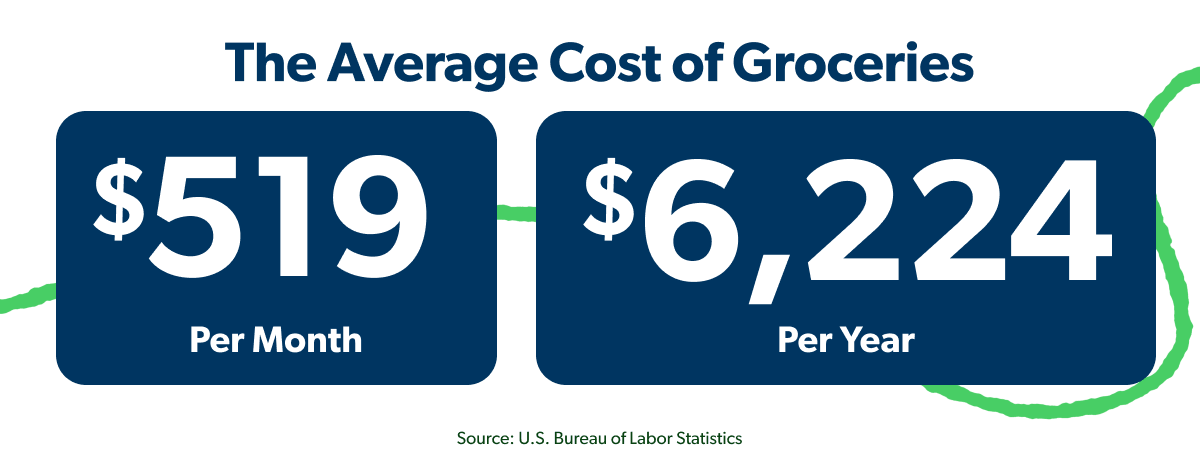
The average grocery cost per month is $519, which comes out to $6,224 a year.¹
And that number is likely to increase as overall food prices continue to go up. In fact, grocery prices have risen 2.3% over the last year, and the USDA projects they'll rise another 3.2% in 2026.2,3 (This doesn't include how much people spend eating out each month!)
But depending on where you live, what grocery store you shop at, and what you put in your cart, you could be spending way over the national average. So, let's talk about how to set a monthly grocery budget that makes sense for you.
How Much to Spend on Groceries Each Month
Unfortunately, there's no magic number for how much each family should spend on groceries.
The USDA Food Plans and Cost of Food Reports give a rough estimate of what you could spend on groceries. These plans are based on current food prices and are broken down into four different budget levels: Thrifty, Low-Cost, Moderate-Cost and Liberal.
(Keep in mind, these numbers don't represent how much people are spending on groceries each month.)
Here are the estimated grocery costs per USDA Food Plan:
Single-Person Household (1 Person)*
- Thrifty Plan: $302–$379
- Low-Cost Plan: $329–$379
- Moderate-Cost Plan: $401–$474
- Liberal Plan: $511–$580
Couple (2 People)
- Thrifty Plan: $624
- Low-Cost Plan: $648
- Moderate-Cost Plan: $803
- Liberal Plan: $1,000
Family of 4**
- Thrifty Plan: $1,013
- Low-Cost Plan: $1,119
- Moderate-Cost Plan: $1,380
- Liberal Plan: $1,668
*Adult age range is 20–50 for Thrifty plan and 19–50 for all other plans.
**Family includes two children, ages 6–8 and 9–11.
USDA Food Plans: Monthly Cost of Groceries by Family Size
|
Thrifty |
Low-Cost |
Moderate |
Liberal |
|
|
Single |
$302–379 |
$329–379 |
$401–475 |
$511–580 |
|
Couples |
$624 |
$648 |
$803 |
$1,000 |
|
Family |
$1,013 |
$1,119 |
$1,380 |
$1,668 |
Source: U.S. Department of Agriculture, 2026.
How to Lower Your Grocery Costs
As you can see, groceries can take a big bite out of your monthly expenses. Thankfully, there are plenty of ways to save money on groceries—and here are a few ideas.
Raid your pantry and fridge first.
Before you rush off to the grocery store, take a good look through your pantry and fridge. Maybe you forgot you already have a jar of mayonnaise for that recipe. Or you could use those peppers that are about to go bad to make fajitas. Just take inventory and get creative with some pantry recipes. Waste not, want not, right?
Change up where you shop.
One of the biggest factors in how much you spend on groceries is where you shop. Seriously, have you seen the price differences out there? Check out some cheaper grocery stores in your area—like Costco or ALDI. Yeah, you may have to bag your own groceries at some of these places, but that little bit of inconvenience means huge savings for you.
Choose generic.
Buying store-brand groceries is a smart way to stretch your grocery budget. According to Consumer Reports, private-label products typically cost 25–30% less than their name-brand counterparts—and the quality is often just as good.4 In fact, Consumer Reports' taste testers found several store-brand products that matched or outperformed their name-brand equivalents.
Even if you aren’t willing to trade in your Cheerios for Honey Nut Hoops just yet, start by opting for the generic brand of basics like condiments, bread, yogurt, nuts or soup.
You probably won’t notice the taste difference, but you’ll notice the price difference on your receipt!
Shop sales.
Another way to save money on your next grocery store run is to pay attention to sales and specials. Do your research beforehand to scout out any weekly specials and try to plan your meals around those items. Shopping produce that’s in season can also save you some bucks.
And if you’ve got the time and patience, you can always try couponing. Just don’t forget to do the math and make sure you’re saving money—especially before you buy in bulk. Stocking up on a year’s supply of applesauce just because it’s on sale isn’t always worth it.
Want more grocery savings tips?
Download our Meal Planner & Grocery Savings Guide for free. You’ll learn how to schedule your meals with confidence and shop the grocery store aisles like a pro. Plus, you’ll get downloadable meal planning and grocery list templates to help you save time and stick to your food budget each month!
Put More Breathing Room in Your Budget
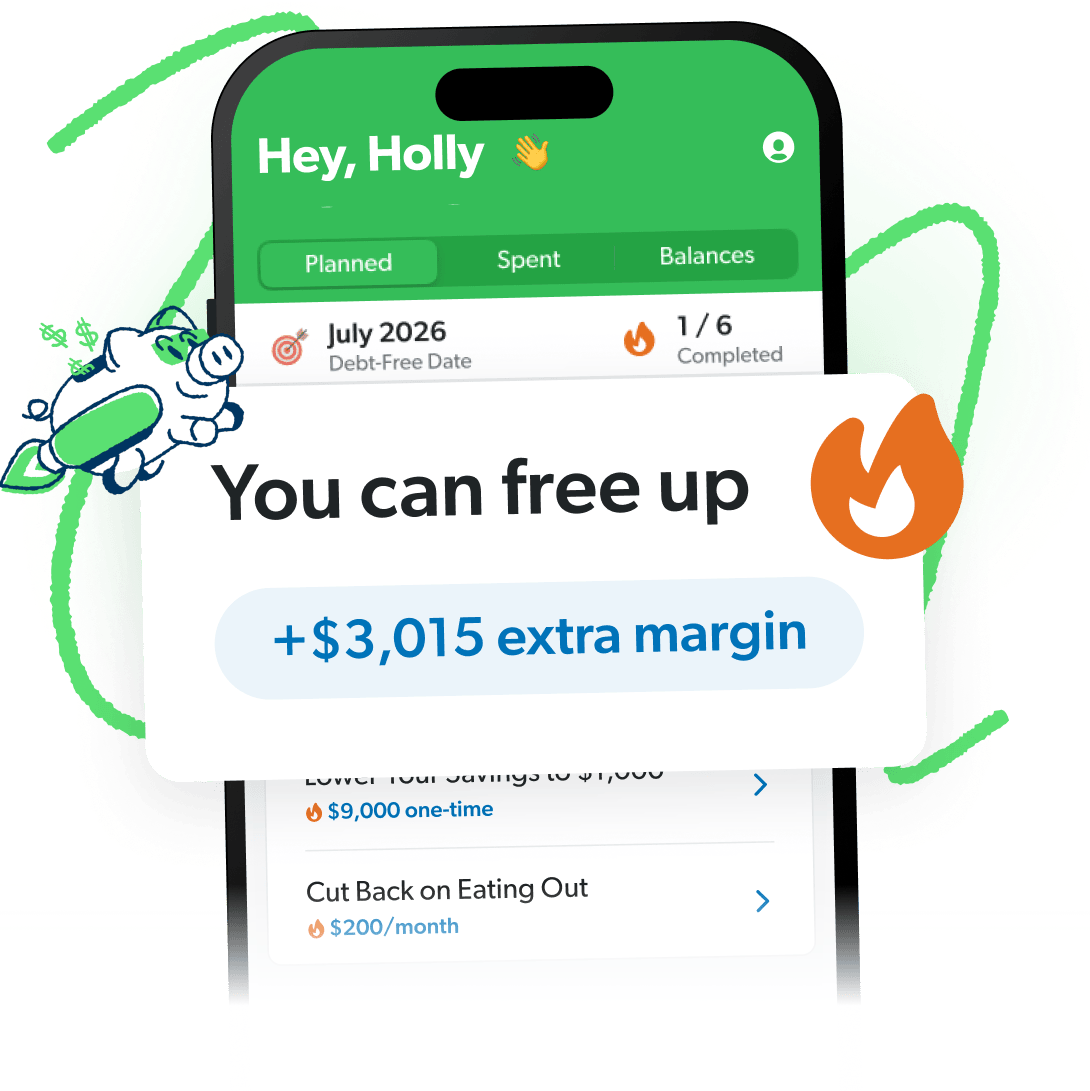
Money feeling tight? Not anymore. The EveryDollar budgeting app helps you free up thousands of dollars you didn’t know you had—in minutes.
How to Set Up Your Monthly Grocery Budget in 4 Steps
All the above ideas are a great start, but actually setting a grocery budget for the month is the best way to spend less. Because when you give yourself a limit before you head into the store, you’re more likely to shop responsibly (instead of just throwing things in a cart and saying a quick prayer at checkout).
Keep in mind that everyone’s grocery budget will be different, so we’ve got four steps to help you figure out how much you should spend each month.
1. See what you already spend.
Start by opening your bank account. Then, go through your spending history and add up how much you spent on groceries each month for the last several months. Use the monthly average as your baseline grocery budget amount. You may cringe when you see the total, but knowing how much you spend each month will help you create a budget that makes sense for you and your family.
2. Budget for other expenses.
Once you decide on a number for your grocery budget, finish setting up the rest of your budget. After food, make sure you cover the other Four Walls: utilities, shelter and transportation. Then add in any other monthly expenses. Do you pay for day care? What about subscriptions? Oh, and don’t forget any debt you may have—like car payments, credit card bills or student loans.
3. Adjust as needed.
Once you’ve included all your expenses in your budget, you might need to do some adjusting. Your goal is to give every dollar a job—whether you’re giving it, saving it, using it to pay off debt, or spending it. That’s what we call a zero-based budget.
You also want to make sure you’re not spending more than you make each month. So, go back through your budget and see which areas you can cut back on (maybe food) and where you can put more money (toward savings, for example).
And listen, you probably won’t get your grocery budget right for the first few months. If you keep going over because you can’t feed your family with the amount you originally set, it’s okay to bump that number up. (You’ll just need to adjust other areas of your budget to find that extra money.)
But if you keep going over budget because you can’t get your spending under control, you need to make some different choices or find ways to save money (more on that in a minute).
4. Consider your financial goals.
According to Ramsey Solutions’ quarterly State of Personal Finance study, food is usually one of the biggest areas we overspend on. But it can also be one of the biggest opportunities to help you save money and hit your goals!
For example, if you’re paying off debt, focus on throwing as much money as you can toward your payments. So, you might prioritize shopping for cheaper meals that require fewer ingredients to help you cut costs. Or maybe you decide to stop eating out entirely. In that case, your grocery budget probably needs to be a little bigger because you’ll be cooking at home more.
If you’re trying to rebuild your emergency fund, your grocery budget will probably look a little lean for a couple of months while you stockpile some savings. Or maybe you’ve got the room in your budget to add those expensive cheeses to your cart without it derailing your progress. Whatever your goal, your grocery budget can play a huge part in how fast you get there.
Get Budgeting With EveryDollar
So, we all now know that a budget is the best way to save money buying groceries. But what’s the best way to budget? Well, that’s easy—it’s with EveryDollar, Ramsey’s all-in-one budgeting app.
But EveryDollar is so much more than just a budgeting app. It's built to help you find margin and put it to work toward your long-term money goals—like building an emergency fund, paying off debt, saving for retirement, and more!
Next Steps
- Do a quick pantry and fridge inventory and plan your next few meals around what you already have.
- Download the free Meal Planner & Grocery Savings Guide to start organizing your meals and shopping list for the week.
- Review your last two or three months of bank statements and calculate your real average grocery spending—and be honest!
- Download EveryDollar and set a zero-based budget that will help you plan out exactly how much you have for groceries every month—and stick to it!
Frequently Asked Questions
-
What is a reasonable grocery budget for a family of four?
-
According to USDA Food Plans, a family of four (including two children ages 6–11) can expect to spend between $1,013 and $1,668 per month on groceries depending on their budget level. The national average household grocery spend is $519 per month, but larger families will naturally spend more.
-
How can I save money on groceries?
-
The most effective ways to save on groceries are checking your pantry before shopping to avoid duplicates, switching to a cheaper grocery store like ALDI or Costco, choosing store brands over name brands (which can cost 5–72% less), and planning your meals around weekly sales. Small habit changes add up fast.
-
How much should one person spend on groceries per month?
-
The USDA estimates a single person should budget between $302 and $580 per month on groceries, depending on their spending level. The thrifty end ($302–$379) assumes careful meal planning and minimal convenience foods, while the liberal end ($511–$580) allows for more variety and premium choices.
-
What's the best way to set a grocery budget?
-
Start by reviewing your last few months of bank statements to find your real average grocery spend. Use that as your baseline, then adjust based on your total monthly income and expenses. Give every dollar a job using a zero-based budget—that way your grocery budget works alongside your other financial goals, not against them.
-
Does my grocery budget change based on my financial goals?
-
Yes. Your grocery budget should flex with your priorities. If you're aggressively paying off debt, trimming your grocery spend is one of the fastest ways to free up extra money. If you're rebuilding an emergency fund, expect a leaner food budget for a few months. Your grocery line item is one of the most adjustable in your budget.
Get Weekly Insights Delivered Straight to Your Inbox
Did you find this article helpful? Share it!

About the author
Ramsey Solutions

Get proven Ramsey answers fast.