
How to Deal With Financial Stress: 12 Tips to Take Control of Your Money
19 Min Read | Feb 24, 2026


Key Takeaways
- Financial stress is anxiety, worry and fear related specifically to money—and it can show up as physical symptoms like insomnia and headaches or emotional symptoms like tension in relationships.
- Most people have financial stress because they don’t know what’s going on with their money and need to get a clear snapshot of their finances.
- Common root causes of financial stress include a lack of financial literacy, not having or following a budget, insufficient income, and deeper emotional or relational challenges.
- Practical steps like budgeting, building an emergency fund, paying off debt, increasing income, and giving can help reduce financial stress and build wealth.
Your thoughts are racing, you haven’t slept soundly for a week, and your stomach is in knots—all because of a trip to the grocery store or a look at your checking account. If these anxious responses to money situations seem familiar, you might be dealing with financial stress. But don’t worry—you’re not alone.
Nearly 78% of Americans would experience financial difficulty if their paycheck were delayed a week.1 This is what I call classic paycheck-to-paycheck living. When you’re living paycheck to paycheck, you’re spending all your income on basic necessities without putting anything aside for long-term goals—like savings or investments. And yeah, it’s stressful!
But you don’t have to live stressed and anxious about money. In fact, I’ve got 12 specific ways to help you lower that stress and experience peace and empowerment with your finances.
What Is Financial Stress?
Before we talk about solutions, let’s look at some definitions. Financial stress is worry and fear related specifically to your money situation. (I’ll share some examples in just a second.) My friend Dr. John Delony would say to think of financial stress and anxiety like a smoke alarm telling you something in your financial life needs attention.
Much like general anxiety, financial stress can cause physical symptoms like insomnia, headaches and fatigue. It can also cause tension in your relationships. Have you ever snapped at your kids because they asked for lunch money? Or wanted to blame your spouse for an overdrawn checking account? You probably realized later that you weren’t really upset with them—you were actually overwhelmed by the worry and tension of financial stress.
Signs and Symptoms of Financial Stress
Here are a few common symptoms of financial stress:
- Feeling anxiety in everyday money situations—like waiting for your total at the grocery store cash register
- Trying to figure out which bills to pay first or whether you have enough money to fill up the car and pay for lunch
- Worrying that it’s too late to reach your financial goals, like buying a house, paying off student loans, or saving for retirement
- Having difficulty sleeping because you can’t stop thinking about where the next dollar will come from
- Obsessing over situations that are out of your control, like the housing market or inflation
- Coping through emotional eating, substance use, or zoning out to Netflix and social media
- Avoiding conversations about the state of your money
- Feeling heightened tension in your personal and professional relationships
- Comparing yourself to neighbors, coworkers or financial averages for your age range to see if you’re “normal” and where you “should” be with your money
If any of these feel familiar, you’re not alone. And over time, that kind of stress doesn’t stay contained—it starts affecting other areas of your life.
How Financial Stress Affects Relationships and Marriage
Financial stress doesn’t just impact your bank account—it affects your marriage too. In fact, research done by Ramsey Solutions found that money is the number one issue married couples argue about. And for 41% of couples with consumer debt, it’s the top source of conflict.
I know a little something about that—before my husband and I paid off our debt, the number one cause of our arguments was money. Once we paid off our debt, guess what? No more money arguments!
Listen, financial stress doesn’t have to take over your life—or your marriage. It’s time to get to the bottom of your money worries so you can change your money mindset and improve your habits.
What’s Behind Financial Stress? Four Common Root Causes
When it comes to figuring out the source of your financial stress, you’ve got to take a financial snapshot. Once you have a picture of the basics—how much you make, how much you owe, and how much your expenses are—then you can dive deeper. Most people have financial stress simply because they don’t know what’s going on with their money to begin with!
Financial stress is usually a symptom of a few root causes, including:
1. Lack of Financial Literacy
Most Americans don’t feel equipped to manage money as an adult. And that’s because many of us were never taught smart money habits in school or at home. But it’s your responsibility to get caught up on the basics of personal finance.
2. Not Having a Budget (or Not Following the One You’ve Got)
You might make good money, but without a plan for how you’ll use your income each month, you wind up feeling broke and disorganized. A budget allows you to prioritize your expenses and take control of your spending. It also helps you find problem areas where you might be overspending on the typical offenders like subscriptions and food. Budgeting can also help you see if you have an income issue, which leads me to the next root cause.
3. Your Income Is Insufficient
A budget is the foundation of getting organized with your money, but it isn’t magic. The money (aka your income) is what makes your budget work properly. If you’ve whittled your spending down as low as it can go and you still can’t make ends meet, you’re dealing with an income issue. Side hustling is a quick fix to get some breathing room, but a long-term solution involves making more money at your main job. I call this your core income.
4. Facing Emotional Challenges or Tough Circumstances
Sometimes, the cause of your money challenges is more serious than needing a bigger paycheck. You could be dealing with emotional struggles, like gambling or spending addictions. Or maybe relational issues, like inappropriate financial boundaries with family or a controlling spouse.
|
Root Cause |
What It Looks Like |
What to Do |
|
Lack of Financial Literacy |
You were never taught how to manage money and feel unsure where to start. |
Learn the basics and follow the 7 Baby Steps. |
|
No Budget (or Not Following One) |
You don’t know where your paycheck goes each month. |
Create a zero-based budget and track expenses. |
|
Insufficient Income |
Even after cutting expenses, you still can’t make ends meet. |
Increase your core income or add a temporary side hustle. |
|
Emotional or Relational Challenges |
You may struggle with impulse spending, addiction, secrecy, or ongoing money fights in your relationships. |
Seek professional help and create a clear financial plan together. |
These situations are unfortunately all too common. But with professional help and a plan, you can put solutions in place that will help you deal with stressful money situations and find peace of mind.
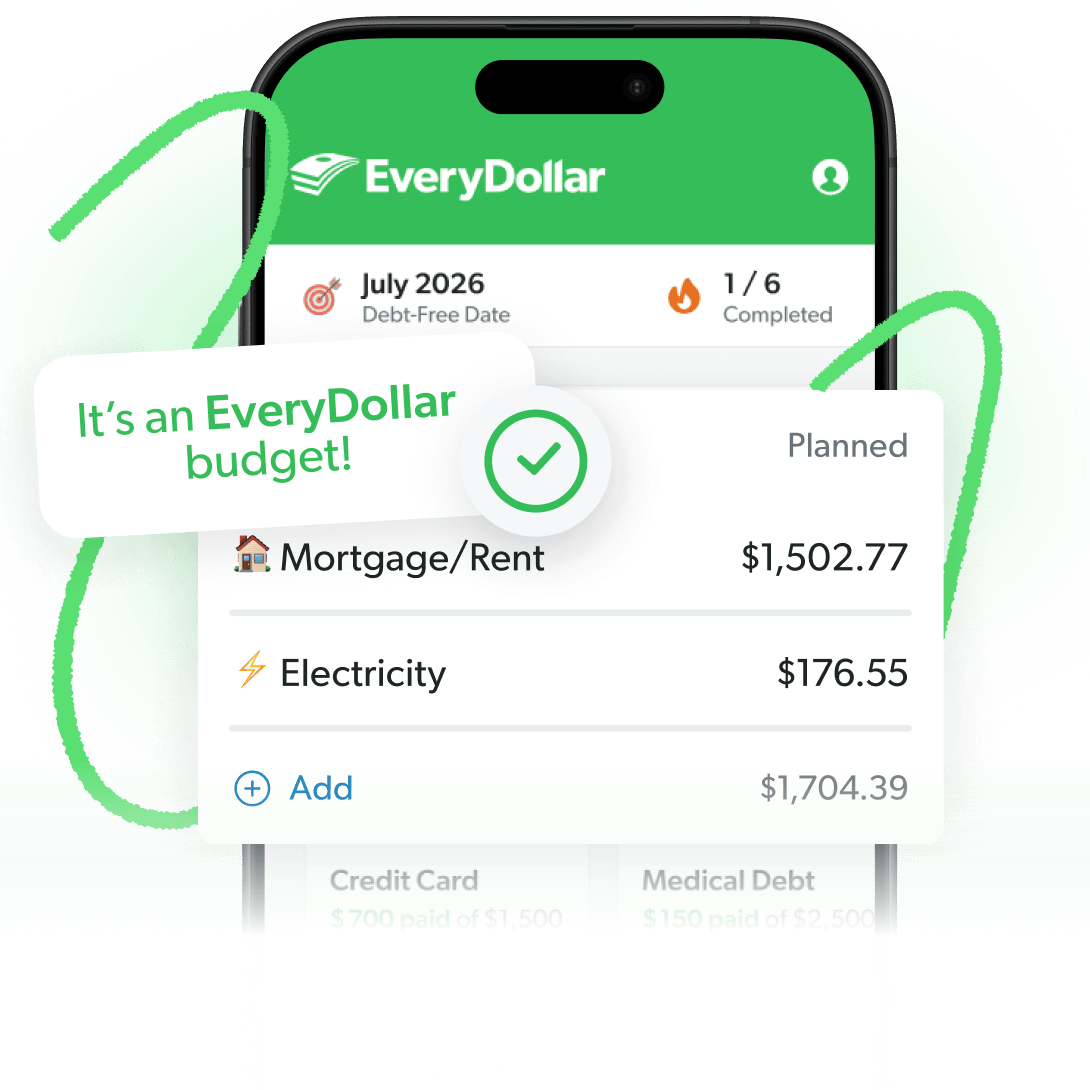
Find Margin You Didn’t Know You Had With EveryDollar
The EveryDollar budgeting app helps you find extra money every month so you can beat debt, build wealth, and make progress. Every. Day.
How to Reduce Financial Stress: 12 Practical Tips
How can you ditch financial stress and start feeling peace with your money? Here are 12 practical ways to do it.
- Stop hiding and look at the big picture of your money.
- Make a budget (and stick to it).
- Find like-minded community for support.
- Track your expenses.
- Build an emergency fund.
- Pay off all your debt.
- Talk to a financial coach.
- Increase your core income (or get a side hustle).
- Cut out emotional spending.
- Start giving.
- Focus on what you have instead of what you lack.
- Set goals.
1. Stop hiding and look at the big picture of your money.
I know it’s uncomfortable, but it’s time to face what you’ve been avoiding. Log in to your checking and savings accounts to see what your balances are. Pull a credit report. Go ahead and open that junk drawer where you’ve been stashing those old bills and take inventory of what’s past due. Write down your debt totals and the minimum monthly payments. Finally, don’t forget to review your recent pay stubs. You want to make sure your income records are correct.
Understanding what you have, what’s past due, and which expenses are coming up is the most helpful thing you can do to start relieving your money stress.
2. Make a budget (and stick to it).
Making a budget each month will help you determine if you’re spending more than you make and, if so, where you might need to cut back. I hear all the time that people feel like they’ve gotten a raise once they do a budget—and who doesn’t love finding extra money?
It may seem weird, but a budget actually gives you peace of mind. Once you take inventory of your bills and debt and you know what you’re dealing with, you can come up with a plan—a zero-based budget. Here’s how it works:
- First, write down your income. This includes what you make at your main job and any side hustles.
- Then, write down your expenses. By expenses, I mean everything you might possibly spend money on in a month—that includes groceries, cell phone bills, nail appointments, insurance premiums, and Grandma’s birthday present. If you pay for it, write it down!
- Now, subtract your expenses from your income. If the total equals zero, congratulations—you’re hitting even. (Don’t worry, zero doesn’t mean you have nothing in the bank. It just means you’ve given every single dollar a purpose and a job to do.) If your expenses are more than your income, that means you’re going deeper into debt or drawing on your savings.
Okay, but maybe the idea of budgeting causes you more stress. I get it. I didn’t like budgeting at first either. It can be a challenge at the beginning—but budgeting is how you get clarity around how much money you have and where it goes.
So, make your budget today. It won’t be perfect the first time around, but you can tweak it as you go. It’ll take a couple rounds of monthly budgets to get the hang of it, but you’ve got to start somewhere.
And here’s a pro tip: It’s way easier to budget with a really fantastic budgeting tool like the Ramsey EveryDollar app. It’s what my husband and I use every single month to budget.
Listen, when your money feels out of control, budgeting puts you in charge, which relieves stress. Big time.
3. Find like-minded community for support.
You don’t have to deal with money stress alone. It’s helpful to surround yourself with people who can help you stay motivated and accountable. You can have regular budget meetings with someone to help keep you accountable, attend live events or online webinars to learn more about money, or tune in to motivational shows like The Ramsey Show or The Dr. John Delony Show. Find people who are encouraging enough to cheer you on and bold enough to call you out.
Got a spouse? You’ve got instant accountability. If you’re single, find a trustworthy friend or mentor and sit down with them every month to check in and set up the next budget. Doing this together will help you both move forward.
Why Open Money Conversations Matter
Let’s be honest—money fights between spouses don’t usually start with money. They start with silence. When you avoid talking about what’s really going on, stress builds. Assumptions grow. And before you know it, you’re arguing about a $40 purchase when the real issue is fear and frustration.
Regular money talks change that. Sit down. Look at the numbers. Celebrate progress. Admit where you messed up. Reset the plan together. That’s how you stop money from driving a wedge between you and start using it as a tool to build your future.
It’s not you versus your spouse. It’s both of you versus the problem. And when you face it head-on as a team, you build trust, confidence and momentum.
4. Track your expenses.
If you want to stop feeling stressed about money, you’ve got to be aware of what you do with your money. Awareness starts with budgeting. And if you want to budget well, you’ve got to track your expenses. Every. Single. One.
I mean it! Track everything you spend—every single transaction, in real time. Don’t wait until the end of the month when you won’t remember those late-night drive-thru taco runs or Amazon movie rentals. Keep your expense log updated daily and you’ll see where your money goes (so you won’t be left wondering where it went). If a budget line gets low, you can move money over from another budget category or just plain stop spending money so you don’t bust your budget.
Want help with this? Try out my favorite budgeting app, EveryDollar, which connects your bank account to your budget. Your transactions stream in automatically, and you just drag and drop them to the right budget line. It’s how you track expenses quickly and accurately.
5. Build an emergency fund.
Life is going to happen, and worrying about potential accidents or emergencies might give you more anxiety. However, being prepared with an emergency fund will give you peace of mind. Start with $1,000 for a starter emergency fund. For some of us, that might be more money than we’ve ever had saved in one place. (Why $1,000? Because that should be enough to cover most common emergencies without relying on your credit card to cover the cost.)
Then, after you’ve paid off all your debt (which I’ll explain next), save for 3–6 months of expenses. Trust me: Knowing you’re prepared to handle unexpected costs—not if, but when they happen—will get you that great night of sleep quicker than the softest pillows in the world.
Put Your Savings on Autopilot
If you want to save consistently, take yourself out of the equation. Set up an automatic transfer from checking to savings on payday. That way, saving happens first—not if there’s money left over.
Most banks make this easy, and budgeting tools like EveryDollar can help you stay on track. When saving is automatic, you don’t have to rely on willpower.
Just don’t check out completely. Stay aware, watch your balances, and stay aligned with your budget. Automation builds momentum, but your discipline keeps it going.
6. Pay off all your debt.
Research done by Ramsey Solutions shows that over half (52%) of Americans say they worry daily about their finances. But just imagine what life would be like if you didn’t have to keep giving your paycheck to student loans, credit cards, medical debt, vacations and more because you’re debt-free.
Psst—I’ve got a plan for how to do just that. It’s called the debt snowball. Here’s how it works:
Step 1: List your debts from smallest to largest, regardless of interest rate. Pay minimum payments on everything but the little one.
Step 2: Attack the smallest debt with everything you’ve got. Once that debt is gone, take that payment (and any extra money you can squeeze out of the budget) and apply it to the second-smallest debt while continuing to make minimum payments on the rest.
Step 3: Once that debt is gone, take its payment and apply it to the next-smallest debt. The more you pay off, the more your freed-up money grows and gets thrown onto the next debt—like a snowball rolling downhill.
It’s worth mentioning: If you’re in the middle of any kind of emergency (like a job loss, major home repair or medical crisis), things may need to look a little different. The best thing to do in that case is only pay minimum payments on your debt and focus on taking care of your Four Walls instead: food, utilities, shelter and transportation. This will help you stay afloat until things get back to normal. And if you’ve got debt collectors calling, your priority should still be taking care of yourself and your family. The credit card company can wait.
7. Talk to a financial coach.
If you want to get some money guidance from a professional, talk to a financial coach—not an opinionated neighbor or family member, but an actual, highly trained coach. They’ll help you create a personalized plan based on your life and your goals so you can move from being stressed and overwhelmed by your money to having direction and a clear path forward.
8. Increase your core income (or get a side hustle).
First of all, know that increasing your income in and of itself won’t solve any problems. You have to be serious about making wise money decisions, no matter your income.
But when your base income simply isn’t sustainable, you need to look at your long-term options for professional growth. This could look like upskilling, earning certifications, or getting a degree in a new career field. (If this is you, make sure you check out my buddy Ken Coleman’s Get Clear Career Assessment to find work you’re wired to do—and make a good income!)
Now, if your income is pretty solid, you’re taking all the steps I mentioned above, and you’re still feeling stressed about your finances, a temporary side hustle could give you the boost you need to pay off your debt faster, cover big expenses, or sock away investments for your future. Just make sure your side hustle earnings are put toward the right things in your budget so you don’t end up back in a hole.
9. Cut out emotional spending.
When you’re stressed, you might try to find some quick relief in emotional spending. Impulse buys, however fun in the moment, are really just a quick jolt of excitement followed by guilt, a tightened budget, debt or even a serious shopping addiction.
The thing is, retail therapy may seem like a good idea in the moment. And it can help you forget your stress for a little while. But it’s not going to fix the problem. It’s only going to make your money worries worse. So instead of running to the store or online shopping apps to try to feel better, work through this list or connect with a mental health professional to actually deal with your financial stress and anxiety.
Here’s a helpful trick I use when I feel the itch to impulse shop. I call it 20/20 vision for my financial goals. I ask myself: Will what I want to buy help me achieve my 20-year money goals? Or will it give me a dopamine hit for the next 20 minutes until the thrill wears off? More often than not, I put that thing I want to buy back on the shelf.
10. Start giving.
I believe in giving. Always. Tithing to your church, donating to charities, supporting worthy causes—even if you’re in debt. It may sound crazy, but it’s actually super valuable.
Generosity shifts our focus off our problems and our financial shortcomings. And when you share your income, you appreciate it more. You stress less. Contentment doesn’t come when we have enough; it comes when we see that what we have is enough. When you give, everyone wins.
11. Focus on what you have instead of what you lack.
Speaking of gratitude . . . if you want to know how to deal with financial stress, work on counting your blessings. If you’re constantly comparing yourself to others, you’ll be stressed over what they have and what you don’t. And if you’re stuck with a serious case of want-itis (the urge to buy things just because you want them), you won’t appreciate what you have now. The thing is—we can always find something to complain about. And we can always find something to be grateful for.
Learn what triggers your comparisons and want-itis, then start limiting your exposure to that thing. (I’m looking at you, Instagram.) Get yourself out of the habit of scrolling and into the habit of gratitude.
12. Set goals.
When you’re stressed to the max, it might be hard to set money goals. But goals are exactly what can help keep you on track. So start setting some right away.
Don’t worry if your goals seem kind of small right now. Make them what you need them to be. One of your money goals might be saving up the $1,000 starter emergency fund. You might be ready to destroy your debt. Or you could be thinking about buying a house or saving for retirement. It’s important to remember that every monthly budget plays a part in making those future dreams come true!
If you don’t know where to start, follow the 7 Baby Steps. This is the best way to move from being broke and stressed to building wealth and giving. The Baby Steps include saving for emergencies, paying off debt, investing, saving for your kids’ college fund, paying off your home, and building wealth so you can give generously.
How to Manage Multiple Savings Goals at Once
Trying to save for a bunch of things at once can feel overwhelming. But here’s the good news: You don’t have to do everything at the same time. A simple plan beats stress every time.
Here’s how to keep it under control:
- List your goals and prioritize them. Fund your emergency savings before you start stacking cash for a beach vacation. Remember: needs before wants.
- Use separate savings accounts or “buckets.” This keeps your car repair money from accidentally turning into concert tickets.
- Automate it. Set up automatic transfers on payday. Make your savings a priority, not an afterthought.
- Track your progress. When you see your savings grow, it builds momentum and keeps you motivated.
Remember, this isn’t about being perfect. It’s about being consistent. Small, steady steps add up!
When to Get Professional Help for Financial Stress
If you’ve taken these steps and you’re still feeling overwhelmed, it might be time to bring in some outside help. There’s no shame in that. Here’s the deal: If you’re feeling totally stuck or like your situation is too complicated to untangle on your own, it’s a sign to reach out to a pro.
After all, big life changes—like marriage, divorce, a new baby, a job change or an unexpected setback—can crank up the pressure real fast. And trying to make major money decisions while stressed usually leads to mistakes.
And if investing is the piece that’s causing stress, working with a SmartVestor Pro can help you build a long-term strategy you feel confident about. Sometimes the fastest way to lower financial stress is to stop guessing and start planning.
How to Take Back Control of Your Money
Hey, you’re going to be okay. In fact—you’ll be better than okay. I know it might feel like you’re really in the trenches right now. But no matter what kind of trouble you’re going through, there’s always hope.
If you want even more practical advice and you’re ready to dig deeper into how to deal with financial stress (and finances in general), get a copy of The Total Money Makeover. It’s a New York Times bestseller that’s helped millions of people learn how to develop everyday money-saving habits and totally transform their relationship with money. This is the book that jump-started my financial wake-up call, and I hope you’ll check it out.
You can beat financial stress. I know it. And I’m cheering for you along the way!
Next Steps
- Figure out your financial baseline. Check your accounts, pull out your bills, and make sure your income numbers are accurate.
- Talk to a trusted therapist or mentor who can give you support as you figure out the cause of your money stress and ways to move forward in healing.
- Download the EveryDollar app to start making your budget. This is the first step to take back control of your money.
Get Weekly Insights Delivered Straight to Your Inbox
Did you find this article helpful? Share it!

About the author
Jade Warshaw