
How Much House Can I Afford?
 By Rachel Cruze
Key Takeaways
- Calculate 25% of your monthly take-home pay to determine how much house you can afford. That amount should cover all house-related expenses, not just your mortgage payment.
- Saving at least 20% for a down payment reduces your loan amount, eliminates private mortgage insurance (PMI), and sets you up for smaller monthly payments.
- Be sure to budget for closing costs and ongoing homeownership expenses like maintenance, repairs, higher utility bills and upgrades—they can add up fast.
- The smartest mortgage choice is a 15-year fixed-rate conventional loan. It saves you tens of thousands in interest and keeps your payment predictable.
- If your numbers aren’t adding up for homeownership right now, there are things you can do to make that dream come true in the future—like paying off debt or moving to a more affordable location.
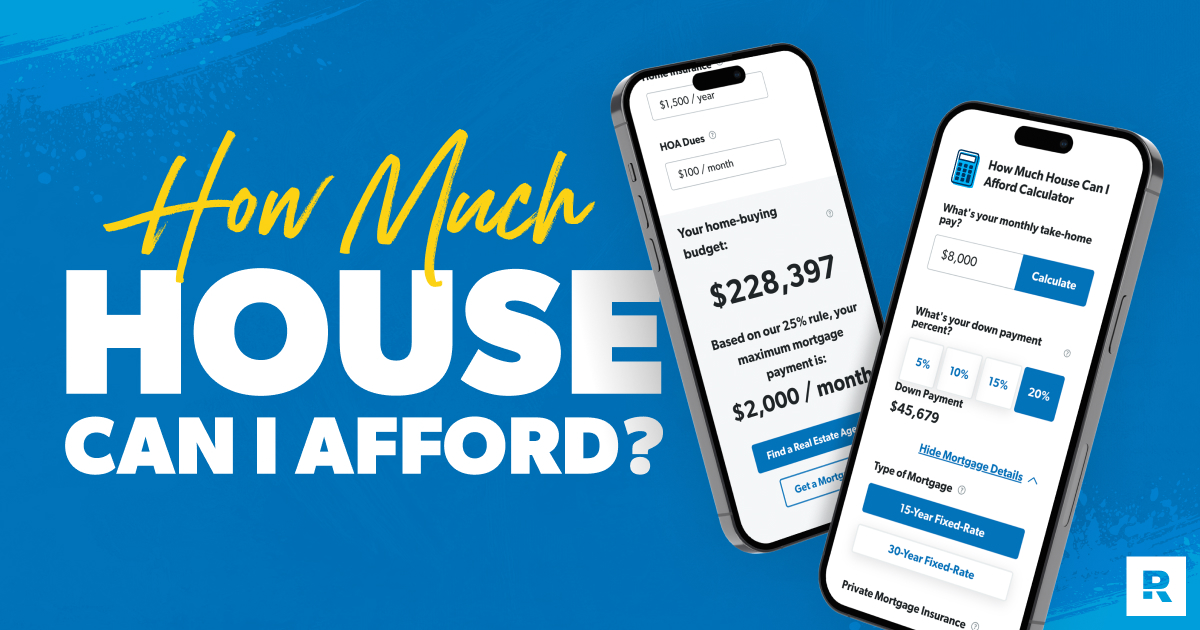
Buying a house . . . it’s a huge life milestone and comes with a lot of emotions. (Excitement? Check. Slight panic? Also check!) But don’t worry. Our Home Affordability Calculator can help you figure out how much you should spend on a house.
Quick Answer
You can afford a house when your house payment is no more than 25% of your monthly take-home pay on a 15-year fixed-rate conventional loan. That 25% limit includes principal, interest, property taxes, home insurance, private mortgage insurance and homeowners association fees. And you should be debt-free with a full emergency fund before you buy.

Did you give it a whirl? As you can see from the results, how much house you can afford really depends on the relationship between your income and the mortgage. Keep your monthly payment at or below 25% of your take-home pay so you have margin in your budget for other goals.
Here's a Tip
When you keep your house payment at or below 25% of your take-home pay, your home will be a blessing. Anything beyond 25%, and you risk not having enough margin in your budget every month—which could put your home into “burden” territory.
Now, the number you got from our calculator is very close to how much house you can afford, but you’ll need to adjust some numbers specific to your market—like local property tax—before you make a final decision. A RamseyTrusted® real estate agent can help you do just that.
How Do I Calculate How Much House I Can Afford?
You need to compare 25% of your monthly take-home pay to your estimated monthly mortgage payment. We’re going to go over all the numbers step by step. (Don’t worry if math isn’t your thing—I promise I’ll break everything down and make it super simple to understand.)
1. Figure out 25% of your take-home pay.
To calculate how much house you can afford, use the 25% guideline we talked about earlier: Never spend more than 25% of your monthly take-home pay (after taxes) on monthly mortgage payments. That includes your mortgage principal, interest, property taxes, home insurance, private mortgage insurance (PMI) and homeowners association (HOA) fees.
Just add up how much you (and your spouse, if you’re married) bring home each month and multiply that by 0.25. For example, here’s what that would look like with a household take-home pay of $7,000 a month:
$7,000 × 0.25 = $1,750
Easy, right? Stick to that number and you’ll have plenty of room in your budget to tackle other financial goals, like investing for retirement or saving for your kids’ college.
2. Use our Mortgage Calculator to determine your home budget.
Now that you’ve calculated 25% of your take-home pay to figure out your maximum monthly payment, we need to translate that into the amount you can afford to spend on a house—and how much you should budget for a down payment.
You could crunch the numbers on that yourself by using a complicated formula (no, thanks!), but you’ll save yourself a lot of time and headaches by simply using our handy-dandy, free Mortgage Calculator. It’ll let you try out different combinations to find the right mortgage amount, interest rate and down payment combo for your budget. Go give it a try!
By the way, you should aim for a down payment of at least 20%. Not only does a bigger down payment mean smaller monthly payments and less debt, but putting 20% down means you won’t have to pay for PMI—potentially saving you hundreds every month.
A smaller down payment—at least 5%—is fine if you’re a first-time home buyer, but get ready for bigger monthly payments and PMI.
3. Calculate your closing costs.
A down payment isn’t the only cash you’ll need to save up to buy a home. There are also closing costs to consider. Things like . . .
- Appraisal fees
- Home inspection
- Loan origination fees
- Credit reports
- Attorney fees
- Home insurance
- Property taxes
On average, closing costs for buyers are about 3–4% of the purchase price of the home—and you need to be able to pay for them with cash. On top of those costs, it’s also possible that you’ll have to pay for your real estate agent’s services (for example, 3% of the home’s purchase price). To sweeten the deal, the seller might offer to cover part or even all of what it costs you to work with your agent. But don’t count on it. Before you commit to working with an agent, be sure to discuss what they charge so you know your maximum potential costs.
A good number to shoot for when saving for a house is 25% of the home’s sale price to cover your down payment, closing costs and moving expenses. But whatever you do, don’t let the closing costs keep you from making the biggest down payment possible. The bigger the down payment, the less you’ll owe on your mortgage!
4. Factor in homeownership costs.
Here’s the truth: Owning a home is expensive. Between repairs, upgrades and maintenance, those bills can add up. Bills such as . . .
- Increased utilities: As a renter in an apartment, you might be used to paying $100–150 a month for utilities. As a homeowner, though, you may need to budget around $500 a month for expenses like electricity, gas, water, sewer, trash and internet.1
- Maintenance and repairs: Most homeowners spend about $2,041 a year on home maintenance projects.2 This could include things like landscaping or routine services like pest control and HVAC tune-ups.
- Furnishings and upgrades: These can cost major bucks, so plan for them in your budget ahead of time if you’re going to want them when you move in. For example, the average cost to furnish a house is around $16,000.3 Meanwhile, a minor kitchen remodel can cost over $28,000.4
That’s why you should save up an emergency fund worth 3–6 months of your typical expenses before you buy a house (in addition to paying off all your consumer debt). When you don’t have an emergency fund, any unexpected expense that pops up can become a crisis. But with an emergency fund, an unexpected expense becomes nothing more than an inconvenience.
So, when you’re figuring out how much house you can afford, don’t forget to factor saving for emergencies into the equation.
How Do I Budget for a House?
All right, you’ve got your target price. Now let’s talk about how you actually save for it—because a house you can afford starts with a budget you actually stick to. As long as you’re debt-free with a full emergency fund, these five steps will carry you the rest of the way.
Step 1: Set your savings goal.
With your target price in mind, nail down two more things: how much you want to put down (at least 5% if you’re a first-time buyer, but shoot for 20% so you can skip PMI) and when you want to buy. Divide your down payment goal by the number of months until then—that’s your monthly savings target. Simple as that.
Step 2: Write down your income.
This is the same monthly take-home pay you used for the 25% rule—every dollar that hits your account after taxes, from your paycheck to your spouse’s to any side hustles. Put it at the top of your budget. You can’t tell your money where to go until you know what you’ve got to work with.
Step 3: List your expenses.
Cover the Four Walls first—food, utilities, shelter and transportation—then everything else: subscriptions, eating out, giving, and a brand-new line called house savings. Give every single dollar a job before the month starts.
Step 4: Make adjustments.
Here’s where it gets real, you guys. If more money is going out than coming in, something’s got to give. As a spender at heart, I feel this one—but those Target runs and Amazon splurges add up fast. Cut back on eating out, cancel the streaming services you forgot you were even paying for (do you really need Netflix, Hulu, HBO Max and Disney+?), and you can even pause retirement investing for a year or two while you focus on your down payment. Small changes add up to your down payment faster than you’d think.
Step 5: Track your progress.
A budget only works if you actually follow it. Check in on your spending throughout the month so you stay on track—our EveryDollar app makes it easy and keeps your goal front and center.
How Do I Know When I Can Afford to Buy a House?
You’re ready when you’re debt-free, have a 3–6-month emergency fund, and have your down payment saved. The best way to buy a house is to pay for it in cash. That’s right—a 100% down payment. Sounds impossible? I get it. But I’ve seen plenty of people crush this goal by getting gazelle intense and saving up over time. No mortgage payments—just a fully paid-for house you can call your own. It’ll probably take a few years, but just imagine walking into your dream home knowing you own every brick. That kind of freedom is worth the wait.
That being said, we know that saving up that much money isn't always realistic for everyone. So a mortgage is the one kind of debt we don’t yell at you for. But if you go that route, save a down payment of 20% or more (a 5% minimum is okay for first-time home buyers).
Why is all this important? Because homeownership can quickly become a nightmare if you don’t have your finances in order. Some people even dip into their 401(k) to buy a house—don’t do it! If you have to borrow from your future just to scrape together a down payment, you’re not ready yet.
Think about it, you guys: If you’re already overwhelmed by your house payment and don’t have money saved for emergencies, you’ll be in a super tough spot if your refrigerator loses its cool or your HVAC unit fizzles out and needs to be replaced. I don’t want that to happen to you.

Which Mortgage Option Should I Choose?
Now, let’s talk about different types of mortgages—because the mortgage you choose will also affect how much you can spend on a house.
Picking the right type of mortgage is a big deal. A lot of them charge you tens of thousands of dollars more in interest and fees. The most common mortgage types like that are FHA, VA, USDA, 30-year and adjustable-rate mortgages. Stay far away from those!
Instead, make sure your mortgage checks both of these boxes:
- A fixed-rate conventional loan: With this option, your interest rate never changes during the life of the loan. This keeps you protected from the rising rates of an adjustable-rate loan.
- A 15-year term: Your monthly payment will be higher with a 15-year term, but you’ll pay off your mortgage in half the time of a 30-year term and save tens of thousands in interest.
Your mortgage lender will probably approve you for a bigger mortgage than you can afford. But don’t let them decide your home-buying budget. Ignore the bank’s numbers and stick with your own.
Knowing your house budget and sticking to it is the only way to make sure you get a mortgage you can pay off as fast as possible. When you’re ready to get preapproved, talk to our trusted friends at Churchill Mortgage.
How Will My Debt-to-Income Ratio Affect Affordability?
When you apply for a mortgage, lenders usually look at your debt-to-income (DTI) ratio—this is your total monthly debt payments divided by your gross monthly income (before tax), written as a percentage.
Lenders often use the 28/36 rule as a sign of a healthy DTI ratio—meaning you’ll spend no more than 28% of your gross monthly income on mortgage payments and no more than 36% of your income on total debt payments (including a mortgage, student loans, car loans and credit card debt).
If your DTI ratio is higher than the 28/36 rule, some lenders will still approve you for a loan. But they’ll charge you higher interest rates and add extra fees like mortgage insurance to protect themselves (not you) in case you get in over your head and can’t make your mortgage payments.
That 28/36 rule is lender math designed to tell you the most you can borrow. Ramsey math (our 25% guideline) tells you the most you can afford—and sets you up to pay off your house fast while still having enough margin in your budget for other important financial goals.
Want More Expert Real Estate Advice?
Sign up for our newsletter! It’s packed with practical tips to help you tackle the housing market and buy or sell your home with confidence—delivered straight to your inbox twice a month!
What Salary Do You Need to Buy a $400,000 House?
You’d need a minimum annual take-home pay of $130,000 to buy a $400,000 house (assuming a 20% down payment on a 15-year fixed-rate loan at 6% interest). But really, you’d need to make even more than that to cover property taxes, home insurance and HOA fees. (I skipped those numbers for this example since they can be vastly different per location.)
Here’s a quick look at how the 25% guideline works out with different take-home pay amounts. Again, the following assumes a 15-year fixed-rate loan at 6% interest and a 20% down payment. The payment shown is principal and interest, so remember to leave room in your 25% for property taxes, home insurance, HOA fees—plus PMI if your down payment is less than 20%.
|
Annual Take-Home Pay |
Monthly Take-Home Pay |
Max Monthly Payment (25%) |
Estimated Max Home Price |
|
$60,000 |
$5,000 |
$1,250 |
$185,000 |
|
$80,000 |
$6,667 |
$1,667 |
$246,000 |
|
$100,000 |
$8,333 |
$2,083 |
$308,000 |
|
$120,000 |
$10,000 |
$2,500 |
$370,000 |
|
$130,000 |
$10,833 |
$2,708 |
$400,000 |
What Should I Do if I Can’t Afford a House in My Market?
Okay, so you’re looking at all this, and then you look at your numbers and something’s not adding up. But if you’re thinking about just giving up—don’t! There are things you can do to get those numbers in line. They just take a bit more patience and hard work on your part.
- Pay off your debt. Focusing on paying off your debt before buying a house is always a good idea. When you’re already making big payments on cars, student loans, credit cards and whatever else every month, it’s almost impossible to fit a house into your budget. But once your finances are stable, you’ll be in a great position to buy when the right opportunity comes along—especially if you’ve done your homework on the best time of year to buy a house.
- Relocate to a more affordable area. If you can’t afford your housing market, you may have to move to a different one. I get it—moving to a new city can be scary. But if buying a house is really important to you, you may have to face your fears and get a little uncomfortable. You can ask a real estate agent for advice about how to target your search to areas you can afford.
- Increase your income. If the amount of money you have coming in each month goes up, the amount you can afford to spend on a home also goes up. There are all kinds of ways to increase your income: getting a side hustle, finding a new job, working more hours, that kind of stuff. It’ll take a little more work, but you can do it!
- Keep saving money. Because home prices are so expensive these days, it’s going to take longer to save up enough money to buy a home. And you know what? That’s okay. You may just need to rent for a year or two—after all, it’s much better to rent while saving for a down payment than to have a house consume your whole world.
- Reset your expectations. Letting go of the idea of a Craftsman house on an acre of land with gleaming hardwood floors might be tough, but it’s worth it to avoid getting in over your head financially. When you work with a real estate agent to get your expectations in line with what you can afford, you’ll be surprised to find out you still have some great options! (Tiny homes or mobile homes may show up in your search—but be careful. While they can seem affordable up front, they often come with downsides that make them a poor long-term investment.)
First-Time Home Buyer Story: Our AC Died on Move-In Day
Breanna and her husband made sure their first home was one they could actually afford. And it’s a good thing they did because on move-in day, their AC unit quit.
“My husband and I bought our first house last summer. . . . We had just tripled our living cost by buying a new house, which we knew we could afford, but we really wanted to wait and see how our budget settled. . . . Once spring got nearer, we brought out three companies for quotes and ended up paying cash for a unit almost half the cost of what we were quoted last summer. I’m so proud of us.”
—Breanna W., THE Ramsey Baby Steps Community
The Bottom Line
Can I just say, I love that you’re taking the time to do research like this before deciding to become a homeowner? I always feel so bad for people who buy a house without knowing what they’re getting into and wind up with a huge money mess on their hands.
Luckily, that won’t be you! Just keep working hard to save money and don’t forget the 25% guideline, and you’ll be in really good shape. The best way to track your progress and find that extra down payment money is with EveryDollar—the budgeting app we built to help you find margin and create a life you love. Start for free.
Next Steps
- If you haven’t already, use our Home Affordability Calculator at the top of the page to get a good estimate of how much house you can afford.
- Go a step further by using our free Mortgage Calculator to figure out how much you should save for a down payment to keep your future home within your budget.
- If you’ve checked all the boxes we’ve gone over and you’re ready to buy (yay!), get connected with a RamseyTrusted real estate agent who will serve you with excellence from start to finish.
Frequently Asked Questions
-
How can I make buying a home more affordable?
-
There are several ways you can make buying a home more affordable. Some of the best include increasing your income, decreasing your monthly payment by making a bigger down payment, and moving to a more affordable neighborhood.
-
Can I afford a house if I have student loans?
-
Pay off the student loans first. Those monthly payments eat up the margin you need for a mortgage, maintenance, retirement investing and college savings. Get debt-free, build your emergency fund, then buy a house with payments no more than 25% of your take-home pay on a 15-year fixed-rate mortgage.
-
Is a 30-year mortgage okay if it’s all I can afford?
-
No. A 30-year mortgage is really a get-out-of-debt-slowly plan that costs you tens of thousands more in interest. If you can’t swing the payment on a 15-year fixed-rate loan at 25% of your take-home pay, that’s a sign the house is too expensive. Buy a smaller starter home or save a bigger down payment instead.
-
How much should I save for maintenance every year?
-
Aim to set aside at least 1% of your home’s value each year for maintenance and repairs.1 Last year, homeowners reported spending an average of $2,041 on home maintenance.2 Budget ahead for the fixes you see coming, and let your fully funded emergency fund (3–6 months of expenses) cover the unexpected ones. That’s what takes the panic out of a busted AC unit.
-
Where should I keep my down payment savings?
-
Keep your down payment savings somewhere safe and easy to reach—like a money market account or a high-yield savings account. Don’t invest it in the stock market. You’re going to spend this money soon, so protecting it matters more than growing it.
Get Weekly Insights Delivered Straight to Your Inbox
Did you find this article helpful? Share it!

About the author
Rachel Cruze

Get proven Ramsey answers fast.