
What Is a Will? (Everything You Need to Know)
 By
By

Key Takeaways
- A will is a legal document stating how you want your assets and dependents cared for after you die.
- Everyone over 18 needs one, not just people with major assets.
- Every will needs four things: an executor, beneficiaries, gifts and guardians for any minor children.
- Only a will—not a trust—lets you name a guardian for your minor or disabled children.
- A simple will is what most people need, and you can make one online in about 20 minutes.
You’ve seen it in countless movies, from Knives Out to Easy Money. A grieving family gathers around a lawyer’s desk for the reading of the will.
Maybe a greedy nephew is after his uncle’s wealth. Or the will forces an heir to reform for an inheritance.
But real life isn’t Hollywood—a will isn’t a tool for manipulating your family.
Quick Answer
A will (or last will and testament) is a legally binding document that states exactly how you want your assets and dependents cared for after you die. It’s the cornerstone of any estate plan and the only document that lets you name a guardian for your minor children.Seventy-six percent of Americans don’t even have a will!1 Most people avoid making one because they don’t want to think about dying. But we’ve done the research—100% of people who don’t want to think about dying still die.
Here’s everything you need to know about what a will is and what it can do.
What Is a Will?
A will—or last will and testament—is a signed, legally binding document that describes exactly how you want your assets (like property, bank accounts and other things you own) to be handled after you die, as well as how you want dependents cared for. There are several types of wills, but they all boil down to the same basic document. Wills are the cornerstone of estate planning.

What Does a Will Do?
A will can resolve issues as big as dividing the family farm among five siblings or as small as making sure your nephew gets the pocketknife he admires.
Your will gives you the power to protect your wishes by saying what you want to happen with your assets and dependents after you die. It gives you control, eases your family’s grief, lets you leave gifts, and protects your minor or disabled children.
Even if you have a trust, you still have to have a will to name a guardian for your minor kids and make a testamentary trust for their inheritance. That’s a trust that’s written into your will and only takes effect after you die, so it can hold and manage an inheritance, usually for a minor child, until they’re old enough to handle it themselves.
If you’re a parent with children under 18 or if you have an adult child who depends on you due to a permanent disability, you need a legal will. It doesn’t matter if you’re single or married—you need a will either way.
What Should a Will Include?
As the centerpiece of good estate planning, your will should include at least four things:
- An executor
- Beneficiaries
- Gifts
- Guardians for minor children if applicable
An Executor
Writing down your wishes only matters if there’s someone to make sure those wishes get carried out. That’s what your executor—also called a personal representative—does. They’ll read the will and handle all other end-of-life business the way you want.
You might hire a lawyer to do this if your will is complicated, but many people simply choose a level-headed, honest relative. They’ll be involved through probate and afterward. Make sure to talk to them first so they aren’t blindsided by the responsibility.
After you sign your will, keep a copy for yourself (important!) and give a copy to your executor and to each of your beneficiaries. If you decide not to give them a physical copy of the will, at least let them know where you keep your will so they can get to it if they need to.
Here's a Tip
If you ever end up making changes to your will in the future (more on that below), destroy all copies of the old will and replace them with copies of the new one.
Beneficiaries
Beneficiaries are the people who will get your stuff. They’re usually immediate family members, but your will can also name extended relatives, good friends, charities you support or anyone else you want.
If you’re married, you could name your spouse as the sole beneficiary, but you can also name secondary beneficiaries in case your spouse passes away first.
Things get more complicated when you have kids, especially in a blended family. It’s a good idea to tell them exactly who gets what beforehand to avoid a years-long feud over your favorite pizza pan or your lawn mower. (Yes, those are real examples, and no, your family won’t handle the situation any better once grief gets thrown into the mix.)
And if you’re single without kids, consider which family members, friends or charities you’d like to give your things to. (Just please don’t name your pet as a beneficiary—as much as you love Fluffy, a cat doesn’t need your condo.)
Gifts
This part of your will spells out what each beneficiary gets. If you have special wishes around the gifts you make in your will, you can include a letter of instruction to outline specifics.
For money, you can set aside a percentage or a dollar amount for each gift. For personal items, give as many details as you need to make sure the right item goes to the right person.
If you’re giving your favorite watch to your closest cousin, describe the watch and name the cousin. Otherwise, your executor may give them the wrong watch—or they might give the right watch to the wrong person.
When you’re deciding who gets what, remember: There’s no wrong answer. It’s all up to you! So take your time, think it through, and leave your stuff to people you think will truly treasure it.
Guardians
A guardian is the person who’ll raise your minor or disabled children if something happens to you.
You vet babysitters carefully just to watch your kids for a few hours—so don’t rush this decision. Think it through, and if you’re married, make the decision together with your spouse.
It should also go without saying, but here it is anyway: Talk with the guardians you’d like to choose before naming them in your will. Springing the emotional and financial burden of caring for your children on unsuspecting loved ones is not cool.
You should also talk to beneficiaries about pet care. Pets are easier to take on than kids, but they’re still a big responsibility. Ask if your beneficiaries are able and willing to take care of Fido—don’t just assume they are!
What Are the Different Types of Wills?
The types of wills are a simple will, holographic will, mirror will and joint will.
For most people, the best type of will is a simple will. It’s the most common type lawyers write up, and it’s also available online. If you go with an online will maker, make sure the document was crafted by an attorney for your state-specific laws. (We recommend Mama Bear Legal Forms—their online will checks all the boxes.)
Although all types of wills do basically the same job, some of the other types are considered less legally sound. Here are the main kinds of wills people use to pass on their assets:
- Simple will: This is the kind of will we recommend for most people. It’s flexible and covers most situations without any special clauses.
- Holographic will or handwritten will: Not all states recognize holographic wills. But in the ones that do, a witness signature isn’t required.
- Mirror will: This is the best type of will for married couples. It gives each spouse control over what happens to their property, while also giving a surviving spouse the freedom to amend the will after the other spouse has died.
- Joint will (or mutual will): Both joint and mutual wills also help married couples with estate planning, but we don’t recommend them—they don’t give a surviving spouse the same flexibility a mirror will does.
Interested in learning more about estate planning?
Sign up to receive helpful guidance and tools.
What’s the Difference Between a Will and a Living Trust?
Here’s how a will and a living trust stack up:
|
Will |
||
|
Can name a guardian for minor children |
Yes |
No |
|
Takes effect |
After you die |
While you’re still living |
|
Privacy |
Becomes a public record during probate |
Stays private—never public |
|
Probate |
Required for most assets |
Skipped |
What Is Not Covered in a Will?
Some assets are handled separately from your will:
- Retirement funds: You name beneficiaries for your 401(k) or IRA when you open the account.
- Life insurance policies: The beneficiaries for your life insurance are also named separately from your will.
- Jointly owned assets: If you and someone else (like your spouse) hold a joint title to anything (like a house, bank account or vehicle), ownership automatically passes to the survivor.
If you want to change the beneficiaries for these assets, contact the fund, insurance provider, government office or title company directly. Changing your will won’t change the information on these documents. In fact, if the beneficiaries you name on these documents don’t match the beneficiaries you name in your will, the names on the documents will override your will.
How Do You Make a Will Legal?
To make a will legally binding (sometimes called executing a will) in any state in the U.S., two things are required:
- You need to sign your will while you’re of sound mind.
- Two people have to sign the will as witnesses.
A sidenote about your witnesses: Most states won’t let a witness get anything from the will they’re witnessing, so make sure you aren’t leaving anything to them. Skip asking your daughter (who’s getting your house in the will) to be your witness, and ask a trusted coworker or family friend instead.
You don’t always have to notarize your will, but we recommend it—more on that below.
When Do You Need a Lawyer for Your Will?
Here are the will-making circumstances where you’d want an attorney on hand to make sure all the little details are fully taken care of:
- Your estate is worth more than $15 million (individual) or $30 million (as a couple) because those are the amounts where federal estate taxes kick in.
- You have a complicated family situation or other complex issues.
- You own a business.
- You own property in multiple states.
These same circumstances are also good reasons to consider a trust versus a will. An estate lawyer can help you figure out which is best.
But most people can easily make an online will that can cover their estate needs without a lawyer. Morgan C., a member of THE Ramsey Baby Steps Community on Facebook, worked with our RamseyTrusted® partner Mama Bear Legal Forms for her will and loved how simple and affordable it was.
“It was easy to use,” Morgan said. “We printed the forms and got them notarized locally. It was a quarter of the price we were quoted from an attorney to do it.”
Saving money on a necessity like a will is great. But Morgan also feels confident that her will is going to get the job done legally.
“It will serve us fine for now,” Morgan said. “If things get more complex or our assets grow, we will consider an attorney at that time. But Mama Bear works well for basic, clean situations.”
Will an online will work for you?
Find out if an online will works for you in less than 5 minutes.
Does My Spouse Need a Separate Will?
Yes, your other half absolutely needs a will too. The easiest way to set up a will for your spouse is to make a mirror will.
Mirror Wills
A mirror will (also known as a reciprocal will or simple will for a married couple) is almost like a duplicate of your own will. The main reasons to get a mirror will are:
- To let your spouse plan who gets their estate after they’re gone (usually you and your kids)
- To add flexibility to future estate planning for the surviving spouse after one of you dies
- To save money, because you usually get a discount on the second document
Keep in mind, a mirror will is not an exact copy of your own will. There are slight differences. One obvious difference: The testator (the person signing the will) flips—your spouse signs their mirror will, not you, so you’re the one who inherits. With mirror wills, there’s also room for small differences about specific pieces of property. So your wife can use your mirror will to give Great Aunt Hazel’s brooch to Cousin Beth.
How Do You Store, Update and Cancel a Will?
Where should you store your will?
A legacy drawer is the best place to store a will—and it’s a good idea to have both a physical and digital legacy drawer. Always keep the original will document, and also store a digital copy in a secure online system—so you and your loved ones can easily access it along with all your other important documents.
When should you update your will?
Update your will whenever one of these happens:
- Marriage
- Kids (both when they’re born and when they become adults)
- Divorce
- Death (of anyone named in the will, like a beneficiary or executor)
- A move (new state, new rules)
- Buying or selling a business
- Retirement (woo-hoo!)
- New circumstances (family disagreements, addictions, etc.)
- A new charity you want to support
- A new pick for executor
- A change of mind (hey, it happens)
Anytime something like this happens, revise your will either by writing a new one or creating a codicil (an added document that makes a small change to your will).
How often should you change your will?
Make it a habit to check your will once every year or so even if you don’t think you need to adjust it. You may find you need to change something anyway (laws may have changed, or you may have forgotten something).
Do changes in your will require a witness?
Whenever you make any changes, you’ll need to get your will witnessed again. You can reuse your original witnesses, as long as they’re willing to sign again.
How do you cancel your will?
If you have major changes to your will, it’s best to cancel it and create a new one. Each state has different rules for how to cancel a will (aka shredding, burning and tearing). You’ll want to check with your state’s laws to find out how to legally cancel your will.
Although a more recent will technically trumps an older one, there could be doubts in court about which document is newer. To avoid that situation, securely destroy your old will after signing the new one, using whatever method your state requires. And if you gave copies of the old will to anyone else, be sure you’re the one who destroys those too. This way, there won’t be any confusion about which will is valid.
What Happens if You Die Without a Will?
If you die without a will (also called dying intestate), your loved ones will be grieving, scared—and headed for probate court, where the state will decide everything.
Probate is the legal process of distributing your stuff to the right people, paying your debts, and handling other legal matters after you die. Having a will makes the process much cleaner and faster. Don’t let the courts settle your estate for you!
While each state has its own laws about dying intestate, most courts will give half your stuff to your spouse and half to your kids. Seems like a pretty fair approach, right? But things get more complex (and more emotional for loved ones) if you have children from a previous marriage or if you and your current partner aren’t married. If you’re single and don’t have any kids, the court will divide everything evenly between your parents and siblings—even if you didn’t get along with them or want that to happen. (We know that’s not fun to talk about, but it’s how the law works.)
And here’s a real kicker for you parents of young children: Without a will, the court will decide who raises your kids.
Don’t let the state make those decisions for you. Instead, make a will that’s clear about what you want to happen.
Common Will Mistakes to Avoid
We’ve told you a lot about what to do, but sometimes it’s helpful to know exactly what not to do (like writing your will in crayon). Here are some mistakes you want to avoid when making a will:
Choosing a Bad Executor
It’s better to hire a lawyer to execute your estate than to choose poorly from your friends or family. Make sure the person you choose has a level head and is someone you know well. And if your whole family is full of nutcases, hire a lawyer.
Not Having a Backup (Executor, Guardian, Primary Beneficiary)
So, you chose someone for each of these jobs, asked them if they’re up for it, and they all agreed. That’s great, but unfortunately, it’s not enough. Circumstances can change quickly, and anything could happen before you get a chance to update your will—or even after you’re gone. Don’t leave your kids without a guardian because you didn’t pick a backup. Always choose a secondary option for your executor, guardian and primary beneficiary.
Putting Your Burial Wishes in Your Will
Wills often don’t get read until well after the casket is in the ground and “Amazing Grace” has been sung. Wait! You wanted to be cremated? Whoops, too bad—that was in your will, so nobody knew.
Yes, you need to tell your closest loved ones about any funeral wishes you have—but not in your will.
Leaving a Surprise
We’re talking about “Surprise! You get my million dollars worth of Spanish gold!” and “Surprise! You get my 6-year-old, Alvin.” Some surprises are better than others, but when it comes to estate planning, it’s best to leave no surprises behind. Tell everyone involved what’s in your will when you write it so nothing catches them off guard.
Never Updating Your Will
Yeah, forgetting to update your will is easy to do, but it’s super important you don’t make this mistake. Just by failing to update your will, you could completely undo all the work of creating one. After all, if you named your wife as the sole beneficiary but she passed before you, your will is useless. Check your will every year.
Take the Next Step. You Can Get Started Today.
Now that you understand what a will really is, you’ve probably realized it isn’t anything like what you see in the movies. Instead of creating drama, wills are really all about protecting the people you care about.
If your situation is simple, you can get that protection for your loved ones from the convenience of your home by creating a legally binding, affordable will online. Just as comforting? If you change your mind about anything in your will, you have six months to make adjustments for free.
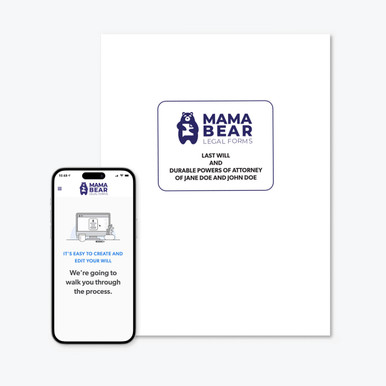
Don’t wait on this one. Get a legally binding will tailored to your state—in about 20 minutes—with our RamseyTrusted provider Mama Bear Legal Forms.Bottom of Form

Complete Last Will Package for Married Couples
Complete Last Will Package for Individuals
Next Steps
- Follow these six steps to get started with estate planning.
- See what an online will covers—and what it doesn’t—before you start one.
- Start your online will with RamseyTrusted provider Mama Bear Legal Forms.
-
What’s the difference between a trust and a will?
-
One of the most important differences between trusts and wills is the ability to name a guardian for your minor children. You can name a legal guardian in your will, but you can’t in a trust. So even if you have a trust, you still need a will to make sure your kids are taken care of after you die. Another important distinction between the two is that, unlike a will, a trust lets you skip probate court.
-
How much does a will cost?
-
The cost of a will varies from free to thousands of dollars. On average, a flat fee for a simple will is about $300. But every will is unique, and several factors affect your price: where you live, the value of your estate, if you use an attorney, and your attorney’s experience level and pricing method (flat fee or hourly). Using a will template or making one online are two inexpensive options.
-
Does a will have to be notarized?
-
Technically speaking, a will doesn’t always have to be notarized, but we recommend it anyway. It adds an extra layer of protection. You just never know who’s going to feel rejected and argue about your assets after you’re gone. While getting your will notarized isn’t always required by law, some states do want a document (called a self-proving affidavit) signed by two witnesses stating they saw you sign your will or saw someone sign it for you at your request. This document also proves you were in your right mind and signed everything willingly.
-
Who can witness my will?
-
As long as they’re a legal adult, anyone except a beneficiary can witness your will. It’s generally not a good idea to have a beneficiary serve as witness because they stand to gain from it, and that could throw doubt on your will. Most people choose a good friend or relative who isn’t in the will to witness for them.
-
What happens if I die without a will?
-
If you die without a valid will, that’s called dying intestate. At that point, your state’s laws control who inherits your property. State intestacy laws generally give property to the people most closely related to you—even if that’s not who you would have picked. And those same laws will decide who gets custody of your kids if you have them. Those decisions are too important to leave up to strangers.
Get Weekly Insights Delivered Straight to Your Inbox
Did you find this article helpful? Share it!

About the author
Ramsey Solutions

Get proven Ramsey answers fast.