
Housing Market Predictions for 2026
 By Rachel Cruze
Key Takeaways
- Mortgage rates: Predicted to stay within the current range through 2027 after averaging 5.6% (15-year fixed) and 6.3% (30-year fixed) in the first half of 2026.1
- Home prices: Expected to rise 1.7%.2 If you’re financially ready to buy now, don’t wait.
- Supply of homes for sale (inventory): Gradually increasing but still below pre-2020 levels.
- Buyer demand: Up 7.8% compared to last year.3
- Risk of a housing market crash: Virtually none.
If you’re wondering what the 2026 housing market forecast may look like—whether prices will fall, rates will drop, or a crash is coming—you’re not alone. The real estate market has seen a lot of unusual trends in the past couple of years, so it makes sense that you’d want to get a 2026 housing outlook before you make any major decisions.
Here’s the thing: Housing market predictions are about as reliable as weather forecasts. Analysts make their best predictions based on real estate data, but no one can know what’s going to happen with 100% accuracy. Plus, national predictions don’t always match what’s happening in your local market since housing trends vary a lot by zip code.
Still, you can listen to what the experts are saying and make some pretty good guesses. Just remember—never let a market prediction control your housing decisions. Only your personal situation and finances should do that!
With that said, here’s what experts predict for the 2026 real estate market.
Good news: We’re now halfway through 2026, which means real data is starting to replace the guesswork—and so far, the market looks a lot like the experts predicted.
Here's a Tip
The 2026 housing market isn’t crashing—but it’s still expensive. Experts predict home prices to rise 1.7%, mortgage rates to hold around 5.6% on a 15-year fixed-rate loan, and inventory to keep growing slowly.4,5 If you’re financially ready to buy, don’t let market predictions stop you. Your personal situation matters more than any forecast.
Will Mortgage Rates Go Down in 2026?
No, probably not by much. The 15-year fixed-rate mortgage averaged 5.6% in the first half of 2026 and is forecasted to hold that average for all of 2027. Sure, it’d be more exciting if rates went down—but look on the bright side: That 5.6% is still lower than the 7% highs we saw in 2023.6
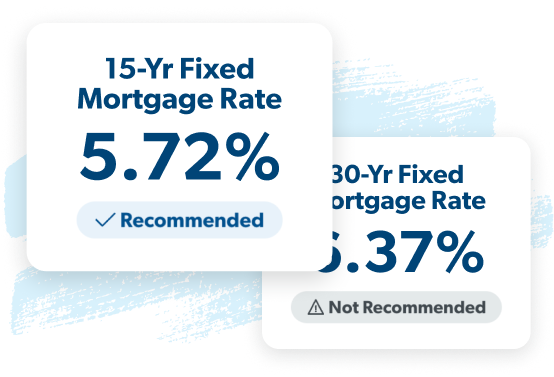
In the chart below, I’ve also highlighted 30-year rates. Notice how much higher those are compared to the 15-year rates. That’s one of the reasons why I only ever recommend getting a 15-year fixed-rate mortgage when you buy a house.
|
Mortgage Type |
2026 Average Rate (January–June) |
2027 Prediction (Econforecasting) |
2027 Prediction (Fannie Mae) |
|
15-Year Fixed |
5.6% |
6.2%7 |
5.6%* |
|
30-Year Fixed |
6.3%8 |
6.9%9 |
6.3%10 |
*Fannie Mae only predicts interest rates for 30-year loans. So, I took the average difference between 30-year loans and 15-year loans in a 12-month period (July 3, 2025, to July 2, 2026—0.72 percentage points) and subtracted that number from Fannie Mae’s 30-year prediction to estimate the 15-year prediction (6.3% - 0.72 = 5.6%).
Keep in mind, many factors influence how lenders set rates—including economic hoopla (like changes to the federal funds rate, the 10-year Treasury yield, and job reports). So don’t bank on predictions that change with the wind. Date the rate, marry the house. You can refinance your mortgage if rates drop after you buy. But if you wait forever for the “perfect” rate, you might miss the right home—and a lower price. If you’re financially ready to buy, now’s the time to get started.
Why Mortgage Rates Matter
Lower rates increase your buying power. Even a 0.5% rate drop can save you tens of thousands of dollars over the life of a 15-year loan. Want to see how a lower rate could add margin to your home-buying budget? Try our free Mortgage Calculator.

Will Home Prices Go Down in 2026?
No, home prices aren’t expected to go down any time soon. But they aren’t expected to skyrocket either. Based on the forecast from Fannie Mae’s Home Price Expectations Survey, which polls more than 100 housing economists and market experts, home prices are expected to increase by 1.7% in 2026. Fannie Mae’s survey respondents also expect similar modest price growth (2%) in 2027.11
What does that look like in a dollar amount? If we take the median sales price of existing homes in June 2026 and multiply it by the predicted price increase for the full year of 2026 ($440,600 x 1.7%), we see that prices could increase to around $448,000 at the end of 2026—that’s about $7,000 higher compared to June 2026.12
|
2026 Median Home Price (June) |
2026 Median Home Price (Full Year Predicted) |
2027 Median Home Price (Full Year Predicted) |
|
$440,600 |
$448,000 |
$457,000 |
|
+1.8%13 |
+1.7%14 |
+2%15 |
No Housing Market Crash in Sight
If you’re thinking the housing market is headed for a crash, it’s not. Prices aren’t going to start drastically going down any time soon.
The main thing to know about the housing market is that home prices are determined by inventory (also known as supply) and demand. Here’s what you can expect in each of those areas.
Housing Inventory
Housing inventory simply refers to the number of houses for sale. When fewer houses are available, buyers are willing to pay more, and sellers have more leverage to increase their asking price. Simply put—low inventory leads to higher home prices. It’s a big reason why buying a home has gotten so expensive.
When it comes to housing inventory for 2026, things are slowing down. The number of homes on the market in January was 10% higher than a year earlier. In June, that number went down to nearly 2% higher—a sign that inventory growth is gradually stabilizing after a strong increase.16
How Much Did Housing Inventory Grow Compared to Last Year?
|
Month |
Year-Over-Year Change (2026 vs. 2025) |
|
January |
+10.1% |
|
February |
+8% |
|
March |
+6.2% |
|
April |
+4.6% |
|
May |
+2.2% |
|
June |
+1.9%17 |
Even though inventory is slightly higher than a year ago, it’s still below pre-2020 levels. So you shouldn’t get your hopes up about seeing any kind of major nationwide price adjustment. But more inventory usually gives buyers more negotiating power and slows rapid price growth.
Will the 21st Century ROAD to Housing Act Help Inventory?
The short answer: It might help a little over time, but not enough for buyers to see a dramatic change in affordability.
You’ve probably heard about large institutional real estate investors—companies that own hundreds of thousands of single-family homes—buying up properties with cash and outbidding regular families like yours. It’s frustrating. You’re ready to buy, you’ve done the work, and then Blackstone swoops in. That’s not how this should work. Homes are for people, not portfolios.
That frustration finally reached Washington, which is where the 21st Century ROAD to Housing Act comes in. The Senate version of the bill passed with rare agreement from both Republicans and Democrats. Their version bans large institutional investors (those that own 350 or more single-family homes) from buying any more single-family homes. The only exceptions are things like newly built rental communities and severely distressed properties—and even those would have to be sold to individual buyers within seven years.
But the House stripped out that seven-year requirement in their amended version—meaning those big companies get to keep every home they acquire, forever. Both the Senate and House passed the bill. President Trump refused to sign it—but didn’t veto it either. So it automatically became law on July 11, 2026. Without the sell-off requirement, though, this probably won't move the needle much for everyday buyers.
Buyer Demand
Buyer demand in real estate refers to how many people are looking to buy a home—and how eager they are. One way to gauge demand is by how many buyers are applying for home mortgages. Mortgage applications have remained strong throughout the first half of 2026 compared to last year—up 7.8% for the week ending July 10, 2026.18
Buyer demand has stayed strong mostly because housing inventory still hasn’t caught up with demand. Buyers who are financially ready now should snag a home sooner rather than later since prices are expected to keep going up.
Want More Expert Real Estate Advice?
Sign up for our newsletter! It’s packed with practical tips to help you tackle the housing market and buy or sell your home with confidence—delivered straight to your inbox twice a month!
Is 2026 a Buyer’s Market or Seller’s Market?
During the first half of 2026, the U.S. slowly inched out of a seller’s market and into a mostly neutral one. One way to measure this is by looking at months of supply—how many months it’d take to sell the current inventory at the current pace of sales if no new homes were listed (active listings ÷ monthly home sales = months of supply).
Months of supply climbed steadily all year, from 3.8 in January to 4.6 in June 2026.19 Most experts say anything under four months of supply is a seller’s market, four to six months is neutral or balanced, and anything above six months is a buyer’s market.
Keep in mind, it’s only considered a neutral market at the national level. Your local market could lean toward favoring buyers or sellers in 2026, depending on a few factors. Let’s take a closer look at each market type.
What’s a Buyer’s Market?
A buyer’s market happens when there are more homes for sale than there are buyers. And while we’re not there yet, the increase in supply means the market isn’t as hot as it was over the past few years. If you’re looking to buy, you’ll probably have more options—and a little less competition. Yes, prices are still high, but the frenzy has definitely cooled.
What’s a Seller’s Market?
A seller’s market happens when there are more buyers than homes for sale. Since there is an increase in supply this year, it’s important to make sure your asking price makes sense for today’s market. It’s easy to overprice your home because of its sentimental value to you—or underprice it by rushing to sell to an iBuyer. A good agent will help you price it right using market data and real-world experience.
|
Market Type |
What It Means |
Who Has the Advantage? |
|
Buyer’s market |
More homes than buyers |
Buyers |
|
Seller’s market |
More buyers than homes |
Sellers |
|
Neutral market |
Balanced |
Neither (or both) |
Will Foreclosures Increase in 2026?
Yes—the number of foreclosures will likely continue to rise in 2026. In May 2026, there were 40,355 foreclosure filings nationwide—a 14% increase from the same period last year. While filings are up year over year, the rate of increase is slowing month over month.20 (Keep in mind, that number is much lower compared to the 3.1 million we saw during the 2008 housing market crash.21)
Here’s what that means for home sellers and home buyers:
- Home sellers: Don’t worry—your home probably won’t drop in value. Even with more distressed properties and bank-owned homes hitting the market, overall inventory is still well below pre-2020 levels. But rising foreclosures do mean more options—and more leverage—for buyers. So if you’re thinking about selling, don’t wait for inventory to build. List your home now while demand is still strong!
- Home buyers: If you’re looking to find a great deal on a foreclosure, you might have a few more options. Keep in mind, buying a foreclosed home could come with its own set of potential issues. Money is made at the buy—but only when you run the numbers and avoid a money pit. Make sure you do your homework on the house and know what you’re getting yourself into before you buy.
Is 2026 a Good Time to Buy a House?
Yes, 2026 is a good time to buy a house if you’re financially prepared. Like I said before, the market shouldn’t determine your decision to buy a house. If you’re prepared financially, then it’s a good time to buy a home, even if inventory is limited and interest rates are high. If you’re not prepared financially, it’s not a good time, even if there’s plenty of inventory and rates are down.
You’re ready to buy a house in 2026 if (and only if) you can check off all these boxes:
- You’re debt-free (Baby Step 2).
- You have an emergency fund of 3–6 months of expenses (Baby Step 3).
- Your monthly house payment on a 15-year fixed-rate mortgage will be 25% or less of your monthly take-home pay. (Steer clear of FHA and VA loans—you’ll pay much more in fees with them.)
- You have a solid down payment. A 20% down payment is ideal because you’ll avoid paying private mortgage insurance (PMI). If you’re a first-time home buyer, a smaller down payment—at least 5%—is okay (just be prepared to pay PMI).
- You can pay the closing costs up front without stealing from your down payment.
Here's a Tip
Here’s the number to know: Your monthly payment on a 15-year fixed-rate mortgage should be no more than 25% of your monthly take-home pay. If you can stay within that threshold—and check off the other items on the list above—stop watching the market and start talking to a lender.
If you don’t meet these qualifications, it doesn’t matter if the market is in your favor. Buying a home isn’t a blessing when you’re broke. Math works in every city and every state—and your budget has to come first. Take your time to get in a better financial position so you can buy a house the right way.
If you are ready to buy, then it’s time to hire an agent and get to work! The best place to find an awesome real estate pro is our RamseyTrusted® program. We only recommend agents who prioritize you and your goals—not their bottom line.
How to Prepare to Buy or Sell in Any Housing Market
I know buying or selling a house is a big deal, especially after all the craziness we’ve seen in the market over the last few years, but you’ve got this!
Yes, the cost of buying a house is higher than it’s ever been before. And yes, selling a home in 2026 will come with obstacles—like high interest rates and home values pricing out a lot of would-be buyers. But even though buying or selling may be more difficult now than it was a couple of years back, it’s not impossible.
You still control your financial future. That includes real estate—no matter what’s going on in the market. And our team here at Ramsey always has your back.
If you want to learn even more about buying or selling a house, check out our Real Estate Home Base! It’s full of helpful articles, guides and calculators—basically everything you need to make confident decisions and reach your home goals. Think of it as your all-in-one real estate resource.
Next Steps
- Pay off all debt using the debt snowball method and build a full emergency fund before buying a house.
- Use our Home Affordability Calculator to set your home savings goal.
- Keep a pulse on the latest mortgage rates and housing prices by visiting our Housing Market Trends page.
- Find a real estate agent in your area who puts your financial goals first—like the agents we vet through our RamseyTrusted program.
Frequently Asked Questions
-
Is 2026 a good time to buy a house?
-
Yes—if you’re financially ready. Finances matter more than markets. If you’re debt-free, have an emergency fund and a big down payment, and can keep your monthly payment on a 15-year fixed loan to no more than 25% of your take-home pay, go for it.
-
Will home prices drop in 2026?
-
No. Experts across the board are projecting modest price growth in 2026. If you’re waiting for prices to fall, you may be waiting a long time.
-
Is there going to be a housing market crash in 2026?
-
No. Experts don’t see a crash coming. Inventory is still below pre-2020 levels, lending standards are far stricter than they were in 2008, and homeowners have significant equity. A crash requires conditions that simply aren’t in place right now.
-
What will mortgage rates be in 2026?
-
The rate for 15-year fixed loans averaged 5.6% in the first half of 2026, and the 30-year averaged 6.3%.1 Both are on track to hold around those averages for the rest of the year and into the next. Rates are lower than the 7% highs of 2023, but they haven’t dropped as much as most people hoped in 2026.2
-
Is it a buyer’s market or seller’s market in 2026?
-
It’s mostly neutral, nationally. Inventory has been growing, which gives buyers more options than they had in 2022–2023. But it’s still below pre-2020 levels, which keeps sellers in a relatively strong position. Your local market could be different from the national average.
-
Should I wait for mortgage rates to go down before buying?
-
No. Rates go up and down, but no one can predict when or by how much with 100% accuracy. If you’re financially ready, waiting costs you more in rising home prices than you’ll save on a rate drop. Date the rate, marry the house—you can always refinance if rates fall later.
-
What are housing market predictions for 2027?
Get Weekly Insights Delivered Straight to Your Inbox
Did you find this article helpful? Share it!

About the author
Rachel Cruze

Get proven Ramsey answers fast.