
What Is Medicare and How Does It Work?
 By
By 
Key Takeaways
- Medicare is a federal health insurance program for people 65 and older, plus those with certain disabilities, ALS or end-stage renal disease.
- Medicare coverage comes in parts: Part A (hospital coverage), Part B (medical coverage), Part D (drug coverage), and Part C/Medicare Advantage (a bundled private alternative).
- You have two Medicare plan options: Original Medicare, which gives you more control if you add Medigap, and Medicare Advantage, which bundles coverage but restricts you to a network and requires referrals.
- Your Initial Enrollment Period is a seven-month window around your 65th birthday. If you miss it, you could end up paying permanent late-enrollment penalties.
- Most people do best with Original Medicare plus a Medigap supplement, not Medicare Advantage—watch out for agents who push Advantage for the bigger commission.
Here's a Tip
Medicare is a federal health insurance program for people age 65 and older, plus those with certain disabilities, ALS or end-stage renal disease. Coverage is split into parts—Part A (hospital), Part B (medical) and Part D (drugs)—and you choose Original Medicare or a bundled Medicare Advantage plan.
You’ve reached your golden years and are nearing 65. You’ve got a lot of life under your belt and wisdom under your hat. Things should be easier now.
So, why does this dang Medicare feel so confusing?
Well, it was created by the government, so that might be your first clue. And second, it’s just a lot to understand. There are so many plan combinations! (We’ll tell you up front: Most people do best with Original Medicare and Medigap.) Plus, it’s pretty high stakes—if you miss your enrollment window, you can end up paying permanent penalties.

That’s why we’re going to walk through it and explain everything you need to know about Medicare so you can start making informed choices and get back to learning about TikTok from your grandkids.
What Is Medicare?
Medicare is a health insurance program established by the federal government for people 65 and older and folks with certain disabilities. It’s a fee-for-service program. Whenever you need services, you pay for a portion of the cost—much like with regular health insurance deductibles and copays.
Let’s be real—you probably already have an idea of what Medicare is. (Maybe you saw Jim’s post on Amy’s Facebook photo about how he just signed up for parts A and B but isn’t sure if he needs Medigap.) But let’s take a deeper look at the details.
While they’re working, most people get their health insurance through their employer because it’s more affordable. But once you retire, coverage gets very expensive. The federal government created Medicare to help people afford health insurance after retirement.
As a government program, Medicare has worked out discounted costs with any participating provider that accepts Medicare patients. These payment rates are generally lower than the rates negotiated by many private health insurers.
How Does Medicare Work?
Medicare coverage is split into parts, and you have two options for how you get your coverage: Original Medicare or Medicare Advantage. After you enroll, you pay your share of the cost for covered health care services as you get them.
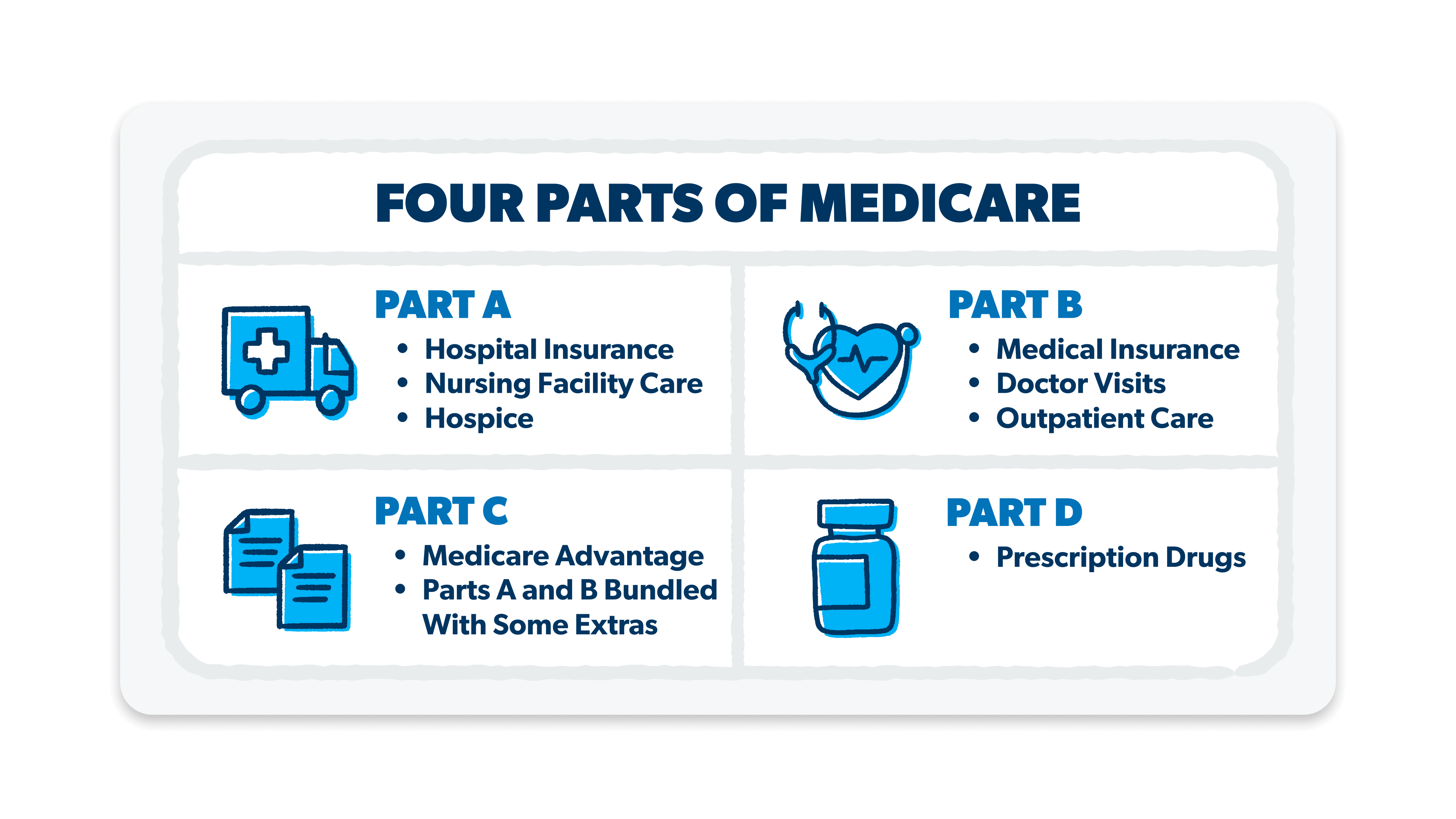
The parts are Part A, Part B, Part D and Part C (Medicare Advantage). Each part is like a mini plan that helps cover a different aspect of health care. If you choose Original Medicare, many people also add a Medicare supplement (Medigap) to help cover out-of-pocket costs.
Unlike regular health insurance, Medicare doesn’t have plans for couples or families—it only covers individuals. Most people enroll around their 65th birthday—we cover the exact timing and penalties for missing it in the “When You Should Enroll” section below.
Like we mentioned above, one way Medicare keeps costs down is by offering a Medicare-approved price for services. Not all doctors and providers will accept the Medicare-approved amount, though. So you have to find the ones who do.
And if this already has you feeling overwhelmed, don’t worry. There are folks who can help walk you through all the decisions you have to make.
Medicare Tips That Set You Up for Success
Government programs are the best . . . at being confusing. And Medicare is no exception. But you can download a guide that makes learning the basics of Medicare feel like talking to a no-nonsense friend over coffee.
Who Qualifies for Medicare?
Americans 65 and older are eligible for Medicare. You’re also eligible for restaurant discounts and tired eyes as your grandkids beg you to read book number 157. Just some of the great things about turning 65.
You may qualify for Medicare before age 65 if you’ve received Social Security disability benefits for 24 months or have end-stage renal disease (where you need dialysis or a kidney transplant) or ALS (aka Lou Gehrig’s disease).
What Are the Parts of Medicare?
Medicare is made up of different parts that cover different medical services. Depending on whether you choose Original Medicare or a Medicare Advantage plan, you either sign up for each part separately or get them bundled in one big plan.
Part A
Medicare Part A is hospital insurance. It covers inpatient hospital visits (like when you have to stay overnight), care at a skilled nursing facility, hospice care and certain home health services. It’s free for most people who’ve worked and paid (or had a spouse who worked and paid) Medicare taxes for 40 or more quarters—everyone else pays a monthly premium.
Part B
Medicare Part B is medical insurance. It covers:
- Doctor visits and services from other health care providers
- Outpatient care
- Home health care
- Durable medical equipment (DME) like wheelchairs, hospital beds, oxygen tanks and walkers
- Preventive services like screenings, certain vaccines and annual wellness visits
Part D
Medicare Part D is drug coverage. This one’s easy to remember because D is for drugs. Remember, do drugs—but only if you have Medicare Part D (and only if your doctor prescribed them)! You have to add Part D separately if you’ve got Original Medicare, but Medicare Advantage plans usually come with drug coverage.
Along with helping cover the cost of prescription drugs, Part D also helps cover many other recommended vaccines that aren’t covered under Part B.
Medicare Supplement Insurance
As we’ve talked about Medicare, you may have noticed wording like helps cover and covers many. That’s because Medicare doesn’t pay for everything, and many people find themselves needing more coverage. (Cue the sad trombone.)
Private companies offer Medicare Supplement Insurance (also called Medigap) as extra insurance you can buy to help pay your share of health care costs if you have Original Medicare. The most common options are Plan G and Plan N. Most people with Original Medicare need this. If you choose a Medigap plan, you’ll pay one premium for it and another for Medicare Part B and also Part D.
Original Medicare vs. Medicare Advantage: Your 2 Options
While it adds to the confusion, having multiple options means there’s a better chance you can find something that works well for you. With Medicare, you have two main options: one from the government and one from private companies. (And by the way, you can’t have both. If you choose Original Medicare with a Medigap plan, you can’t also get a Medicare Advantage plan.)
Here's a Tip
For most people, Original Medicare plus a Medigap plan offers the most flexibility and protection.
Original Medicare
Original Medicare is offered by the government. It basically refers to Parts A and B. Part A is free for most people, and Part B has a premium. You get a separate insurance card for each part. It renews automatically every year—but premiums and coverage details can change each year, so make sure you review your options during Open Enrollment.
Original Medicare covers a large part of approved medical expenses, but you’ll still have to pay your share of the costs out of pocket. Regular health insurance usually has a yearly limit on what you’ll pay out of pocket, but Original Medicare doesn’t.
With Original Medicare, you can go to any doctor, hospital or provider who takes Medicare, and you don’t usually need a referral to see a specialist.
If you want drug coverage, you’ll need to add Part D (it also usually renews automatically).
But as we’ve mentioned, Original Medicare isn’t enough coverage for most people, so they add Medicare Supplement Insurance.
Medicare Advantage
We’ve mentioned Part C a few times as we’ve gone along. Medicare Advantage is known as Part C. Don’t ask us why.
With Medicare Advantage, you get all the parts bundled into one plan—and some plans even cover things like vision, hearing and dental services. Medicare Advantage plans are offered through private insurance companies.
Most plans include drug coverage (Part D). There's also a yearly limit on out-of-pocket costs. But how much you pay for each service depends on your plan.
Whether your plan automatically renews depends on the plan, but either way, your costs and coverage can change from year to year. Review your options each year during Medicare’s Open Enrollment Period (Oct. 15–Dec. 7) to make sure you’re still getting the best deal.
When it comes to which providers you can use, Medicare Advantage is more like traditional health insurance. You’re limited to providers in the plan’s network. You also may need a referral before you can see a specialist. This means the insurance company running your Advantage plan could deny your referral to the specialist and you’d have to pay for the whole thing out of pocket.
Because you only have one insurance card with Medicare Advantage, it sounds simpler. But it’s not really. You still have to pay a separate premium for Part B and then also one for your Advantage plan.
The big thing to note about Medicare Advantage plans is that you have less control than you do with Original Medicare. You have to use providers in the plan’s network, and you can’t get just any service (like seeing a specialist) without a referral (and the plan can deny it).
Medicare Advantage can genuinely be the right fit for some people though—especially if you’re healthy and your doctors are in the plan’s network.
But watch out for insurance agents and Medicare advisors who push Medicare Advantage no matter what. They make more money from selling you Medicare Advantage—and it’s easier because it comes in one package, so they don’t have to chase down a supplement policy that fits your needs.
Original Medicare vs. Medicare Advantage
|
|
Original Medicare |
Medicare Advantage |
|
Doctor and hospital choice |
Any doctor or hospital that takes Medicare |
Only doctors and hospitals in your plan’s network |
|
Specialists |
No referral required |
Referral required |
|
Cost in 2026 |
Standard monthly premium of $202.90 Annual deductible of $1,736 for Part A and $283 for Part B1 |
Often has an additional premium on top of the Part B premium Annual deductible varies |
|
Out-of-pocket limits |
No |
Yes |
|
Coverage |
Most medically necessary services |
Everything Original Medicare covers, and sometimes certain vision, dental and hearing services |
|
Best for |
Most people, especially those who want freedom to choose any provider and plan to add Medigap |
People who can’t afford Medigap, or are very healthy and don’t need much medical care |

When You Should Enroll in Medicare (and the Penalty for Waiting)
Your Initial Enrollment Period (IEP) is a seven-month window: the three months before your 65th birthday month, your birthday month and the three months after. That’s your main shot at signing up without extra cost.
If you miss your IEP and don’t have other qualifying health coverage, you’ll pay permanent late-enrollment penalties on Part B and Part D—for as long as you have Medicare. These aren't one-time fees—they're added to your monthly premiums for as long as you have Medicare.
If you’re still working at 65 and covered by an employer plan, you may qualify for a Special Enrollment Period (SEP) that lets you delay Medicare without a penalty. For the full breakdown of enrollment steps and timing, see our guide on how to enroll in Medicare.
What Does Medicare Cost When You Turn 65?
Understanding how much Medicare costs is key to retirement planning—here’s a quick breakdown of what you’ll likely pay in 2026:
Part A: Usually free if you or your spouse has worked 40-plus quarters
Part B: $202.90 per month standard premium2
Part C (Medicare Advantage): Varies by plan
Part D: Varies by plan
Medigap: Varies by plan and provider
These figures update every year, so check our full breakdown of the cost of Medicare for the latest numbers.
If you’re a high earner, budget for more. Medicare charges an income-related monthly adjustment amount (IRMAA) that raises your Part B and Part D premiums based on your income from two years prior. The higher your income, the more Medicare will cost you—so keep this in mind as you plan your retirement.
What Is Not Covered by Medicare?
Medicare doesn’t cover these services:
- Long-term care
- Vision
- Dental (including dentures)
- Hearing aids (including exams for fitting them)
- Annual physicals (different from an annual wellness visit)
- Cosmetic surgery
- Massage therapy
- Podiatry (unless eligible)
Let’s just say if Medicare were an outfit, it’d be a bikini. A lot of things Medicare doesn't cover are also things regular health insurance doesn't cover. But Medicare has a few extra gaps too.
Medicare also doesn’t cover health care costs when you’re overseas (some regular health insurance plans do). Some of these gaps can be filled by Medicare Advantage, which sometimes covers specific vision, dental and hearing services.
Because Medicare doesn’t cover everything, some people need to get additional health insurance beyond Medigap.
Is this whole Medicare thing sounding a little complex? Frankly, we agree! But it’s nothing to sweat about. We think figuring out Medicare matters more than enough to justify getting help from a pro. People like the folks at Chapter (more on them in a minute) can help you figure out what you need.

Talk With a Medicare Advisor Now!
Our friends at Chapter Medicare are RamseyTrusted advisors! They know their stuff and can help you find the coverage that works best for you.
What Is the Difference Between Medicare and Medicaid?
It can be pretty easy to mix up the names for different health care programs—especially when the names are Medicare and Medicaid. Come on, people. There are only two letters that make them different! Do better.
Sure, the names are similar, but there are big differences between Medicare and Medicaid. Basically, Medicare is health insurance while Medicaid is financial aid. Take a look at the definition for each:
Medicare: Health insurance run by the federal government for people 65 and older and those with certain disabilities. It covers things like hospital visits, doctor visits and other medical services. It doesn’t matter how much income you have—eligibility is based on your age (or disability).
Medicaid: A government-run health care assistance program for people with limited income. It helps pay for things like nursing home care, personal care and Medicare premiums. This is an aid program that helps low-income folks pay for health care.
Key difference: Medicare eligibility is based on age (or disability). Medicaid eligibility is based on income.
But they aren’t completely unrelated. If you have a limited income and struggle to pay for Medicare premiums, Medicaid can help you with that.
If you qualify for both Medicare and Medicaid (that’s called being dual eligible), the two programs can cover nearly all your health care costs.
Get Help Choosing the Right Medicare Plan
So, to recap, Medicare is one of your options for health insurance once you turn 65. You can either get Original Medicare, which gives you more freedom and choice (but also requires you to sign up for each part individually), or you can get Medicare Advantage through a private company.
With Medicare Advantage, you get everything bundled together (sweet), but you have less flexibility and a greater chance of being denied care (boo!).
If Medicare still feels like you’re staring at a crossword puzzle in a different language, don’t worry. We have good news!
There are folks who once felt just like you. They learned the ins and outs of Medicare, and now they're here to help you navigate it with confidence. The good people at Chapter will walk you through your options and help you pick the right Medicare plan for your needs—not the one that will line an agent’s pockets the best. But they don’t stop there. After you’ve enrolled, they’ll help you use your benefits and get the most out of Medicare.
Next Steps
- Learn more about how working with a Medicare advisor can make choosing a plan easier.
- Once you’re about six months away from your 65th birthday, get in touch with our friends at Chapter. They’re RamseyTrusted® advisors who can help you choose the Medicare plan that works best for you.
- Even after you enroll, Chapter's advisors can help if Medicare denies a claim you think should be covered. They'll walk you through the appeals process.
-
Does everyone pay the same for Medicare?
-
No. Part A is free for most people who worked (or whose spouse worked) 40-plus quarters. Part B’s standard premium is $202.90 a month in 2026, but high earners pay more because of Medicare’s income-related monthly adjustment amount (IRMAA).1
-
What are the biggest mistakes people make with Medicare?
-
Missing the enrollment window, picking Medicare Advantage because it sounds simpler, and skipping Medigap while still healthy enough to qualify are big mistakes.
-
What does Medicare not cover?
-
Long-term care, dental, vision, hearing aids, routine physicals (different from wellness visits), cosmetic surgery and overseas care are not covered by Medicare.
-
How much does Medicare cost when you turn 65?
-
Part A is usually free, Part B costs $202.90 a month in 2026, and Part D and Medigap premiums vary.1 Each part also has a deductible.
-
What’s the difference between Original Medicare and Medicare Advantage?
-
Original Medicare gives you the freedom to use any provider and add Medigap. Medicare Advantage bundles your coverage but limits you to a network and usually requires referrals.
-
When should I sign up for Medicare?
-
Sign up for Medicare during your seven-month Initial Enrollment Period—three months before through three months after your 65th birthday month—so you avoid permanent late-enrollment penalties.
Get Weekly Insights Delivered Straight to Your Inbox
Did you find this article helpful? Share it!

About the author
Ramsey Solutions

Get proven Ramsey answers fast.