
How to Budget With the Cash Envelope System
 By
Rachel Cruze
By
Rachel Cruze
Key Takeaways
- Start with your problem categories by using cash envelopes for areas where you tend to overspend, like groceries, restaurants and fun money.
- Spend only what’s in each envelope, and when the cash is gone, you’re done spending in that category.
- Put leftover cash toward your current Baby Step at the end of the month instead of letting it disappear back into your spending.
You guys, if you’ve ever stared down your bank account three days before payday wondering where your grocery money went, this one’s for you.
Quick Answer
The cash envelope system is a budgeting method where you pull out cash for specific spending categories—like groceries or eating out—put it in labeled envelopes, and stop spending in that category once the cash is gone. It’s simple, hands-on, and it flat-out works.I’ll show you how to set up your cash envelopes, stick to them all month, and make them more fashionable than ever!
What Is the Cash Envelope System?
The cash envelope system (also called cash stuffing or envelope budgeting) is a simple budgeting method that uses physical envelopes filled with cash for specific budget categories to help you track spending and stay on budget. You spend only what’s in each envelope, and when the money’s gone, you stop spending in that category until next month.
The envelope method is a powerful way to fight overspending, especially in the areas where you tend to go overboard (hello, food!).
People love making envelope budgeting more personal with colorful envelopes and creative setups. But the heart of it is still the same: telling your money where to go so you don’t wonder where it went.
Is Cash Stuffing the Same as the Envelope System?
Yes! If you've seen cash stuffing all over TikTok—it's just a newer name for the traditional cash envelope system.
The envelopes may have gotten a glow-up (hello cute binders and stickers), but the basic idea hasn't changed. And I love that a new generation is discovering a budgeting method our family has been teaching for years.
How Does the Envelope System Work?
The cash envelope system works by giving you a set amount of cash to spend in specific budget categories each month. You decide how much you want to spend on things like groceries, gas, restaurants or fun money, and then take out those amounts in cash.
Next, divide the cash into individual envelopes labeled with each category. When you shop, you only use what’s in that envelope. And it’s easy to know how much you have left to spend throughout the month because you can literally see the cash that’s left.
When that grocery envelope starts looking a little thin by day 20, you notice. And that’s the whole point! It’s your little reminder to pump the brakes and make that money last (because nobody wants to be eating random freezer food for the last five days of the month).
What’s the Biggest Advantage of the Cash Envelope System?
The biggest advantage of using cash envelopes is simple: When the money’s gone, it’s gone. It makes overspending nearly impossible.
When you see and feel your money leaving your hands, and see your cash running low, you’re probably going to be more careful about what you spend that money on. Swiping a card is easy because you don’t feel it in the moment. But there’s something deep and psychological about seeing those dollar bills go bye-bye. And that feeling is going to help you stay on track, stop overspending, and actually start making progress toward your money goals!
Think about it: If you’ve only got two twenties left in your fun money envelope, that Target run suddenly feels like a much bigger decision. You see the trade-off right then and there—and that’s exactly the kind of spending awareness cash envelopes are meant to create.
Celeste from THE Ramsey Baby Steps Community on Facebook shared what happened when her family tried cash envelopes on vacation:
“This was our first time utilizing the cash envelope system. It was ahh-mazing!!! It was so fun to have a budget for everything and to not have that sick feeling of having to check our bank account to see how much was left in there after using a debit card for several days. The old us would have spent most of our money in the first two days . . . and then have to resort to credit cards for the remainder of the trip. We almost did whale watching but decided not to because we didn’t budget for it this trip, and it was so fun to see how paying with cash really helps you appreciate your money.”
|
Cash Envelope Spending |
Debit Card Spending |
|
|
Psychological impact |
You see and feel the money leave your hand, so spending feels more real in the moment. |
Swiping can make it easier to spend without thinking about how much is left in your budget category. |
|
Ease of tracking |
See exactly how much is left in the category just by looking in the envelope. |
You’ll need to update your budget first, then check the category to see how much is left.. |
|
Overspending risk |
Lower—as long as you stop spending when the envelope is empty |
Higher if you aren’t checking your budget before you spend |
How Do I Start Envelope Budgeting?
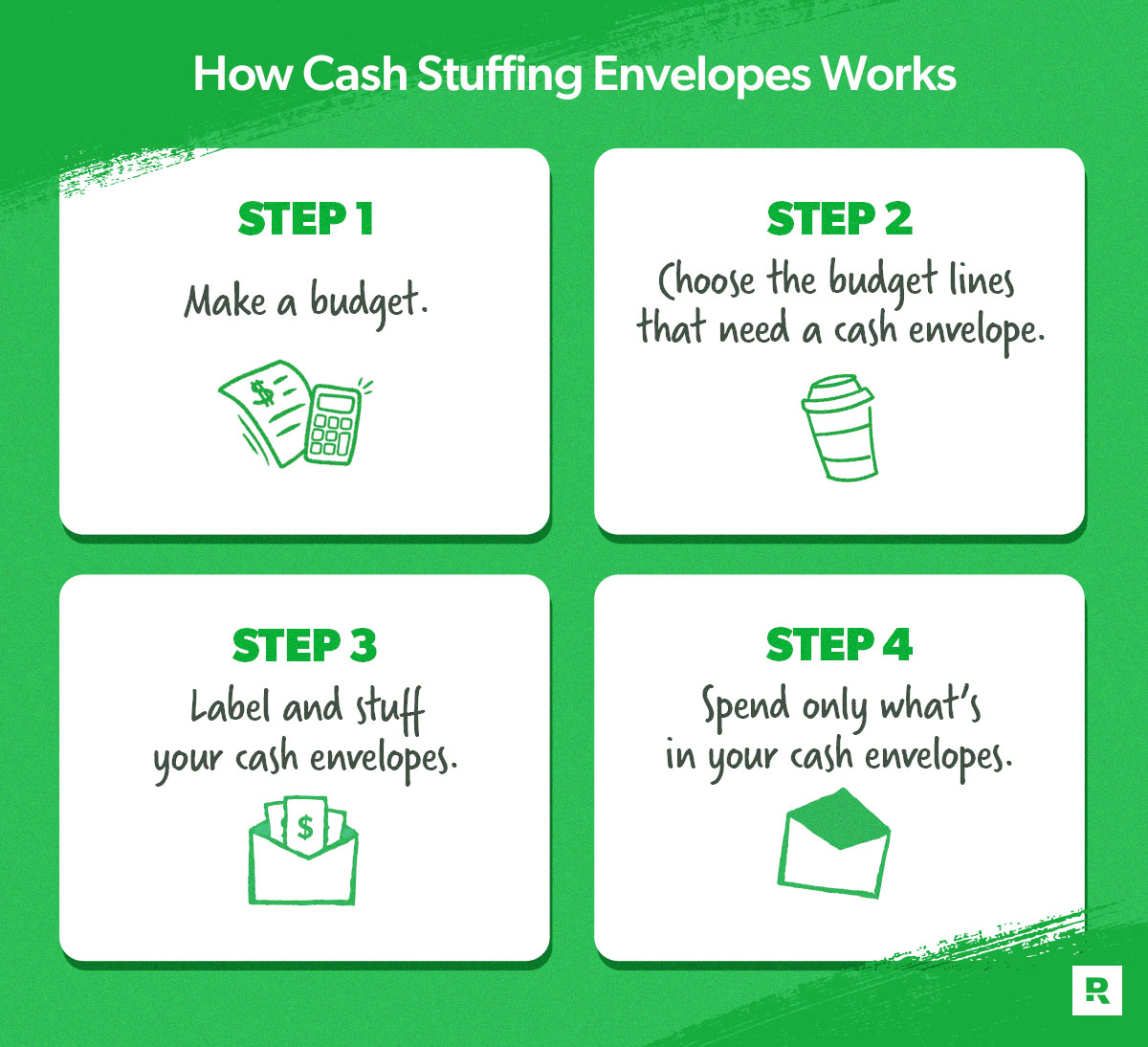
1. Make a budget.
First things first, you need to make a budget. List out your income (everything coming in for the month), then list out all your expenses.
You’re aiming for a zero-based budget where your income minus your expenses equals zero. This means you’re giving every dollar a job to do (whether that’s giving, saving or spending).
Want an easy way to do this? Use EveryDollar—the budgeting app built by Ramsey to help you plan where every dollar will go before the month begins.
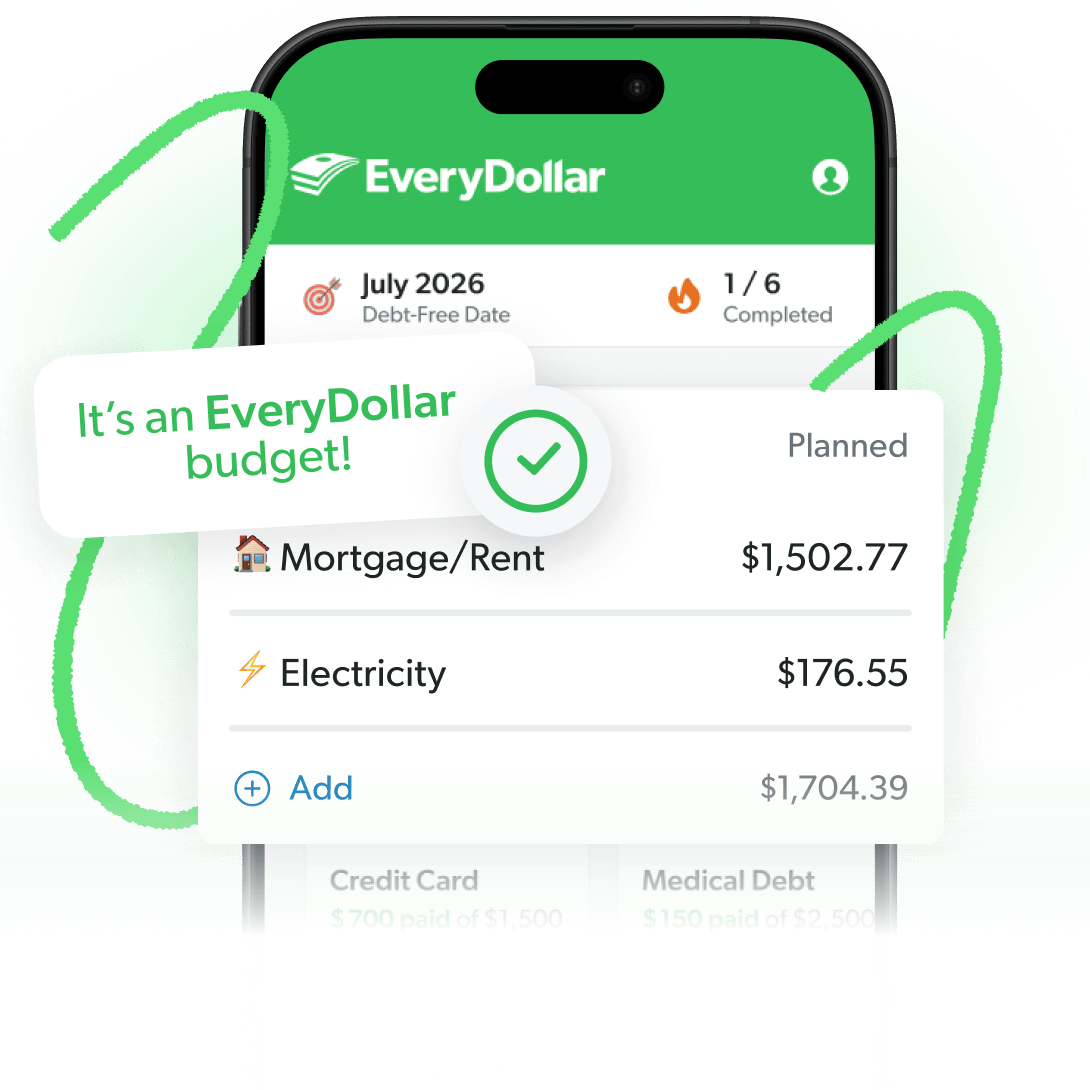
Find Margin You Didn’t Know You Had With EveryDollar
The EveryDollar budgeting app helps you find extra money every month so you can beat debt, build wealth, and make progress. Every. Day.
2. Choose the budget lines that need a cash envelope.
When you’re making your budget, think about the categories where your money has a habit of disappearing. Maybe you find yourself impulse shopping every time you go to the grocery store. Or maybe you keep choosing to ignore your leftovers and eat out at restaurants instead. Those are the perfect places to try cash envelopes.
Here are a few budget lines I find most helpful to make envelopes for:
- Groceries
- Restaurants
- Gas
- Medicine/pharmacy
- Hair care/makeup
- Car maintenance
- Personal
- Entertainment
- Gifts
If you’re not sure how much to put in each envelope, start with what you can realistically afford based on your income and the rest of your budget. You can always adjust the amounts next month once you see what works.
3. Label and stuff your cash envelopes.
Once you decide which categories need envelopes and how much you’ll spend in each one, it’s time for the fun part—stuffing your envelopes!
Grab your cash from the bank, label each envelope with its spending category (like groceries, gas, fun money—you get the idea), and start stuffing. And yes, this is the part where you can break out the cute envelopes if that’s your thing.
If you get paid twice a month, this still works for you too! Let’s say you’ve budgeted $700 a month for groceries. When you get your first paycheck of the month, take out $350 and put it in your grocery envelope. When you get your second paycheck, do the same thing again and put the remaining $350 in the envelope.
Just like that, you’ve funded your $700 grocery budget for the month—without overspending or guessing.
4. Spend only what’s in your cash envelopes.
Here’s the most important rule of the cash envelope system: Only spend the money you’ve put in the envelope for that category.
Take your envelopes with you when you head to the grocery store, run errands, or go out to eat. During the month, the only money that comes out of that grocery envelope is the money you use to pay for food at the grocery store. If you leave the envelope at home by mistake, turn your car around.
Also, if you spend most of your grocery envelope in the first week, you’re going to have to cut back the rest of the month (try meal planning, shopping sales, and couponing). I know, I know. Nobody wants to hear “no more restaurants” when it’s Thursday night and you don’t feel like cooking. But that’s where the envelope does its job.
Because here’s the deal: The cash envelope system only works if you stick to it. You can’t just use the envelopes some of the time—you’ve got to use them the whole month. That’s how you build better spending habits.
What Are the Benefits of Using Cash Envelopes?
Cash envelopes can help you stop overspending and be more intentional with every dollar you spend. And honestly, there’s something weirdly satisfying about opening an envelope and knowing exactly what you’ve got left.
Here are some of the biggest reasons people choose this budgeting method:
- Helps prevent overspending. When the envelope is empty, that’s it. You physically can’t spend more money.
- Creates spending awareness. You see exactly how much money you have left every time you spend, making you more intentional with your purchases.
- Builds financial discipline. When you can feel the cash leaving your hand, it makes spending more real than swiping a card.
- Cuts down on impulse purchases. You can’t buy that last-minute candy bar or sale sweater if you don’t have the cash for it.
- Helps you make progress on your financial goals. Any leftover cash can go toward debt, an emergency fund or savings.
- Keeps budgeting simple. Envelopes full of cash are pretty self-explanatory.
What Are the Disadvantages of Using Cash Envelopes?
Okay, cash envelopes aren’t perfect. Carrying actual cash can be a little inconvenient—especially when we’re all used to tapping our phones and moving on with our lives. Here are a few downsides to know about:
- Getting cash. Depending on how your bank is set up, getting cash from your account can be tricky—not to mention the fees and limits your bank might charge for getting cash from an ATM.
- Juggling cash. Because money is a physical thing, it will take up space in your wallet and your life. You’ll need to be mindful about where your envelopes are . . . cash can’t be replaced like a debit card can.
- Only spending what you have. Wait, that just seems like a challenging advantage!
What If I Run Out of Money in My Cash Envelope?
If you run out of money in a cash envelope, stop spending in that category instead of borrowing from another envelope. The whole point of the envelope method is to help you stay on track and stick to your budget.
So, if your restaurant envelope is empty, that’s your sign to head home and see what you can pull together from the pantry. I love tacos too, you guys, but we’re not stealing from the gas envelope to get them.
And next month, take another look at your budget. If you’re consistently running out of money in the same category, you may need to adjust how much you’re budgeting there.
What Should I Do If I Have Money Left in My Cash Envelope at the End of the Month?
If you’ve got money left in an envelope at the end of the month, put that extra cash toward your current Baby Step. And congrats! Coming in under budget is the best feeling.
If you haven’t completed Baby Step 1 (aka a $1,000 starter emergency fund), that’s your first goal! And if you’re on Baby Step 2 and paying off your debt, take that extra cash and put it toward your debt snowball. Every little bit helps.
Once you’re past Baby Step 2, keep using that extra money to make progress on your current Baby Step. Whether it’s $5, $20, or $50, it all counts. Those little wins add up!
Cash envelopes can help you manage your money better and reach your goals faster. So put the cash envelope system to work!
What Are Some Envelope Budgeting Tips and Techniques?
The cash envelope system is pretty simple, but a few tricks can make it a whole lot easier to stick with. Here are some of my favorite ways to make cash envelopes work in real life:
- Start with problem categories only. You don’t need an envelope for every expense (just imagine carrying all those!). Focus on areas where you tend to overspend—like dining out, groceries and entertainment.
- Don’t borrow between envelopes. If your restaurant envelope runs empty, don’t steal from groceries to keep eating out. That’s just moving the overspending around.
- Plan for irregular expenses. Create envelopes for annual or semiannual expenses (car insurance, Christmas or birthday gifts, etc.) and contribute a little each month so you’re prepared when bills arrive.
- Keep your envelopes safe. Store them in a secure location at home, and only carry the one you need for that day’s shopping.
- Celebrate coming in under budget. If you have money left at the end of the month, put it toward your financial goals—like debt payoff, emergency fund or savings.
- Adjust your allocations monthly. If you consistently run out in one category, you may need to increase the budget for that category and decrease another.
What Tools and Apps Can Help With Envelope Budgeting?
A cash envelope wallet can keep all that cash from taking over your purse, while a budgeting app like EveryDollar can help you plan and track the budget behind it.
That’s actually why I designed the Rachel Cruze wallet—to give you a simple (and cute!) way to keep your cash envelopes organized and all in one place. Because nobody wants loose twenties and crumpled receipts floating around the bottom of their bag.
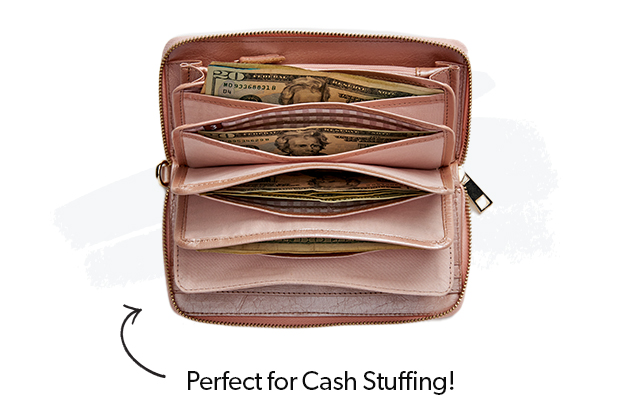
I love so many things about this wallet! For starters, it’s got:
- Four interior envelopes for cash
- 10 slots for debit cards and gift cards
- A zippered pouch for coins, coupons or receipts
- A high-quality genuine leather exterior (so it looks good and it’s built to last)
- A wrist strap and zip-top closure
- Multiple color choices (black, camel, champagne and more!)
Then there’s EveryDollar. It’s the budgeting app I use to plan where my money is going before the month begins. And you can use it to figure out how much cash needs to go in each envelope too.
You can also manually enter your cash transactions in EveryDollar as you spend. That way, your envelopes help you see what you’ve got left in the moment, while EveryDollar helps you see how it all fits into your overall budget.
And that’s really all you need! Your envelope system doesn’t have to be complicated or Pinterest-perfect. Find a setup that works for you and let your budget do its thing.
Next Steps
- Make your monthly budget. Give every dollar a job before the month begins so you know exactly how much you can spend in each category.
- Pick two or three problem categories. Start with the areas where you tend to overspend—like groceries, restaurants or fun money—and set aside the cash you budgeted for each one.
- Stick to your envelopes. Spend only what’s in each envelope, and when the cash is gone, you’re done spending in that category until it’s time to refill it.
Frequently Asked Questions
-
What categories should I use for cash envelopes?
-
Use cash envelopes for the categories where you tend to overspend—like groceries, restaurants and fun money. You don’t need an envelope for every single budget category!
Start with two or three problem areas where having a physical spending limit would help you the most. Once you get the hang of it, you can always add more envelopes if you need them.
-
Can you do the cash envelope system without cash?
-
Technically, no. The whole point of the cash envelope system is using physical cash to help you feel the weight of your spending. When you pay with a card, it’s easy to overspend without even realizing it. But when you hand over actual cash from an envelope, you’re way more aware of where your money’s going—and that’s what builds intentional habits.
Now, if you want to use a budgeting app to keep track of your spending, that’s totally fine—but that’s not the cash envelope system. The method works best when you’re actually using cash.
-
How do I use the cash envelope system for online purchases?
-
For online purchases, keep track of what you spend and subtract that amount from the cash you’ve set aside for that category. You may not be physically handing over the cash at checkout, but that purchase still needs to come out of your budget.
For example, if you have $100 in your clothing envelope and spend $40 online, take $40 out of the envelope and put it back in your checking account. Now you've got $60 left to spend on clothing, and you won't accidentally treat that $40 as extra cash later.
-
How does the cash envelope system work for emergencies?
-
If a crisis comes up in the middle of the month and you have absolutely no choice but to move money around between your cash envelopes, that’s okay. Start by figuring out how to adjust your budget for the month.
If you’re married, talk with your spouse and decide together on the best course of action. Both of you need to be involved—it’s a joint decision. Or, if you’re single, run the numbers by someone you trust to hold you accountable to your money goals. Just don’t drain other envelopes for every surprise expense.
This is also when having an emergency fund comes in real handy. So if you don’t already have at least $1,000 set aside for emergencies, go ahead and make that a priority!
-
Is the cash envelope system safe?
-
Yes, using cash envelopes can be safe as long as you’re careful about how much cash you carry and where you keep it. You definitely don’t need to walk around with your entire month’s grocery budget in your purse!
Only carry what you need when you’re out shopping. And keep the cash you aren’t using in a secure place at home.
Get Weekly Insights Delivered Straight to Your Inbox
Did you find this article helpful? Share it!

About the author
Rachel Cruze

Get proven Ramsey answers fast.