
Best Budgeting Methods: How to Choose the Right One for You
 By
By
Key Takeaways
- Zero-based budgeting is the best method because it assigns every dollar a job and eliminates overspending.
- The 50/30/20 rule is a popular method, but the percentages don’t work for most Americans.
- Cash stuffing works best for people who overspend on categories like food and entertainment.
- Zero-based budgeting works for everyone regardless of income, debt, age or relationship status.
If your paycheck hits and disappears before the next payday, you don’t have a money or a math problem—you have a budget problem! And to break the cycle of disappearing paychecks, you need a budgeting method that actually works. That’s why we recommend zero-based budgeting.
Here's a Tip
Zero-based budgeting is the best budgeting method because it assigns every dollar of your monthly income a specific job, such as bills, groceries, savings or debt payoff, before the month begins.
With a zero-based budget, you give every dollar a place to go—instead of wondering where it went. And it works for all income levels, whether you’re scraping by or rolling in dough. Budgeting is more about what you do than what you know. It’s 80% behavior and 20% head knowledge. So let’s dive in to all things budgeting!
What Is a Budgeting Method and Why Does It Matter?
A budgeting method is a system for deciding ahead of time how you’ll give, save or spend your money. That might sound simple, but it takes some work on your part.
Even though they sound the same, having a budget and having a budgeting method are different things. Plenty of folks “have a budget.” They have an app or spreadsheet they look at from time to time (or not at all). But without a method, a budget is just a document. A method is what sets your budget in motion. It tells you how to handle every dollar before it shows up—so you’re not freaking out about an overdrawn bank account at the end of the month!
Here’s what that could look like in real life: Clark and Darla’s take-home pay is $7,000 a month combined. They make decent money, but they always end up scraping the bottom of their account by the 25th. For them, that means putting off paying some bills and eating the crusty end slices of bread (yuck). It’s all because they’re winging it with their budget. They know how much they make and what bills to expect each month, but they’re not making a plan that tells all their money where to go. So unplanned purchases eat up any “extra” money. Sound familiar?
But a zero-based budget solves those problems. Whether it’s the 1st or the 25th of the month, you’ll have money set aside for your expenses. If you need to back up and learn the basics of budgeting, start with our How to Budget Guide.
What Are the Most Common Budgeting Methods?
It might seem like budgeting methods are a dime a dozen, but we’re going to look at the seven most common ones. We’ll dig in to how each one works, what it can offer, what Ramsey’s take is, and why zero-based budgeting stands in a category of its own.
1. Zero-Based Budgeting
Zero-based budgeting assigns every dollar of your income a specific category so that income minus expenses equals zero. You build a new budget each month and give every dollar a job.
Zero-based budgeting works for any income—big or small, steady or irregular. It’s for anyone who wants to take control of their money, especially people paying off debt or building an emergency fund.
2. 50/30/20 Rule
The 50/30/20 rule splits your after-tax income into three buckets: 50% for needs, 30% for wants, and 20% for savings and debt. It’s simple to understand and easy to start, which appeals to people who’ve never budgeted before.
But we don’t recommend the 50/30/20 rule because the math doesn’t work for most Americans. The average American household spends a lot more than 50% of its income on needs alone—we’re talking food, housing, transportation, utilities. So you’re pretty much setting yourself up for failure if you try to stick to 50%. The three big categories also make it really hard to visualize where your money is really going.
Zero-based budgeting is built around what you actually give, save and spend—not a generic formula.
3. 60/30/10 Rule
The 60/30/10 rule also divides income into three categories: 60% for needs, 30% for wants, and 10% for savings or debt repayment. This method takes money from savings to allow more spending on needs.
But like all percentage-based approaches, we don’t recommend the 60/30/10 rule as a budgeting system. It has the same problem as the 50/30/20 rule: It forces your real life into preset categories instead of being built around what you actually earn, spend and owe. Zero-based budgeting does that job better.
4. Cash Stuffing (Aka the Envelope Method)
Cash stuffing (or the envelope method) uses physical envelopes to hold a set amount of cash for specific spending categories each month. When the envelope is empty, you stop spending. No robbing one envelope to pay for other expenses!
Cash stuffing is probably how your grandparents kept track of their money, and it works well with a zero-based budget. Once you’ve created a zero-based budget, you can use envelopes for the specific categories where you tend to overspend, like groceries, dining out, entertainment or fun money. Cash stuffing keeps you accountable to only spend the money you’ve budgeted to spend.
5. Pay Yourself First
Paying yourself first budgeting means automatically moving a savings or investment contribution out of your account before you spend anything else. The idea is, if the money’s gone before you see it, you won’t miss it.
Paying yourself first is a way to automate your savings, but it’s not a complete budget system. If you only think about savings and don’t tell the rest of your money where to go, you’ll end up overspending.
A zero-based budget already tells you to prioritize saving over spending. Paying yourself first is just an automated way to do that. It can complement a zero-based budget in Baby Steps 3–7, but it’s never a replacement for it.
6. Loud Budgeting
Loud budgeting is exactly what it sounds like: You let everyone know your budget constraints—friends, family, coworkers, even pets (“Sorry, Fido, no more money for treats this month.”) It’s about being honest with everyone about your budget. A lot of times that means saying no to spending to say yes to something more important. After all, “no” is a complete sentence.
Loud budgeting works well if you’re the type of person who overspends to keep up with others or feels social pressure to say yes to every invitation. But loud budgeting is a tactic, not a complete system. You still need a zero-based budget behind it.
7. Budget Percentages
Budget percentages are recommended spending guidelines—like spending 25% of your take-home pay on housing, 10–15% on food, 10% on transportation, and so on. They’re not really a budgeting method but more guidelines to check whether your spending is in a healthy range.
Budget percentages are useful when you’re evaluating a specific budget category. You might ask, “Is my food category too high?” And knowing normal ranges can help you fine-tune your budget.
Here’s how all seven methods compare at a glance:
|
Method |
How It Works |
What It Can Offer |
Ramsey’s Take |
|
Zero-Based Budgeting |
Assign every dollar is a specific job each month. Income – expenses = $0. |
You have full control over every dollar. It helps you find hidden money and adapts to any income or life stage. |
This is Ramsey’s recommendation for everyone, at every Baby Step, in every situation. |
|
50/30/20 Rule |
50% goes to needs, 30% to wants, and 20% to savings and debt. |
It’s easy to learn the concept of spending categories. |
This is not recommended because the math fails most households. |
|
60/30/10 Rule |
60% goes to needs, 30% to wants, and 10%to savings and debt. |
It’s slightly more spending-focused than the 50/30/20. |
Same problem as 50/30/20: Percentages don’t reflect real-life budgets |
|
Cash Stuffing/Envelope Method |
Divide cash divided into envelopes by category. When they’re empty, you stop spending. |
This helps you feel the pain of the money leaving your problem spending categories. |
Use this method within a zero-based budget for variable categories (groceries, dining, fun money). |
|
Pay Yourself First |
Savings are automatically contributed before any other spending occurs. |
It automates savings and is good for making investing contributions consistent. |
It can complement a zero-based budget, but never replace it. |
|
Loud Budgeting |
Openly declare your budget limits to friends, family and colleagues. |
This creates accountability and helps you resist peer-pressure overspending. |
You can pair it with a zero-based budget to help you stay accountable. |
|
Budget Percentages |
Follow recommended percentage targets for each budget category. |
These are a helpful reference to spot if a category is too high or low. |
Use it to check your zero-based budget categories, not as a stand-alone plan. |
Which Budgeting Method Is Right for You?
Here’s the quick answer: Zero-based budgeting is the right method for whatever situation you’re in—whether you’re young or old, have a low or high income, or prefer cats over dogs. Depending where you’re at in your financial journey, you can use some of the other budgeting methods or tactics to support your zero-based budget. Here are some examples of how you can use zero-based budgeting alone or with the help of some other methods:
- If you have consumer debt and want to get gazelle intense and pay it off fast, zero-based budgeting is the key. It’ll help you find every extra dollar and put it toward your debt snowball.
- If you always seem to overspend on food, clothing or another budget category (ahem, coffee), you can use cash stuffing on top of zero-based budgeting for those specific categories.
- If you’re saving up your emergency fund or building wealth in Baby Steps 3–7, zero-based budgeting is still your foundation. But you can automate your savings and investment contributions to make it easier.
- Zero-based budgeting works great even if you’re self-employed or have irregular income. It might just take some extra time to create a new budget each month based on your expected income.
- If you need some accountability to stick to your zero-based budget, don’t be afraid to do a little loud budgeting from time to time. It’ll help you cut back on impulse buys.
- Budget percentages can be helpful guidelines when budgeting. For example, we recommend giving 10% to your church or local charity and spending no more than 25% of your income on housing.
Why Does Ramsey Recommend Zero-Based Budgeting for Everyone?
Zero-based budgeting works because it forces you to tell every dollar where to go before the month starts. When all your money has a job, there’s nothing left to overspend. That’s why it’s the only budgeting method Ramsey recommends.
Here's a Tip
Zero-based budgeting doesn’t restrict your spending. It just makes sure your spending matches your priorities.
Real-Life Scenario: The Overwhelmed Overspender
Debra and Ray Henderson take home $9,000 a month combined. They have two incomes, three kids (plus a fur baby) and a stubborn $22,000 in credit card debt. They don’t spend extravagantly, but they’ve never really had a plan for their money. They end up wondering where it all goes (and relying on a credit card when something “comes up” and they’re short on cash).
Zero-based budgeting can break that cycle. It’ll force them to name every expense, find the money leaks, and redirect every extra dollar straight to the debt snowball. For instance, they might see that their restaurant spending is one of their biggest expenses—and decide to cut back. A few months in, budgeting will be second nature for the Hendersons.
How Do You Start a Zero-Based Budget This Month?
It’s pretty easy to create a zero-based budget. You take your monthly net income (your actual take-home pay after taxes) and subtract all your planned spending, saving and giving until you reach zero. Done. Now, that doesn’t mean your bank account hits $0 at the end of the month. It just means every dollar has a job before the month begins.
Let’s say your net income is $5,000 and your spending, savings and giving totals $4,800. You’ve got $200 left without a job! Don’t leave that money aimlessly floating like a new college grad holding out for management position—give it a job! Throw it at debt. Add it to your emergency fund. Give every dollar a purpose.
You don’t need to be a spreadsheet wizard or to have a degree in finance to make a zero-based budget. Here’s how to do it in seven steps:
- Calculate your monthly take-home pay. Add up every source of income you expect this month. Use your actual net income after taxes, not your gross salary.
- List every expense you expect this month. Start with expenses you know you’ll have every month, like food, utilities, shelter and transportation. Then add variable expenses, like eating out, clothing and entertainment. Don’t guess. Pull up last month’s bank statement and be honest about what you actually spent. (You’ll probably be surprised by how much you spent on some stuff.) The EveryDollar app has built-in categories, so you’re not starting from scratch. Here’s a list of what to track each month:
- Housing (rent or mortgage)
- Food (groceries and restaurants)
- Utilities (water, electricity, internet, etc.)
- Transportation (gas, car payment, insurance)
- Debt payments (student loans, credit cards, etc.)
- Savings (emergency fund, retirement or other savings goal)
- Giving (church or charity)
- Fun money (entertainment, subscriptions, etc.)
- Give every dollar a category before the month begins. Subtract each expense from your income until you hit zero. This is where the method earns its name. Every dollar has a job before the month starts.
- Set up sinking funds for irregular expenses. Car registration, holiday gifts, annual subscriptions, a family vacation—these won’t surprise you if you plan for them. Divide the annual cost by 12 and budget that amount every month. When the bill comes, the money is already there.
- Track your spending as the month goes on. Check in daily if you’re brand new to budgeting. But as you get better at it, you won’t need to check in as often. Update your numbers in real time so you always know where you stand.
- Adjust when life happens. A budget isn’t a slow cooker. You can’t set it once and walk away. If you spend $50 more on groceries than planned, move $50 from another category to cover it. The point isn’t a perfect budget—just one you’ll actually follow.
- Review and reset before next month starts. Every month is different. Build a new budget for the next month before it begins. Don’t just copy last month’s budget without paying attention. Adjust it based on what each month actually looks like. Budgeting for December might look a lot different than May.
- Pat yourself on the back. Okay, we said seven steps, but if you made it this far, you deserve some praise! Budgeting requires you to roll up your sleeves and do a little work, but the reward is definitely worth it.
Linda, who is from Kearney, New Jersey, and a member of the Ramsey Baby Steps Community on Facebook, offered this bit of advice about budgeting: “You can guesstimate on most things. The idea is to not go over your budgeted amount. If you’ve allotted $250 for food, you watch carefully and buy according to what you have left. This keeps it from being a free-for-all and spending $600 when you wanted to spend $250. It takes a few months to get the hang of it. You’ll learn to turn off lights, eat ramen, organize errands to use less gas.”
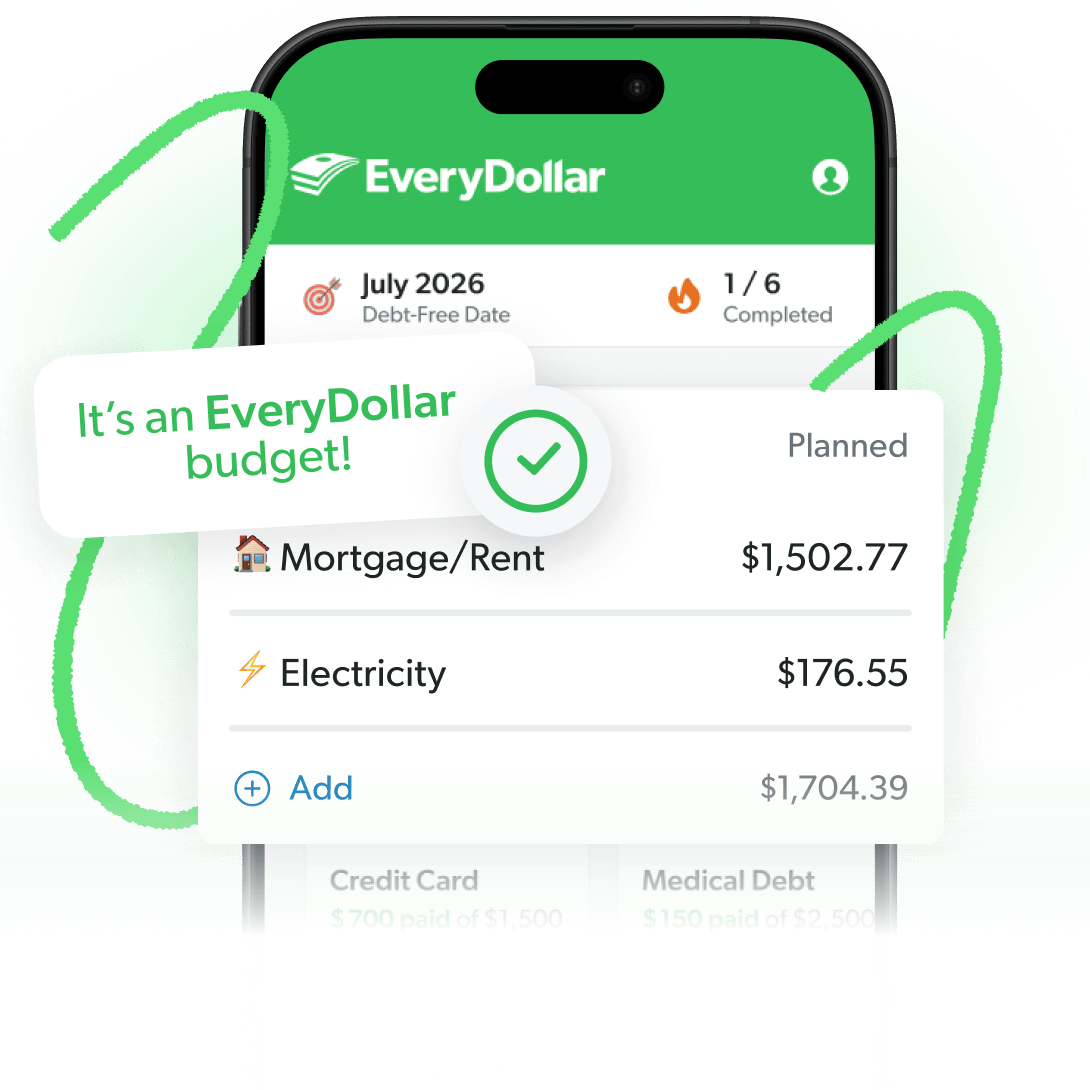
Find Margin You Didn’t Know You Had With EveryDollar
The EveryDollar budgeting app helps you find extra money every month so you can beat debt, build wealth, and make progress. Every. Day.
How Does Budgeting Help You Pay Off Debt and Build Savings?
Zero-based budgeting speeds up whatever Baby Step you’re on. When you assign every dollar a job, you find money you didn’t know you had that can go straight to your Baby Step. It could go to your $1,000 starter emergency fund (Baby Step 1), your debt snowball (Baby Step 2), or your fully funded emergency fund of 3–6 months of expenses (Baby Step 3). The plan works because it’s specific.
Here’s what that looks like in practice. When the Jeff and Jennifer Smith sat down to build their first zero-based budget, they found $380 a month that was just flying out the window. It included two forgotten streaming subscriptions, restaurant spending that had crept from $200 to $400, and a gym membership nobody had used since February. They threw that $380 in extra margin at their smallest debt, a $2,800 medical bill, and paid it off in seven months.
Then they rolled that payment into the next debt on their list—a credit card. In a year and a half, they paid off $19,400 in consumer debt. All because they had a plan for their money!
That’s how the debt snowball works with zero-based budgeting. You list debts smallest to largest, pay minimums on everything else, and attack the smallest debt with everything you’ve got. When it’s gone, you roll that payment to the next one.
If you’re debt-free and focused on savings goals, zero-based budgeting is just as helpful. Instead of putting the margin toward debt, you put it toward your fully funded emergency fund, retirement, kids’ college or your mortgage.
Whatever your income, whatever your debt load, zero-based budgeting gives you the control you need to stop overspending and start making real progress!
Next Steps
- Calculate your monthly take-home pay and write it down.
- Build your first zero-based budget before the month starts.
- Use EveryDollar to set up budget categories. The app does the math!
-
What is the best budgeting method for beginners?
-
Zero-based budgeting is the best method for beginners. It builds the habit of intentional spending from day one and gives you full control of your money. It usually takes about three months to get comfortable with it.
-
Can I use more than one budgeting method at a time?
-
You can combine elements of other methods with zero-based budgeting. For example, you can add cash stuffing for categories where you tend to overspend. But don’t overcomplicate it. The best budget is the one you’ll actually use.
-
How often should I update my budget?
-
Build a new budget before every month begins and check in at least weekly throughout the month. A budget isn’t a “set it and forget it” tool. Unexpected expenses come up, and your plan needs to reflect reality.
-
What is the easiest budgeting method to stick to?
-
Zero-based budgeting is the easiest to stick to long term because every dollar has a job—there’s no question about whether you can afford something. The initial setup takes a little work, but once it’s built, the monthly reset takes 15–20 minutes using EveryDollar.
-
Is zero-based budgeting hard to do?
-
It takes about three months to get comfortable with zero-based budgeting. The first month is the hardest because you’ll probably underestimate some categories and need to adjust mid-month. That’s normal. By month three, most people say it becomes habit
-
What budgeting method works best for paying off debt?
-
Zero-based budgeting is the best method for paying off debt because it forces you to find every extra dollar and put it to work on your debt—whether that’s car loans, student loans or credit cards.
Get Weekly Insights Delivered Straight to Your Inbox
Did you find this article helpful? Share it!

About the author
Ramsey Solutions

Get proven Ramsey answers fast.