
Budgeting Tips for Single Moms
 By
By

Key Takeaways
- Zero-based budgeting means every dollar—including child support and side hustles—gets a job before the month starts.
- The Four Walls (food, utilities, shelter and transportation) come before every other line in your budget.
- If you’re still paying off debt, save a $1,000 starter emergency fund first, then grow it to 3–6 months of expenses once you’re debt-free.
- EveryDollar does the zero-based math for you—so every dollar has a job and you always know where your money went.
If you’re a single mom (or dad), we see you. We know how hard you work and how many plates you have to keep spinning every single day—including your finances.
Quick Answer
Our best budgeting tip for single moms is to start with a zero-based budget. List every dollar of income—your paycheck, side hustles and child support—then give every dollar a job before the month begins. And if you need help putting your budget together, EveryDollar walks you through it step by step.Single moms have many titles: career woman, grocery shopper, personal chef, cleaner-upper, chauffeur, chief financial officer. And that last one comes with its own set of challenges when you’re managing things like child support, alimony and childcare costs on one income.
But the budgeting principles are the same no matter your life stage. You just have to make them work with your specific numbers.
So we’re sharing some effective budgeting tips for single moms to help you start budgeting and make the most of your money each month.
How Do You Create a Single-Mom Budget?
Create a single-mom budget with the zero-based method: List every dollar of income, give every dollar a job, and make income minus expenses equal zero. And before the month begins, make sure you’ve covered your Four Walls (food, utilities, shelter and transportation).
Managing your household finances by yourself (on top of everything else) can feel intimidating. But the truth is, you can confidently take control of your money—no matter your income, marital status or financial past.
Here’s how to build your zero-based budget:
- Step 1: List your income. This includes your normal paycheck, side hustles, child support or alimony and any money you get from selling stuff. If you have an irregular income, budget using your lowest-earning month from the past three months (you can adjust and add more money into your budget later if you need to).
- Step 2: List your expenses. First, set aside money for giving (we recommend 10% of your income). Next, if you’re out of debt, budget for savings. Then you want to make sure you cover your essentials: food, utilities, housing and transportation. Lastly, list all your other expenses for the month—important things like childcare, debt payments and insurance, followed by nonessentials like entertainment, clothing and personal care.
- Step 3: Subtract expenses from income. The goal is for the math to equal zero. No, that doesn’t mean you blow all your money. Zero-based means you give every single dollar a job to do in your budget—whether it’s saving, paying off debt, giving or spending.
Keep in mind, every single-mom budget is going to look different (depending on your income, how many kids you have, and where you live).
And if you realize your expenses are more than your income for the month, don’t worry. That’s totally normal when you first budget! You’ll just need to do some adjusting. Go through your budget and see where you can cut back so you’re not in the red (more on that in a minute).
Here's a Tip
New to budgeting? Our free Budget Calculator is a great place to start (plus, it does the math for you)!
What Does a Single-Mom Budget Look Like?
A single-mom budget should give every dollar of income—including child support and side hustle money—a job and should make sure the Four Walls are covered. Here’s what that could look like for a single mom bringing home $3,500 a month:
|
Income |
Amount |
|
Take-home pay |
$2,800 |
|
Child support |
$600 |
|
Side hustle income |
$100 |
|
Total Income |
$3,500 |
|
Expenses |
Amount |
|
Giving (10%) |
$350 |
|
Savings(while paying off debt) |
$0 |
|
Food (Four Walls) |
$550 |
|
Utilities (Four Walls) |
$200 |
|
Rent (Four Walls) |
$1,200 |
|
Transportation (Four Walls) |
$200 |
|
Childcare |
$500 |
|
Debt payments |
$300 |
|
Insurances |
$100 |
|
Personal/miscellaneous |
$100 |
|
Total Expenses |
$3,500 |
|
Left to budget |
$0 |
11 Effective Budgeting Tips for Single Moms
These 11 budgeting tips can help you find some breathing room in your budget and make more progress with the money you have.
1. Focus on the Four Walls.
The most important thing is that you prioritize food, utilities, shelter and transportation. Plan for those before you budget for anything else—even if your income isn’t where you want it to be right now.
You want to make sure you’ve got enough to feed your kids and yourself, keep the lights on, keep a roof over your head, and put gas in the tank to get to work. If you can at least do those things, you won’t have to stress as much about making it to the end of the month.
2. Find ways to save on essentials.
Look for ways to save money on your Four Walls and other necessities without cutting the things your family actually needs. Food, household items and transportation are all good places to start.
Here are some money-saving tips for single moms:
- Shop what’s on sale and use coupons.
- Choose generic over name-brand items.
- Take advantage of store price-matching policies (including at Amazon, Walmart, Costco and Target).
- Carpool to work or set up a carpool for your kids if you usually drive them to school.
- Meal plan (yes, it takes time, but it does save you a lot of money).
- Bulk buy nonperishable items you know you’ll use.
Here's a Tip
Look for expenses you might be paying for without even thinking about them. Maybe there’s a subscription on autopay you forgot about or a streaming bundle nobody in the house watches anymore. A few small cancellations can free up money fast.
3. Cut nonessential expenses where you can.
Take a look at your budget and see what nonessential spending you can cut. We know it’s hard to say no—whether it’s to your kids or to yourself—but every expense adds up!
Do you really need all those streaming services when your kids just watch Disney+? Even little treats like lattes and pizza deliveries add up. Decide what you’re willing to live without in order to save more each month.
Here's a Tip
When you have to say no to something your kids want, explain why. Something as simple as, “We’re saving for our emergency fund,” can help them understand what your family is working toward—and maybe even get them excited about reaching the goal with you.
4. Adjust your budget as needed.
Your budget will need adjustments throughout the month, especially when you’re first getting started. If you overspend in some categories or an expense changes, just go into your budget and move things around as needed.
And don’t feel like you have to get your budget right immediately. It usually takes about three months to get the hang of it. Your budget should work for you, not against you. Start with this month, stick with it, and give yourself some grace.
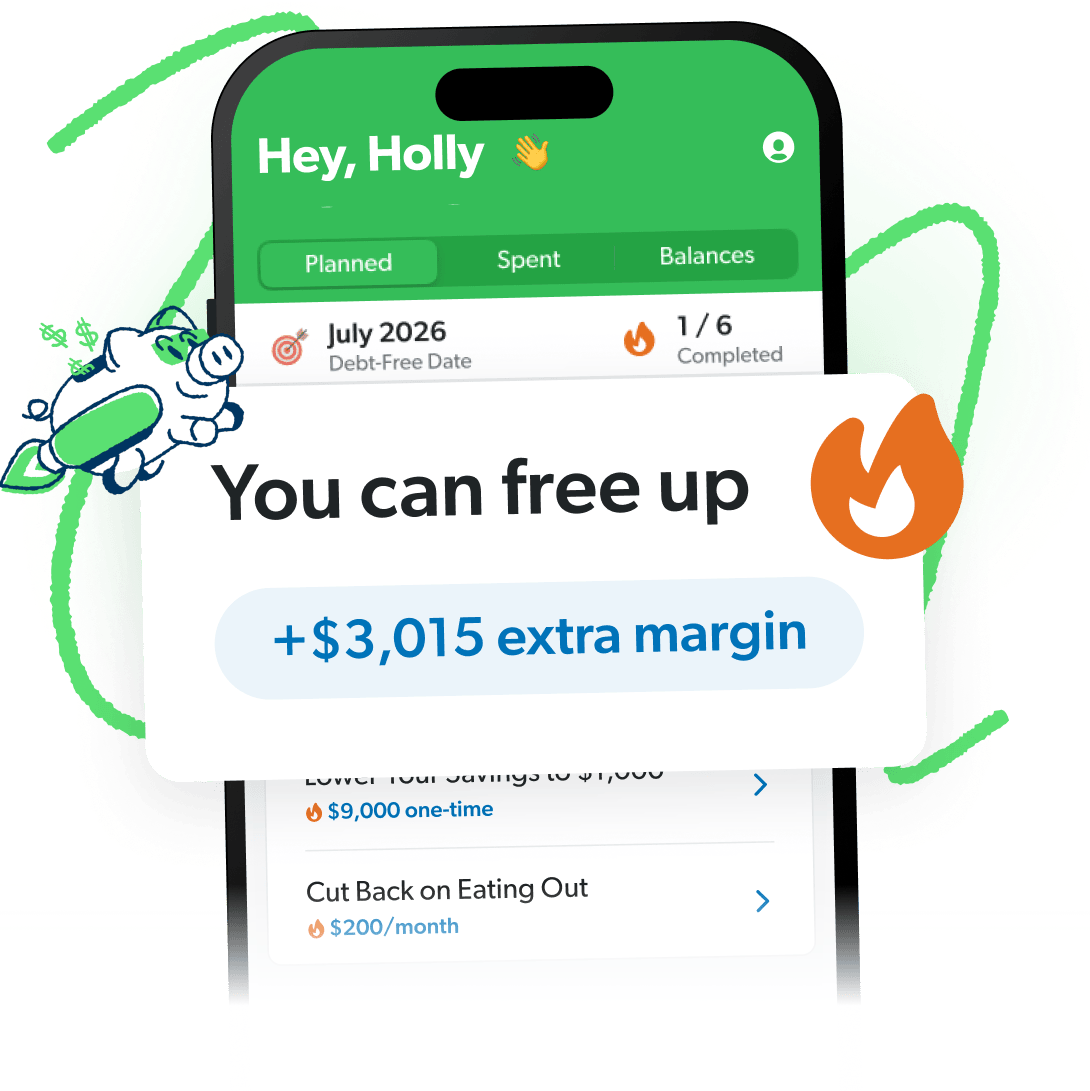
Find Margin You Didn’t Know You Had With EveryDollar
The EveryDollar budgeting app helps you find extra money every month so you can beat debt, build wealth, and make progress. Every. Day.
5. Save for emergencies.
An emergency fund gives you cash to handle those unexpected expenses without reaching for debt. You know how it goes: You get a flat tire on the way to work. Your kid needs a tooth pulled. Emergencies happen—usually at the most inconvenient times.
If you’ve got debt to pay off, start with a $1,000 starter emergency fund (this is Baby Step 1 of the 7 Baby Steps). Once you’re debt-free, build your emergency fund up to 3–6 months of expenses.
Maybe you’ve never even had $1,000 in the bank before. But you can do it! And it’s definitely worth the peace of mind.
6. Increase your income.
If you’ve cut expenses as much as you reasonably can and still need more margin, increasing your income can give your budget some breathing room. Now, we know that as a single parent, you only have so much time and energy to add more work onto your plate. But there are things you can do to earn more money:
- Sell stuff you no longer need.
- Find a side hustle that works with your current schedule.
- Monetize a skill you already have (like photography, art, jewelry making or baking).
- Ask your boss for a raise.
- Earn passive income by advertising on your car (yep, it’s a real thing).
- Decide if it’s time to look for a new job with better pay.
7. Avoid and pay off debt.
The truth about debt is that it keeps you stuck—stuck paying for the past, stuck in a defeated state of mind. We understand you may have had to use debt to make ends meet before. But if you follow the tips we’ve already given, you won’t need to rely on credit cards or loans to get by.
Decide right now that you’re done with debt. And start taking the steps to get out of debt even on a low income. The best way to make progress is with the debt snowball—once you knock out that smallest debt, you’ll have unbelievable momentum to keep going!
If you need a little proof that it can be done, check out what Abbey shared in THE Ramsey Baby Steps Community Facebook group:
“Single mom to two incredible kids. $52,000 in student loans. 27 looooong, haaaard months. WE ARE DEBT-FREE (and it was SO worth it!) . . . If you’re a single parent, you CAN do it . . . My kids were so supportive—helping cut our paper debt chain loops, dreaming about our celebration trip, and, most importantly, being the BEST why for changing my family tree. Stay the course! You got this!”
8. Consider downsizing or refinancing.
If your housing payment is putting too much pressure on your budget, consider whether downsizing could give you some breathing room. Moving into a house or apartment you can better afford can free up money for other priorities in your budget.
We know this can be emotional if you just recently became a single parent and you’re afraid of too much change at once (for both you and your children). But you want your housing situation to be a blessing, not a burden—so do what makes the most sense for your family and your budget.
If you have a mortgage, you can also look into refinancing. Depending on your interest rate, closing costs and how long you plan to stay in the home, refinancing may lower your monthly payment—but run the numbers before you decide.
9. Communicate with your kids.
We understand wanting to protect your children from your own financial worries. But children can sense when you’re stressed or when finances are tight. It’s best to be honest and talk to your kids about money—in an age-appropriate way, of course.
Let them know what your spending priorities are and what you may have to say no to as a family so they know what to expect. And don’t be afraid to share money goals with your kids. They usually enjoy pitching in, helping you track progress, and celebrating with you when you hit a milestone!
10. Seek out single-mom resources.
If money is especially tight, look into assistance programs and community resources you may qualify for. Listen, there’s no shame in taking advantage of programs and discounts for single parents—that’s what they’re there for! But watch out for loans disguised as financial help (because remember, you’re avoiding debt).
Here are some resources for single moms to look into:
- The Single Parent Project: provides financial assistance for single parents
- Helping Hands for Single Moms: helps low-income single moms who are earning their college degree
- Low-Income Home Energy Assistance Program (LIHEAP): assists with covering energy bills and home repairs
- Medicaid: offers low-cost or free medical insurance to single-parent families
- Supplemental Nutrition Assistance Program (SNAP): allows families to buy healthy food with a prepaid debit card
- Head Start: allows children five and under to go to preschool at no cost
- Child and Dependent Care Credit: allows parents to deduct childcare costs from their taxable income
These resources can help you get on your feet. But keep in mind, you usually have to meet certain low-income standards to qualify.
11. Build your community.
You may be a single parent, but that doesn’t mean you have to do it all by yourself. Having a solid support system can help you mentally, emotionally and financially. You need people who will encourage you—especially when times are tough.
A local church can be a great source of community, and they may have resources or groups specifically for single moms. It’s also a great idea to find a therapist who can help you navigate the ups and downs of life.
And when it comes to money, a financial coach can answer your questions and help set you up for financial success. Once you’re ready to put that plan into action, EveryDollar can help you build a zero-based budget and keep up with your money all month long.
Whatever you do, you don’t have to go it alone.
Whether you’ve been a single mom for a while or the title is new to you, know this: You have the power to take control of your money and not just survive—but thrive. You got this!
Next Steps
- Download EveryDollar and build your first budget.
- Fund your Four Walls first, then find one expense you can cut to create more margin.
- Talk to your kids about the new plan in a way that fits their age.
-
How can a single mom save money on a low income?
-
Cover your Four Walls first, then look for places to free up money in your budget. Cancel subscriptions you’re not using, plan meals ahead, shop sales, and look into community or government assistance programs you may qualify for. Even small changes can create some much-needed margin.
-
Should child support be included in a single mom’s budget?
-
Yes. If you receive child support or alimony, include that money as income in your monthly budget. With a zero-based budget, you’ll give that money a job along with the rest of your income so you know exactly where it needs to go.
-
How much should a single mom have in an emergency fund?
-
If you’re still paying off debt, start with a $1,000 starter emergency fund. Once you’re debt-free, build a fully funded emergency fund of 3–6 months of expenses. That gives you a bigger cushion when life throws an unexpected expense your way.
Get Weekly Insights Delivered Straight to Your Inbox
Did you find this article helpful? Share it!

About the author
Ramsey Solutions

Get proven Ramsey answers fast.