
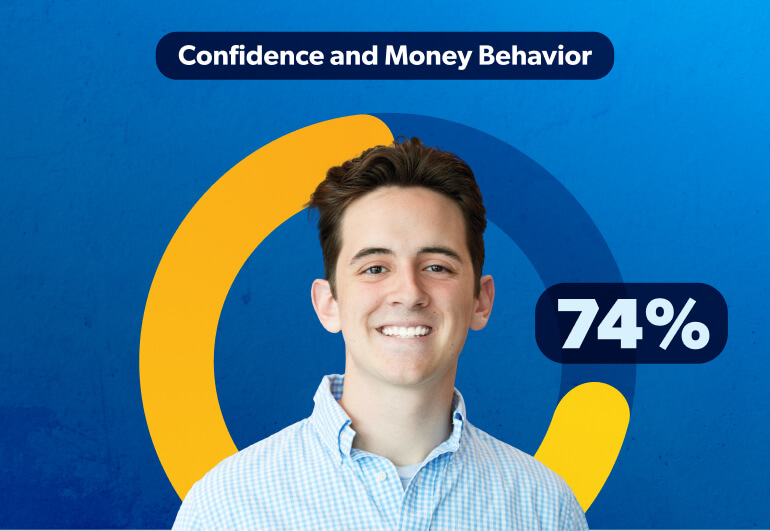
74% of Foundations grads feel confident managing their money.
vs. 61% Competitors,
60% No Financial Literacy Class

Complete the form below, and a team member will contact you with a custom quote for your school.
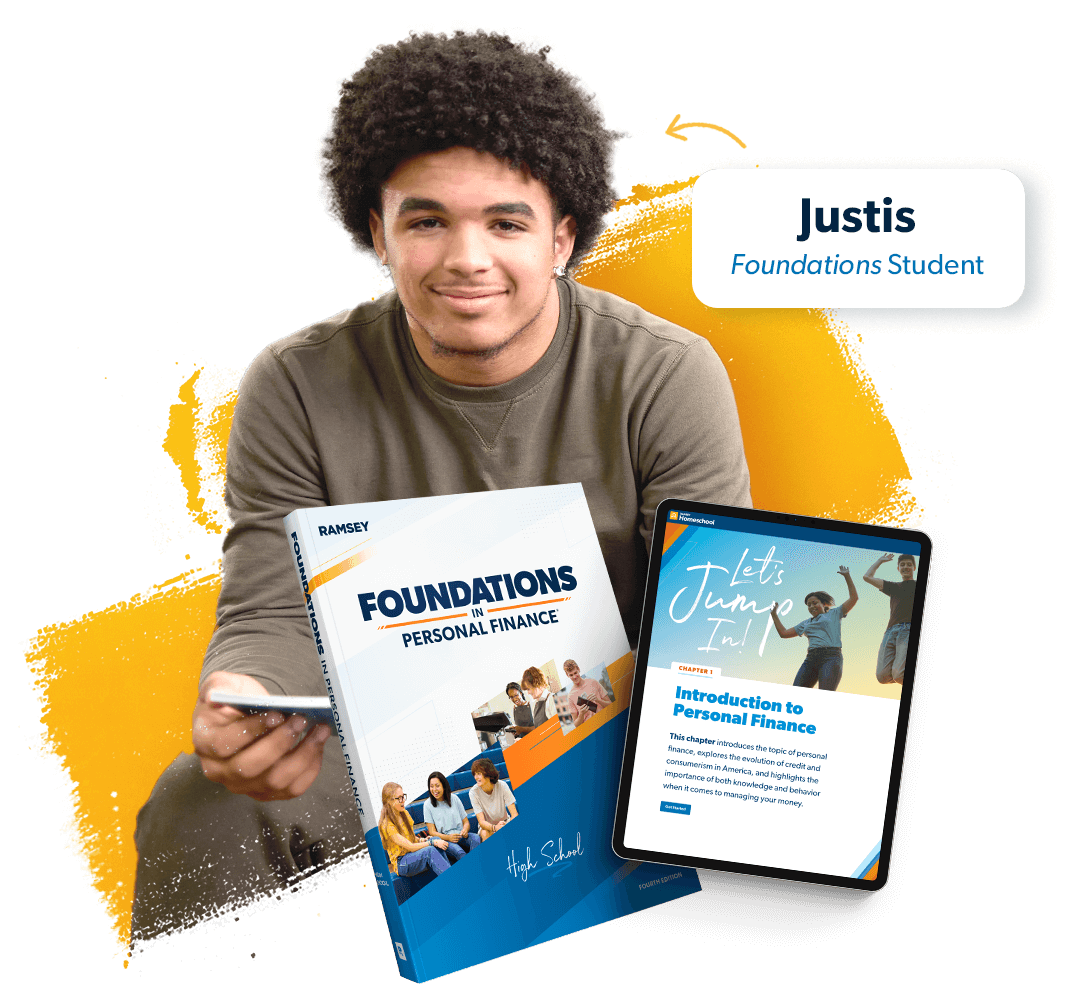
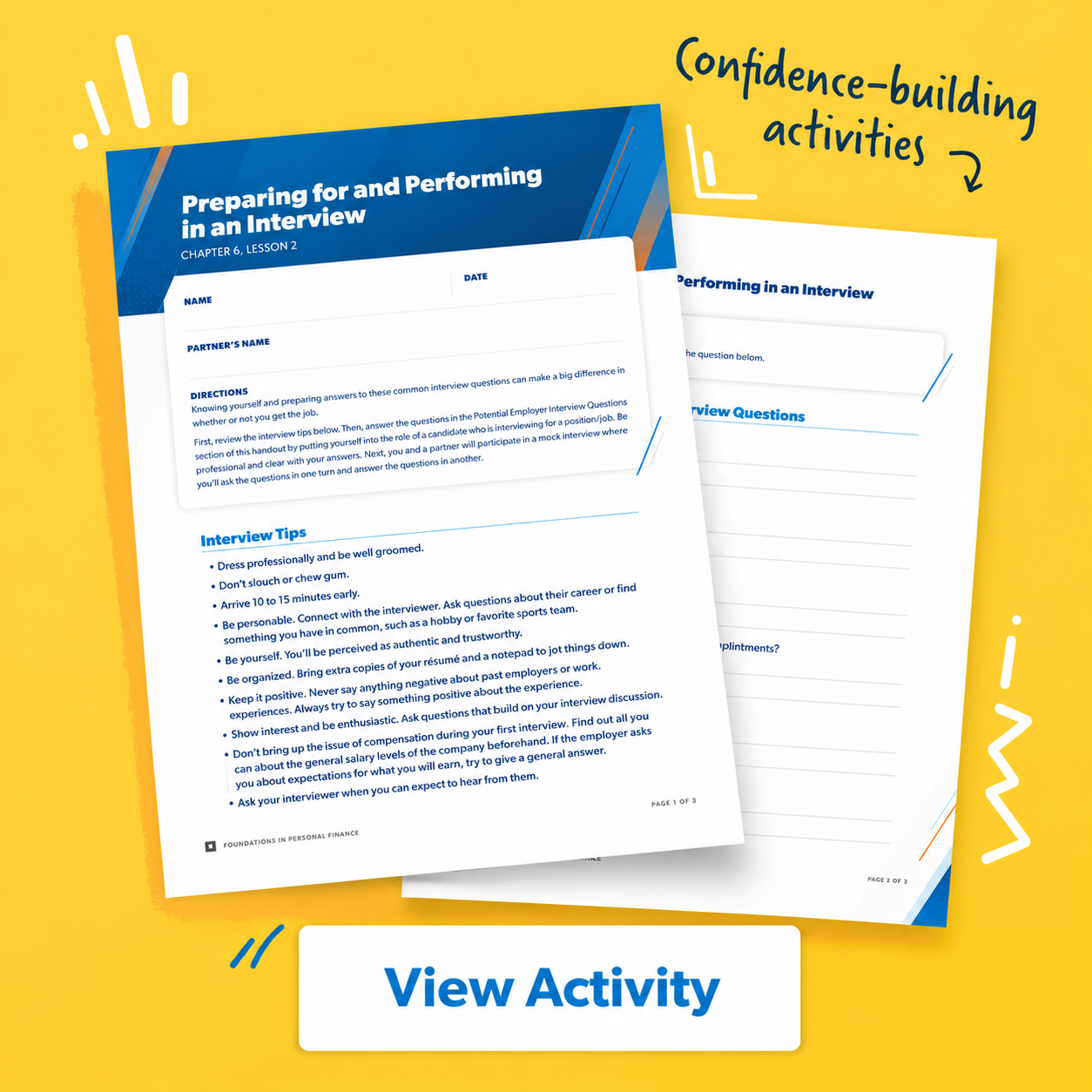
Our curriculum helps teachers overcome classroom distractions with hands-on activities, engaging videos and real-life application.

Ramsey Education surveyed high school graduates from the classes of 2021–2025 to see where they stand in terms of their money confidence, financial independence and career clarity. Some took Foundations in Personal Finance in high school, some took a different financial literacy curriculum, and some took none at all. The results below show how those three paths compare.
vs. 61% Competitors,
60% No Financial Literacy Class
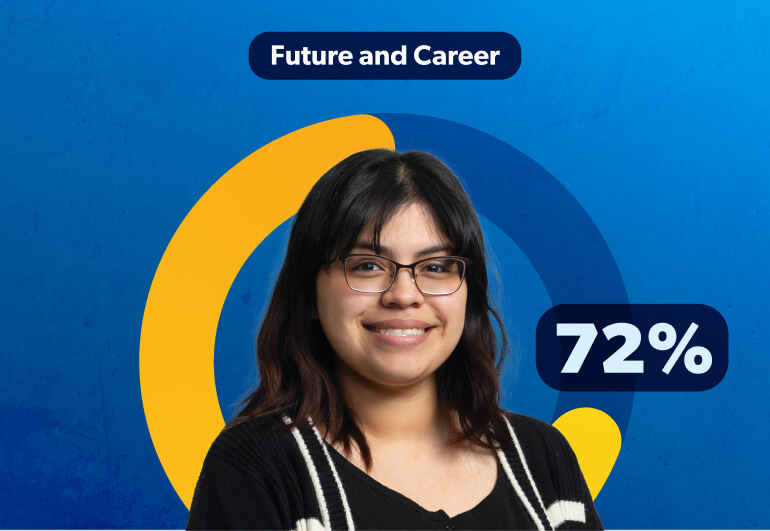
vs. 63% Competitors,
63% No Financial Literacy Class
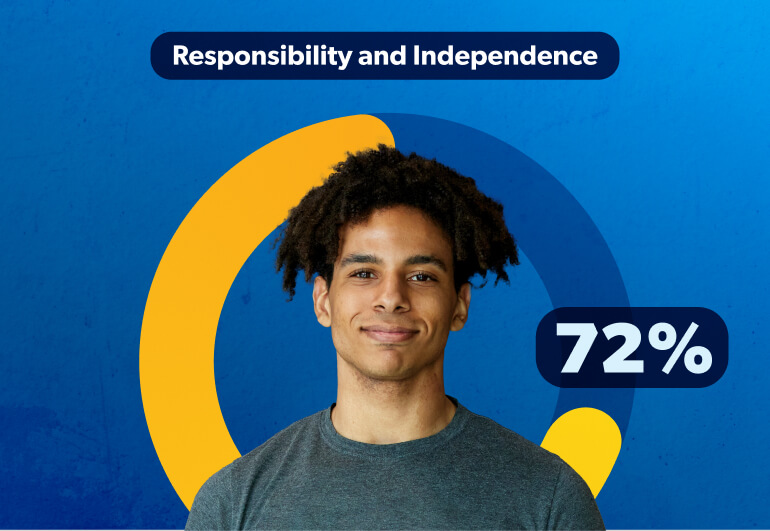
vs. 62% Competitors,
58% No Financial Literacy Class
Audience: N=928 U.S. high school graduates from 2021–2025. Respondents either took Foundations in Personal Finance in high school (n=309), took a competitor financial literacy course (n=310), or did not take a financial literacy course in high school (n=309). Responses were collected June 23–July 20, 2026.
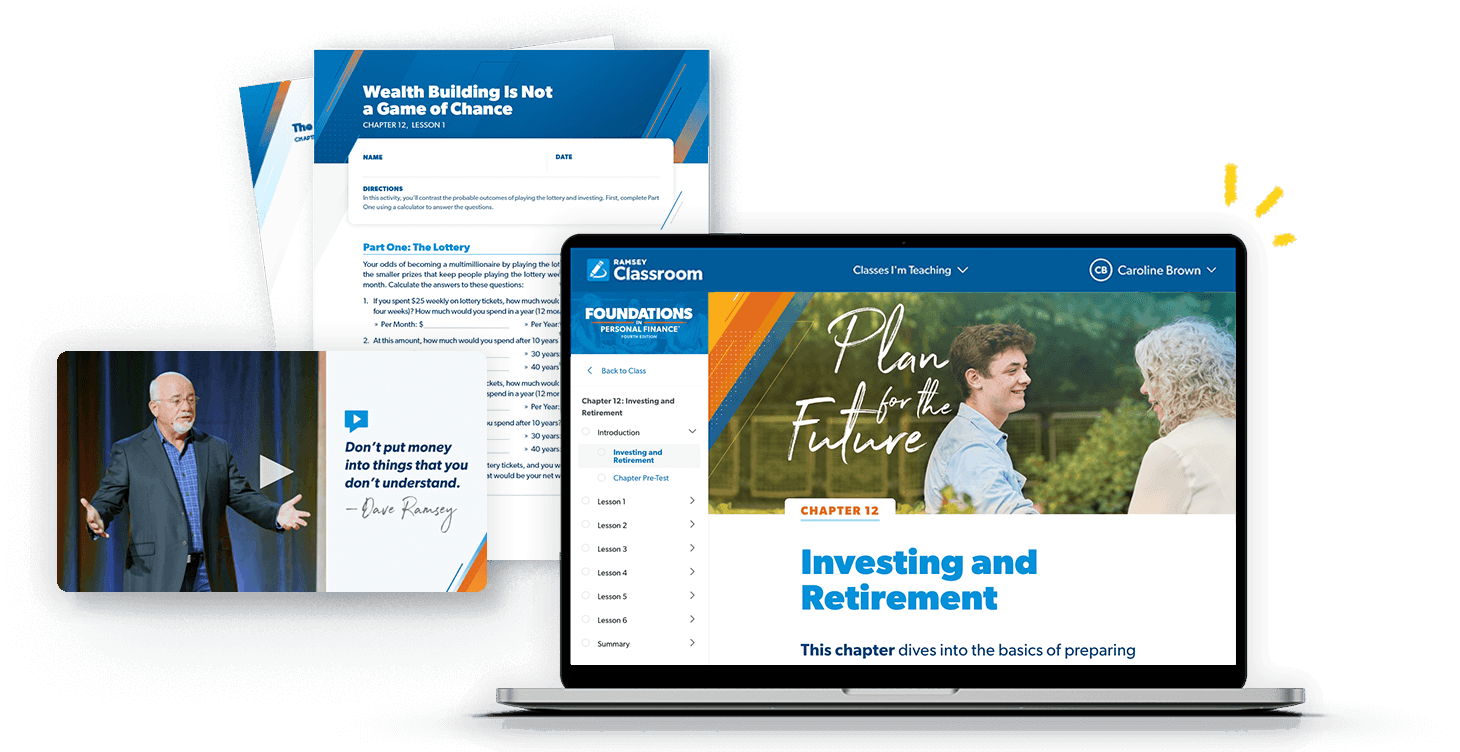
Test-drive the curriculum with a free trial of Chapter 12: Investing and Retirement. You'll get a preview of lesson content, videos and classroom activities.
Get tools and support to help you win in the classroom.

Curriculum support and training

Help center

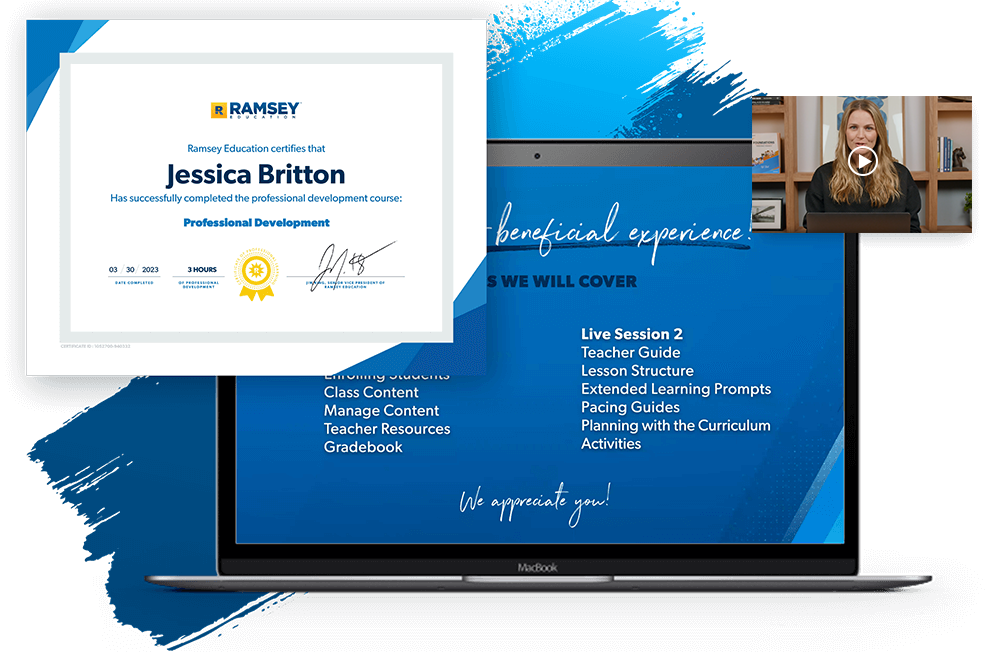
Professional development
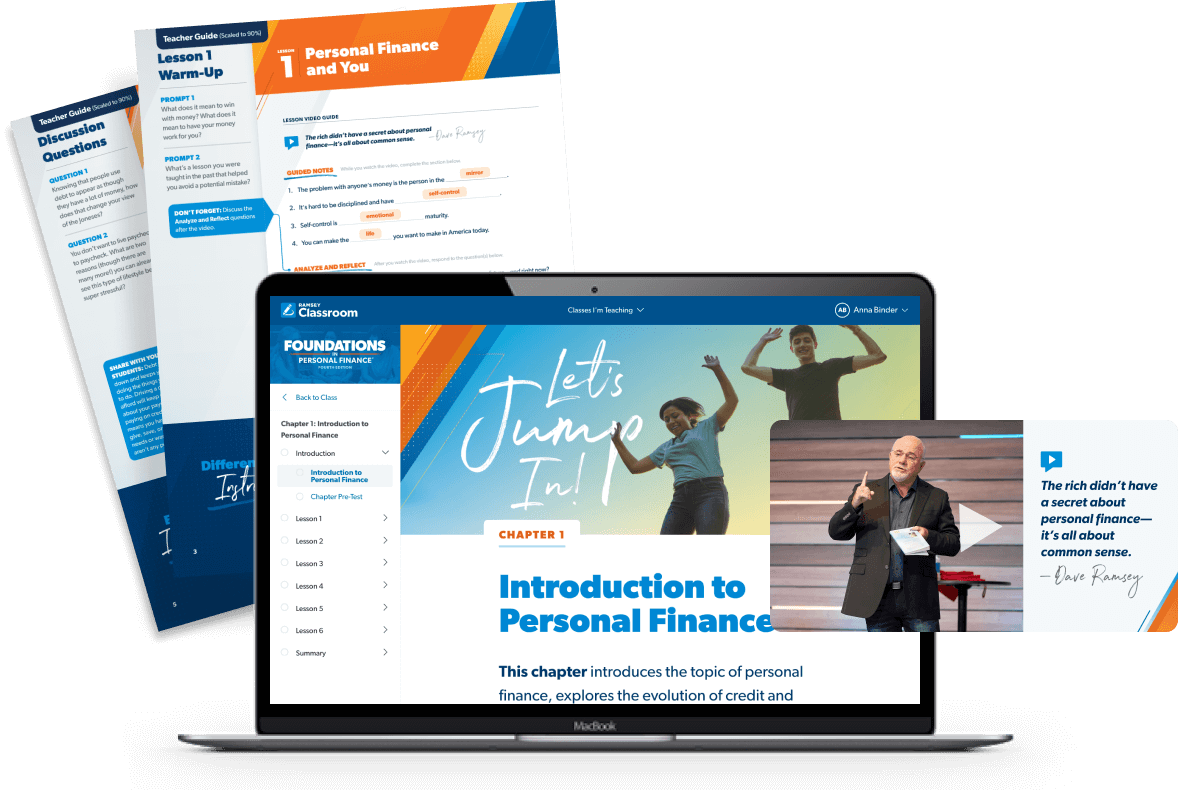
The Foundations in Personal Finance high school curriculum consists of 13 chapters of essential personal finance principles like how to budget, save, avoid debt, invest, be a wise consumer and much more!
Introduces the topic of personal finance, explores the evolution of credit and consumerism in America, and highlights the importance of both knowledge and behavior when it comes to managing money.
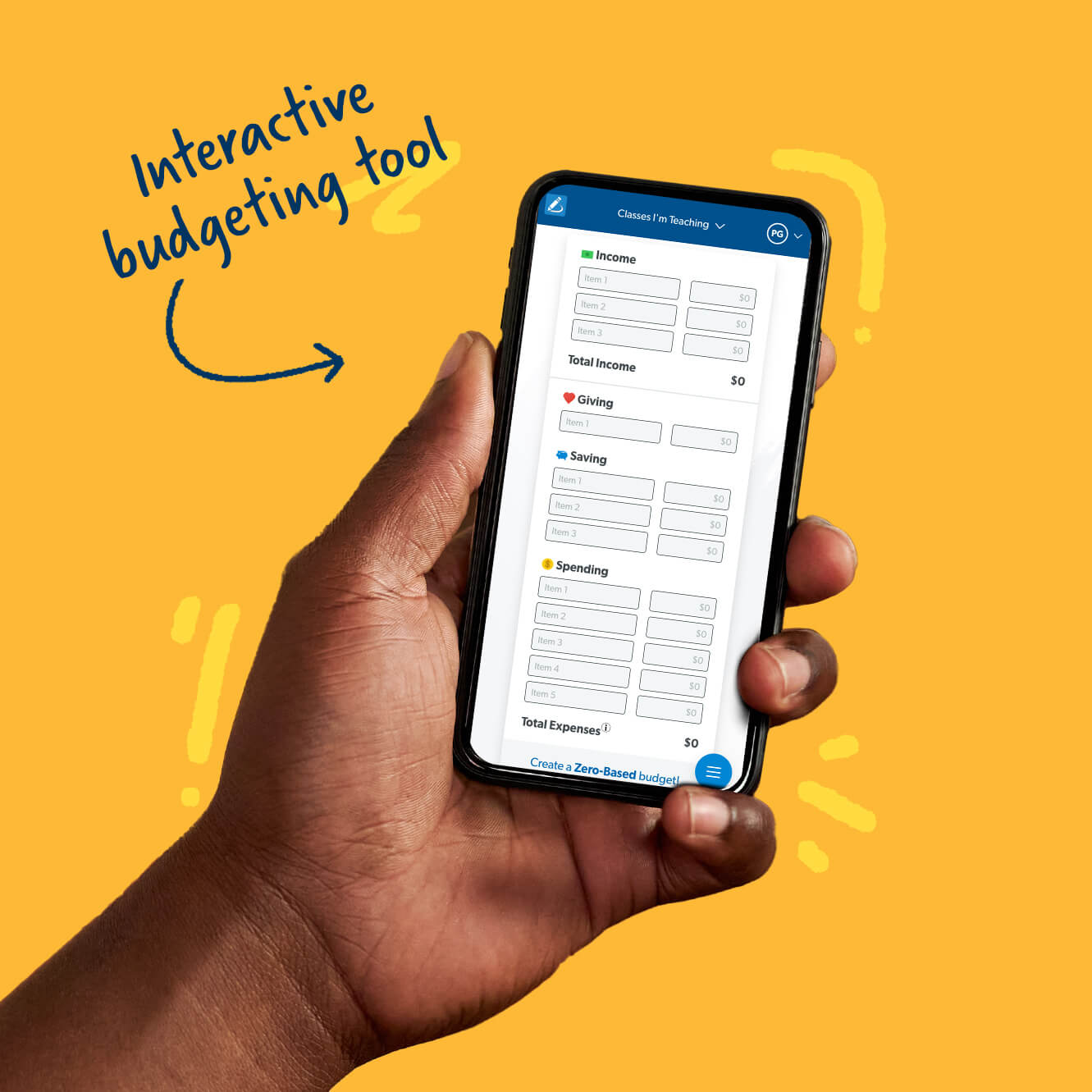
Dives into why budgeting is key to taking control of money—and how students can get started right now.
Emphasizes the importance of saving and explains three reasons why students should save money: emergencies, large purchases, and wealth building.
Identifies the dangers of debt, debunks some credit myths, explains the credit report and score, and provides practical strategies to get out of debt—and stay out.
Highlights the importance of being a smart consumer as part of a healthy financial plan, explains strategies to manage spending behavior, exposes common consumer scams, and identifies consumer rights.
Examines how students can find the right career path and create strategies to land a job they’ll love so they can thrive and enjoy their work. They’ll also discover tips for building a resumé and presenting themselves well during a job interview.
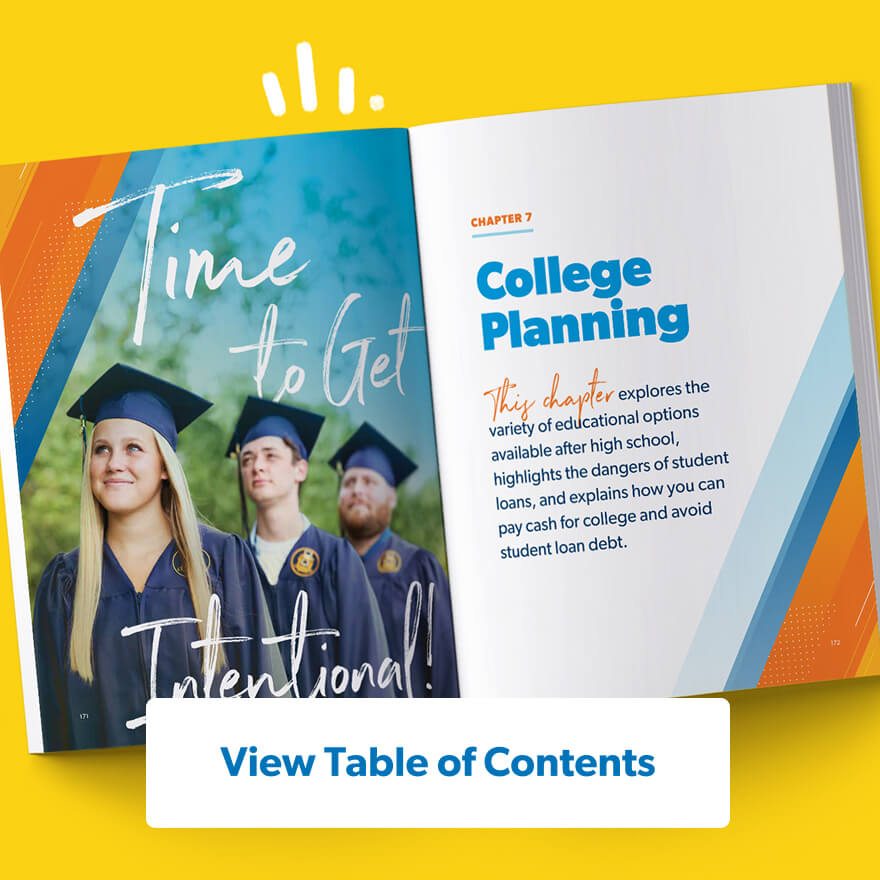
Explores the variety of educational options available after high school, highlights the dangers of student loans, and explains how students can pay cash for college and avoid student loan debt.
Explores the services provided by banks and credit unions, including the different options and features. Students will learn about responsible banking, how to manage their accounts, and the importance of keeping records.
Breaks down the purpose of insurance, explains how insurance works, shows how insurance protects a person’s assets, and highlights the eight basic types of insurance everyone needs to have in place.
Digs into a huge reality in life: If someone earns an income, they’re going to pay taxes. This chapter also breaks down the basics of different types of taxes—like sales, excise, and federal taxes—including how they impact a person’s income and spending.
Identifies the differences between renting and homeownership. Students will discover the financial costs related to having their own place to live, and they’ll learn what to do when they’re ready to buy a house.
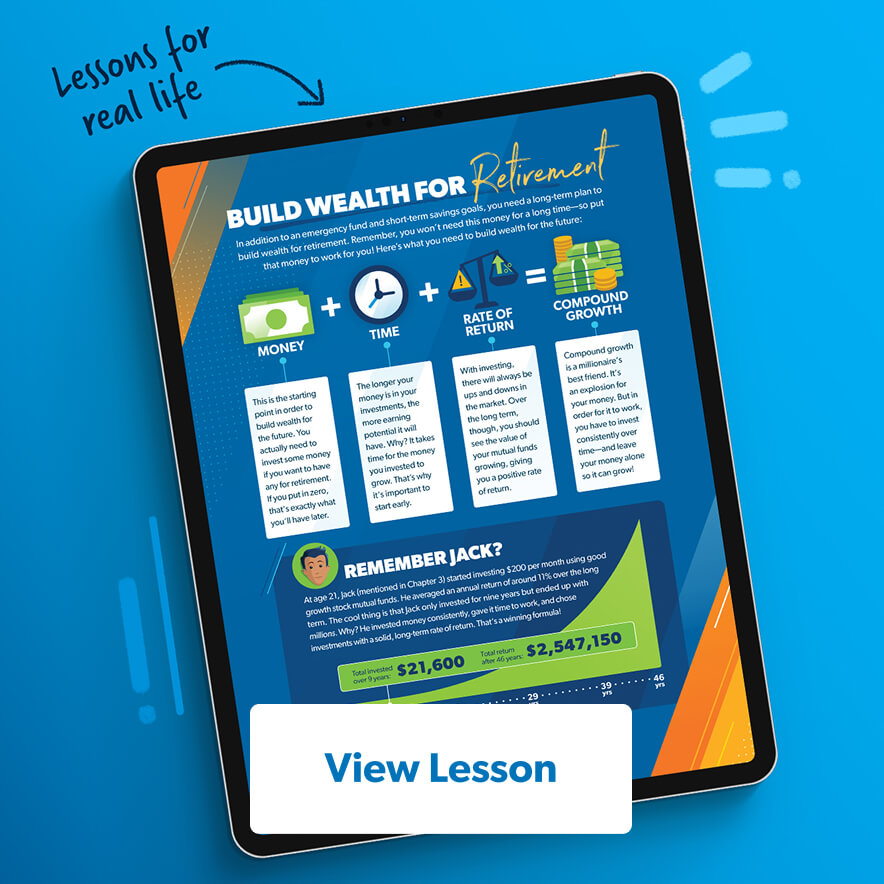
Dives into the basics of preparing for retirement, investing for the future by understanding the stock market and mutual funds, and planning to live a life bursting with generosity.
Examines how the global economy impacts personal financial decisions and how different global economic systems influence decisions about goods and services that are used around the world.
Simply fill out the form above and our team will reach out. You can then request a quote and our team will provide you with one based on your class size and student needs.
Yes! Foundations in Personal Finance is available in a fully digital option, as well as a print and streaming option. No matter what delivery method you choose, a printed Teachers Guide is available for purchase.
Yes! Foundations in Personal Finance includes Spanish closed captions and transcriptions for all videos, downloadable student textbook PDFs, student activities and chapter assessments in PDFs, and parent resources. Our digital platform works with popular web browser plugins like Google Translate to help other non-English speaking students translate text and read content aloud in languages like Haitian, Haitian Creole, Portuguese and many more.
Yes! We have extended learning prompts specifically for differentiated learning in the Teacher Guide.
Foundations is designed as a semester-long course with stand-alone chapters. You'll receive flexible pacing guides you can choose from, but if you don’t need a full semester course, the stand-alone chapters allow you to make the course fit your schedule—not the other way around.
More than 50% of schools across the country have used the Foundations curriculum. This means more than 7 million students have learned how to budget, save, spend wisely and invest. It’s a generation equipped to live out their dreams and give to the world around them.
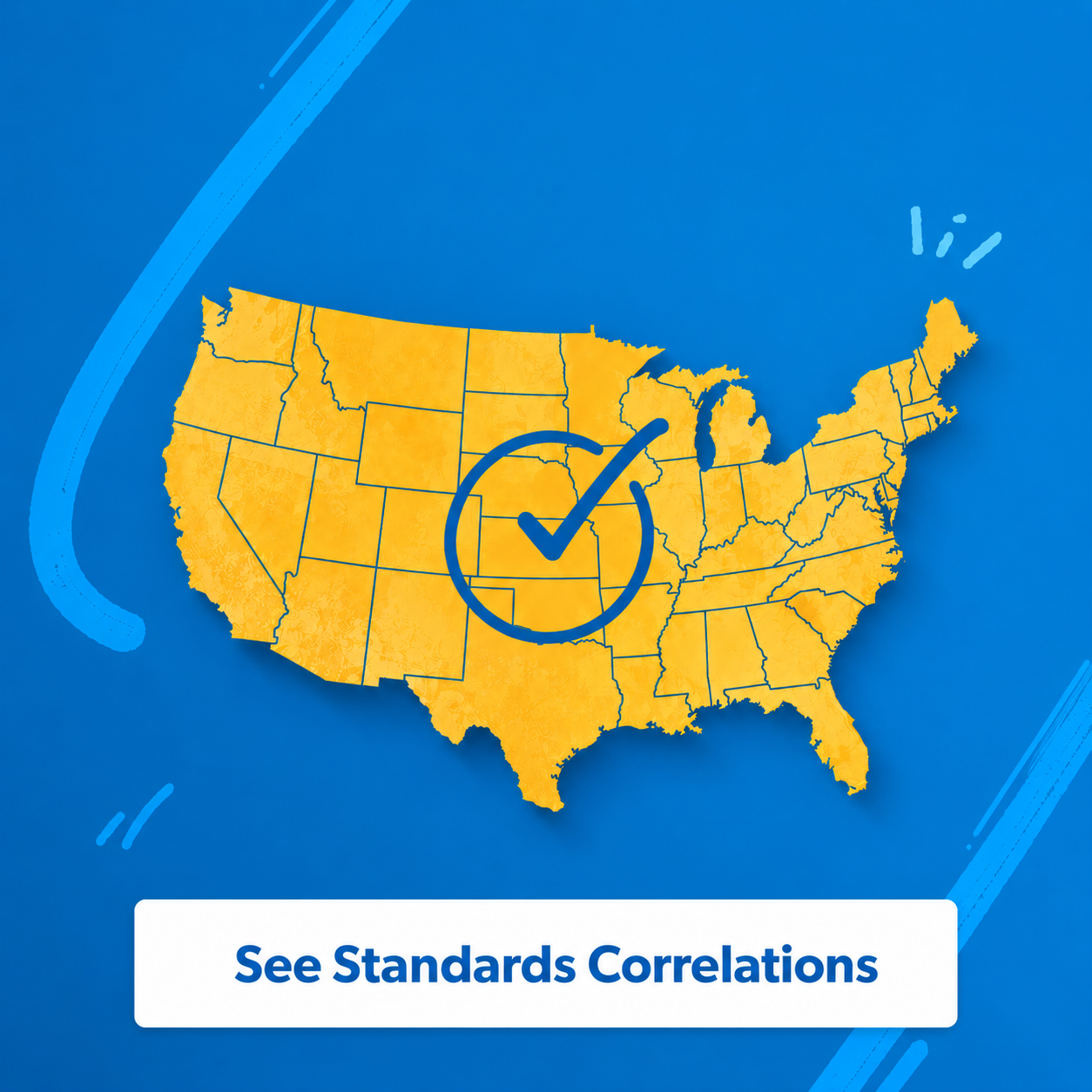
Yes! Foundations in Personal Finance meets standards in all 50 states and the national standards for personal finance. You’ll get a clear correlation document that shows exactly where each lesson meets your state's standards. Our content team regularly updates the curriculum so it stays current as standards change.
Yes! Foundations in Personal Finance meets constitutional guidelines and doesn’t include religious instruction or proselytizing. Designed for public, private and charter school education, our curriculum is objective, practical and focused on real-life money skills students need to take control of their future.
Pricing depends on how many students need access and how your school or district plans to use the curriculum. Because every school is different, we provide custom quotes instead of one flat rate. You can save more when you purchase the curriculum for multiple years.
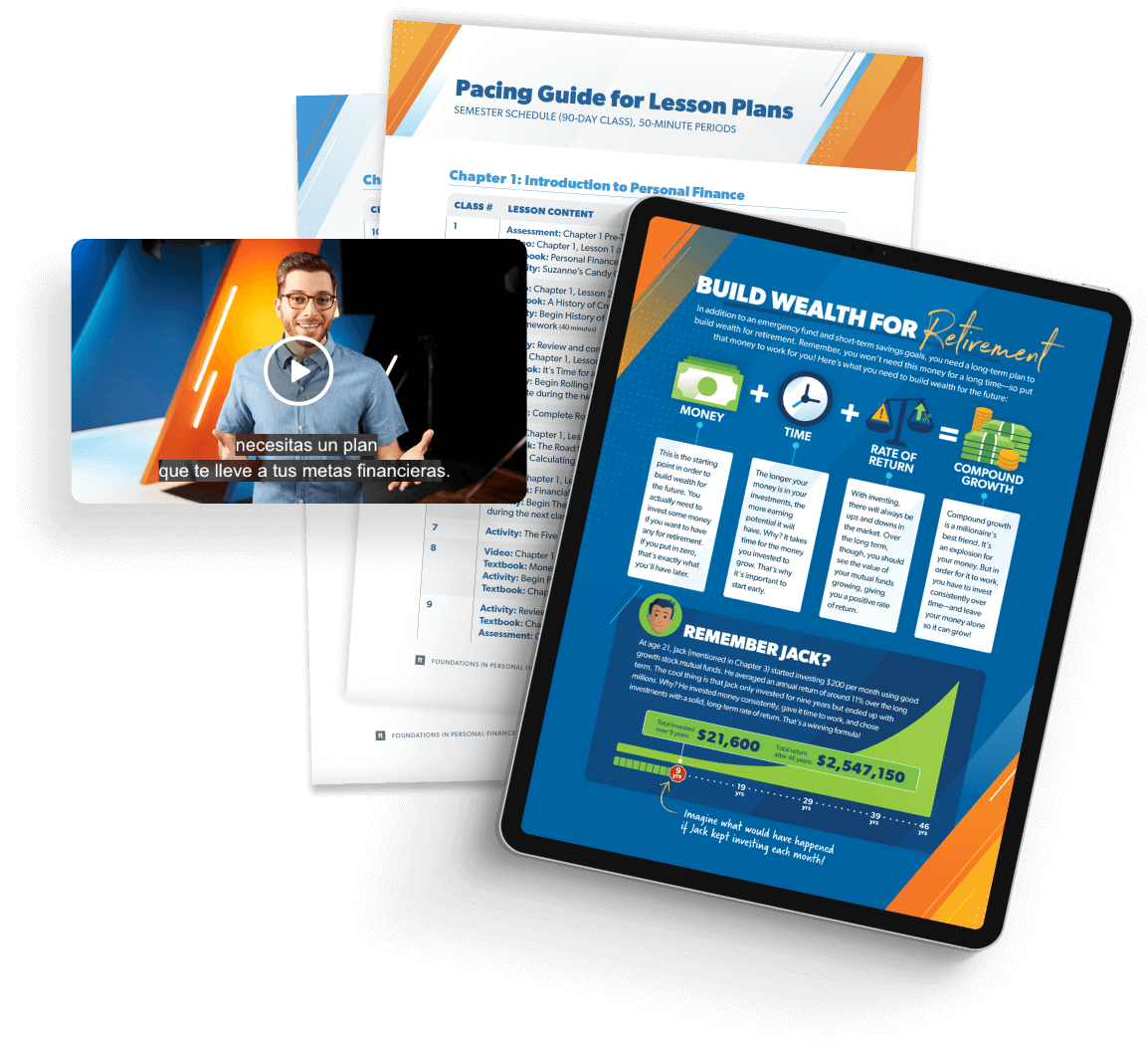
Foundations in Personal Finance is a turnkey curriculum with content that’s planned, prepped and ready to teach. It includes ready-to-use lessons, digital activities, autograded assessments, and pacing guides designed to fit your schedule. You’ll also have ELL and Tier 2 resources to support students at different learning levels.
As an additional offering, professional development onboarding and training is available to help teachers feel even more confident from day one. This includes walk-throughs of Ramsey Classroom and guidance on planning lessons, pacing the course, and leading classroom discussions. Teachers will also have access to training videos, monthly Zoom office hours, and ongoing customer support along the way.
Students learn how money really works so they can set better goals, make wiser money decisions, and step into their future with confidence. They’ll see how concepts like budgeting, saving, and investing connect to the choices they’ll make in everyday life. See why these skills matter in The Financial Literacy Crisis in America: 2023 Report.
The Foundations in Personal Finance curriculum meets or exceeds standards in all 50 states. The curriculum also meets all national standards for personal finance.
National Jump$tart
Alabama
Alaska
Arizona
Arkansas
California
Colorado
Connecticut
Delaware
Florida Personal Finance and Money Management
Florida Economics and Personal Finance
Georgia
Hawaii
Idaho
Illinois
Indiana
Iowa
Kansas
Kentucky
Louisiana
Maine
Maryland
Massachusetts
Michigan
Minnesota
Mississippi
Missouri
Montana
Nebraska
Nevada
New Hampshire
New Jersey
New Mexico
New York
North Carolina
North Dakota
Ohio
Oklahoma
Oregon
Pennsylvania
Rhode Island
South Carolina
South Dakota
Tennessee
Texas
Texas Proc '24
Utah
Vermont
Virginia
Washington
West Virginia
Wisconsin
Wyoming