
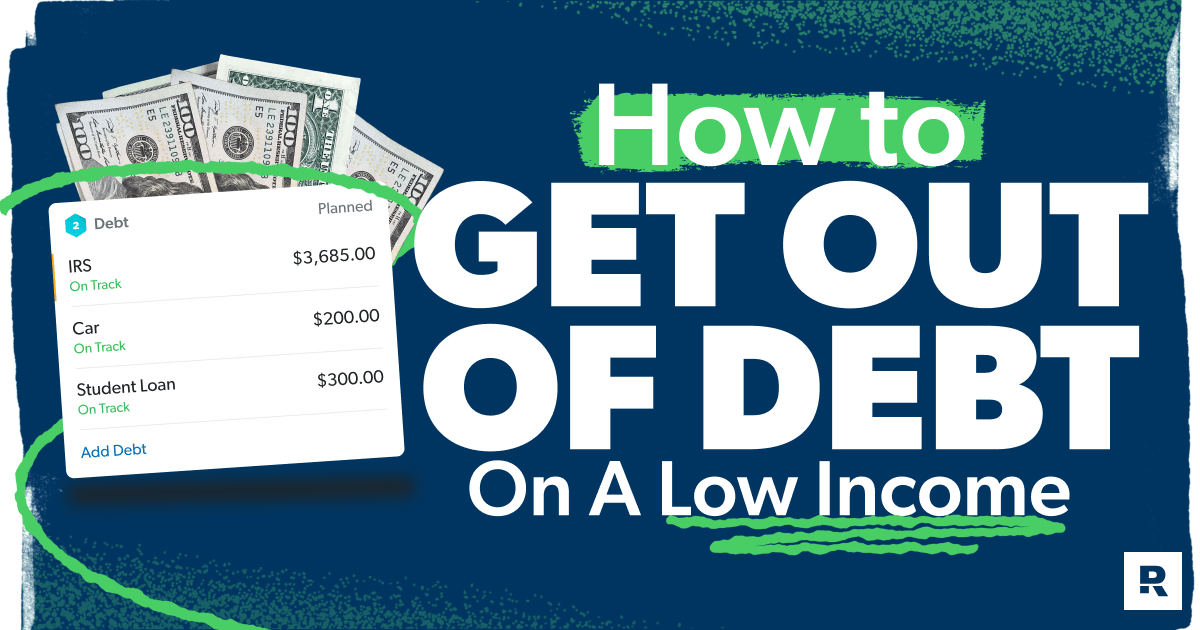
How to Get Out of Debt on a Low Income
 By
By
Key Takeaways
- Americans owed $18.8 trillion in household debt as of the first quarter of 2026, but you can become debt-free with a clear plan and consistent action.1
- To pay off debt on a low income, create a written zero-based budget, use the debt snowball method, and create more margin by cutting expenses or increasing your income.
- If your income doesn't cover all your bills, prioritize the Four Walls before saving your starter emergency fund and paying off debt.
- EveryDollar, Ramsey's budgeting app, helps you create a zero-based budget so you can take control of your money and put every dollar to work.
Debt's heavy. And too many of us are carrying that weight around every single month. But it's hard to know how to get ahead, especially if your income's on the lower end.
Here's a Tip
You can pay off debt on a low income by using a zero-based budget and the debt snowball method. Start with EveryDollar to make a plan for your spending, then list your debts from smallest to largest and put every extra dollar toward your smallest balance. If money is tight, create more margin by cutting expenses or increasing your income.
If you have a goal to get debt out of your life, you can make it happen. And once the debt's gone, all that money you were sending out every month on payments will be back in your budget. So it's completely worth it!
How to Pay Off Debt With a Low or Fixed Income
If you're feeling the weight of debt, you aren't alone. Americans owed $18.8 trillion in household debt as of the first quarter of 2026.2 And with credit card interest rates hovering around 22%, it's easy to see why so many people feel stuck.3
Living on a fixed income—such as Social Security, a pension or disability benefits—can make getting out of debt feel even harder because your income doesn't grow. But here's the thing: Most of the time, fixed income is just another way of saying low income. The real challenge isn't that your income stays the same. It's that it may not be enough to comfortably cover your bills, everyday expenses and debt payments.
The good news? You can get out of debt, even on a low or fixed income.
How Do I Find Out How Much Debt I Have?
Start by making a list of every debt you owe, including student loans, car loans, credit cards, medical bills and personal loans. Write down the balance for each debt, then add them together to find your total debt.
Whatever amount you're staring down, you can pay it off. And looking at that total shouldn't feel defeating. It's the first step toward getting out of debt and finding freedom!
How Do I Budget on a Low Income?
A budget is the fastest way to find money you didn't know you had. When you tell every dollar where to go before the month starts, you stop wasting money on stuff you don't even need.
Once you set up your budget, you'll see exactly how you've been spending your money. Then you can start making the changes you need to get some confidence and pay off your debt. That’s why so many people have told us they feel like they got a raise when they started budgeting!
EveryDollar budgeter Sarah Fragnito said, "Until you look at your finances, you don't realize how much of your money is going to waste."
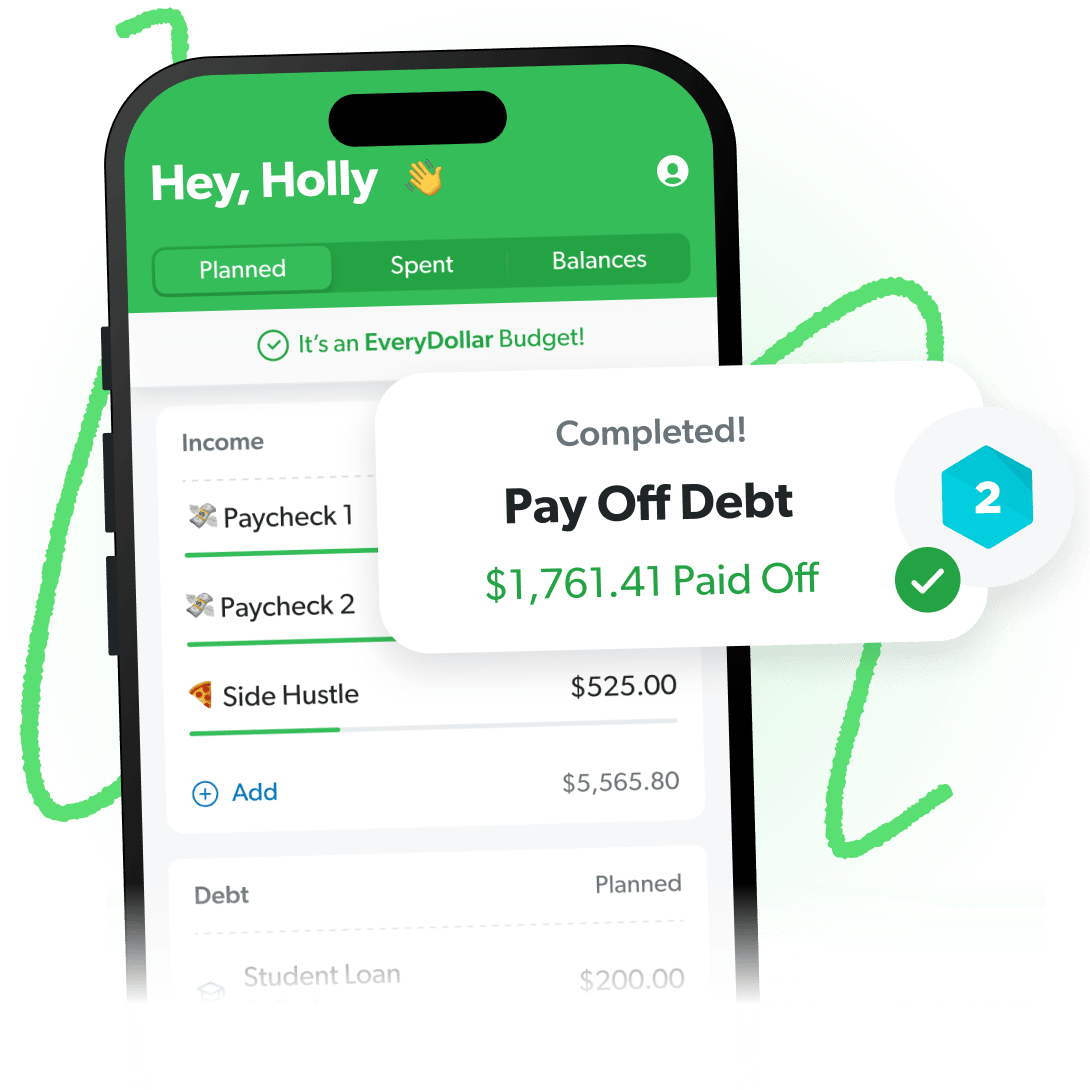
That's right—you might have more money to work on your debt payoff goal than you even think. EveryDollar, Ramsey's budgeting app, makes it easy to create a zero-based budget in about 15 minutes. On average, new EveryDollar users find $395 in their first month, giving them more margin to pay off debt.4
Find More Margin. Beat Debt Faster.
Paying off debt doesn’t have to take forever. With the EveryDollar budgeting app, you’ll find extra margin every month so you can pay off debt faster.
What if My Income Doesn't Cover My Bills?
If your income isn't enough to cover all your bills, focus on the Four Walls first: food, utilities, shelter and transportation. Before you put an extra dollar toward debt, make sure your family has groceries, the lights stay on, you have a safe place to live, and you can get to work.
Once your Four Walls are covered, put any remaining money toward Baby Step 1—saving a $1,000 starter emergency fund. After that, start paying off your debt with the debt snowball method.
If you don't have enough income to cover the Four Walls, don't ignore the problem. Look for ways to increase your income with extra work, cut nonessential expenses, and take advantage of available community resources (such as food banks or utility assistance) while you get back on your feet.
What Is the Best Way to Pay Off Debt?
The best way to pay off debt—no matter your income—is with the debt snowball method. Start by listing your debts from smallest to largest, then work through them one at a time.
- List your debts from smallest to largest, no matter the interest rate.
- Make minimum payments on all your debts except the smallest.
- Pay as much as possible on your smallest debt.
- When it's paid off, move everything that was going to that debt to the next-smallest.
- Repeat until every debt is gone.
So, why aren't you focusing on interest rates right now? Because you need a quick win. When you knock out the smallest debt first, you get motivation. When you pile that payment onto the next debt, you get momentum. Motivation plus momentum equals victory.
You'll be like a snowball rolling down a hill, getting bigger and stronger with every debt you knock over.
Plug your numbers into our Debt Snowball Calculator to estimate your debt-free date and see how every extra debt snowball payment can get you closer to the finish line.
Debt-Free Date Calculator
Debt Snowball vs. Debt Consolidation
Some people wonder if debt consolidation is a smarter option—especially when payments feel overwhelming. It isn't. Here's why.
|
Comparison |
Debt Snowball |
Debt Consolidation |
|
How it works |
Pay off debts from smallest to largest while building momentum. |
Combine multiple debts into one new loan or payment. |
|
Changes your behavior? |
Yes. You follow a written budget, create more margin, and pay off debt one balance at a time. |
No. It combines your debts but doesn't address the spending habits that caused the debt. |
|
Typical result |
Builds momentum and helps you become debt-free faster by staying motivated. |
May lower your monthly payment but often extends your payoff timeline and increases the total interest you pay. |
|
Ramsey recommendation |
Recommended |
Not recommended |
Now that you know the plan, let's talk about finding the money to fuel it.
How Can I Make More Money to Pay Off Debt?
If your budget is already as lean as possible, increasing your income is one of the fastest ways to speed up your debt payoff. Every extra dollar you earn can go straight to your smallest debt, helping you build momentum with the debt snowball.
Here are a few ways to create extra income:
- Grab a side hustle.
- Take on freelance clients.
- Sell stuff.
- Switch jobs.
- Work overtime.
Yes, all this is extra work, but it's also extra income. And remember—this is just a season. The debt will be gone, and you’ll get to keep all your income when you don't have to make payments anymore.
Here's a Tip
Before you pick up another job, look around your home. Selling electronics, furniture, clothes, tools or other items you no longer need can give you a quick cash boost without adding more hours to your schedule. Put every dollar you earn from those sales toward your smallest debt to build momentum even faster.
How Do I Cut Expenses to Pay Off Debt Faster?
Some of the quickest ways to cut expenses are canceling unused subscriptions, eating at home instead of restaurants, and avoiding impulse purchases. Those three categories can free up more money for your debt snowball without making major lifestyle changes.
Here are a few ways to put that into practice:
- Cancel subscriptions or streaming services you rarely use.
- Meal plan and cook at home instead of eating out.
- Shop with a grocery list to avoid impulse purchases.
- Combine errands to save money on gas.
- Buy only the clothing and household items you truly need.
- Look into warehouse memberships to save on groceries, household items and gas.
- Compare insurance, phone or internet plans to lower your monthly bills.
Here's a Tip
Review your bank and credit card statements from the last 30 days and look for recurring charges and subscriptions you no longer use. Cancel what you don't need and redirect every dollar you save to your smallest debt.
Make sure you put all the extra money in the budget toward your debt snowball. All of it. It's so easy to turn those savings into splurges without even meaning to. But now's not the time for that. This is the time to crush your debt.
What Debt Payoff Tactics Should I Avoid?
Steer clear of any strategy that moves your debt around instead of paying it off. That means no debt consolidation loans, no balance transfers, no HELOCs and no personal loans—not even from family. These tactics may promise quick relief, but they don't address the habits that caused the debt in the first place.
Here are some common debt payoff tactics to avoid:
- Debt consolidation: Combining your debts into one payment doesn't make them disappear. Lower monthly payments often mean a longer repayment timeline and more interest over time.
- Balance transfers: Moving credit card balances to a new card may offer a temporary low interest rate, but it doesn't reduce what you owe and can make it easier to keep borrowing.
- HELOCs: This is when you borrow against the equity in your home and you're basically trading something you actually own for more debt. It puts your home at risk if you can't make the payments.
- Personal loans: Borrowing money from a bank, family member or friend to pay off other debt simply replaces one debt with another.
These strategies might sound like an easy way out, but they often leave you in more debt and more frustration. Don't let anyone sell you a shortcut. Stay focused on the debt snowball instead.
Ready to Get Out of Debt?
Paying off debt on a low income may feel impossible—until you find the money you didn't know you had. A zero-based budget, the debt snowball method and a little extra margin can help you make steady progress toward becoming debt-free.
EveryDollar helps you create a zero-based budget so you can take control of your money and put every dollar to work. When you know where your money is going, you can make intentional decisions that move you closer to your debt-free goal.
Here's how to take action today.
Next Steps
- List every debt you owe from smallest to largest.
- Create a written zero-based budget in EveryDollar.
- Put every extra dollar toward your debt snowball.
- Read How to Pay Off Debt for a complete step-by-step plan to become debt-free.
Frequently Asked Questions
-
Can I pay off debt if I live paycheck to paycheck?
-
Yes. Start with a written zero-based budget so you know exactly where your money is going. Look for ways to create more margin by cutting unnecessary expenses, increasing your income, or both. Then use the debt snowball method to pay off your debts from smallest to largest.
-
Should I use a debt consolidation loan to lower my payments?
-
No. Debt consolidation combines your debts, but it doesn't eliminate them or address the habits that led to debt in the first place. A lower monthly payment can also mean a longer repayment timeline and more interest over time. Instead, use the debt snowball method to pay off your debts one by one.
-
What is the fastest way to increase income for debt payoff?
-
Selling items you no longer need and picking up a temporary side hustle are two of the fastest ways to earn extra money. Whether you deliver food, freelance, work overtime, or sell things around your home, put every extra dollar toward your smallest debt to build momentum with the debt snowball.
Get Weekly Insights Delivered Straight to Your Inbox
Did you find this article helpful? Share it!

About the author
Ramsey Solutions

Get proven Ramsey answers fast.