
15 Budgeting Tips for Beginners to Manage Your Money Better
 By Rachel Cruze
Key Takeaways
- A budget helps you take control of your money, stop living paycheck to paycheck, and spend without guilt.
- A zero-based budget tells every dollar where to go before the month starts. Cover essentials first and adjust as needed.
- Make budgeting a habit: track spending, check in often, and aim for progress—not perfection.
Budgeting isn’t easy, especially when you’re just getting started. It can feel overwhelming and even frustrating at first. But we promise—budgeting is for you.
Quick Answer
The best budgeting tips are to create a zero-based budget before the month begins, cover the Four Walls (food, utilities, shelter and transportation) first, and check in on your budget regularly. A budget is a plan for your money, and it takes about three to four months to get the hang of it.Budgeting is the best way to cut stress and stop living paycheck to paycheck. You might be surprised to see how much extra money you actually have each month. It can feel like giving yourself a little raise! That’s a massive step toward your money goals. And it gives you permission to spend, guilt-free.
So yeah, I’d say it’s worth the effort. To get you started, here are some simple budgeting tips to make the whole process easier.
1. Create a zero-based budget before the month begins.
Okay, the most important budgeting tip is to make a plan before the month starts and give every dollar a job so your income minus expenses equals zero. This is what we call a zero-based budget.
And no, a zero-based budget doesn’t mean you have zero dollars in your bank account (leave a buffer of a few hundred dollars in there). With a zero-based budget, you assign every dollar of income to a specific area (giving, saving, or spending) so that income minus expenses equals zero.
I find that budgeting works best on a monthly basis. It gives you a wide lens to look at your spending and leaves room to adjust if needed.
Doing a zero-based budget is how you make sure none of your money slips through the cracks or gets spent by accident. And doing it before the month starts is how you stay ahead and take full control of your money from the very first dollar.
2. Budget as a team.
Budgeting works best when everyone’s on the same page. If you’re married, set aside time each month for a budget meeting. This is your chance to set goals together, talk through what’s coming up, and make sure your money is working for both of you.
If you’re single, find an accountability partner who’ll cheer you on and help you stay focused. The key is not going it alone. When you have a plan to take control of your personal finances and a person you trust to hold you accountable, you’ll feel more connected, motivated and in control.
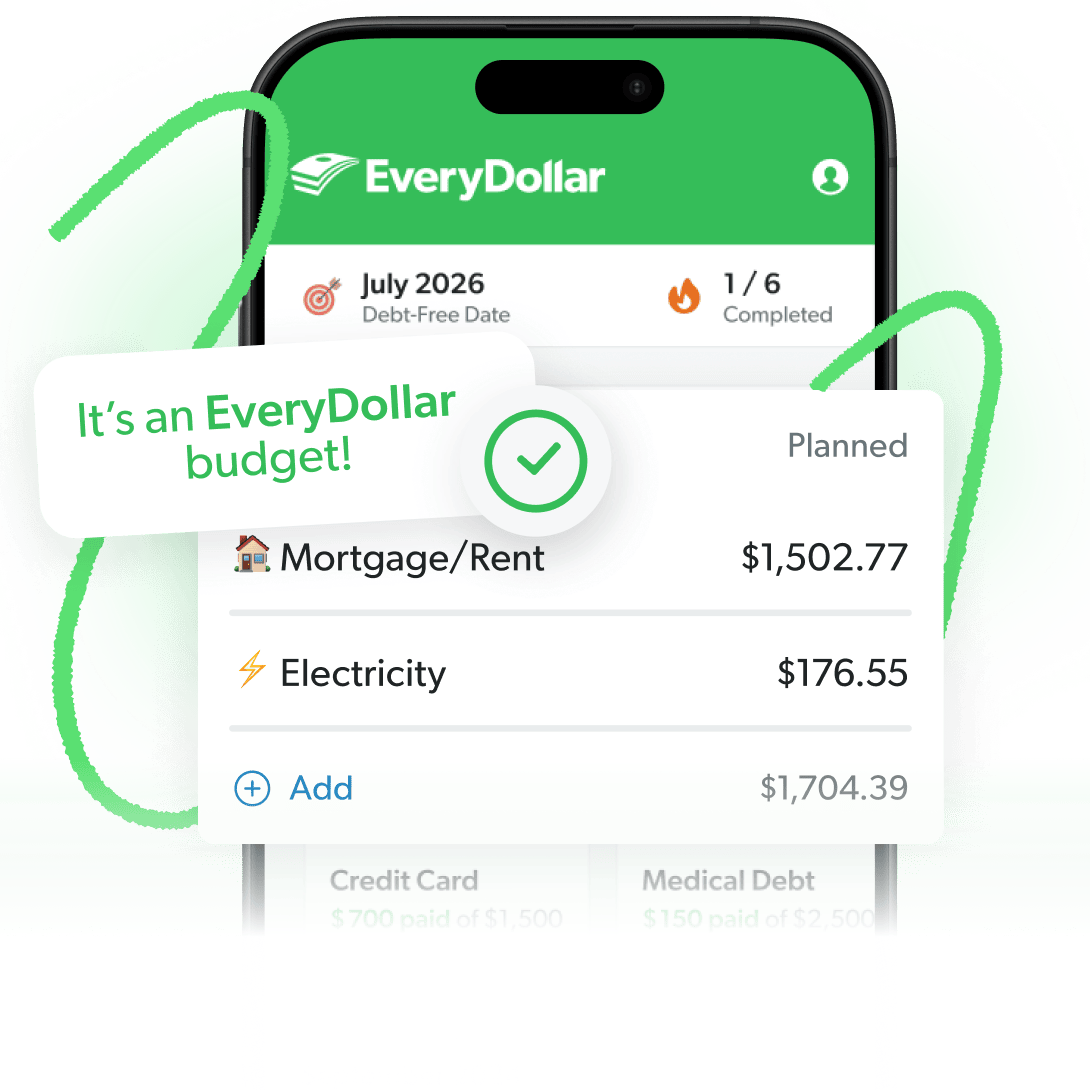
Find Margin You Didn’t Know You Had With EveryDollar
The EveryDollar budgeting app helps you find extra money every month so you can beat debt, build wealth, and make progress. Every. Day.
3. Prioritize the essentials (the Four Walls).
Once you set aside money for giving and saving, start your budget by covering what matters most, what we call the Four Walls: food, utilities, shelter and transportation. These are your core needs, the things that keep your life stable and your household running.
Once you’ve covered the essentials, you can start budgeting for everything else. Taking care of your basic needs before your wants means you can breathe a little easier and make smarter choices with the rest of your money.
4. Overestimate your expenses (especially at first).
When you’re just starting out, it’s easy to underestimate how much you actually spend, especially in categories like groceries, gas or eating out. So give yourself a little margin and overestimate your expenses in those areas. If you think you usually spend $500 a month on groceries, budget $550.
This helps you get a more honest picture of your spending habits—and avoid busting your budget early on. As you go, you’ll get better at fine-tuning the numbers. But for now, round up and give yourself some wiggle room.
5. Adjust your budget for each month.
No two months are exactly the same—your budget shouldn’t be either. Some months bring seasonal expenses like back-to-school supplies or routine car maintenance. Others might be filled with celebrations like birthdays, holidays or that vacation you’ve been looking forward to.
Take a few minutes at the start of each month to look ahead. What’s coming up? Use your calendar to pinpoint special events, irregular bills or anything that might impact your spending. Staying ahead of your monthly expenses helps you avoid last-minute stress and set your budget—and yourself—up for success.
For bigger expenses you see coming up in the future, set up sinking funds. A sinking fund is a strategic way to save money by setting aside a little bit of cash each month.
6. Make paying off debt a priority.
If you’ve got debt, you need to make paying it off a priority in your budget. Debt keeps you stuck because it steals the very thing that helps you move forward: your income.
The best way to knock out your debt is with the debt snowball method. This is a strategy where you focus on your smallest debt first (regardless of interest rates) and throw every extra dollar you can at it while making minimum payments on the rest. Once that smallest debt is gone, you roll that payment into the next smallest. As you knock out each debt, the amount you’re paying keeps growing so you can become completely debt-free faster.
That’s why the debt snowball works—you get quick wins that keep you motivated until you reach your goal!
7. Cut unnecessary expenses.
Sometimes the budget needs a little trimming. If money’s tight right now, see what you can cut to give yourself more breathing room. Here are some little shifts that can make a big difference:
- Switch to just one streaming service.
- Skip eating out this month.
- Shop at a cheaper grocery store.
- Stop saving for retirement (if you’re paying off debt).
And remember, this doesn’t have to be forever. You’re creating margin to help hit your money goals faster. You can always adjust and add things back in. That’s the beauty of budgeting: You’re in charge.
8. Automate your bill payments.
Let’s be honest: Paying bills isn’t exactly fun. But automating some of them can save you time, help you avoid late fees, and keep life just a little more organized. Set up autodrafts for things like your rent or mortgage, utilities or insurance.
Just be sure you’re still keeping an eye on your bank account. You don’t want five bills hitting on the same day you make a big grocery run and accidentally send yourself into overdraft. A budgeting app (like EveryDollar) can help you align bill due dates with your paydays. A few minutes of planning can save you a whole lot of stress and keep your budget running smoothly.
9. Set clear financial goals.
Every great money plan starts with one simple question: What’s your why? Maybe it’s getting out from under those student loans, building an emergency fund, or paying off your home. Whatever it is, your why is what keeps you going when budgeting feels hard.
So, once you’re clear on your goals, make them personal. Write them down. Put them where you’ll see them. And give each one a timeline. Clear goals are how you start making real progress with your money. Short-term goals could be things like saving a starter emergency fund or paying off consumer debt. While long-term goals might include saving for a home, college or retirement.
When your why is front and center, it’s a whole lot easier to stay motivated, especially on the days you’d rather do anything but budget.
10. Check in with your spending regularly.
Your budget isn’t a one-and-done thing. It’s a living plan that needs regular check-ins.
Track your spending daily so you always know where your money’s going. I also recommend setting aside time each week to review your budget and make sure you’re still on track. It doesn’t take a ton of time to stay on top of your budget—especially with a budgeting app. You’ll get faster the more you budget, but here’s a general idea of the time commitment:
- Daily spending check: 2–5 minutes
- Weekly budget review: 10–15 minutes
- Monthly budget reset: 30–45 minutes
And if you’re budgeting with your spouse, I can’t say this enough: Make it a team effort. Sit down together to talk through what’s working and what needs adjusting. These check-ins keep you on the same page and help you make smarter money choices together.
11. Add a miscellaneous budget line.
I always make sure to set aside a small amount ($50–100) for those little things that pop up during the month—because let’s be real, something always does.
That way, when unexpected expenses hit, you’re ready. You won’t have to dip into your grocery money or steal from another category.
And if you notice the same type of expense showing up again and again in that line, it’s time to give it a permanent spot in your budget.
12. Stop using credit cards.
If you want to really take control of your money, the credit cards have got to go. Hear me out!
Even if you pay them off each month, using credit cards makes it hard to track where your money is going, which can lead to overspending. And if you’re carrying a balance, that interest is eating up your income and keeping you stuck.
So, ditch the credit cards . . . for good. Cut them up, cancel the accounts, and stick to your debit card or cash. When you only spend what you actually have, you’ll feel the difference—and your budget will too.
13. Use the cash envelope system for problem spending categories.
If you keep overspending in certain categories (like groceries, fun money or eating out), try paying with cash instead of plastic. Better yet, use the cash envelope system to really keep you disciplined.
Just take out the exact amount you’ve budgeted, stick it in an envelope, and only spend the cash you have on hand. When the envelope is empty, you’re done spending.
It’s simple, powerful and the ultimate accountability partner.
14. Practice contentment over comparison.
The moment you start comparing your life to someone else’s, you open the door to frustration and overspending. Maybe your friend gets a new car or posts about a beach vacation, and suddenly your paid-off car or staycation doesn’t feel like enough.
Comparison doesn’t just steal your joy—it can steal your paycheck too. So stay focused on your goals, your progress and the life you’re building. Contentment is your secret weapon that keeps you grounded, grateful and moving forward.
15. Give yourself grace.
Budgeting takes practice. It usually takes about three to four months to really get the hang of it. So don’t expect perfection right away.
Your first budget (or even your second or third) might feel messy, but that’s okay. Give yourself—and each other, if you’re married—grace, learn from the bumps, and keep going. Progress matters more than perfection. You’re building something good. Just keep showing up.
And you’re not the only one figuring it out. Here’s what Russell, a member of THE Ramsey Baby Steps Community on Facebook, shared about his first few months of budgeting:
“The March budget is our third consecutive month budgeting. As they say, it takes about 90 days to make a proper budget. We still have a lot of work to do. The important thing is we currently have a working functional budget.”
Get a Budgeting App That Works for You
Scribbled notes and mental math won’t help you take control of your money. You need a budgeting app that will keep you organized and seriously boost your budgeting game.
EveryDollar is a zero-based budgeting app that lets you create a monthly budget and track your spending by category. It even lets you sync with your spouse so you’re both on the same page and working toward the same goals.
Ready to start telling your money where to go (instead of always wondering where it went)? Just download the EveryDollar app, answer a few questions, and we’ll build you a personalized plan based on your situation so you can free up margin and make the most of every dollar every day.
Next Steps
- Look through your bank statements to get an idea of your monthly spending.
- Think about your goals and why you want to start budgeting.
- Create a free budget with EveryDollar.
-
What is the best budgeting method for beginners?
-
A zero-based budget is the best budgeting method for beginners. It assigns every dollar of income to either giving, saving, or spending before the month begins so income minus expenses equals zero. That clarity gives every dollar a clear job, helps prevent overspending, and removes guesswork.
-
How do I create a monthly budget from scratch?
-
Start by listing your income and all of your expenses, then subtract expenses from income so the total equals zero. Track your spending throughout the month and adjust your budget before the next month begins. Doing this before the month starts is how you stay ahead and take full control of your money from the first dollar.
-
How can I save money with a budget?
-
You save money with a budget by telling your money where to go before the month begins. A budget helps you spot unnecessary spending, cut back on nonessentials, and plan saving as part of the budget. If money is tight, trimming extras like restaurants or extra streaming services creates margin to reach your goals faster.
-
How long does it take to get good at budgeting?
-
It usually takes about three to four months to get the hang of budgeting. Your first budget, or even your second or third, might feel messy, and that’s okay. Keep showing up and adjust each month, because progress matters more than perfection.
Get Weekly Insights Delivered Straight to Your Inbox
Did you find this article helpful? Share it!

About the author
Rachel Cruze

Get proven Ramsey answers fast.