
10 Money Management Tips to Take Control of Your Finances
 By George Kamel
Key Takeaways
- Personal finance is 80% behavior and 20% head knowledge, which means anyone can learn to manage money well. You just have to build the right habits.
- A zero-based budget gives every dollar a job before the month starts, so you decide where your money goes instead of wondering where it went.
- Debt is a thief—it steals your income and your future. Use the debt snowball to pay it off, smallest balance first.
- Save a $1,000 starter emergency fund and get the right insurance. And after you’ve paid off all debt, save 3–6 months of expenses and invest 15% of your income for retirement.
- Sinking funds let you save for big purchases over time so you can pay cash and skip the debt entirely.
For a lot of people, money management means checking your bank app in the Taco Bell drive-thru and hoping for the best. And the only formal money lesson most of us got growing up was how to balance a checkbook (right up there with learning how to send a fax).
Quick Answer
Good money management comes down to building the right habits with your money—like budgeting, tracking expenses, paying off debt, saving for the future, and being generous. Ramsey’s 7 Baby Steps give you a simple, step-by-step plan for putting those habits into action.Those are the same habits that helped me go from broke and in debt to a debt-free millionaire over the course of a decade. So, if you want to learn how to manage your money better, listen up! I’m giving you my best money management tips to help you take control of your finances for good.
What Is Money Management?
Money management is the process of handling your finances by budgeting, spending, saving, investing and giving. Simply put, it’s how you manage your money. (Shocking, I know.)
Now, there’s corporate money management (sometimes called investment management). Picture people in suits, eating sad salads at their cubicles, talking about “capital expenditures” and “retained earnings.” But personal money management—that’s what I’m talking about here—is about how you handle your own money day to day.
Good money management is just as important as brushing your teeth (and flossing daily, if your dentist asks). Like good oral hygiene, how you manage your money affects your quality of life. And trust me, it can keep things from being super painful later on.
How Should You Budget for Your Life Stage?
The basic money management plan doesn’t change based on your life stage. A zero-based budget and the Baby Steps work at every age and income level. What changes is what you focus on.
Managing your money looks different when you’re a single college student than when you’re a couple planning for retirement. Find your situation below and jump to the article we wrote for it.
|
If You’re . . . |
Start Here |
|
Single |
|
|
A single mom |
|
|
Married |
|
|
Nearing or in retirement |
10 Money Management Tips to Help You Make the Most of Your Finances
Thankfully, personal finance is 80% behavior and only 20% head knowledge. So that means anybody can learn how to manage money well.
Here are my top 10 tips to help you start managing your money like a pro.
1. Take financial inventory.
The first step to managing money is knowing exactly what you’re dealing with. That’s right, it’s time to be brave and look in the financial mirror.
Start by logging in to any financial accounts you have (bank accounts, credit card accounts, student loan accounts). Then make a list of every unpaid bill, any recurring expenses, all debts, credit cards, auto loans . . . everything. Leave no subscription or payment unturned—including those vampire subscriptions you forgot you signed up for that keep quietly sucking money out of your account every month.
You need to know exactly how much money is coming in, how much debt you owe, and what you’re paying for every single month.
I know this part can be a little intimidating, especially if you’ve made some money mistakes you’d rather not think about (hey, we’ve all been there—myself included). But you’ve got to face the brutal facts if you want to make progress.
2. Do a monthly budget.
The best way to manage your money is with a budget. A budget puts you in the driver’s seat because you get to decide where your hard-earned money goes before the month begins—not the government, the credit card companies, or even your mother-in-law (she means well . . . probably).
Without a budget, you’re basically winging it every month, hoping there’ll be enough money to keep the lights on and food in the fridge. But that just leaves you broke, anxious and stressed.
There are lots of budgeting methods out there, but I recommend a zero-based budget. That’s where your income minus your expenses equals zero. That doesn’t mean you have zero dollars in your bank account at the end of the month. It just means you give every single dollar a job to do—whether that’s giving, saving, paying off debt, or spending!
And if you’re not sure how to start budgeting, don’t worry. There’s an app for that! It’s called EveryDollar. Download it for free, plug in your numbers, and tell your money where to go for the month.
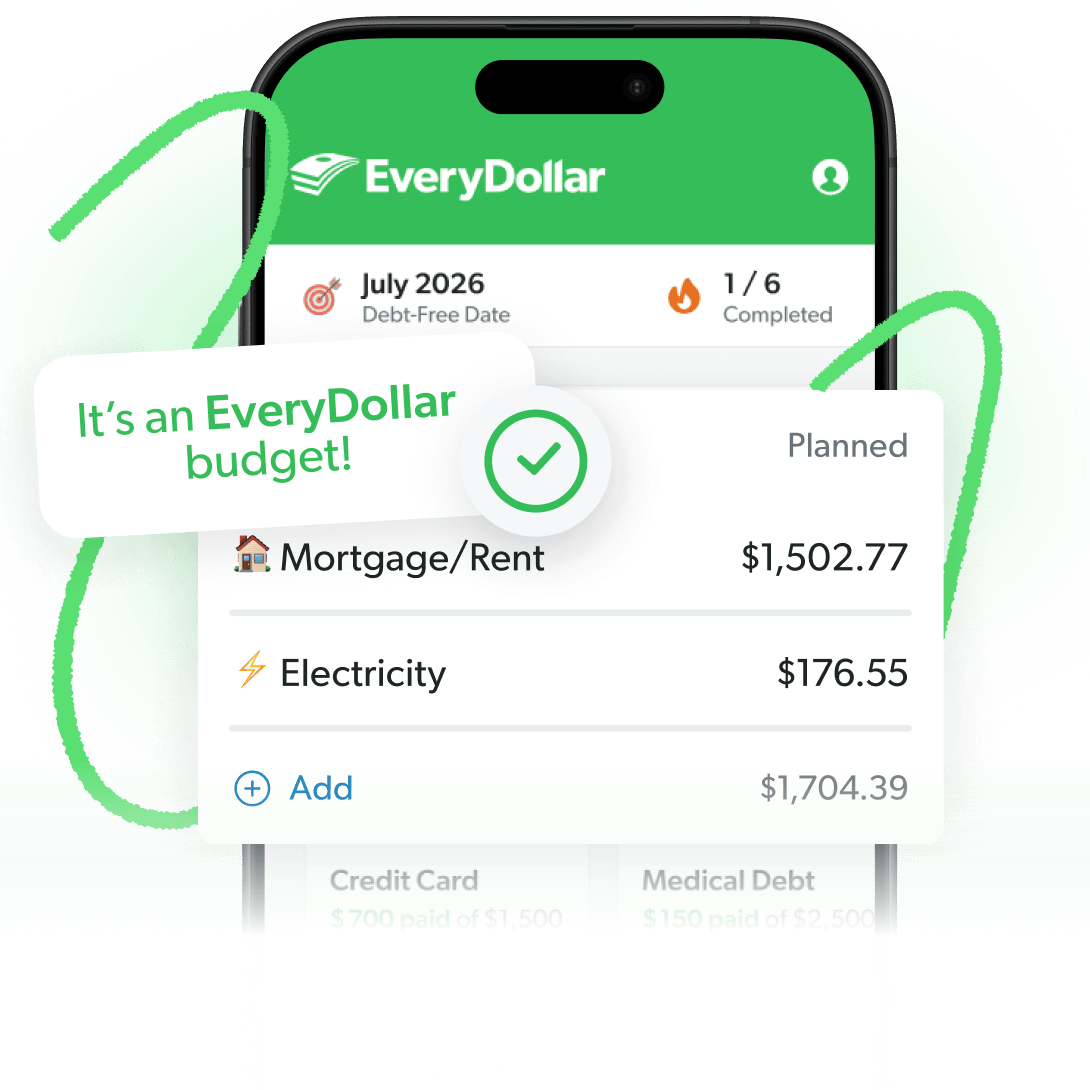
Find Margin You Didn’t Know You Had With EveryDollar
The EveryDollar budgeting app helps you find extra money every month so you can beat debt, build wealth, and make progress. Every. Day.
3. Track your expenses.
Making a budget is only the first step—you also have to track your expenses throughout the month to know whether you’re actually sticking to the plan you made.
Because if you just put some numbers down but never actually track your spending, how will you know if you’re where you need to be? You won’t. You’ll end up with an overdrafted bank account (which is the financial version of a charley horse).
The easiest way to track your expenses is with EveryDollar. With the premium version, you can even connect to your bank account so your transactions stream right into your budget. Then all you have to do is drag and drop each transaction to the right budget line. Boom! Tracking done.
4. Build an emergency fund.
When you have an emergency fund, you have money to cover unexpected expenses without reaching for debt. It’s also called a rainy-day fund, disaster fund, never-go-into-debt-again fund, or my personal favorite . . . oopsie-daisy fund. No matter what you call it, it’s important to have one.
If you’re in debt, start by saving $1,000 for your starter emergency fund. That gives you a buffer for those little emergencies while you work on paying off debt.
Later on, you’ll beef up your emergency fund to cover 3–6 months of expenses. But before you do that, you’ll need to tackle the biggest threat to good money management: debt.
5. Pay off and avoid debt.
Debt steals your income and keeps you paying for the past instead of building for the future. Debt is dumb. There, I said it. And I’ll say it again and again as many times as I need to.
Debt might look like a shortcut to getting what you want now, but shortcuts don’t build a future. We don’t do shortcuts. Avoid debt like it’s lava—or spam (the edible kind and the email kind). Once you allow it into your life, it’s hard to get rid of it.
If you already have debt, focus on paying it off using the debt snowball method. Here’s how it works: You list your debts from smallest to largest balance (not worrying about the interest rates). Pay minimum payments on all your debts but the smallest one, then throw any extra cash you can get at that smallest debt until it’s paid off.
Once that debt is paid off, roll what you were paying on it into the payment on your next-smallest debt. Keep going until you’re completely debt-free.
That progress can add up fast. Holly from THE Ramsey Baby Steps Community Facebook group shared: “Since February, I’ve paid off three small debts (less than $500 each) and a medical debt (~$1,750), and was able to absorb a mortgage increase of $300 while still continuing the debt snowball. Do I want to go out and buy new clothes? Yep! But not this month! With a budget, you tell your money where to go, you gain control, and yes, it makes it easier.”
“Since February, I’ve paid off three small debts (less than $500 each) and a medical debt (~$1,750), and was able to absorb a mortgage increase of $300 while still continuing the debt snowball. Do I want to go out and buy new clothes? Yep! But not this month! With a budget, you tell your money where to go, you gain control, and yes, it makes it easier.”
– Holly
Keep stacking those wins until there’s nothing left to pay off. Then get yourself to Ramsey Solutions Headquarters in Tennessee for your Debt-Free Scream!
6. Lower your spending.
Lowering your spending helps you live on less than you make and creates more margin in your budget. You may not think you spend that much, but every grocery run and overpriced latte adds up (a dollar more for oat milk?).
Remember that budget we talked about? Chances are, you’ll have trouble sticking to it the first couple months. Look for places where you can cut back without making yourself completely miserable.
Instead of eating out at restaurants when you don’t feel like cooking, start preparing your meals in advance. Rather than dropping $50 at the movies, plan a fun date night at home. Choose generic brands in the grocery store or cancel subscriptions you don’t use. There are plenty of ways to save money!
Not going to lie, it’ll probably be hard at first. But as soon as you train your brain to stop spending at the drop of a hat, you’ll realize you can do it. And when you see how much extra money you have at the end of the month, it becomes addicting. Pretty soon, you’ll get more and more creative with other ways to save.
7. Save up for large purchases.
For large purchases, save up and pay cash instead of going into debt. A new guitar. The latest Apple product. The Peloton you just know will get you to work out more (been there, sold that). It’s tempting to swipe a credit card or split it up into “four easy payments.” But we’re avoiding debt, remember?
A key part of managing your money well is knowing when to buy something. Because you want to own your stuff, rather than your stuff owning you. That means, if you don’t have enough to pay cash for it, it’s not the time to buy it. There are two words for that: delayed gratification.
If you’ve got your eye on something you can’t afford right now, create a sinking fund for it. Sinking funds are a great way to save for large purchases because you can budget for them over time to spread out the cost. And the best part? You won’t get stuck making payments for something you bought months ago.
8. Invest for your future.
Investing helps you build wealth for retirement and gives your money time to grow. This is where the fun really begins! Here are some investing basics to remember:
- Don’t invest a dime until you’re out of consumer debt and have an emergency fund of 3–6 months of expenses.
- Invest 15% of your gross income into tax-advantaged retirement accounts like your 401(k) or a Roth IRA.
- Invest in good growth stock mutual funds.
- Work with a financial advisor.
Whether you’re 24 or 54, it’s never too early or too late to start! The sooner you prepare for your golden years, the better.
9. Protect yourself with insurance.
Having the right insurance protects your finances from risks that could otherwise wipe out your savings. Basically, insurance transfers some of those expensive risks to an insurance company so you’re not left covering the entire cost of a medical emergency, car accident or other disaster yourself.
There are eight types of insurance everyone needs at some point: auto, health, life (if you have people depending on your income), homeowners or renters, long-term disability, identity theft protection, long-term care (when you turn 60) and an umbrella policy (if your net worth is more than $500,000).
Just watch out for gimmick policies you don’t need—like cancer insurance, burial insurance and whole life insurance. Fear can make just about any insurance policy sound like a must-have, so focus on getting the right coverage for the risks you actually need to protect against.
If you need help figuring out what insurance to get, you can take this free Coverage Checkup quiz. And don’t forget to add those insurance premiums to your monthly budget!
10. Be generous with your money.
Make generosity a regular part of how you manage your money instead of waiting until you feel like you have “enough” to give. You can practice generosity at every stage of your financial journey—even when it’s hard.
There’s no denying the connection between those who win with money and those who give back to others. The two go hand in hand like peanut butter and jelly (or peas and carrots, if you’re a Forrest Gump fan).
Studies have shown that being generous leads to more happiness, contentment and a better quality of life.1 Isn’t that the kind of person you want become?
So don’t wait until you have a certain amount of money in your bank account or time on your calendar before you start practicing generosity. Be intentional about making generosity a regular part of your life today.
How Do You Start Managing Your Money the Right Way?
If you want to reach your financial goals, the 7 Baby Steps give you a clear, step-by-step plan for managing your money. They’ll walk you through building an emergency fund, paying off debt, saving for the future, and building wealth.
And no matter which Baby Step you’re on, you need a budget. Because “I’ll just try not to spend too much this month” isn’t exactly a financial plan.
That’s where EveryDollar comes in. It helps you make a zero-based budget, give every dollar a job, and track your spending so you actually know where your money is going (instead of finding out after the damage is done).
Managing your money doesn’t have to be complicated. But you do have to manage it. Start your free EveryDollar budget today and tell your money where to go.
Next Steps
- Make a zero-based budget. Use EveryDollar to give every dollar a job before the month begins and start taking control of where your money goes.
- Figure out your next Baby Step. Whether you’re building your starter emergency fund, paying off debt, or investing for retirement, know what goal you’re working toward next.
- Pick one money habit to work on this week. Track your expenses, cut an unnecessary subscription, or start a sinking fund and put what you learned into action.
-
What is the 50/30/20 rule for money management?
-
The 50/30/20 rule is a budgeting method that divides your income into three buckets: 50% for needs, 30% for wants, and 20% for savings. But Ramsey recommends a zero-based budget instead, where you give every dollar a job before the month begins based on your actual income, expenses and goals.
-
How do I manage money with a low income?
-
Start by covering your Four Walls—food, utilities, shelter and transportation—before anything else gets paid. Then make a zero-based budget and track your spending so you know exactly where your money is going. If there’s still not enough margin, look for ways to lower expenses or bring in extra income.
-
Is it better to save or pay off debt first?
-
Save $1,000 first, then focus on paying off your nonmortgage debt. That starter emergency fund gives you a buffer for unexpected expenses so you don’t have to reach for debt when life happens. Once you’ve saved $1,000, move to Baby Step 2 and pay off your debts from smallest to largest using the debt snowball.
Get Weekly Insights Delivered Straight to Your Inbox
Did you find this article helpful? Share it!

About the author
George Kamel

Get proven Ramsey answers fast.