
Medicare Enrollment Explained
 By
By
Key Takeaways
- There are five different enrollment periods for Medicare, but only three for first-time enrollees. People already receiving Social Security benefits before they turn 65 will be enrolled in parts A and B automatically.
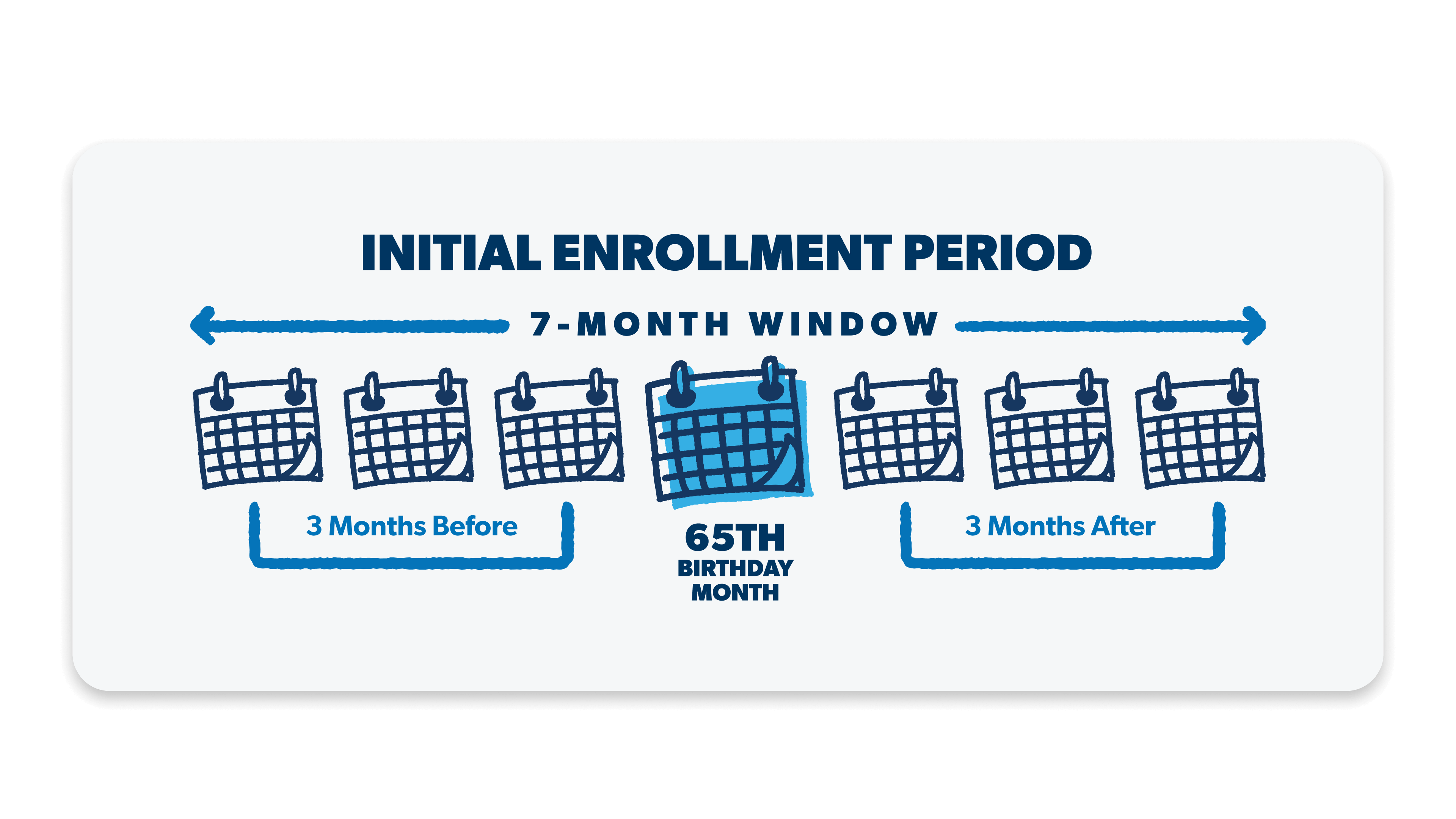
- You can sign up for the first time during your Initial Enrollment Period (three months before your birthday month through three months after) or during a Special Enrollment Period with no penalty.
- If you miss both of those, you can still sign up during the General Enrollment Period (January 1–March 31), but you’ll likely pay a penalty in the form of higher premiums for the rest of your life.
- You can enroll in Medicare parts A and B through Social Security by going to their website, calling, or visiting a local office.
- To enroll in Medigap, Part D, or Medicare Advantage, you’ll need to contact the insurance company offering the plan.
Here's A Tip
Most people enroll in Medicare for the first time during their Initial Enrollment Period (IEP), which begins three months before their 65th birthday month and ends three months after. If you qualify, a Special Enrollment Period (SEP) lets you sign up later without penalties. Missing both means using the General Enrollment Period (GEP) (January 1–March 31) and could result in permanently higher premiums.
Last reviewed: July 2026. Medicare costs, enrollment rules, and plan availability can change each year. Review your coverage annually during the Annual Enrollment Period (AEP).
The rules, options and dates around Medicare are crazy! Especially enrollment. And if you get it wrong, you could end up paying penalties the rest of your life. Yeah, the stakes are that high!

So we’re going to do our best to make it simple (and introduce you to some folks who can help guide you beyond this article.)
What’s a Brief Overview of Medicare?
Medicare is health insurance for folks over 65 (or people who have a disability and certain diseases) that’s run by the federal government. It comes in a few different parts—kind of like the Stooginfloöginfluuugenfläffer from Ikea comes in “a few” different parts:
- Part A is hospital insurance.
- Part B is medical insurance.
- Part C is also called Medicare Advantage and rolls parts A, B and often D into one plan through a private insurance company.
- Part D is prescription drug coverage.
Parts A and B together are called Original Medicare. People usually have either:
- Original Medicare with Part D and a Medigap plan added
- A Medicare Advantage plan
Original Medicare gives you more options and control while Medicare Advantage locks you into a specific network of providers.
Who Is Eligible to Enroll for Medicare?
You must meet one of the following basic eligibility criteria for Medicare:
- Be 65 years or older
- Have a disability status (qualifying for Social Security disability insurance)
- Have end-stage renal disease (requiring dialysis or a kidney transplant)
- Have amyotrophic lateral sclerosis (ALS, aka Lou Gehrig’s disease)1
How Do You Enroll in Medicare?
You enroll in Medicare parts A and B through Social Security—online, by phone, or in person at a local office.
If you’ve been receiving Social Security payments since at least four months before your 65th birthday, you’ll automatically be enrolled in Original Medicare (parts A and B). The government will send you a welcome packet along with your Medicare cards (don’t expect cookies or anything—it’s the government). At that time, you’ll be given the option to add on Part D and a Medigap plan or switch to Medicare Advantage.
Here's A Tip
During your IEP, you have guaranteed issue rights, which means in most cases, insurers can’t deny you or charge more based on any health conditions. That’s another great reason to take advantage of the IEP to avoid future coverage risks.
Medicare Tips That Set You Up for Success
Government programs are the best . . . at being confusing. And Medicare is no exception. But you can download a guide that makes learning the basics of Medicare feel like talking to a no-nonsense friend over coffee.
If you’ve decided to wait to receive your Social Security benefits until later, you’ll need to sign up on your own.
Which Medicare Enrollment Period Applies to You?
Use this table to find the enrollment period that fits your situation.
|
Situation |
Enrollment Period |
|
Turning 65 and new to Medicare |
Initial Enrollment Period (IEP) |
|
Still working, with employer coverage ending |
Special Enrollment Period (SEP) |
|
Missed IEP and SEP |
General Enrollment Period (GEP) |
|
Want to change plans |
Annual Enrollment Period (AEP) |
|
Buying Medigap for the first time |
Medigap Open Enrollment Period (OEP) |
What Are All of the Enrollment Periods?
There are five different Medicare enrollment periods, and you have three opportunities to sign up for the first time—but one of them comes with a penalty, so pay attention!
- Initial Enrollment Period (IEP)
- Special Enrollment Period (SEP)
- General Enrollment Period (GEP)
- Annual Enrollment Period (AEP)
- Medigap Open Enrollment Period (OEP)
Initial Enrollment Period (IEP)
The IEP is your first opportunity to sign up for Medicare. It starts three months before your 65th birthday month and runs through the three months after (total of seven months). To begin, you can sign up for parts A and B. Once you have those in place, you can also sign up for Part D and a Medicare Advantage plan (if you choose) during this period.
You have three ways to enroll during the IEP:
- Online
- Over the phone
- By contacting your Social Security office
Who should sign up during the IEP? If you plan to use Medicare as your health insurance coverage immediately
Who should not sign up during the IEP? If you are currently covered by health insurance that’s of similar value to Medicare (this most often happens when you’re still working and have employer-sponsored health coverage or you’re covered by your spouse’s insurance)
Special Enrollment Periods (SEPs)
Medicare offers an SEP for situations where people have special circumstances that arise outside the normal IEP window.
Circumstances that trigger SEPs:
- Your comparable coverage ends (you leave your job and lose your employer-sponsored health insurance, for example)
- You move back to the U.S. after missing your IEP while living overseas—but living abroad won’t automatically qualify you for an SEP. You’ll only be eligible if you delayed getting earlier coverage due to having coverage through employment while working out of the country.
- You lose comparable drug coverage
- Your coverage changes and is no longer creditable (an industry term that means “as much coverage as” Medicare)
- If you experience any changes to your coverage outside your control that mean you need new coverage
- You move to a new address and your plan isn’t available in that area (this one only applies if you have Medicare Advantage)
There are many little nuances to what triggers an SEP. If you need Medicare and already passed your 65th birthday, talk to a licensed Medicare advisor. This is what they’re trained for! They can look at your situation and figure out if you qualify for an SEP.
- Who should sign up during an SEP? You missed your IEP because of special circumstances or you had other coverage that ended
- Who should not sign up during an SEP? You already signed up during your IEP or you need to switch (or make changes to) your existing plan
General Enrollment Period (GEP)
The GEP runs annually from January 1 to March 31.
If you missed your IEP or SEP, maybe you should deal with your procrastination problem. Kidding. Mostly. (But seriously—you can still get Medicare!) You do get another chance to enroll for the first time during the GEP. You can sign up for Original Medicare, with the option to add Medigap or Medicare Advantage, as well as drug coverage.
Heads up though. Using the GEP to enroll usually comes with a penalty in the form of higher premiums—and they last for the rest of your life.
Who should sign up during the GEP? Pretty much nobody! Remember to sign up during your IEP or SEP. But if you forget, then sign up during the next GEP.
Who should not sign up during the GEP? Anyone who already signed up during their IEP or SEP, or anyone who wants to make changes or switch plans.
Let’s look at the kinds of penalties you could be facing if you wind up needing to use the GEP to enroll.
|
Medicare Part |
GEP Penalty |
|
Part A |
Usually premium-free, otherwise the monthly premium may increase up to 10% for twice the number of years the individual could have had Part A but didn’t enroll1 |
|
Part B |
10% premium increase for each full 12-month period delayed2 |
|
Part D |
Permanent penalty added to Part D premium, calculated as 1% of the national base beneficiary premium for each month you missed coverage3 |
Annual Enrollment Period (AEP)
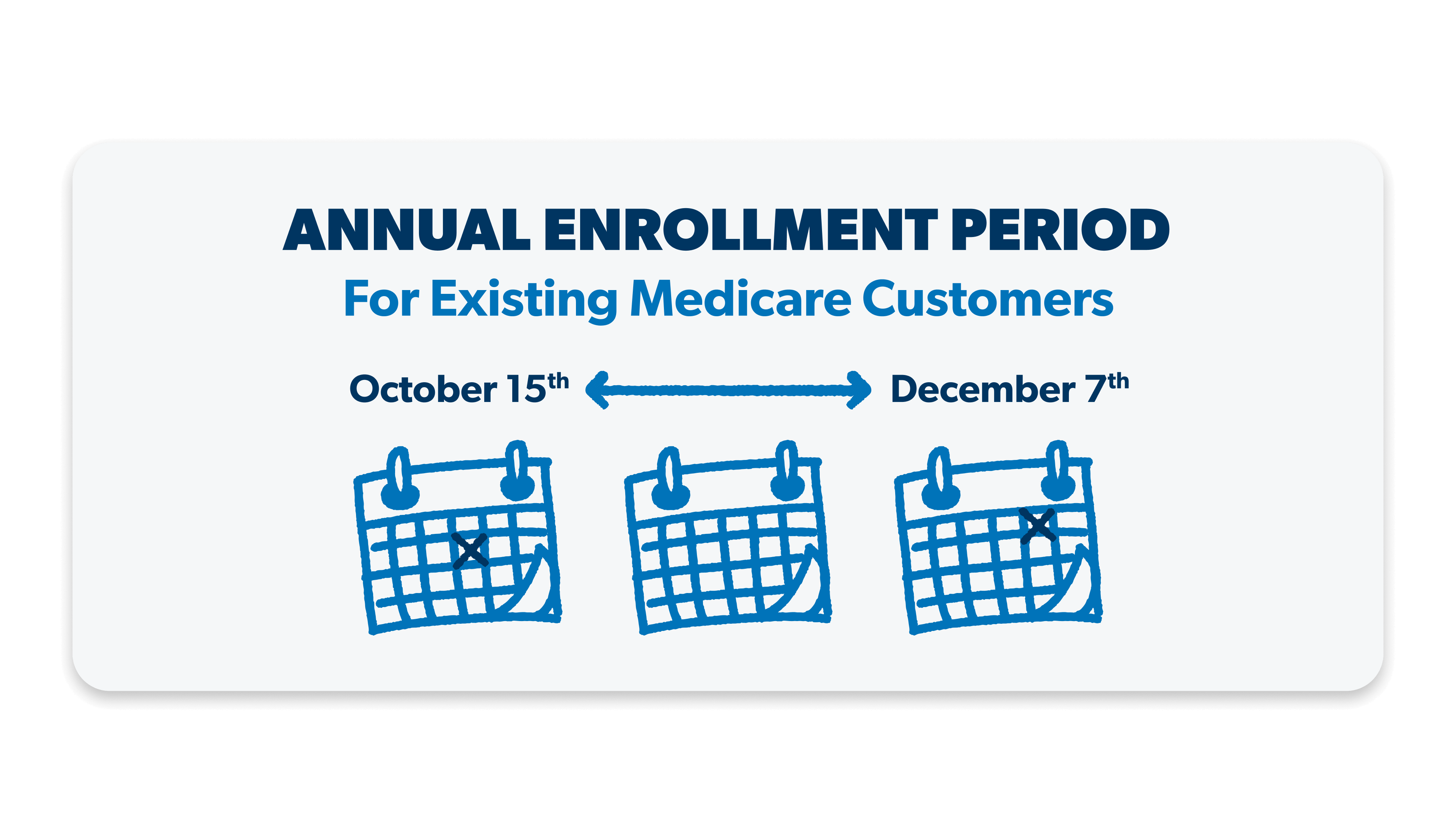
Medicare’s AEP runs from October 15 to December 7. But don’t be fooled by the name. Sure, it sounds awfully similar to regular health insurance’s open enrollment period, when anyone can sign up for health insurance—but this is not (repeat not) a time for you to sign up for Medicare for the first time.
The AEP is a time for folks who already have Medicare to make changes to their existing plan or switch plans.
For example, if you have a Medicare Advantage plan but get annoyed having to use in-network providers, you can drop your Advantage plan and switch back to Original Medicare.
Who should sign up during the AEP? People who already have Medicare and need to make changes to your current plan (including Part D) or switch to or from Medicare Advantage and Original Medicare
Who should not sign up during the AEP? People who want to sign up for Medicare for the first time
Medigap Open Enrollment Period (OEP)
Your Medigap OEP begins when your Medicare Part B coverage starts, and runs for six months from that date. And if you decide to go with Original Medicare, you’ll most likely want to get a Medigap policy to help cover your out-of-pocket costs. The best time to do that is during your Medigap OEP.
During this period, insurance companies are required by the federal government to cover you—so you can’t be denied a policy because of preexisting conditions.
If you wait until later, there are no laws forcing insurers to sell you a policy, so you could be denied. Plans often cost a lot more if you wait. But you can technically buy a policy any time of year—provided you can get an insurance company to actually sell you one.
Here’s a quick summary of the what, when and why of all five enrollment periods.
Medicare Enrollment Periods
|
Period |
When It Happens |
Features |
|
Initial Enrollment Period (IEP) |
3 months before your birthday month through 3 months after |
You can sign up for Medicare for the first time. |
|
Special Enrollment Period (SEP) |
Varies |
This allows you to sign up for Medicare for the first time under special circumstances defined by the federal government. |
|
General Enrollment Period (GEP) |
January 1–March 31 |
You can sign up for Medicare for the first time if you missed your IEP or SEP. Sadly, you will be penalized. |
|
Annual Enrollment Period (AEP) |
October 15–December 7 |
You can make changes to your existing plan or switch plans. |
|
Medigap Open Enrollment Period (OEP) |
The 6-month window starting the first month you get Part B |
You can sign up for a Medigap Plan and won’t be denied. |
Can I Enroll in Medicare While Still Working?
You can enroll in Medicare while still working—in fact, many people choose to sign up for Medicare at age 65 even if they keep their job and employer health insurance. In some cases, employer coverage lets you delay certain parts of Medicare without a penalty, but you can still enroll if you want to. Your own timing will depend on the size of your employer and how your current health plan works with Medicare.
Can I Change Medicare Plans Later?
The government does allow you to change your Medicare plan after you first enroll, although the timing of those changes will depend on your circumstances. For most people, the AEP is the best time to do so. But certain events can also trigger eligibility for making a change through an SEP.
What Is the Enrollment Process for Parts A and B?
You sign up for Medicare parts A and B through Social Security. They make sure you’re eligible and have paid into Social Security long enough to qualify for premium-free Part A. There are a few ways to sign up for Medicare parts A and B:
- Online (sign up through the Social Security website)
- By phone (call Social Security)
- In person (visit a local Social Security office)
- Automatic enrollment4
Applying online through the Social Security website is the easiest and fastest route. But no matter which way you decide to do it, you’ll need these documents to apply:
- Social Security card (or other proof of your SSN)
- Proof of age (like your birth certificate)
- Proof of U.S. citizenship or legal residency (like your passport or green card)
- Record of employment (like a W-2)
- Any marriage or divorce information
- Any military service information
- Any past Social Security benefit claims
Here's A Tip
We touched on this earlier, but there is one instance where you won’t have to apply for parts A and B. This is called automatic enrollment, and it happens only if you’ve already been receiving Social Security benefits for four months prior to your 65th birthday.
But if you are automatically enrolled, don’t just sit back and wait. You’ll want to consider applying for drug coverage and Medigap or consider whether you want to switch over to a Medicare Advantage plan. (Not sure which you want? Check out what Medicare advisors recommend.)
What’s the Enrollment Process for Medicare Advantage (Part C) and Part D?
If you decide a Medicare Advantage plan works better for your needs, you’ll get an opportunity to enroll in one of the enrollment periods. You’ll also be able to sign up for Part D during these windows:
- IEP (if you’re new to Medicare)
- AEP (if you’re changing your plan)
- SEP (if you have special circumstances)
- Medicare Advantage OEP (if you’re switching between Advantage plans)
Start by comparing plans as you would with any health insurance. If you already have doctors and health care providers you like, make sure they’re in the provider network of the plan you choose. Once you find the best plan for your situation, join it by calling the plan provider or visiting their website.
Remember, you must already be enrolled in Medicare parts A and B to get a Medicare Advantage plan. To sign up, you’ll need to provide your Medicare number and the start dates of your coverages for parts A and B.
Can I Delay Signing Up?
Yes—you can delay Medicare, but only with qualifying employer or group health coverage. Without it, delayed enrollment means permanent penalties if you ever want to sign up for Medicare (which you probably will). Proof could be as simple as an insurance card with both your and your employer’s names on it.
What Are My Medicare Enrollment Choices?
How Does Original Medicare Compare to Medicare Advantage (Part C)?
The main difference between the two is how much control and how many options you have.
Original Medicare: This is parts A and B together. You would usually add a Medigap Plan to help cover out-of-pocket costs and Part D for prescription drugs. You’d have three Medicare cards and would manage these plans separately. You can go to any provider who accepts Medicare.
Medicare Advantage: This is parts A and B plus extra coverages by a private insurer. These often come with a prescription drug plan too. After you sign up for parts A and B and then buy an Advantage plan, all these plans are managed by the private insurer, and you get one card. You are limited to providers within the network set by the insurance company.
What Changed for Medicare Part D in 2025?
Beginning in 2025, Medicare Part D changed a lot under the Inflation Reduction Act. Here’s a quick summary of what’s new:
- The coverage gap/donut hole effectively ended.
- You can now spread annual costs through the Medicare Prescription Payment Plan.
- As of 2025, Part D now includes a $2,100 annual out-of-pocket cap on covered prescription drugs.2
Once you reach your Part D cap, you won’t pay for any more covered drug costs for the rest of the year.
Medicare also offers the Medicare Prescription Payment Plan, which lets enrollees spread out-of-pocket prescription costs across the year in monthly payments.
Keep in mind, pharmacy networks, approved prescription lists, and premiums vary by plan. You’ll want to compare Part D plans each year during the AEP.
When you’re picking out a Part D plan, ask yourself these questions:
Do I take medications currently? If you’re on medications, make sure the plans you’re looking at cover those drugs.
Do I take generic drugs or expensive drugs? If you take generic drugs, look for a plan that offers “tiers” where you pay nothing or low copayments for generic drugs.
Do I have preferred pharmacies? Make sure the plan allows you to use them. Some plans contract with a network of pharmacies and won’t cover drugs from pharmacies outside it. Some plans have “preferred pharmacies” that offer better prices, which could save you money.
Do I want to avoid penalties? Who doesn’t? Even if you don’t really have drug costs now, you should still sign up for a Part D plan with low monthly premiums when you are first eligible (unless you already have drug coverage through other health insurance). You’ll avoid the penalties that come with signing up later.
What Are the Most Common Medicare Enrollment Mistakes to Avoid?
Medicare’s complexity is exactly why people mess it up. Here are the most expensive mistakes you should avoid:
Missing enrollment deadlines: There are a lot of dates to keep track of. But the really important one is your IEP. If you miss it and don’t qualify for an SEP, you’ll have to pay higher premiums for the rest of your life. And keep in mind, the longer you wait, the bigger the penalties get.
Not reviewing coverage options annually: Medicare rules change every year. You need to keep up with them because changes can mean you’re no longer fully covered. A Medicare advocate can keep track of these for you and let you know if you need to adjust anything.
Failing to understand the costs and benefits of different plans: Just like with regular health insurance, Medicare plans are different, and depending on your situation, some work better than others.
If you’re thinking about going with a Medicare Advantage plan, you need to understand that you may not be able to get a Medigap policy if you decide you want to switch back to Original Medicare.
Insurance companies are only required to sell you a Medigap plan during your Medigap OEP. After that, they can deny you coverage if you don’t meet their health requirements (like if you have a preexisting condition). Even if you don’t have medical issues, you may have fewer options and have to pay more for your plan.
What Do I Need to Do Before I Enroll in Medicare?
- Confirm eligibility.
- Decide between Original Medicare and Medicare Advantage.
- Compare Part D plans.
- Consider Medigap.
- Gather enrollment documents.
- Mark enrollment deadlines.
Should I Use a Medicare Advisor?
Don’t let all this information overwhelm you—you can get the right coverage in place and avoid all the pitfalls hidden in the confusion by using a Medicare advisor. The folks at Chapter are RamseyTrusted® Medicare advisors. They’ll bring what they know about Medicare (everything) and figure out the right Medicare plan for your situation.
But they don’t leave you there. Chapter advisors are also advocates. After they’ve helped you enroll, they’ll guide you through your Medicare journey—from how to use your benefits to checking in to see if you want to make changes. They’ll even help you get doctor appointments set up. And did we mention it’s all free?
Chapter makes their money by getting you covered, not by selling you a particular plan. So you can be confident you’ve actually got the right plan for you—not the one the guy on the phone gets paid the most to sell you.
Next Steps
- Learn more about Medicare supplement plans and how they’re usually the best choice.
- Read up on all the ways a Medicare advisor can help you.
- Connect with Chapter today to get Medicare coverage.
-
When should I enroll in Medicare?
-
Most people should enroll during their IEP, which starts three months before their 65th birthday month and ends three months after.
-
Can I delay Medicare if I’m still working?
-
Yes. If you have qualifying employer-sponsored coverage, you may be able to delay Medicare Part B without paying a late-enrollment penalty.
-
What is the penalty for late Medicare enrollment?
-
If you miss your IEP and don’t qualify for an SEP, you may need to wait for the GEP and could face permanent late-enrollment penalties. The penalty for Part B is a 10% premium increase for each full 12-month period delayed. For Part D, it’s a permanently higher premium, calculated as 1% of the national base beneficiary premium for each month you missed coverage.
-
How do I enroll in Medicare?
-
You can enroll through Social Security online, by phone, or at a local Social Security office.
-
Do you automatically get Medicare at age 65?
-
Enrollment at age 65 is not automatic. You are only automatically enrolled in Medicare at age 65 if you are already receiving Social Security or Railroad Retirement benefits. If you are not yet collecting those benefits, you generally must enroll yourself during your Medicare IEP. If you’re still working and covered by an employer health plan, you may be able to delay certain parts of Medicare without a penalty.
-
Can you enroll in Medicare online?
-
You can enroll in Medicare online. If you need to sign up for Medicare yourself, you can apply online through the Social Security Administration. Online enrollment is available for most people enrolling in Medicare parts A and B. If you’re automatically enrolled because you’re already receiving Social Security benefits, you generally do not need to submit an application.
Get Weekly Insights Delivered Straight to Your Inbox
Did you find this article helpful? Share it!

About the author
Ramsey Solutions

Get proven Ramsey answers fast.