
What Happens if You Don't Pay Your Student Loans?
 By
By 
Key Takeaways
- Not paying your student loans can result in late fees, wage garnishment and even being taken to court.
- If you can’t afford your student loan payment, you should contact your loan servicer, get on a budget, and find ways to lower your expenses and decrease your spending.
If you’re struggling to cover your student loan payment every month, you’re not alone. But what would happen if you just . . . didn’t pay?
Unfortunately, ignoring your student loans will only make things way worse. Just a few things you can expect: being reported to credit agencies, late fees and payments being taken straight out of your paycheck. You could even be looking at some court time if things aren’t cleared up. Yikes!
The good news is, there are ways to avoid these penalties and get on top of your student loan payments.
What Happens if You Don’t Pay Your Student Loans?
As tempting as it may be to ignore your student loans and not pay them, it does come with consequences (some more intense than others). But what happens to you ultimately depends on the type of student loan you have: federal or private.
If You Don’t Pay Federal Student Loans
Federal student loans are owned by the U.S. Department of Education, and federal loan servicers have the power of the government behind them to get money from you. (Yikes!) That said, here’s what happens if you don’t pay your federal student loans:1
- Your loan becomes delinquent immediately after you miss a payment. You’ll probably get charged a late fee (which can be up to 6% of the monthly payment).
- Your loan servicer will report your student loan as delinquent. If your payment is 90 days (three months) late, the major credit agencies (Experian, Equifax and TransUnion) will know about it.
- Your loan will go into default. This is usually after 270 days (nine months) of missed payments.
Once your federal student loan is in default, here’s what happens next:2
- Your entire loan balance becomes immediately due (plus interest). This is called loan acceleration—and yeah, it’s as scary as it sounds.
- The default is reported to credit agencies.
- You can’t apply for deferment or forbearance.
- You’re no longer eligible for an income-driven repayment plan.
- You can’t apply for more financial aid (including grants).
- Your wages can be garnished, as well as your tax refund and Social Security benefits. This means the government can take your student loan payment straight out of your paycheck, no questions asked (oof!).
- You could be taken to court. Your lender can sue you for the money you owe.
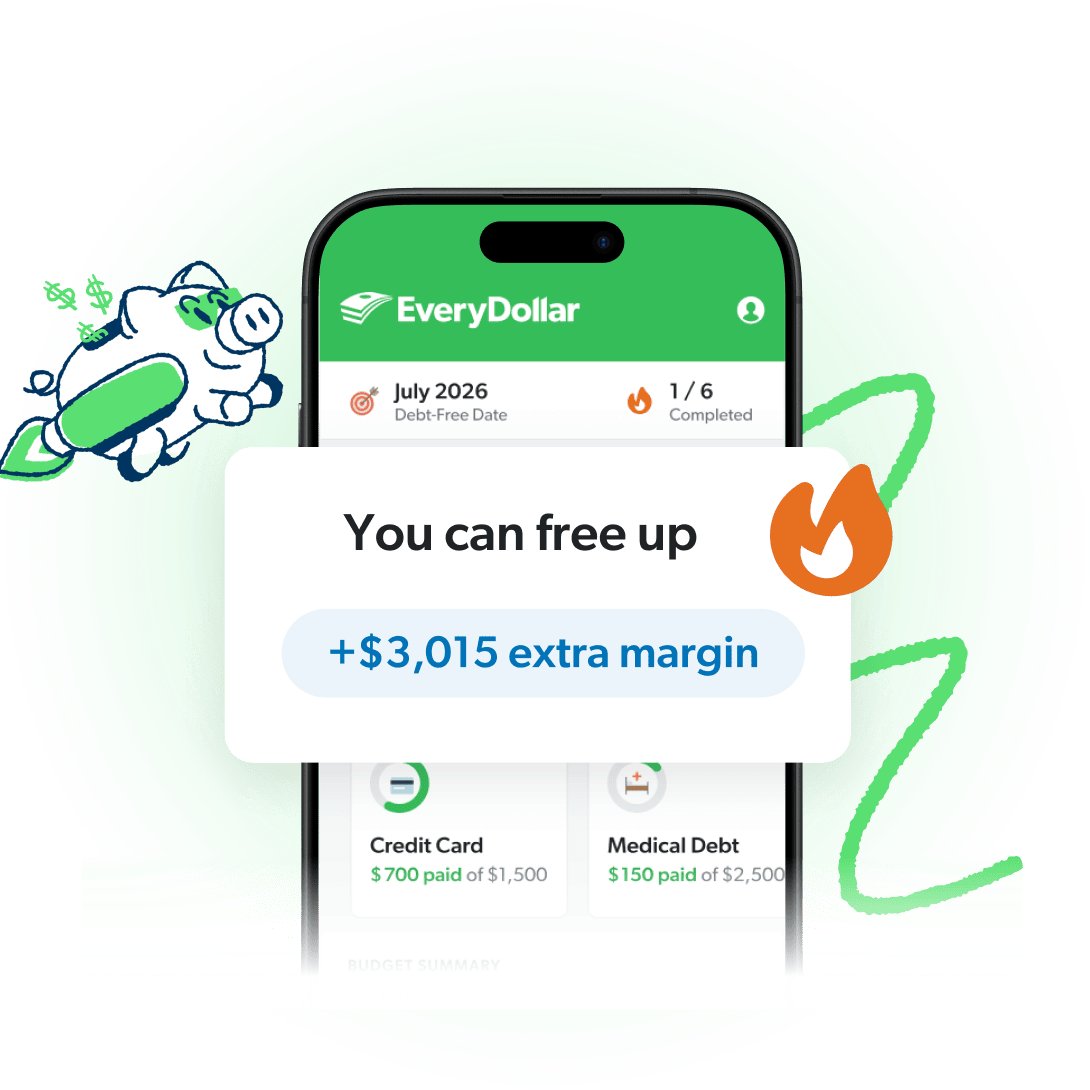
Ditch Debt Faster With EveryDollar
A lifetime of minimum payments? No thanks. The EveryDollar budgeting app helps you find extra margin every month so you can be debt-free faster!
If You Don’t Pay Private Student Loans
Private student loans are owned by private lenders, so the rules are a little different when it comes to not paying them back. They may not have the same power federal lenders do, but you definitely don’t get off easy!

The consequences for not paying your private loans depends on your specific lender. But here’s generally what happens:
- Most private student loans are delinquent immediately after you miss a payment.
- As soon as your loan is delinquent, you’ll get charged a late fee (either a flat fee or a certain percentage of your monthly payment).
- After 30 days (one month), your lender can report your delinquency to credit agencies.
- After 90 days (three months), your private student loans go into default. This is much sooner than federal loans!
Once your private student loan is in default, here’s what can happen:
- Your loans get sold to a collections company. And listen, debt collectors can be pretty ruthless.
- Your credit score takes a hit, as well as anyone who cosigned for you. While we don’t put much stock in credit scores, you definitely don’t want to trash your credit.
- You can be taken to court. Your lender can sue you for the money you owe.
- Your wages may be garnished. But this only happens if your lender sues you and gets a court order to do so. And they can’t take anything from your tax refunds or Social Security checks.
Can You Go to Jail for Not Paying Your Student Loans?
No, you can’t go to jail for not paying your student loans. So if that was a fear you had, take a deep breath—no one is coming to arrest you if you miss a payment.
But like we mentioned, you can be sued over defaulted student loans. This would be a civil case—not a criminal one. So again, you don’t have to worry about doing any jail time if you lose. But unless you want to deal with a drawn-out legal mess while paying attorney fees and other court costs, do whatever you can to keep from defaulting on your loans.
Can You Get Rid of Student Loans Through Bankruptcy?
Technically yes. But it’s not easy, or even realistic. As a general rule, student loans cannot be cleared through filing bankruptcy. This is especially true for federal loans—because you know the government’s getting their money back one way or another.
There is the rare chance of student loans being discharged (cleared) through a separate bankruptcy process called an adversary proceeding. You basically have to prove you wouldn’t be able to eat if you paid your student loan payments. But the odds aren’t great. Less than 1% (0.1% to be exact) of people who try to have their student loans discharged through bankruptcy are actually successful.3 Plus, bankruptcy is a long and brutal process that should be avoided at all costs.
What to Do if You Can’t Pay Your Student Loans
We get it. No one likes having to pay back their student loans. But as you can see, you either pay up or pay the price—one way or another. So if you’re able to pay back your loans, you need to. But if you’re actually struggling to make your student loan payment, here are the steps to take.
Contact Your Loan Servicer
If you think you’re going to miss your payment, get ahead of it by contacting your student loan servicer. Not sure who that is? Your loan servicer is the company assigned to manage your loan—including handling payments, answering questions, and helping you navigate your options. They’re your go-to contact when you need help with anything related to your student loan.
They’ll probably try to move you to a different payment plan, most likely an income-driven repayment plan (like the SAVE plan) to make your monthly payments more manageable. But don’t let a lower payment keep you from trying to get rid of your student loans as fast as possible!
If you’re going through a particularly rough time financially (for example, if you lost your job or had a medical emergency), your loan servicer might recommend applying for deferment or forbearance. But in most cases, interest will continue to add up, and you’d just be pushing your loans to the side for later—so that should be your last resort! Only go that route if you’re not able to pay for the basic necessities (food, housing, utilities and transportation).
Find the Right Place to Get Help
Not sure who to call when you need help with your student loans? Figuring out where to turn can feel as confusing as piecing together IKEA furniture. But don’t worry—you’re not alone!
Here’s how to cut through the chaos:
- Check your loan statements or emails. Your monthly statements or official emails usually list your loan servicer and their contact info front and center.
- Look up your loans online. If you’re not sure who holds your loans, check your online loan account to find the name of your servicer.
- Phone a friend (or parent). If someone cosigned your loan, check with them—they might have the info you need on hand.
- Ask your bank or credit union. Some private student loans go through local banks or credit unions, so your bank may be able to point you in the right direction.
Reach out directly to your loan servicer’s customer service for help if you’re confused about payments or want to talk through your options. Getting the right support now can save you a lot of hassle (and headaches) later!
Need Help Making a Payment?
If your question is simply about how to pay your loan or where to send your payment, your loan servicer can walk you through the process. They’re the ones you’ll contact to set up payments, update your information, or address any issues with your account.
Make Your Monthly Student Loan Payment
Once you’ve lined up your student loan payment plan, it’s time to make sure those payments actually go out each month. Don’t worry—it’s not as intimidating as it sounds.
Most student loan servicers give you a few ways to pay:
- Online: Log in to your loan servicer’s website and set up a one-time or recurring payment with your bank account. (Set a calendar reminder so it doesn’t slip your mind!) Some servicers offer a small interest rate discount (like 0.25%) if you sign up for autopay. This can help you never miss a due date—and save a little cash in the process!
- By mail: If you’re old-school, you can mail a check or money order—just make sure to include your account info so it gets credited correctly.
- By phone: Most loan servicers also let you pay over the phone with your bank info.
Pick the method that works best for you, but whatever you do, make sure you’re paying every month—on time.
Steps to Pay Off Your Student Loans
If that student loan payment-due notification gives you a pit in your stomach every month, you need to make some changes. It’s nice to have a diploma nailed to a wall (or stuffed in a drawer somewhere), but you don’t want student loans hanging around forever.
Get on a Budget
Don’t have enough money for your student loan payment? Then you need to get on a budget. If things feel out of control with your money, a budget helps you take control. When you write everything out and see exactly what you’re spending, you can find ways to free up more money for your student loans (and for any other debt payments). And this helps you every single month.
Go ahead and create your budget right now with EveryDollar!
Lower Your Expenses
Once you’ve made your budget, start cutting your spending. Can you dial back the amount of money you spend eating out each month? Do you really need all those subscriptions and memberships? (Those suckers add up!) We know it’s not fun to tell yourself no. You’d much rather buy that overpriced margarita than think about paying off your student loans. But the little sacrifices add up and keep you from falling behind on your payments.
Increase Your Income
If you lower your spending and still don’t have enough to afford your payment, it may be your income that’s the problem. So find ways to get your income up. Can you take on more hours at your current job? Are you a freelancer who can work with more clients? Or can you pick a side hustle (or two) to get some extra cash flowing into your budget? Even spending a little bit of time each week walking dogs, delivering food, or babysitting can help you cover your payment. Remember: It’s only temporary until you knock out your loans. You’ve got this!
Next Steps
- Figure out exactly how much you owe in student loans.
- Contact your service provider to see what repayment options you have and start making payments.
- Download EveryDollar and get on a budget to take control of your money.
Get Weekly Insights Delivered Straight to Your Inbox
Did you find this article helpful? Share it!

About the author
Ramsey Solutions

Get proven Ramsey answers fast.