
The Truth About Credit Card Rewards
 By
By
Key Takeaways
- Credit card rewards are a marketing tool funded by fees and interest paid by cardholders.
- The average credit card APR for cardholders who get charged interest is 22.15%, according to the Federal Reserve.1
- Paying your balance in full every month doesn’t eliminate the risk of overspending with a credit card.
- A zero-based budget helps you manage your money before you spend it instead of relying on a credit card for cash flow.
- Cutting up your credit cards and switching to cash or debit can help you take control of your spending.
So, the credit card company is offering you cash back, miles, points and whatever else they can think of every time you swipe their card—all from the goodness of their hearts to help you get ahead with your finances. Right?
Wrong.
Quick Answer
Credit card rewards are a marketing tactic, not free money. The average credit card APR is 22.15% (if you carry a balance month to month), while rewards may give you just 1–2% back. That math doesn’t work in your favor. Skip the rewards and build a real plan for your money instead.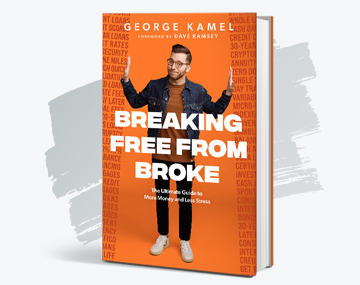
More Money. Less Stress. Yes, Please.
In his new book, George Kamel does the research for you and exposes all the worst money traps out there so you can build real wealth!
Because when you look past the points, miles and cash back, credit card rewards aren’t the deal they’re made out to be.
Are Credit Card Rewards Worth the Interest?
No—not even close. In 2025, 45% of credit card owners said they’d carried a balance at least once in the previous 12 months.3 And for cardholders who get charged interest on their balance, the average annual percentage rate (APR) is a whopping 22.15%.4

Credit card companies use cash-back offers to lure you in and encourage you to spend more because you’ll get something out of it in the end—or so you tell yourself. But who’s really getting something out of it?
The credit card companies.
That 1% cash back is an easy give from companies who can turn around and charge over 22% interest on balances that aren’t paid off.
Credit card rewards aren’t a tool. They’re. A. Trap.
|
The Rewards Myth |
The Reality of Debt |
|
You get “free” 1% cash back. |
If you carry a balance and get hit with interest, the average APR is 22.15%.5 |
|
Points make you feel like a smart spender. |
Research shows using credit cards can activate the brain’s reward system and encourage more spending.6 |
|
Rewards feel like free money. |
Credit card companies fund rewards with money they make from fees and interest. |
Is It Okay to Use Credit Cards if You Pay the Balance?
Even if you pay your balance in full every month, using a credit card can still cost you. Research shows paying with credit cards can encourage you to spend more by activating the reward center of your brain.7
But using a card and paying it off sure can feel like you’re winning. It feels like you’re being responsible and building a strong credit score. It feels like you’ve got a cash-flow plan and security. It feels like those rewards are just the icing on top of what you were planning to buy anyway.
But do those reasons really hold up? Let’s take a closer look.
1. Do I need a credit score for rewards?
You may need a good credit score to qualify for certain rewards cards. But that doesn’t mean you need to chase a credit score—or credit card rewards—to win with money.
FICO runs so deep these days, you might think it’s been around forever—like the U.S. probably needed one to make the Louisiana Purchase. But guess what: The FICO score didn’t even become a thing until 1989. It’s a new “standard” we’re told we have to measure up to. But in reality, a FICO score doesn’t tell anyone if you’re wealthy, responsible or successful. It just says how steady you’ve been at making payments to banks and lenders over and over again.
We call it the “I love debt” score because you need a history of borrowing money and paying it back to build one. And if a rewards card keeps you tied to that system, those points and miles just aren’t worth it.
Here’s a list of things you can do without a FICO score (despite what people tell you): buy a house, rent an apartment, buy a car, rent a car, apply for a job, anything. Literally anything.
Too many Americans are falling for the lie that you need a “good” credit score.
Hey. Your worth isn’t set by a number. You’re more than that. Just say no to FICO.
2. What is a better cash-flow plan than credit cards?
A zero-based budget—a plan where every dollar has a job before the month begins—beats any credit card as a cash-flow tool. Why? Because it shows you where your money’s going before you spend it, not after.
Maybe you use credit cards to cover your normal monthly expenses and then make one bulk payment at the end of the month to cover the balance. You aren’t worried because you do pay off the balance, so you never deal with interest.
But in this case, you’ve made credit cards your money-management system. There’s a better way: Budget the money you actually have. Right now.
When you budget every dollar you make every month, you’ll see spending habits you didn’t even realize you had. Paying a lump sum at the end of the month means you don’t see just how often you buy breakfast biscuits on the way to work. What if you’re literally eating away at what could be a healthy retirement fund? When you track every expense, your expenses can’t hide from you.
Budgets make you accountable. To yourself. It’s not just about “being responsible” by paying off a balance on purchases you won’t remember by the end of the month. It’s about deciding (on paper and on purpose) where every dollar goes before the month begins.
P.S. We know a free budgeting app called EveryDollar, if you need one!
3. Should I use credit cards for emergencies?
No—a credit card is one of the worst emergency plans you can have. And yet, plenty of people still keep a credit card around “just in case.” That’s because it can feel reassuring to know you’ve got a card ready when a big, unexpected expense hits.
But here’s the deal: The last thing you need after dealing with an emergency is to pay interest as you pay back that money for months—that’s just salt in the wound. Yes, you want to have security knowing you can stand up against whatever life throws at you. We all do, and that’s 100% natural.
But guess what? Real security comes from having actual cash in the bank (aka an emergency fund). That’s why Baby Step 1 is saving $1,000 for your starter emergency fund. And once you’re out of debt, Baby Step 3 is saving 3–6 months of expenses for a fully funded emergency fund. Then when life happens, you can pay the bill today instead of paying it back for months—plus interest.
4. What does it cost you to chase rewards?
It can cost you more than you get back—not just in interest, but in how much you spend.
And that’s the sneaky thing about credit card rewards. We tell ourselves we’re just using that card to pay for normal life things—gas, groceries, even utility bills. So getting cash back or points for money you spend anyway feels like an easy “Yes, please!” That’s why they call them rewards. Right?
Hold up. There’s something behind this rewards scheme you should know.
Who Actually Pays for Credit Card Rewards?
Some of the money behind those rewards comes from people paying credit card interest, and some comes from fees charged to cardholders and businesses. Credit card companies then take that money to build sky-high towers, create irresistible ad campaigns, and paint their product as a rewarding no-brainer. That way, they bring in more cardholders—which puts more money in their pockets.
But at what cost? The 45% of people who don’t pay off their balances each month and get slapped with interest payments are the ones paying for your rewards.
And why can’t they pay their balance at the end of the month? We don’t know. Maybe a family has a medical bill pop up they can’t cover because that month’s budget is already too tight. Maybe a single mom is scraping by, holding her breath every time she swipes her card at the grocery checkout. Seriously, we aren’t just making this stuff up—these are real stories we’ve heard from real people. Suddenly those airline miles don’t seem so rewarding.
Tell credit card companies you won’t be a part of it. If you’ve been using credit cards for points or miles or cash back or whatever—not knowing it was at the expense of others—you can stop that. Today.
Cut. Up. Those. Cards.
Here’s what you’ll gain: using your money in real time, knowing where every dollar is going, and creating true security, interest-free. These are rewards we can get behind.
How Do You Quit Credit Cards for Good?
Quitting credit cards means replacing them with cash or debit and making a plan for every dollar you earn. No amount of airline miles is worth the risk of debt. And real security comes from having an emergency fund ready when life happens.
So, start with some “plastic surgery.” Cut up those credit cards so you’re not tempted to swipe your way back into debt. Then switch to cash or debit and use a zero-based budget to start telling your money where to go.
We know it can be a big shift to change how you think about credit cards. You don’t have to figure it all out at once. Start for free with our EveryDollar app and take control of your money one budget at a time. You’ll see where your money’s really going and start making it work for you.
Not for the credit card companies. For you.
Next Steps
- Stop using your credit cards for new purchases.
- Cut up the cards so you’re not tempted to swipe.
- Build a starter emergency fund of $1,000.
- Start a budget in EveryDollar so every dollar has a job.
-
Are credit card rewards actually free money?
-
No. Credit card companies fund rewards with money they make from fees and interest. Those points, miles and cash-back offers may feel like a nice perk, but they’re part of a system designed to keep you spending and make credit card companies money.
-
Can you get rich using credit card rewards?
-
No one gets rich off 1% cash back. Building wealth comes from taking control of your income and consistently investing for the future. Chasing points and cash back keeps your focus on spending money, while a real wealth-building plan puts your money to work for you over time.
-
What happens to my rewards if I close my credit card?
-
You could lose unused rewards when you close your account, depending on the card. But don’t let a pile of points keep you tied to a credit card you’re ready to ditch. Close the account and keep moving forward with your debt-free plan.
-
Does closing a credit card hurt my credit score?
-
It can. Closing a credit card can cause your score to drop, but don’t keep a card around just to protect a number. You can get out of debt and live your life without relying on a credit score.
Get Weekly Insights Delivered Straight to Your Inbox
Did you find this article helpful? Share it!

About the author
Ramsey Solutions

Get proven Ramsey answers fast.