
How Much Car Can I Afford?
 By
By 
Key Takeaways
- How much you should spend on a car depends on your income, savings, trade-in value, time frame and overall money goals.
- The total value of all your vehicles shouldn’t be more than half your annual income.
- Unless you have a net worth of at least $1 million, you shouldn’t buy a new car.
- Ask Ramsey: What’s the fastest way for me to save money?
Maybe your Kia went kaput or your Toyota took a tumble. Or maybe you’re just tired of driving a car that’s older than a college student (hey, Rhonda the Honda has served you well all these years). Either way, you’re in the market for a new ride. So how much car can you afford to get? The amount of money you should spend on a car depends on several factors, including your income, savings, trade-in value, time frame and overall money goals.
But there are also some car-buying rules that make getting a car you can actually afford a whole lot easier. Because the goal is for you to own your car—not feel like it owns you.
Calculate How Much Car You Can Afford
1. Choose how you’ll pay.
Most people believe they have only two choices when buying a car: loan or lease. But the truth is, neither of those are the smartest choices financially.
The best way to buy a car is with cash—meaning you pay for the car up front and in full. No monthly payment hanging over your head. No interest quietly draining thousands of dollars out of your bank account. Just you, your car and your peace of mind.
Now, does that mean you might need to save a little longer? Or maybe go with a car that costs less than the one you had your eye on? Probably. But when you drive away knowing your car is 100% yours—no lender, no strings attached—you’ll feel the freedom (and relief) that comes with it.
Here's a Tip
Wondering what your car payment would be? Use our auto loan calculator to see just how much more a car loan would cost you. (Spoiler alert: It’s enough to make you steer clear of a car payment.)
2. Set your budget.
Once you know how you’re paying, it’s time to figure out how much you can pay. And again, we’re talking about buying a car in full—not just covering the down payment.
- Check your savings. Look at what you’ve currently got in savings and ask yourself: Where does buying a car fit into my other financial goals? Are you still paying off debt? Saving for a house? Every dollar you put toward a car is one less dollar you could put toward something bigger.
- Factor in your trade-in. Replacing your current car? Use Kelley Blue Book to get a ballpark idea of what it’s worth if you sell it or trade it in. Some people trade it to the dealer, and others sell it themselves. You’ll probably get more money if you sell your car yourself, but selling it to a dealer is a lot less hassle. Consider what works best for your timeline and comfort level before deciding.
- Stick to this income rule. The total value of all your vehicles shouldn’t be more than half your annual income. Why? Cars lose value fast (motors equal major depreciation). Don’t tie up too much of your money in something that’s dropping in value the second you drive it off the lot.
- Set your max amount—and don’t budge. Once you know your number (which, by the way, should include all taxes and fees as well), commit to it. No matter how shiny the deal sounds at the dealership, you’re not going over budget. Paying in cash and having a firm number makes you a powerful negotiator.
- Take your budget for a test drive. Before you commit, try “test-driving” your car budget. For a few months, set aside the amount you’d be spending on your future car—including not just the sticker price but also insurance, maintenance, fuel and those sneaky fees that always pop up (registration, taxes, etc.). Not only does this give you a clear view of how that number feels in real life (hello, reality check!), but it also gives you a few months to build up your savings. Plus, waiting a bit might just line up your purchase with the best time to buy a car. Bonus!
It’s also important to look beyond just today’s numbers when counting the costs of a new (to you) car. Think about the bigger financial picture and how your car could impact your future goals. For example, if you don’t have a mortgage payment now but hope to buy a house in the next few years, make sure there’s plenty of breathing room in your budget to make that dream possible around things like repair costs and insurance.
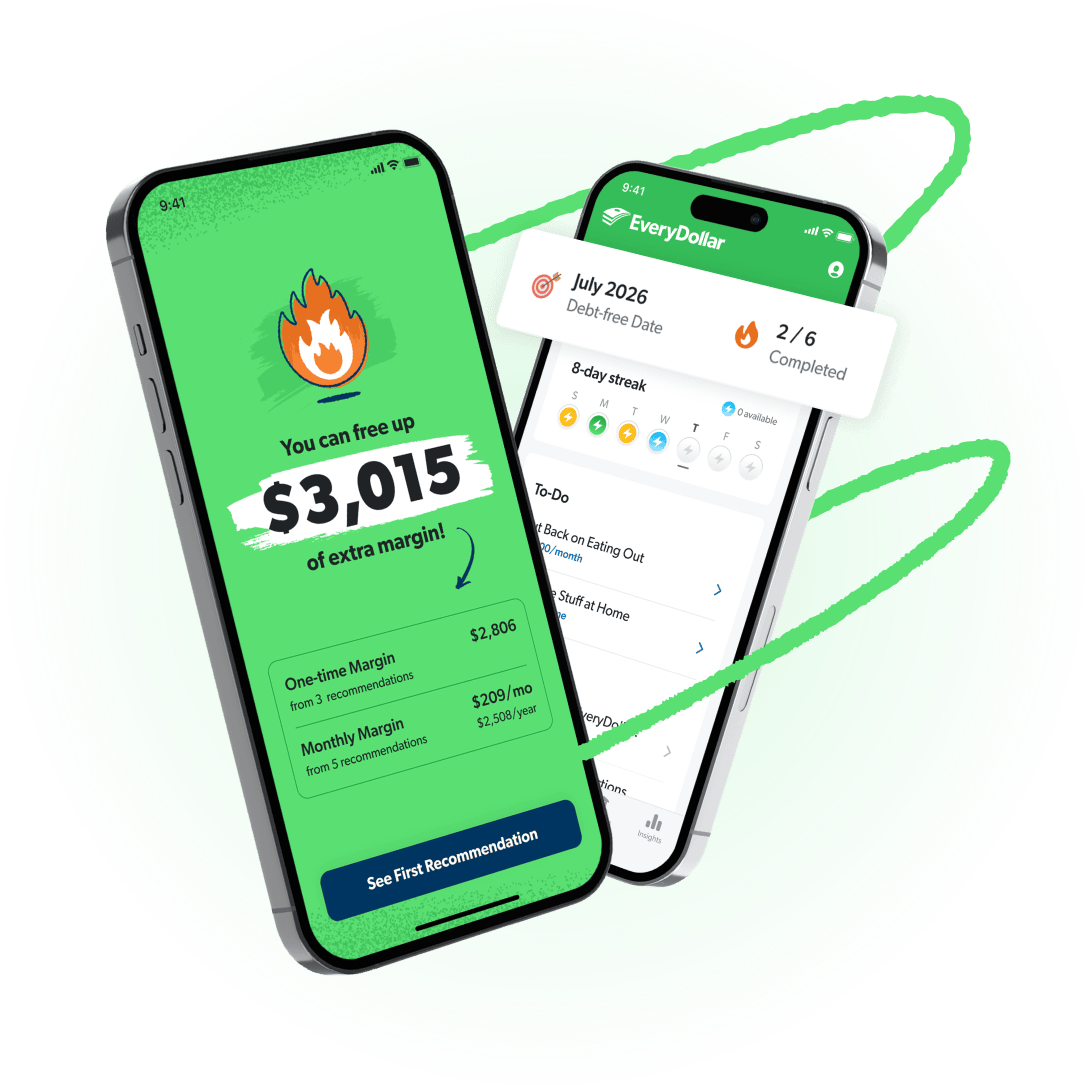
Free Up Margin. Make Real Progress.
The EveryDollar budget app helps you find hidden margin and put it to work so you can stack savings, crush debt, and build wealth that lasts.
3. Decide what car fits your budget.
The car you can actually afford is probably a used car. We get it, you want that shiny new ride with the new-car smell. But here’s the deal: A brand-new car is one of the fastest ways to throw money straight out the window. Unless you’ve got a net worth of at least $1 million, skip the new-car lot. Here’s why:
- Cars lose value fast. In just one year, a new car drops about 20% of its value.1 Ouch! A millionaire can afford that financial hit. But for anyone else, it just doesn’t make good financial sense.
- Real life happens. If you’ve got kids, you know juice boxes and sticky fingers don’t care if your car is new or used.
- Used is reliable. There are tons of dependable used cars out there. You just have to shop smart and ask the right questions.
- Consider the total cost. Some brands cost way more to repair, especially imports with pricey parts. And that SUV might look great, but if it’s a gas guzzler and you’ve got a long commute, your wallet will feel it. Don’t forget other important costs like insurance—your premium will be higher for a new car than a used one. Also, don’t assume electric vehicles will save you money. With fancy computers and batteries, repairs and up-front costs can be higher.
Bottom line: Think about the whole cost of driving the car, not just the sticker price. Taking a few extra steps now means you’ll drive away with confidence (and maybe a little more cash left in your pocket).
4. Plan your car-buying timeline.
So, you’ve got your budget and have an idea of the kind of car you can get, but when are you planning to buy your next ride? That makes a big difference in what you have to work with.
- If your car just quit on you: You might need wheels fast. Use the amount you decided on in Step 2. If you haven’t saved that much yet, decide if it’s worth dipping into your emergency fund, or see if it’s smarter (and cheaper) to repair your car instead of replacing it.
- If your car still runs (even if it’s not your dream car): Keep driving it! Use the extra time to save for the next one—one dollar at a time. Remember: no car payments. That’s off the table.
And when you’re ready to start saving:
- Research the price of the car you want.
- Decide on a time frame you want to get the car by (six months, one year?).
- Then divide the total cost by the number of months to get your monthly savings goal.
Unlike a car payment, this is you paying yourself . . . interest-free. Your patience will pay off, and you’ll be paying cash for your next ride in no time!
Save for the Car You Want Faster
Saving for a car gets a whole lot easier when you’ve got a plan for your money. That’s where EveryDollar comes in!
The EveryDollar budgeting app can help you free up thousands in margin—money you didn’t even know you had—and give you a custom plan to put it to work on crushing debt, stacking savings, and building wealth that actually lasts.
Download EveryDollar today and finally make the progress you’ve wanted all along.
And the next time a dealer tries to hook you with a pricy car payment, you can smile, flash your cash, and say, “No, thanks—I’m paying in full.”
Next Steps
- Add up your current savings and calculate the maximum amount you can pay in cash for a car today.
- Check Kelley Blue Book to estimate your current car’s trade-in or resale value.
- Set a firm car budget and commit to not going over it.
- Download the EveryDollar app and create a monthly savings goal to start stacking cash for your next car.
Car Affordability Frequently Asked Questions
-
How much car can I afford based on my salary?
-
Ramsey’s car-buying rule is that you shouldn’t buy a brand-new car unless you have a net worth of at least $1 million. Also, the total value of all your vehicles shouldn’t be more than half your annual income. This is because you don’t want too much of your money tied up in something that depreciates so fast.
-
How much should you put down on a car?
-
It’s best to put down 100%. The less you put down on a car, the higher your car payment—and the more you’ll pay in interest. So, instead of only making a down payment, budget to pay for the full price of the car.
-
How much car payment can I afford?
-
Rather than asking how much car payment you can afford, ask yourself if you can afford to pay for the total price of the car—up front and in full. Buying a car in cash helps you avoid debt and the stress of a car payment, as well as having to pay thousands more in interest.
Get Weekly Insights Delivered Straight to Your Inbox
Did you find this article helpful? Share it!

About the author
Ramsey Solutions

Get proven Ramsey answers fast.