
From Elective to Essential
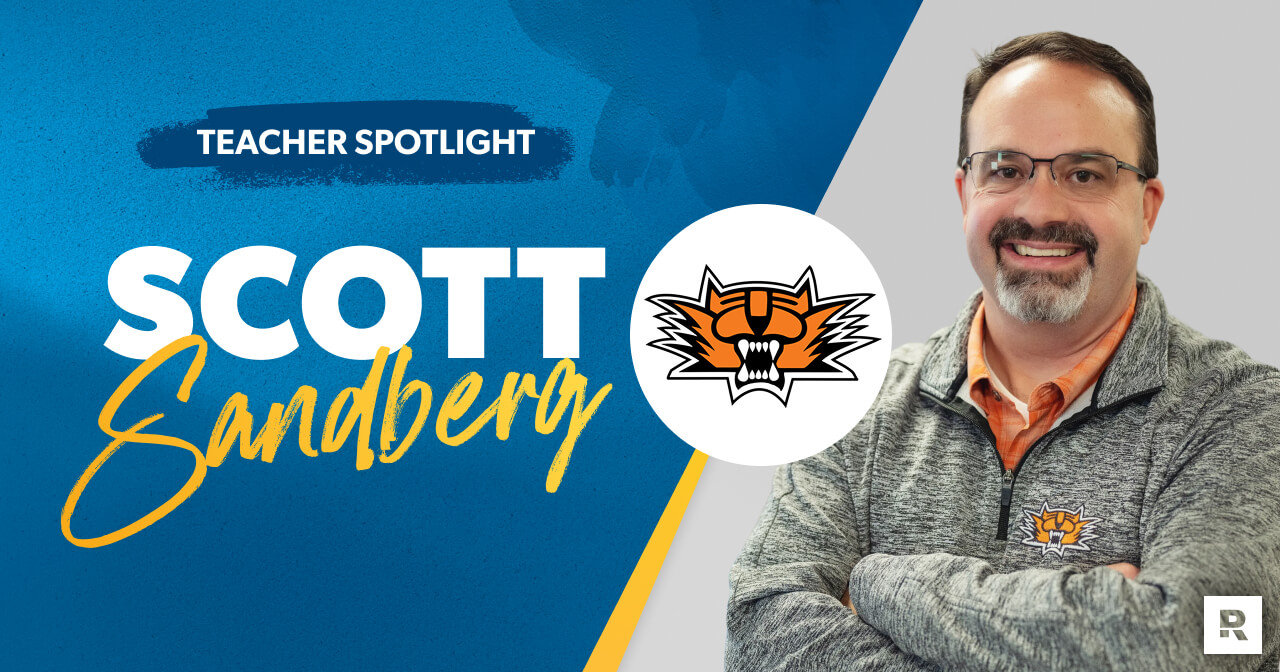
Why One Teacher Believes Personal Finance Belongs in Every High School
When Scott Sandberg asks his new students if they think they can become millionaires, only a few hands go up.
After three weeks of his personal finance class, nearly every hand is raised.
The moment when students realize what’s possible shaped Scott’s career. For more than 14 years, he’s taught Ramsey Education’s Foundations in Personal Finance across two districts. He’s driven by the belief that students can change their financial future.
At Ephrata High School in Washington, personal finance isn’t a graduation requirement, but Scott’s determined to see that change. But in his classroom personal finance is treated as essential. Students budget, debate real-life trade-offs, simulate emergencies, apply for scholarships, and practice long-term thinking about money.
“I’ve had parents come up to me and say, ‘Thank you for teaching this class. This is the first time my student actually talks about school,’" Scott says. “Kids need this kind of education.”
Teaching From Experience
Scott’s commitment to personal finance education didn’t start in the classroom. It started nearly 27 years ago, when he met Dave Ramsey at an event and began his own debt-free journey.
“I adopted Dave’s philosophy, but I did it ‘Dave-ish,’” Scott admits. “It got me out of debt, but it didn’t change my habits.”
That changed after what he jokingly calls “car-mageddon”—a season when three out of four family vehicles needed costly engine or transmission repairs at the same time.
“My wife and I looked at each other and said, ‘We make too much money for this,’” he recalls. “That was the catalyst.”
That experience shapes how Scott teaches. Having learned the same money lessons in his own financial journey brings credibility and perspective into the classroom.
“I’m very honest with my students,” he says. “I talk about my journey—what worked, what didn’t and why behavior matters.”
That transparency builds trust. When students see that their teacher faces the same decisions and learns from them, they’re more willing to take the lessons seriously and apply them to their own lives.
Impact Beyond the Classroom
The impact of Sandberg’s class doesn’t stop at the school doors. What begins in the classroom often continues at home as students start conversations their families weren’t having before.
“They start talking to their parents,” he explains. “They ask things like, ‘Are we in debt? Do we have a plan for the future? How are we going to pay for college?’”
Those conversations don’t just affect students—they reshape how entire families think about money. And sometimes, they change what families think is possible.
“I had a student whose parents told him it was impossible to buy a car with cash. But he learned how to do it in class and now he’s saving for his first car.”
And for many students, the impact doesn’t fade after the class ends. “They’ll text me or call me and say, ‘Mr. Sandberg, I’m going to buy a car and I’m going to pay cash for it,’ or ‘We finally saved up enough money to buy our house,’” he says. “That’s when you know it stuck.”
Advocating for What Students Need
For Scott, the impact he sees in his classroom points to something larger. It’s why his work extends beyond his own students and into broader conversations about what schools require before graduation. He currently serves on a Future Ready committee and has spent years advocating for personal finance to become a graduation requirement in Washington.
“The graduation model is outdated,” he says. “We want to make sure students today are receiving the education that’s required for them to be successful—whether that’s college, trade school or going straight into the workforce.”
Scott knows change takes time. His own class started with just 14 students years ago.
“Now, we’re consistently over 100,” he says. “That’s almost half of our graduating class.”
That growth comes down to trust and relevance.
“This isn’t just information,” Scott says. “If you don’t have the behavior behind it, you’re not going to be able to do it. That’s why we do the simulations. That’s why we use budgeting apps. That’s why we play the games. So students can see that these things have a real impact on real life.”
Foundational Life Skills
For Scott, personal finance isn’t an add-on to a student’s education—it’s a core part of being prepared for life after high school.
He’s seen firsthand how quickly students gain confidence when they’re given clear guidance, real practice and the opportunity to think through financial decisions before they face them on their own.
That belief fuels Scott’s push to make personal finance education available to every student, not just those who choose it as an elective.
Life doesn’t treat money as optional, and neither should schools.
That’s why Scott continues to advocate for personal finance to be treated as essential. Because when schools commit to teaching the skills students will use every day after graduation, they do more than meet a requirement—they prepare students for life.
Get Weekly Insights Delivered Straight to Your Inbox
Did you find this article helpful? Share it!

About the author
Ramsey Education

Get proven Ramsey answers fast.