
Debt by Default
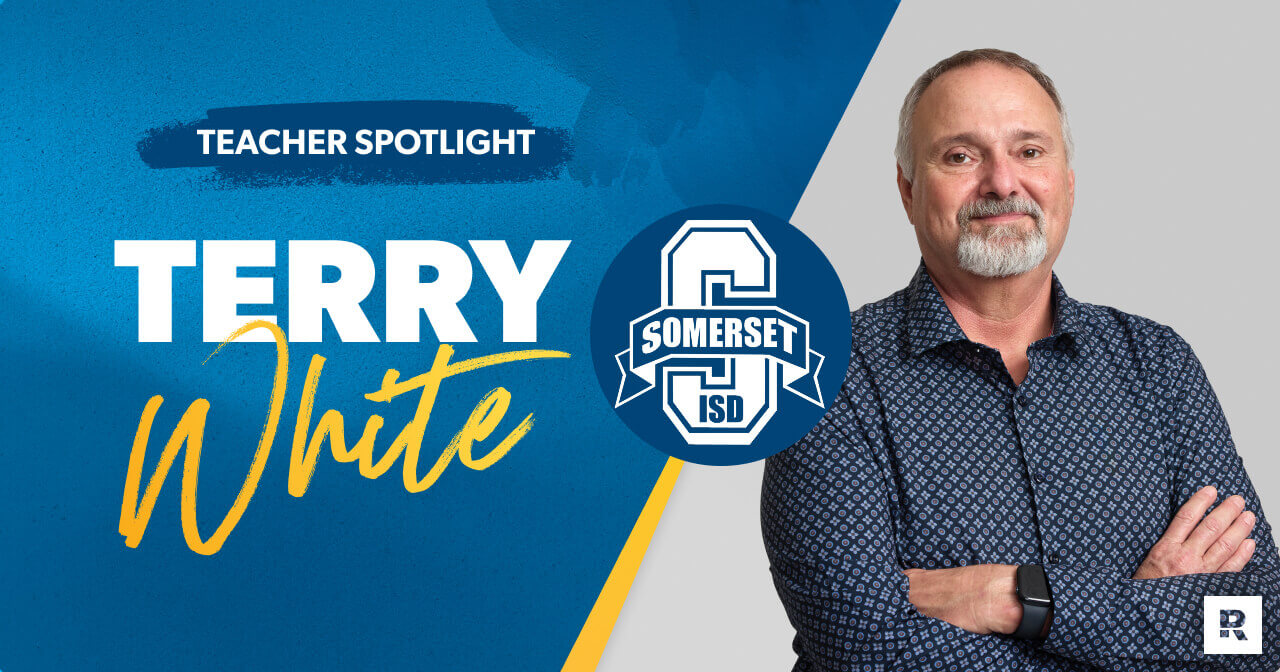
How a Texas High School Class Is Reshaping Financial Conversations at Home
At Somerset High School, just south of San Antonio, Texas, Terry White works with a student population he knows well.
Many students grow up believing debt is simply a part of life. They watch their parents and grandparents rely on credit cards, payment plans and payday loans just to make ends meet.
More than three-quarters of Somerset students come from economically disadvantaged backgrounds. Many live in single-parent households or with their grandparents. And then they move directly into the workforce or community college after graduation—paths where financial decisions begin immediately.
“A good majority—about 60–70%—just join the workforce,” Terry said. “We have quite a few that go to community college. Very few go to a four-year university.”
For students stepping directly into work and adult responsibility, financial decisions don’t wait. That reality shaped how Terry, Somerset’s master social studies teacher and curriculum coach, approached the district’s personal finance curriculum adoption.
Moving Beyond Compliance
When Texas introduced personal finance as a graduation requirement option, Terry saw it as an opportunity to rethink what students needed most.
“Our students and their guardians are never exposed to this kind of stuff,” he said. “They have no idea how to budget. They have no idea how to save money.”
At a curriculum adoption event, Terry reviewed several options. Many leaned heavily on traditional economics, emphasizing theory and abstract concepts that didn’t reflect what he saw in his classrooms.
“Yes, it’s important for students to know supply and demand,” he explained. “They need to know the curves. But going into the workforce, our students need to learn how not to get into debt.”
The goal was clear: Meet the graduation requirement with a course that matched students’ real lives and allow teachers to implement it consistently across classrooms.
Taking the Lesson Home
About 325 Somerset students have completed Foundations in Personal Finance. Terry estimates that 65–70% have truly embraced the curriculum’s principles.
“I’ve had so many of them tell me they’ve started a savings account,” he said. “And their parents have started a savings account.”
The most meaningful impact showed up at home. One student shared that after showing his savings journal to his family, they stopped using payday loans. “His dad actually started keeping a savings journal of his own,” Terry recalled. “That was huge.”
For Terry, those stories confirm what he believed from the start: When students understand how money works, they don’t keep that information to themselves.
Unlearning What Felt Normal
Many students entered Terry’s class with long-held assumptions about money—assumptions shaped by watching their families live paycheck to paycheck and making difficult trade-offs just to cover basic needs.
For some students, financial stress seemed inevitable. For others, budgeting and saving seemed pointless. One student shared with Terry, “I thought budgets were just for poor people. I didn’t know people with money actually use a budget to help keep their money.”
As the course progressed, the curriculum introduced students to basic tools and clear explanations of how money management works—often for the first time.
In some cases, that shift in understanding was emotional. Terry described one student who began crying during class. “She said, ‘With this program, I’m learning I don’t have to be in debt like my parents. I don’t have to be poor.’”
Changing the Default
At Somerset High School, living paycheck to paycheck felt like the default—not because of poor choices, but because it’s what many students had seen modeled at home.
Foundations in Personal Finance doesn’t promise to eliminate every challenge students face. Instead, it offers practical instruction delivered early enough to matter, giving students a clearer framework for managing real-world financial decisions.
For Terry White, the takeaway is clear, and it’s one he’s willing to share beyond Somerset.
“I would absolutely encourage other districts to do the same thing we did,” he said. “Don’t wait. Replace your regular economics. This is truly the information our kids need to go forward and not live in debt.”
Living paycheck to paycheck and going into debt may still be the default many students grow up seeing. But at Somerset, one class is helping them recognize another option—and giving them the tools to act on it.
Get Weekly Insights Delivered Straight to Your Inbox
Did you find this article helpful? Share it!

About the author
Ramsey Education

Get proven Ramsey answers fast.