
How to Pay Off Credit Card Debt
 By Jade Warshaw
Key Takeaways
- The debt snowball method is the best way to pay off credit card debt.
- Options like balance transfers, debt consolidation and personal loans will just make your debt problem worse.
- Pay off your credit card debt faster by cutting up the cards, getting on a budget, lowering your spending, and earning extra money.
- The more money you throw at your debt snowball each month, the faster you’ll knock out your balances and become debt-free.
- If money is tight, protect your Four Walls, cut expenses, and increase your income to get your debt snowball moving.
Listen, if credit card debt is stopping you from paying your bills or keeping you up at night, I see you. I got my first credit card in college and maxed it out fast. At one point, my husband and I had more than $20,000 in credit card debt. I still remember how ashamed I felt—but you don’t have to stay stuck there!
Quick Answer
To pay off credit card debt fast, use the debt snowball method. List your debts from smallest to largest. Pay minimum payments on everything except the smallest debt, and attack that one with a vengeance. Once it’s gone, roll that payment into the next-smallest debt until you’re debt-free.Here’s how big this problem really is: Americans owed $1.26 trillion in credit card debt as of the second quarter of 2026.1 And if you’re carrying credit card debt, you’ve got plenty of company—the average borrower owes $6,610.2
It’s time to drop it like it’s hot. (Sheesh, people, I’m talking about dropping your debt!) Here are all the ways you can attack your credit card debt, starting with the one that actually works.
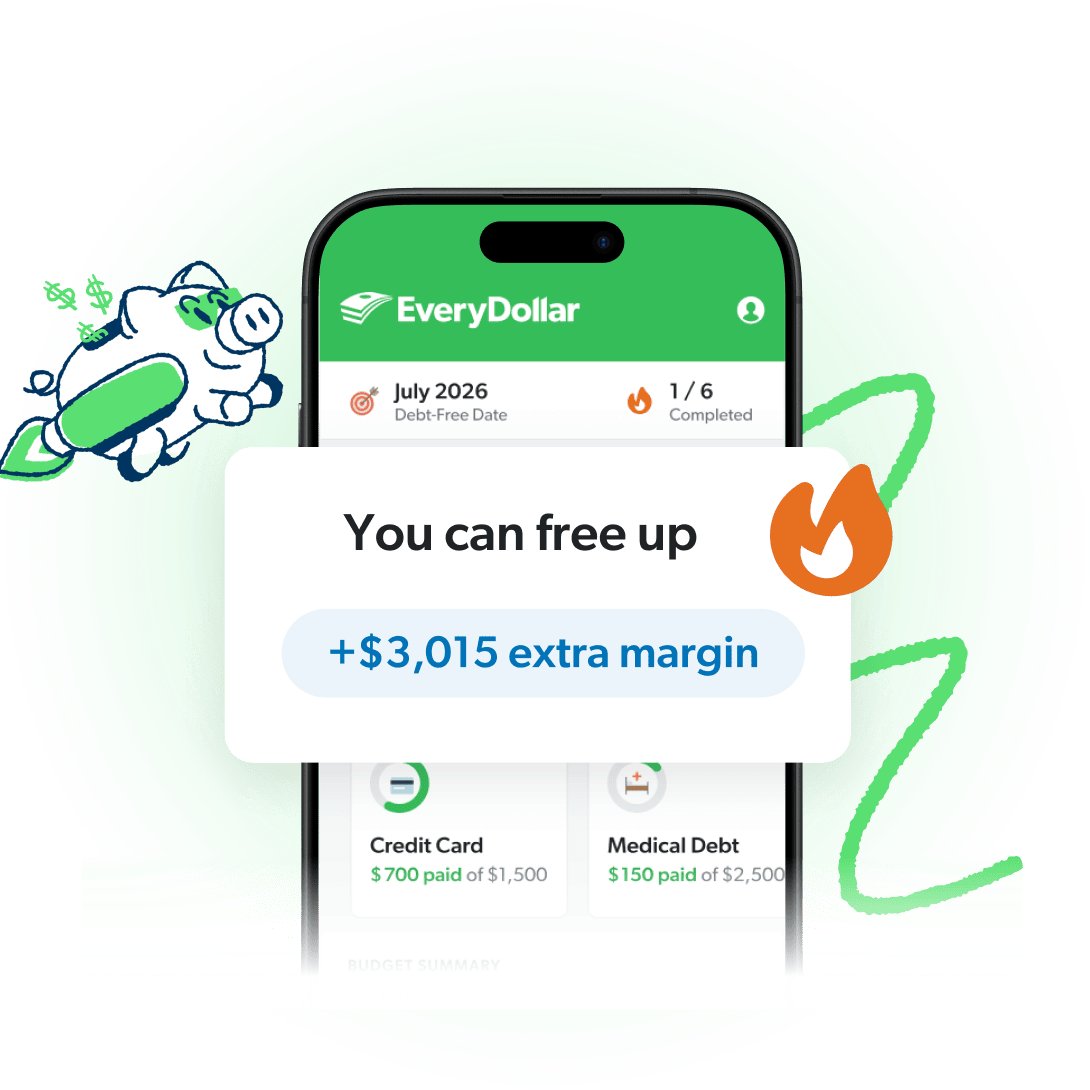
Ditch Debt Faster With EveryDollar
A lifetime of minimum payments? No thanks. The EveryDollar budgeting app helps you find extra margin every month so you can be debt-free faster!
What Are the Most Common Ways to Pay Off Credit Card Debt?
The most common ways to pay off credit card debt are the debt snowball, the debt avalanche, balance transfers, personal loans, debt consolidation, debt settlement, forgiveness programs, 401(k) loans, home equity loans and borrowing from family. But the one we recommend is the debt snowball.
Paying off credit card debt—or any debt—is never easy (and anyone who says different might be scamming you). There are plenty of so-called quick fixes out there, but most of them just move the debt around or add more money problems to your plate.
|
Method |
How It Works |
Should You Use It? |
|
Debt Snowball |
List debts from smallest to largest balance. Pay minimums on everything but the smallest, attacking that one with a vengeance. |
Yes—it’s built around behavior change and quick wins that keep you motivated until you’re debt-free. |
|
Debt Avalanche |
Pay off the debt with the highest interest rate first, regardless of balance. |
No—it puts math ahead of behavior and can take too long to give you a win. |
|
Credit Card Balance Transfer |
Move your balances to a new credit card with a lower introductory interest rate. |
No—you’re shuffling debt around instead of actually paying it off. |
|
Personal Loan |
Replace your credit card balances with one loan that has its own rate, fees and monthly payment. |
No—your cards may show a $0 balance, but you haven’t actually gotten rid of the debt. |
|
Debt Consolidation |
Combine multiple debts into one loan and one monthly payment. |
No—it can stretch out your payoff timeline and keep you in debt longer. |
|
Debt Settlement |
Pay a company to negotiate with creditors in hopes of settling your debts for less than you owe. |
No—you can negotiate with creditors yourself, and debt settlement companies charge hefty fees without guaranteeing results. |
|
Credit Card Forgiveness |
Companies promise to make your credit card debt disappear, often for an up-front fee. |
No—these companies charge big fees and tell you to stop paying your bills, all while promising debt relief they can’t guarantee. |
|
401(k) Loan |
Borrow from your retirement savings to pay off your credit cards. |
No—it robs your retirement of time and growth just to shuffle around debt. |
|
Home Equity Loan |
Borrow against the equity in your home to pay off your credit cards. |
No—you’re putting your house on the line to pay off unsecured debt. |
|
Borrowing From Family or Friends |
Borrow money from someone you love to pay off your credit cards. |
No—it turns a personal relationship into a financial obligation without fixing the behavior that created the debt. |
So, let’s talk about the most popular credit card payoff strategies and whether or not they’ll actually help you get out of debt.
1. How does the debt snowball method work?
The debt snowball method works like this: List your debts from smallest to largest, pay minimums on everything but the smallest, and throw every extra dollar at that one until it’s gone. (Trust me, I know from personal experience!) Here’s exactly how it plays out:
- List all your debts from smallest to largest. If you’ve got multiple credit cards, list the balances individually. And if you’ve got other debt, like car loans, personal loans or student loans, be sure to include those too. Don’t worry about the interest rates right now—just focus on the balances.
- Start making minimum payments on all your debts, except the smallest. This is important because you don’t want 1-800-Pay-Me (aka debt collectors) blowing up your phone.
- Attack your smallest debt with any and all the extra money you can get. Knock it out as fast as possible! (I’ll give you some tips on how to do that in a bit.)
- When that smallest debt is gone, take what you were paying on it and put it toward the second-smallest debt until it’s paid off. Continue to make minimum payments on your other debts.
- Keep doing that until all your debts are gone! Remember, each time you pay off a balance, you’ve got that much more money to throw at the next debt—like a snowball rolling downhill. It’s unstoppable. You’re unstoppable. That credit card debt (or any debt) doesn’t stand a chance!
The debt snowball is all about motivation and momentum. Instead of trying to do everything at once, it gives you a game plan to attack your debts one at a time. That’s why you start with the smallest balance first.
Right about now, you might be thinking, Jade, why not tackle the debt with the highest interest rate first? I know, I know. But the truth is, what you really need right now is a quick win. And the best way to start off strong and stay motivated is to knock out that smallest debt ASAP and feel that win.
Take it from someone who knows. When it comes to paying off debt, money is mostly about your mindset, not math. Once you get that first debt behind you, you’ll be on fire and ready to knock out the next debt!
2. Is the debt avalanche better than the debt snowball?
No—the debt avalanche isn’t better than the debt snowball, even though the math checks out. The debt avalanche focuses on paying off the debt with the highest interest rate first. But that could mean waiting a long time for your first win (and you need those quick wins to stay motivated!). Snowball or bust.
With the debt avalanche, your first targeted debt might be a huge balance that could take a long time to pay off. Sure, the method sounds nice in theory, but it takes too dang long to see real progress.
Remember: Paying off debt is less about math and more about behavior. When you experience a win, your body gets a shot of dopamine and wants to continue that behavior. Sorry, debt avalanche, but in the words of Ariana Grande, “Thank you, next!”
3. Should I use a balance transfer?
No. A balance transfer moves all your credit card debt onto one new credit card with a lower interest rate—but that’s all it does. It shuffles your debt around, but last time I checked, moving the mess around doesn’t make it disappear.
Here’s the thing: I’m not mad at you for considering this. But it’s not the solution. You might lower the temperature of the fire temporarily, but please know, you’re still on fire. You didn’t actually pay anything off.
You could also get hit with transfer fees and risk going blind reading the fine print. Okay, that last part is an exaggeration—but there’s no exaggerating that huge spike in your interest rate when you make just one late payment or the introductory period expires. Even though there are laws meant to protect consumers, credit card companies still find sneaky ways to profit off your oversight.
Remember, what you owe (aka the debt) is your main problem. The interest rate is just an annoying symptom. So let’s stay focused on paying off that credit card as fast as possible, instead of moving the debt around—because it’s burning up your money!
4. Should I get a personal loan to pay off credit card debt?
It’s a no for this one too. A personal loan just trades one loan for another and keeps you stuck in the same debt cycle. It feels like relief because your credit cards show a $0 balance. But the debt just moved to a new lender with its own interest rate, fees and monthly payment. Instead of moving your debt around, you need to deal with it head on.
5. Should I consolidate my credit card debt?
Again, no. (Do you see a pattern here?)
I get why credit consolidation sounds like a good idea. You combine multiple debts into one loan with one monthly payment, which feels simpler. But simpler doesn’t mean debt-free. You still owe the money—and depending on the terms, you could stay in debt even longer.
Also, in most cases, the interest rate still depends on your credit score. I’m not a fan of the credit score (aka your “I love debt” score), but if you’ve got credit cards, you’ve got one. And you should know, if your credit is a hot mess, your interest rate will be too. Plus, if you do happen to snag a low interest rate that seems too good to be true, know that bad boy will usually go up over time.
Debt consolidation goes by all kinds of names—like credit card balance transfers, home equity lines of credit (HELOCs), and student loan consolidation. But don’t let the fancy labels fool you. At the end of the day, it’s still debt!
6. Should I use debt settlement?
Nope. Debt settlement companies will charge you a fee and promise to negotiate with your creditors or reduce the amount you owe. But wait a minute—why pay someone to do something you can easily do yourself for free?
The truth is, these companies usually just take your money and leave you drowning in the debt you already had—plus all the new late fees that built up when no one was paying on your balance.
7. Is credit card forgiveness real?
No—not the way you’re probably hoping. Credit card forgiveness might sound like your debt magically disappears, but usually, it means trying to convince a creditor to accept less than what you owe. And even if they agree, you’re not necessarily walking away scot-free. You could still deal with fees, a hit to your credit, and even taxes on the amount that was forgiven. Some “forgiveness,” huh?
So, watch out for debt relief companies that advertise credit card debt forgiveness! These companies may ask you to stop paying your bills so they can “negotiate” for you. Others will charge huge up-front fees just to promise you some government program that doesn’t exist. And some slap a new label on high-interest consolidation loans and call it forgiveness.
Do you see a trend emerging here? None of these options are a true solution. They’re just hoaxes that’ll keep you busy but not productive in paying down your debt.
8. Should I take a 401(k) loan to pay off credit card debt?
Never borrow from your 401(k) to pay off credit card debt unless you’re trying to avoid bankruptcy or foreclosure. A 401(k) loan lets you borrow money from your retirement savings and pay it back over time with interest. But your 401(k) is for retirement—not for cleaning up credit card debt. That money needs to stay invested so it can grow!
Oh, and if you mess around and get fired or quit your job, the full amount of that 401(k) loan immediately becomes due. That’ll turn your emergency into a full-blown crisis.
9. Should I use a home equity loan to pay off credit card debt?
No—don’t use a home equity loan to pay off credit card debt. A home equity loan is basically a second mortgage that lets you borrow against the equity you’ve built up in your home. But here’s where things get real: Your house is the collateral. Y’all, we are not putting the roof over our heads on the line to pay off a credit card! That’s taking one money problem and turning it into a much bigger one. Hard pass.
10. Should I borrow from family or friends to pay off credit card debt?
Keep your credit card debt out of your relationships. Borrowing money from family and friends is a quick way to make things weird with the people you love. I don’t care who you are or how rich Uncle Boo Boo might be—once money gets involved, that relationship changes.
Not only will it make Thanksgiving dinner extremely uncomfortable, but it also turns your loving uncle (or your friend) into a debt collector. No family needs that extra tension—especially around the dinner table. And just so you know, credit card debt doesn’t automatically go away when someone dies, which can make things even messier for the people you love.
How Can I Pay Off My Credit Card Debt Even Faster?
Cut up those cards, get on a real budget, cut your spending, and find ways to bring in extra income. Do all four, and you’ll throw some serious fuel on that debt snowball. Let’s get into it.
Should I cut up my credit cards?
Yes—cut up your credit cards and close the accounts, even the store cards. You can’t ditch debt for good if you’re still swiping.
I know those credit card points and cash-back rewards can make you feel like you’re getting something for free. You’re not. Credit card companies aren’t handing out rewards because they’re feeling generous. They’re making billions off interest, fees and people staying in debt. Don’t play their game.
And yeah, at first you might feel a little out of place—like showing up to a party dressed as Wonder Woman only to realize it wasn’t a costume party. But who cares? A debit card (or cash) will do everything a credit card will do. I’ve booked flights, rented cars, and even bought a house without a credit card. The only difference is, I wasn’t spending money I didn’t have.
Do I need a budget to pay off credit card debt?
Absolutely! You can’t pay off credit card debt with your money running around unsupervised. A budget is like a toothbrush—everyone needs one, and without it, things get gross real quick.
I’m talking about a zero-based budget, where you give every dollar a job. And right now, one of those jobs is kicking your debt to the curb.
Go ahead and create a budget with our EveryDollar app. Start by taking care of your essentials, then budget for the minimum payments on all your debts. Once those are covered, take a hard look at what you’re spending each month on the fun stuff (eating out, trips to the nail salon, streaming services).
Next, grab your credit card statement and budget to pay off the full statement balance by the due date. Got extra money in your budget? Great. Use it to attack your smallest debt first with the debt snowball and knock that balance out fast.
How can I lower my spending to pay off debt faster?
Take a good, hard look at your budget and find every expense you can live without for a season. If you need some ideas of where to start cutting, ya girl has got a few:
- Restaurants (eating out will eat into your budget big-time)
- Entertainment (this includes sports games or going to the movies)
- Cable or streaming subscriptions (for now, sit through the ads on those free versions)
- Daily coffee runs (you can be your own barista)
Also, find ways to lower your monthly bills and save money in the categories you can’t cut completely. You can do this by watching your electricity use, meal planning, or choosing generic over name brands. And when you shop, use cash—it helps you curb those impulse buys.
If you make enough small changes, you’ll feel like you got a raise! Just make sure you’re also intentional about putting your freed-up money toward paying off debt—not wasting it on unnecessary purchases.
How can I earn extra money to pay off debt faster?
Sell your stuff, work extra hours, or find ways to increase your income with a side hustle (or two!). Drive for Uber, deliver groceries, house-sit—whatever you can do to bring in extra cash, do it. And then throw that money straight at your debt.
And listen, you don’t have to take my word for it. Carl, a member of THE Ramsey Baby Steps Community Facebook group, shared this advice for anyone working to get out of debt:
“Sell anything you can, and scrape out the pennies from the corners. It’s not as big of a mountain as you think, but it takes perseverance and determination to climb. Make every penny count, and involve the kiddos—let them know a little sacrifice now means bigger and better things in the future. You can do this! It will be well worth it!”
Don’t sleep on the skills you already have either. You could tutor, babysit or pick up freelance gigs. Shoot, I taught music and sold cakes when I was getting out of debt. Whatever your thing is, use it to make some extra money. Will it take more of your time and energy? Yes. But will it help you pay off your debt faster? Most definitely!
Life is about trade-offs. This is just a season of cutting back and working harder, but it means you’re on the path to being credit card debt-free. And that’s worth every ounce of sweat you’ll pour into this thing. I did it. I know you can do it too!
Okay, we’ve talked about how the debt snowball works. But what does that actually look like when you’ve got a big balance staring you in the face? Let’s use $10,000 in credit card debt as an example . . .
How Can I Pay Off $10,000 in Credit Card Debt?
To pay off $10,000 in credit card debt, stop adding new charges, make the minimum payments, and throw every extra dollar you can find at your smallest balance first.
Let’s say that $10,000 is spread across three cards with balances of $2,300, $3,200 and $4,500. You’d make the minimum payments on all three, then use EveryDollar to find as much extra money as possible to attack that $2,300 balance first. Once it’s gone, roll that payment into the $3,200 balance and keep that debt snowball moving.
And y’all, the amount you throw at this thing matters. For example, assuming a 22% interest rate and $250 in combined monthly minimum payments, if you added:
- $200 extra per month, you’d be debt-free in about 2 1/2 years
- $400 extra per month, you’d be debt-free in about 1 1/2 years
- $600 extra per month, you’d be debt-free in a little over a year
These are just examples—your interest rates and payments will affect your actual timeline. Run your numbers through the Credit Card Payoff Calculator to see how quickly you could knock out that $10,000.
How Can I Pay Off Credit Card Debt When I Have No Extra Money?
If you don’t have any extra money to pay off your credit cards, stop using the cards, protect your Four Walls, get on a bare-bones budget, cut your expenses, and increase your income. You may not be able to speed up your debt snowball today, but you can stop digging the hole deeper and start creating some margin.
Here’s exactly what to do:
- Stop using your credit cards. No more swiping, y’all. Take those cards out of your digital wallets, move recurring charges off them, and cut them up or freeze them. You can’t pay off credit card debt while you’re still adding to the balance. Stop the leak first!
- Protect your Four Walls. Cover your Four Walls—food, utilities, shelter and transportation—before you put anything extra toward your credit cards. Listen, we aren’t skipping groceries or risking the lights getting shut off just to make the debt snowball move faster. Take care of your basic needs first, then make your minimum debt payments.
- Get on a bare-bones budget. Open up the EveryDollar app and give every single dollar a job. Start with your Four Walls and minimum debt payments, then look at everything else. And I mean everything. If the math says you don’t have enough money, now you know exactly what you’re working with—and what needs to change.
- Prioritize your expenses if your income changes. If your paycheck isn’t the same every month, rank your expenses and fund them in order as the money comes in. Four Walls first. Minimum payments next. Everything else comes after that. Don’t spend money you’re hoping will show up. Work with the money you actually have, and adjust your budget every time your income changes.
- Cut your expenses. Cancel, pause, reduce, renegotiate and sell. Cancel subscriptions you don’t need. Pause restaurants and other fun spending for a while. Call around and see where you can lower your bills. Sell the stuff collecting dust around your house. Get scrappy! And remember, some of these cuts are just for a season. You’re not saying, “Never again.” You’re saying, “Not right now—I’ve got debt to pay off.”
- Increase your income. If there’s nothing left to cut, go make more money. Pick up overtime, grab a short-term side hustle, or start selling stuff. Find what you can do and get after it! Every extra dollar goes straight toward the smallest balance in your debt snowball.
Now, if you’ve covered your Four Walls and still can’t make your minimum payments, we’ve got a different situation on our hands. And if you’re already behind on payments, don’t just cross your fingers and hope it works itself out. Read through our article What to Do When You Can’t Pay Your Bills, and make a plan for what to do next.
And listen, if your debt snowball is moving slower than you want right now, keep going. When my husband and I were $20,000 deep in credit card debt, there were months when we didn’t have an extra dollar to throw at it. But we protected our Four Walls and kept working the plan anyway. You can do the same.
Every balance you knock out gets you closer to the day when credit card debt is completely out of your life. I’m telling you from the other side: All that hard work is worth it. So keep working that debt snowball until every last balance is gone. You’ve got this!
Next Steps
- Cut up your credit cards, then cancel the accounts for good.
- Build your $1,000 starter emergency fund—that’s Baby Step 1.
- Start your debt snowball with a free budget in EveryDollar.
-
How long does it take to pay off credit card debt?
-
The average person using the debt snowball becomes debt-free in 18–24 months. Your timeline will depend on how much debt you have and how aggressively you attack it. The more intense you get about cutting expenses and bringing in extra income, the faster that debt snowball will move.
-
Should I close my credit card accounts after paying them off?
-
Yes. Pay them off, close the accounts, and be done with credit cards for good. Keeping a paid-off card open “for the credit score” just keeps you tied to the system that got you into debt in the first place.
-
How can I pay off credit card debt with no money?
-
You can always find money, even when it feels like there’s none. Start a budget with EveryDollar. Cut every expense that isn’t essential (like eating out, subscriptions, or that daily coffee) and pick up a side hustle. Then throw every extra dollar at your debt.
-
Is it better to pay off credit cards or save money first?
-
Save your $1,000 starter emergency fund first—that’s Baby Step 1. It keeps a flat tire or an unexpected doctor’s visit from turning into more credit card debt. Once that fund is in place, go all in on paying off your debt with the debt snowball.
-
What if I can’t even make the minimum payments?
-
Cover your Four Walls first: food, utilities, shelter and transportation. If you still don’t have enough to make your minimum payments, you need a different game plan. Head over to our article What to Do When You Can’t Pay Your Bills to figure out your next move. And don’t panic. Take care of your basic needs first, then tackle the next step.
Get Weekly Insights Delivered Straight to Your Inbox
Did you find this article helpful? Share it!

About the author
Jade Warshaw

Get proven Ramsey answers fast.