
Are Tiny Homes Worth It?
 By
By
Key Takeaways
- Tiny homes are more like RVs than traditional homes—they lose value over time instead of building equity.
- A tiny home costs around $45,000 to build, but land, permits and utility hookups can push the total cost even higher.1
- Most tiny homes don’t qualify for a traditional mortgage, so buyers get stuck with higher-interest RV or personal loans.
- A tiny home can still be worth it as a lifestyle choice—just don’t count on making your money back when you sell.
Remember when tiny houses were all the rage? Wait . . . they still are. People everywhere seem to be fascinated by the idea of downsizing their lives, responsibilities, debt and reliance on a normal nine-to-five. Pop culture has helped fuel the fascination, with TV shows like Tiny House Nation and Tiny House, Big Living highlighting this supposed lifestyle of minimalism and nonstop adventure.
But is going tiny really worth it?
Quick Answer
Generally, no—a tiny home isn’t a good financial investment because it depreciates like a vehicle instead of building equity like a traditional home. But it can be worth it as a lifestyle choice if you’re after minimalism or mobility and you don’t mind owning something that loses value over time.What Are Tiny Houses?
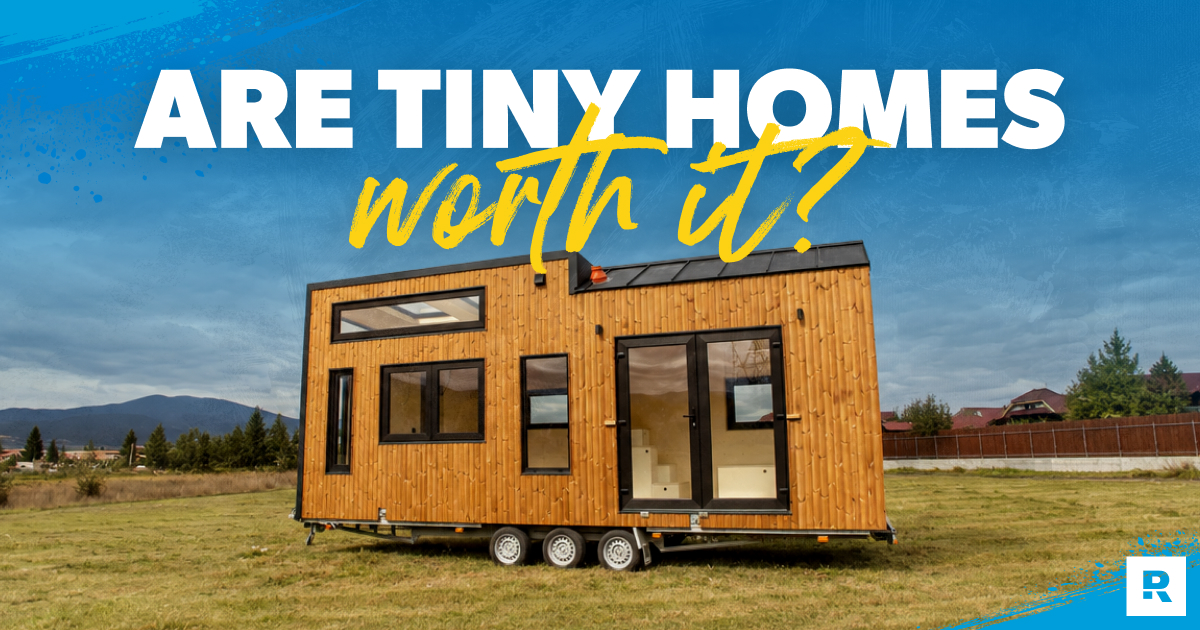
Tiny homes are homes that are . . . well, tiny. They can come in all shapes and styles and can be built from a kit or from the ground up. Some are even customized RVs, school buses, trailers or shipping containers. But remember, tiny homes are small. A tiny house is a dwelling of 400 square feet or less, excluding lofts.2

Tiny homes are often classified as personal property—like a car or an RV—rather than real estate, which can make them harder to finance and resell. It’s a big reason a tiny home works better as a lifestyle choice than as a wealth-building move like buying a traditional stick-built house—whether you’re talking about your primary residence or a second home.
Tiny homes aren’t a new idea. People have lived in small spaces for all kinds of reasons since the beginning of time. But the tiny house movement you see today is here and going strong. Whether you consider yourself a minimalist or someone who just doesn’t like a lot of stuff, the idea of downsizing to a tiny home can easily grab your imagination.
Listen: You either love the idea of a tiny home or you hate it. If you’re young, have a wandering spirit, and just want a little adventure in your life without being attached to a hefty mortgage, you probably love the idea. But if the thought of not being able to sit up in bed makes you claustrophobic, you’ll hate it.

How Much Does a Tiny House Cost to Build?
Tiny homes cost an average of $45,000 to build.3 In comparison, building a standard-sized home costs an average of $323,000.4 But don’t let those numbers fool you. At $150 per square foot, tiny homes cost more per square foot to build than standard-sized homes, which typically run $60–110.5,6
Why Are Tiny Homes So Expensive?
Tiny homes often come with big hidden costs—like land, permits and utility hookups. And if you want your tiny home to have an outdoor theater, rooftop patio, butcher-block countertops and granite-tiled rain shower . . . you’ll pay top dollar.
If you’re looking for a run-of-the-mill tiny space that gives you a place to rest your head (and save money up front), a tiny home kit could help. But remember, the kit doesn’t always include necessities like doors or windows. Yup—those are extra.
Here are some expenses people don’t always think about before buying a tiny home:
- The cost to buy or rent land
- Permits and licenses from the state and city where you plan to park or build
- A trailer (if your tiny home is on wheels) for traveling or moving your home, fuel, and a vehicle with enough horsepower to lug it around
Now, if you want to own the ground under it instead of renting a lot, start by learning how to buy land so you know what that adds to your budget.
Here's a Tip
The sticker price is just the start. Before you can move in, you’ll likely pay to buy or rent land, pull permits, and hook up water, sewer and electricity. On a raw lot, those hookups alone can run into the thousands.
What’s the Resale Value of Tiny Houses?
If your tiny home is on wheels, it’ll depreciate more like an RV or a truck. Tiny homes have poor resale value because the buyer pool is small and most traditional lenders won’t write a mortgage for them. So your future buyer is often stuck paying cash or hunting for an RV loan, which shrinks the pool even further.
When it comes time to sell your tiny home, you’ll have to find a super-specific buyer, and you’ll have to sell that buyer on the customizations and style of house you chose for yourself. The multipurpose spaces you thought were a no-brainer for your lifestyle may not work for someone else’s lifestyle. Yup—that special closet you made for your handbell collection will be worthless to anyone who doesn’t give a rip about tiny musical bells.
If a getaway place is the goal, there are smarter ways to afford a vacation home than parking money in something that loses value.
Want More Expert Real Estate Advice?
Sign up for our newsletter! It’s packed with practical tips to help you tackle the housing market and buy or sell your home with confidence—delivered straight to your inbox twice a month!
Do Tiny Houses Depreciate in Value?
Yes, tiny homes depreciate in value, especially ones built on wheels. That’s because they’re seen more like a mobile home or the truck you pull them with, rather than a piece of real estate. The market for tiny homes is a lot smaller than the market for full-size family homes. But even if your tiny house is built on a foundation, don’t expect it to increase much in value—the resale market is still small.
So, unless you’ve built your tiny house on the most desirable piece of land in the United States (and you own that land) with a crazy amazing view, you probably won’t see your home value go up over the years. Bummer.
But when it comes to owning a tiny home, people aren’t really looking to build equity. They’re looking for adventure, freedom from a large house payment, and the opportunity to live life a little differently than the rest of us.
Are Tiny Houses Worth the Investment?
No—tiny homes aren’t a good financial investment because they lose value over time, unlike a traditional home.
Here’s how a tiny home compares to a traditional home on the things that actually matter:
|
Factor |
Tiny Home |
Standard-Size Home |
|
Typical cost to build |
$45,000 ($150 per square foot)7 |
$323,000 ($60–110 per square foot)8 |
|
Appreciation |
Depreciates like an RV—the structure rarely gains value |
Typically appreciates over time |
|
Financing |
Rarely qualifies for a mortgage—usually RV or personal loans |
Standard mortgages at lower rates |
|
Ongoing costs |
Land or lot rent and towing |
Property taxes, insurance and upkeep—but builds equity |
|
Builds wealth? |
No |
Yes |
If you’re absolutely sold on living small and going tiny, you do you—but don’t expect any returns on your investment.
If you need a place to live but aren’t ready to buy a house, that’s okay! Remember: Renting isn’t bad, especially if you’re working on revamping your finances from the ground up. We know it’s hard to stomach the idea of “throwing away money,” but renting a home or apartment for a season might be your best option.
And if you’re looking for a tiny house because you believe in minimalism, living small or traveling, that’s okay too. But don’t be surprised if the investment you make in your tiny house isn’t so tiny. There’s a lot of hassle that comes with tiny home living. Before you spend that hard-earned money on building your tiny abode, make sure you’re up for the challenges it’ll bring with it. And don’t forget: The investment you’re making at this point is more about the lifestyle than the money you’ll make at resale.
Don’t settle for a tiny investment. Find a RamseyTrusted® real estate agent to help you buy a home that actually builds wealth. We’ll match you with an expert agent in your area who will give you solid homeownership advice with your specific needs in mind.
Next Steps
- Pay off all debt.
- Save 3–6 months of expenses in a fully funded emergency fund.
- Take our free quiz to see if you’re ready to buy a house.
Frequently Asked Questions
-
Are tiny homes a good investment for first-time buyers?
-
No—not if your goal is to build wealth and move into a traditional home later. Tiny homes are a lifestyle purchase, not a wise financial move. Their resale market is limited, financing can be expensive, and they don’t build equity like a traditional home. If you want a bigger home down the road, buying a tiny home can delay that goal instead of helping you reach it.
-
Can you get a mortgage for a tiny home?
-
Rarely. Most traditional lenders won’t write a mortgage for a tiny home on wheels, and very small homes can be difficult to finance and appraise. You’ll likely be looking at a higher-interest personal loan or RV loan instead, which makes an already risky purchase even more expensive.
-
Do tiny homes on foundations appreciate?
-
They’re better than tiny homes on wheels, but they still aren’t a strong investment. The resale market is small, so appreciation is limited and unpredictable. When the value does go up, it’s usually the land doing the work—not the tiny home sitting on it.
-
Is it cheaper to live in a tiny house than to rent?
-
It can cost less month to month, but that doesn’t make it the better financial move. A tiny home can lose value—and financing, land, utilities and maintenance add up fast. Renting a modest place while you save for a down payment on a traditional home is often the smarter way to move toward homeownership.
Get Weekly Insights Delivered Straight to Your Inbox
Did you find this article helpful? Share it!

About the author
Ramsey Solutions

Get proven Ramsey answers fast.