
Signs of Gossip in the Workplace and What Great Leaders Do About It

Key Takeaways
- Gossip in the workplace is discussing a problem with someone who can’t solve it.
- Two of the many signs of gossip are smaller meetings forming in the hallway and factions or cliques forming inside the team.
- Gossip grows in leadership gaps.
- One way to help stop gossip is to establish clear meeting rhythms.
- When leaders confront gossip quickly, they protect unity and retain team members.
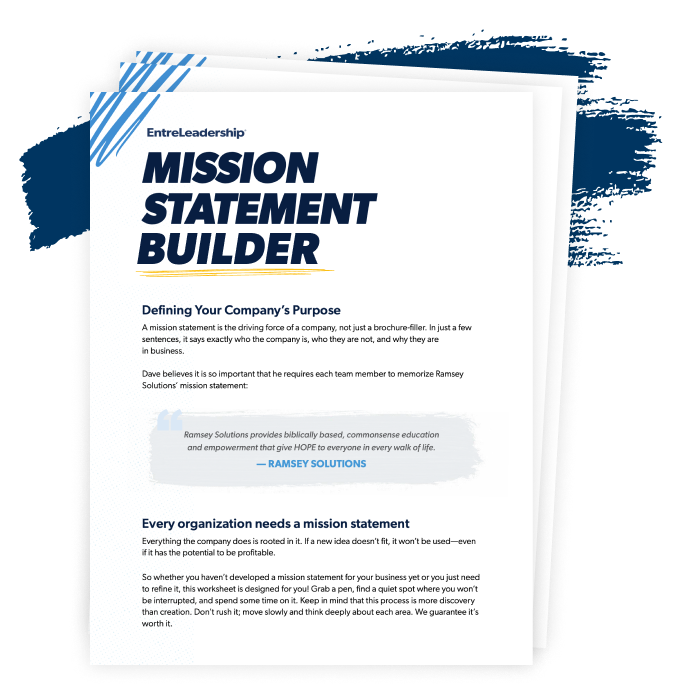
Get the Free Mission Statement Builder
You don’t have to figure it out alone! Download the easy-to-follow EntreLeadership Mission Statement Builder that will help you write a mission statement that gets you and your team fired up and on the same page.
Imagine losing one of your top performers and not knowing why. Their numbers were strong, their pay was competitive, and their workload was fair. But over time, they quietly disengaged—taking lunches alone, no longer speaking up in meetings, and pulling back the enthusiasm and ownership that once set them apart. Then one day, you were blindsided when they slid a letter of resignation across your desk. Within a week, they were gone.
Later, you found out they were exhausted, not by the work, but by the steady drip of speculation and subtle divisiveness on the team. It wasn’t loud or dramatic. It was hallway whispers, side comments after meetings, and just enough negativity to make it hard to feel safe or optimistic.
That’s how gossip in the workplace works. It rarely shows up as the headline in an exit interview, but it often plays a supporting role.

Workplace gossip quietly fuels distrust, disengagement and turnover. When people feel talked about instead of talked to, they pull back. Yet 58% of team members say they observe gossip weekly, even while acknowledging that it hurts morale and damages trust.1
Gossip is an issue every good leader has to face. Until you understand gossip, confront it, and eliminate it, it will define your culture, and your workplace can quickly become a revolving door of strong, high-performing team members. So let’s look at what gossip is, why it spreads, and how to stop gossip in the workplace.
What Is Considered Gossip?
Here’s a simple gossip definition: Gossip is discussing a problem with someone who can’t solve it. It isn’t just talking behind someone’s back. It’s misdirected communication. For example, gossip is when:
- A team member vents about a coworker to a peer instead of addressing it directly.
- Someone speculates about leadership motives instead of asking for clarification.
- Negative information gets repeated with no regard for others.
The bottom line is simple: If the person you’re talking to can’t fix the problem and you’re not looking for a solution, you’re gossiping.
Now, not all negative conversations are wrong. Here are a few things gossip isn’t:
- Giving direct feedback
- Escalating concerns to the right leader
- Processing conflict in a one-on-one meeting
- Asking clarifying questions
It’s the toxic conversations that travel sideways to other team members instead of up to leadership that poison unity. And unity isn’t optional if you want to grow a remarkable company culture.
Signs of Gossip
Gossip doesn’t always announce itself, but it leaves fingerprints. You might notice side comments after meetings or speculation about leadership decisions that no one has taken the time to clarify. You might even hear hushed, “Did you hear . . . ” more than you’d like.
But more subtly, you’ll see these signs of people gossiping in your workplace:
- Information travels unofficially before it’s shared formally.
- Tension between teammates appears out of nowhere.
- Your leaders and managers are surprised by complaints that have been circulating for weeks.
- Smaller meetings form in the hallway after the real meeting ends.
- Factions or cliques form inside the team.
- The team slowly drifts away from your stated core values, unchecked.
Gossip in the workplace is one of the five enemies of unity for a reason. It trades clarity for assumptions, alignment for division, and courage for comfort.
How Gossip Starts
Most people don’t think they’re gossiping in the moment. In their minds, they’re just processing or venting. Or maybe they’re trying to make sense of something they don’t understand or something causing friction.
But gossip grows in leadership gaps. Here’s what we mean:
- If roles are unclear, people fill in the blanks.
- If decisions aren’t explained, people create their own explanations.
- If meetings are inconsistent, issues surface in the hallway instead . . . or around the coffee machine, where frustration spreads faster than facts.
- If there’s no safe, clear path to share frustration with a leader, it spreads to the closest warm body.
- If bad behavior isn’t confronted, morale quietly erodes while the gossip keeps spreading.
When people don’t believe they have healthy escalation paths for problems, culture fractures. And when you don’t create structured communication rhythms, your team creates unstructured ones. That’s why healthy businesses rely on consistent meeting rhythms and clear expectations. When your team knows where concerns belong, they’re far less likely to process them at the coffee machine.
How to Stop Gossip in the Workplace
Now for some good news: If you see gossip in your organization, you can be an agent for change. It’s not as simple as putting up a “no gossip” poster, but building strong, healthy leadership in four key areas will shut down gossip and restore unity.
1. Align your team around your mission.
Healthy communication flows from shared purpose. When your team is aligned around a clear mission, it becomes easier to filter conversations, resolve conflict, and protect unity.
Here are three steps to make this happen:
- Define your mission.
- Align your team around it.
- Lead with it so everyone knows why you exist and how you win.
2. Establish clear meeting rhythms.
Strong communication reduces the oxygen gossip needs to survive. Make sure your meetings review priorities, surface issues, clarify decisions, and reinforce your mission. It’s worth repeating: When team members have a structured place to process concerns, they’re less tempted to take matters into their own hands.
Healthy teams consistently use these communication rhythms:
- Weekly team meetings
- One-on-ones
- Quarterly reviews
3. Teach your team that negatives go up.
On healthy teams, negatives go up and positives go all around. In other words, if there’s a problem, it goes to someone who can fix it. And when there’s a win, it gets celebrated publicly.
When someone brings you a sideways complaint, coach them in the moment with phrases like, “Have you talked to them about this?” or “What solution would you propose?”
And if you’re not their leader, your standard response should be something like, “Let’s bring that to your leader or another leader you trust.”
You’re not shutting them down. You’re redirecting them and reinforcing ownership. Over time, your team will start doing this for each other. When everyone helps protect unity, culture strengthens quickly.
4. Model clear, direct communication.
Leaders set the emotional thermostat. If you vent about team members without resolution, your team will notice. If you speculate publicly, they’ll follow your lead.
So model what you expect to see using effective communication:
- Address issues quickly.
- Clarify rather than try to interpret or guess.
- Attack problems, not people.
- Listen more than you talk.
- Have the uncomfortable conversation.
Direct conversations prevent whispered ones. State your expectations and path for escalation and resolution before a crisis forces your hand. During interviews, onboarding and staff meetings, clearly explain your workplace gossip policy so everyone understands it, and connect it to your core values so it’s not just a rule but a reflection of who you are.
Leadership Accountability
This part of the gossip conversation is especially tough because the truth is, sometimes you can put everything in place clearly and communicate consistently, yet a team member may still choose to gossip at work. Now what?
Step one is to confront the gossip in what will likely be an uncomfortable conversation. Name the behavior clearly and explain its impact on trust and morale. Let the team member know what you expect and ask for their commitment to change.
If the gossip continues, it’s now a performance issue. In limited cases, you might set up a performance improvement plan, but more often than not, you’ll need to protect your culture by letting the person go.
That’s not being harsh. That’s stewarding your culture and caring about the unity of your team and the service your customers receive. Unity is too valuable to sacrifice for the temporary comfort of avoiding conflict.
What a Gossip-Free Culture Looks Like
You’ll know you’ve built a gossip-resistant culture when conversations feel light, trust runs deep, and problems get solved instead of recycled.
A gossip-free business isn’t robotic or fearful—quite the opposite. It’s healthy and free to thrive because feedback is direct, roles are clear, assumptions are minimal, and trust is high.
In a gossip-free culture, energy is spent serving customers and solving problems, not managing drama. Problems are processed, not passed around. And team members are free to focus on work they care about—work that actually matters.
Gossip Audit
Use these questions to evaluate whether your leadership systems are strengthening unity or unintentionally fueling gossip:
- Do we have consistent communication rhythms?
- Are roles and expectations clearly defined?
- Do team members know where to escalate concerns?
- Do we teach unity explicitly?
- Do we celebrate wins publicly?
- Do our meetings surface real issues?
- Do I address gossip immediately?
- Do I model direct conversations?
If you hesitate on several of these, remember that you set the tone. Revisit your mission as the North Star for your team. Then recommit to clear rhythms, reinforce that negatives go up, and lead with direct communication. When you do, you won’t just reduce gossip. You’ll rebuild trust and create a culture where your best people thrive.
What’s Next: Define Your Mission. Clarify Your Purpose.
Clarity doesn’t just inspire your team members. It protects them. Download our free Mission Statement Builder to define your mission in six easy steps and create a unified team that cares about your purpose as much as you do.
Get Weekly Insights Delivered Straight to Your Inbox
Did you find this article helpful? Share it!

About the author
EntreLeadership

Get proven Ramsey answers fast.