
Cash Stuffing: How It Works
 By
By 
Key Takeaways
- Cash stuffing, also called the envelope system, means putting cash into labeled envelopes for each category and only spending what’s in each one.
- Each envelope has a set amount for the month, and once it’s gone, you stop spending in that category.
- Paying with cash makes spending feel real, which helps you spend less than when you swipe a card.
- When an envelope runs out before the month ends, you can see exactly where you need to pull back on your spending.
- Any leftover cash should be put to work toward goals like building an emergency fund or paying off debt.
Cash stuffing may be trending on TikTok, but it’s nothing new. It’s a hands-on way to follow a zero-based budget, and it’s been helping people stop overspending and get out of debt for decades.
Quick Answer
Cash stuffing is a budgeting method where you withdraw physical cash for your monthly spending categories and “stuff” it into labeled envelopes. Once an envelope is empty, you stop spending in that category—or choose to move money over from another category.Sound familiar? It should. Cash stuffing is just the envelope system with a trendier name. And there’s a reason this old-school budgeting method still works.
What Is Cash Stuffing and Why Does It Actually Work?
Cash stuffing works because it makes you feel the money leaving your hands with every purchase. Psychologists call this the “pain of paying,” and using cash makes spending feel oh so real—which can help you think twice before blowing past your budget.
Here’s how it works: You divide your monthly income into labeled envelopes, one for each spending category, and only spend what’s inside. When the money’s gone, it’s gone, and you’re done spending in that category for the month. That built-in limit makes you slow down and decide whether that next purchase is really worth it.
When you’re at the grocery store watching the total climb past your budget and you’re the one handing over twenties, it hits different. That feeling is your budget working.
What’s the Difference Between Cash Stuffing and the Envelope System?
There isn’t one. Cash stuffing is just the envelope system with a shiny new social media name. The same envelopes, the same cash and the same plan for telling your money where to go. We’ve been teaching it for decades.
How Does the Cash Stuffing System Work? (Step by Step)
Here’s how to go from your paycheck to fully stocked envelopes. Follow these steps in order.
- Build your zero-based budget. Start by listing your income and expenses so every dollar has a job. In a zero-based budget, your income minus expenses equals zero. This is the plan that drives everything else.
- Choose the categories to use cash for. Focus on the areas where you tend to overspend, like groceries, gas, dining out and fun money. Fixed bills like rent, insurance and utilities stay in your checking account as automatic payments.
- Decide how much cash to put in each envelope. Set a monthly amount for each category, then divide it by how often you get paid each month. That tells you how much cash to pull each payday.
- Withdraw cash and stuff your envelopes. When your paycheck hits, go to the bank and withdraw the cash you planned. Label your envelopes and put the right amount in each one so your categories are funded.
- Spend only what’s in the envelopes. Use the cash for its assigned category and nothing else. (That means no sneaking money from the gas envelope because the restaurant envelope ran dry.) When the envelope is empty, you’re done spending for the month.
- Put leftover money to work. At the end of the month, if you have extra cash, don’t let it just sit there. Give it a clear assignment based on where you are in the Baby Steps. If you’re on Baby Step 1, add it to your starter emergency fund. On Baby Step 2, throw it at your smallest debt and keep the snowball rolling. Once you’re out of debt, move it into savings and investments.
How Do You Start Cash Stuffing?
To start cash stuffing, you really just need a budget, some envelopes and your next paycheck. Don’t overcomplicate it.
If you want something more durable than plain paper envelopes, the Ramsey Cash Envelope System is an easy way to keep your categories organized and your cash in one place.
When you’re set up correctly, it looks like this:
- Every dollar in your budget has a job.
- Your main spending categories have envelopes.
- Each envelope has a clear monthly amount.
- You know how much cash to pull each payday.
- Your envelopes are labeled and ready to use.
- You review and adjust after your first month.
Then, start spending from those envelopes and see how your plan holds up in real life. Your first month probably won’t be perfect—and that’s okay. Review what worked, adjust what didn’t, and keep going.
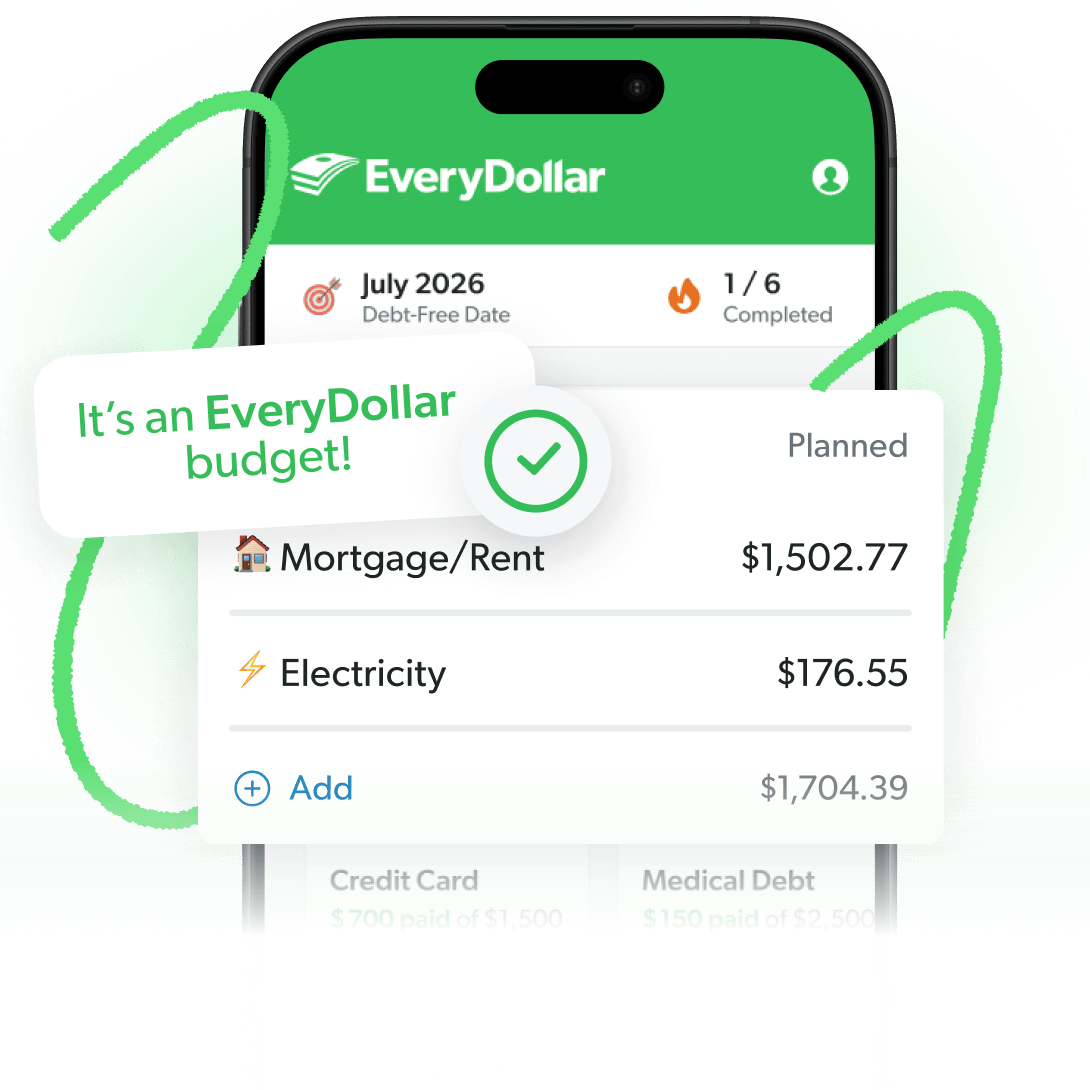
Find Margin You Didn’t Know You Had With EveryDollar
The EveryDollar budgeting app helps you find extra money every month so you can beat debt, build wealth, and make progress. Every. Day.
What Envelopes and Categories Should You Use?
Start with three to five areas where you tend to overspend instead of trying to stuff an envelope for everything. As you get more comfortable, you can always add more.
Here are some of the most common envelope categories:
- Groceries
- Dining out
- Personal care
- Clothing
- Fun money
- Entertainment
- Gifts
Groceries and dining out are usually the biggest game changers because those are the categories where money tends to disappear fast if you’re not paying attention.
As Debby from THE Ramsey Baby Steps Community puts it: “When I grocery shop with just $200 in my pocket, there’s no way to overspend.”
Here's a Tip
Don’t let loose change pile up in a junk drawer. Keep a small coin jar next to your envelopes, and once a month, put it toward one of your financial goals. Hey, every dollar counts!
Use these guidelines to decide where to start:
- Pick categories where you tend to swipe without thinking.
- Focus on in-person spending (envelopes don’t work as well for online purchases).
- Leave recurring bills like your mortgage, utilities and insurance on autopay in your checking account.
Real-World Examples
Use your recent spending as a starting point, then adjust as you go. The first month is about getting a clear picture of your habits and making small corrections.
If you’re not sure what to budget, here are example monthly amounts for common spending categories based on different household sizes. We looked at consumer spending data and common budgeting recommendations to put these examples together, but your numbers will look different depending on your income and where you are in the Baby Steps. This is just a starting point.
|
Category |
Single Person (~$40K income) |
Family of Four (~$65K income) |
|
Groceries |
$350 |
$900 |
|
Dining out |
$100 |
$250 |
|
Personal care |
$40 |
$80 |
|
Clothing |
$50 |
$100 |
|
Fun money |
$50 |
$100 |
|
Entertainment |
$100 |
$250 |
|
Gifts |
$40 |
$80 |
Use our Budget Calculator to estimate category amounts based on your monthly take-home pay. Then adjust the numbers to fit your situation and build a zero-based budget.
How Much Cash Should You Withdraw and When?
Withdraw enough cash to fund your envelopes until your next paycheck. The exact amount depends on your budget, your pay schedule and which expenses you’ll need to cover before you get paid again.
For example, say you budget $400 a month for groceries. If you’re paid twice a month, you could put $200 into your grocery envelope from each paycheck. If you’re paid weekly, you could start with $100 per paycheck and adjust based on how the weeks fall that month.
Do the same thing for your other envelopes. If dining out gets $100 for the month and you’re paid twice that month, you’d put $50 into that envelope from each paycheck.
The goal is to break your monthly budget into smaller, per-paycheck amounts so you don’t blow through the whole category at once.
The $3,500 Monthly Budget Breakdown
Say you bring home $3,500 a month. After you budget for your bills, giving, saving and other priorities, you decide to put $700 in envelopes for the spending categories where you need the most hands-on control. Here’s one way that could look:
|
Category |
Monthly Amount |
|
Groceries |
$400 |
|
Dining out |
$150 |
|
Fun money |
$100 |
|
Personal care |
$50 |
If you’re paid twice a month, you could fund half of each amount from each paycheck: $200 for groceries, $75 for dining out, $50 for fun money and $25 for personal care. Stuff those envelopes, stick to what’s inside, and you’re covered until the next paycheck.
Which Expenses Go in Envelopes vs. Stay in Checking?
Use cash envelopes for spending categories where you’re more likely to overspend, like groceries, dining out and fun money. Keep regular bills like your mortgage, utilities, insurance and debt payments in your checking account.
Here’s a simple way to break it down:
|
Expense Category |
Where It Goes |
|
Groceries |
Envelope |
|
Gas |
Envelope |
|
Dining out |
Envelope |
|
Fun money |
Envelope |
|
Entertainment |
Envelope |
|
Clothing |
Envelope |
|
Giving |
Checking (autopay) |
|
Rent/mortgage |
Checking (autopay) |
|
Insurance |
Checking (autopay) |
|
Utilities |
Checking (autopay) |
|
Debt payments |
Checking |
Notice we listed giving as an automatic payment. That’s because it belongs at the top of your budget (you don’t want to run out of envelope money before you give).
If your church offers online giving, automatic giving can help you stay consistent. If not, plan for it in your budget and give first.
Cash Stuffing vs. Digital Budgeting Apps: Which Should You Use?
You don’t have to choose between cash stuffing and a digital budget. In fact, they can work really well together: Use a budgeting app like EveryDollar to plan where all your money is going, then use cash envelopes for the spending categories where you need a little extra help sticking to that plan.
Think groceries, dining out and fun money—the categories where it can be way too easy to spend $20 here and $30 there without realizing how fast it adds up. Cash puts a hard limit on that spending, while EveryDollar helps you keep up with the rest of your budget, including bills, debt payments and savings goals.
Your envelopes are only one part of your budget. You still need to make sure your needs are covered, your bills are paid, and you’re making progress on the Baby Steps. EveryDollar helps you keep an eye on the big picture while your envelopes help you stay on track with the cash in your hand.
What Are the Pros and Cons of Cash Stuffing?
Cash stuffing can be especially helpful if you struggle with overspending, but carrying cash isn’t convenient for every purchase. Here’s a quick look at the trade-offs:
|
PROS |
CONS |
|
|
None of those cons has to be a deal breaker. You don’t have to keep your entire paycheck sitting around in cash or carry a wad of twenties everywhere you go. Use envelopes for the categories where cash helps you stay in control, and leave money for online purchases and automatic bills in checking.
Start Cash Stuffing This Pay Period
Cash stuffing can help you stop overspending by putting a clear, physical limit on the categories that tend to get away from you. Instead of wondering where your money went, you decide where it’s going before you spend it.
Build your zero-based budget in EveryDollar, then use cash for the categories where you need more help sticking to the plan. It’s a simple shift, but it can completely change how you handle money.
Start with a few envelopes this pay period, stick with it, and adjust as you go. That’s how you build better spending habits!
Next Steps
- Build a zero-based budget so every dollar has a job before the month begins.
- Choose three to five spending categories where you overspend most and create labeled envelopes for them.
- Only spend what’s in the envelopes each month, then put any extra money toward your financial goals.
Frequently Asked Questions
-
What if I run out of cash in an envelope before the month ends?
-
Stop spending in that category or move money from a lower priority envelope (like fun money). That’s the system working! It shows you where your plan needs adjusting or where your habits need to change.
-
Can I use cash stuffing if I have debt?
-
Yes, and you should! Cash stuffing helps you control spending so you have more money to put toward your debt snowball.
-
Can I use a debit card instead of cash envelopes?
-
You can, but it’s not the same. People tend to spend more when they swipe. Cash slows you down and helps you stick to your plan. Use EveryDollar to track your budget, then use cash where you need more control.
-
How do I handle irregular or large expenses with cash stuffing?
-
Use sinking funds. Set aside a little money each month for things like car repairs, holidays or annual bills so those expenses don’t catch you off guard. For larger sinking funds, it may make more sense to keep the money in your bank account and track it in EveryDollar instead of stuffing hundreds (or thousands) of dollars into an envelope.
-
Is cash stuffing better than using a budgeting app?
-
No—you don’t have to pick one. Cash stuffing helps you control spending in specific categories, while a budgeting app like EveryDollar helps you plan your whole month and track your progress toward your financial goals. You can use both as part of the same zero-based budget.
-
How do I handle online purchases with cash stuffing?
-
Keep money for online purchases in checking and track those purchases in your budget. Save your cash envelopes for categories you pay for in person—especially the categories where having a physical spending limit helps you stay on track.
Get Weekly Insights Delivered Straight to Your Inbox
Did you find this article helpful? Share it!

About the author
Ramsey Solutions

Get proven Ramsey answers fast.