
Banking Basics
Understanding banking basics helps you make smarter decisions with your money. See our tips below on how to pick a bank, choose the right bank account, and use debit cards the smart way!

-
Choosing a Bank
Not all banks are created equal. Learn how to choose the right one, avoid bank fees, and keep more of your hard-earned money.
-

Types of Bank Accounts
Where you keep your money matters. Check out the different types of bank accounts—so you can make the best decision for your money.
-
Debit Card Basics
Debit cards are one of the easiest ways to pay for everyday expenses. Here’s how they work and what to watch out for.
Smart Banking Starts With a Budget
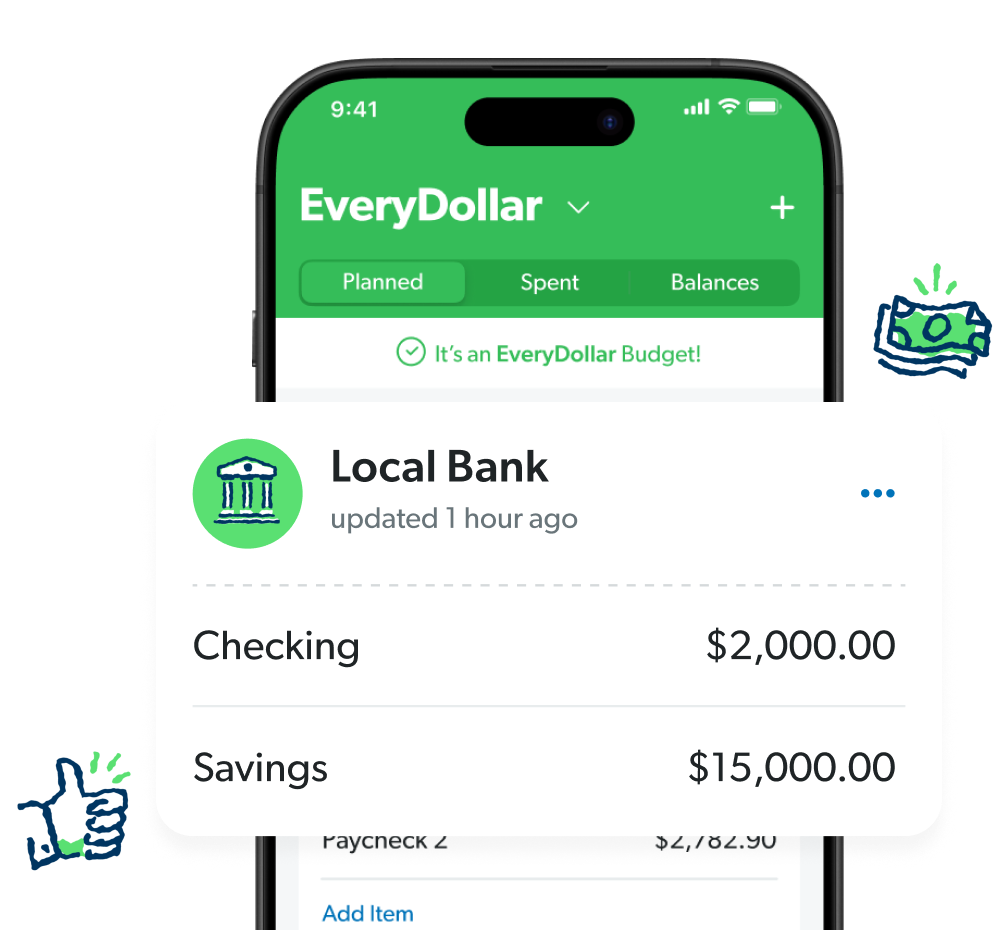
Using a debit card and choosing the right bank accounts are important. But if you really want to take control of your money, you need a game plan. Our EveryDollar app helps you set up a monthly budget—by giving every dollar a job so you can hit your money goals.
Frequently Asked Banking Questions
-
What do I need to know about banking?
-
A bank account gives you a secure place to keep your money, deposit your paychecks, and pay your bills. Most people have a checking account for everyday spending and a savings account for money they want to set aside. With your checking account, you'll get a debit card that’s connected to real money in your account, so when you use it, treat it like cash.
-
How do I choose a bank?
-
Look at these four things:
- Types of accounts (checking, savings, joint options)
- Interest rates and fees (avoid monthly maintenance fees if possible)
- Customer service (you want helpful humans when you need them)
- Convenience (ATM access, online banking, branch locations)
-
What are the main types of bank accounts?
-
The two main types of accounts are checking and savings:
- A checking account is for everyday spending like bills, groceries and other regular expenses.
- A savings account is for money you want to set aside for short-term goals or your emergency fund.
Most people need both.
-
What's the difference between a checking account and a savings account?
-
A checking account is for money you use regularly and need easy access to. A savings account is for money you are setting aside and do not plan to spend often.
-
How does a debit card work?
-
Your debit card is connected directly to your checking account. When you swipe it, money comes out of your account usually right away, though some transactions can take a couple of days to show up. It’s real money—not borrowed money like a credit card—so treat it like cash and don’t spend more than you have!
-
What banking basics should beginners learn first?
-
Start simple. Open a checking account for spending and bills, and open a savings account for money you want to set aside. Use your debit card carefully, keep an eye on your balance, and avoid extra fees like overdrafts or monthly charges.