
What Is Leadership? A Straightforward Guide for Business Owners

Key Takeaways
- Leadership is the ability to influence and maximize the talents, passions and skills of others to achieve a goal. It’s not a title or personality type.
- Leaders lead people and managers manage processes and things. A business owner has to do both.
- Leadership is a skill you can learn.
You probably started your business because you’re good at what you do or passionate about what you’re building. But leading people is a different job. And how you handle it shapes every day at work for you and your team. Done well, leadership puts a spring in your step. Done poorly, whether you’re leading or being led, it drains your soul.
Quick Answer
Leadership is the ability to influence and maximize the talents, passions and skills of others to achieve a goal. It’s not a title or personality type. For a business owner, leadership is heavily tied to three disciplines: vision, relationships and results.Let’s take a deeper dive into what leadership really means, how it differs from management, and what it looks like in practice.
What Is the Definition of Leadership?
Leadership is influence. People follow you because they want to, not because they have to. A great leader takes that influence a step further by helping people do their best work in service of something bigger than themselves.
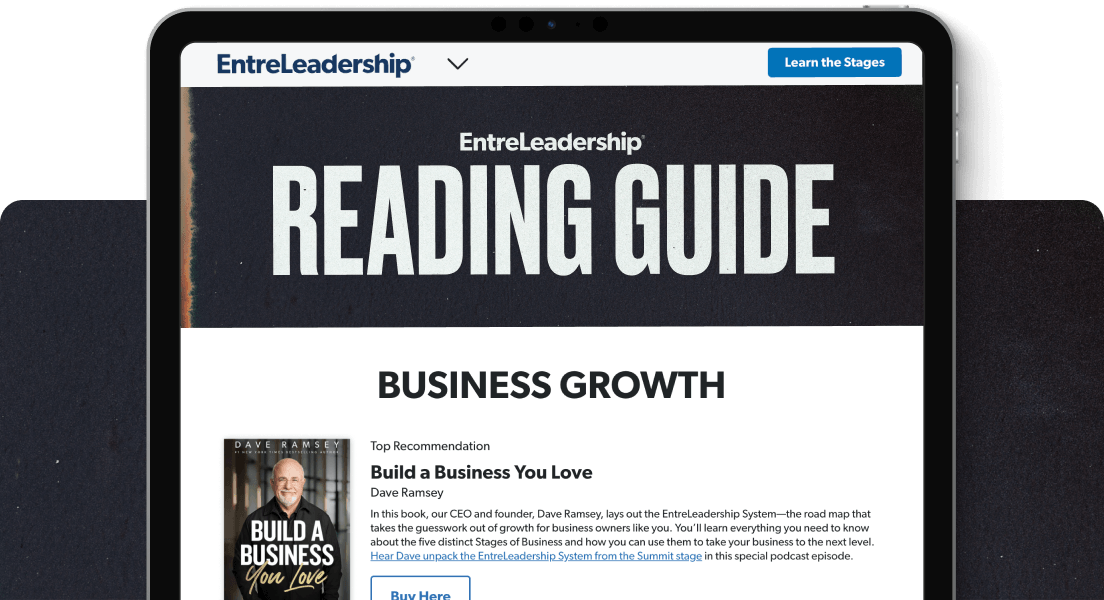
Dave Ramsey, founder and CEO of Ramsey Solutions, coined the term EntreLeadership® to capture what happens when the entrepreneurial spirit and leadership work together. He defines it as the process of leading to cause a venture to grow and prosper. He even created a business division called EntreLeadership at Ramsey Solutions to help small-business owners grow into the leaders their companies need.
What Dave Learned the Hard Way About Leadership
If you think leaders are born, not made, Dave’s story says otherwise. At 22, he was working in sales and got promoted to sales manager almost right away. Then he did what a lot of new bosses do: He barked out orders and bossed everyone around. And about three weeks later, the promotion was taken away.
That’s when he learned an important lesson. Positional power—Do this because I’m the boss—pushes people. But persuasion—Here’s where we’re going and why—pulls them. Dave had to relearn that lesson a few more times while building what’s now Ramsey Solutions. But making the switch to real leadership helped him grow the company into a $300 million business.
The moral of the story is, you can make people do what you say because of your title, but you can’t force them to believe in the vision or want to follow you. That comes through influence. To lead with purpose, be willing to grow, especially in the character qualities and skills your role requires.
So what helps a leader earn that influence? Build character qualities that earn their trust.
Qualities of a Great Leader
Integrity, servant-heartedness and vision top the list of qualities that matter most in a leader. Other important qualities include decisiveness, discipline, humility, loyalty, attentiveness and influence.
These qualities are more about character than personality, and your team needs to see them in you. Think about the leaders you’ve respected most. Chances are, you trusted them because of how they treated people and handled responsibility, not because they were the loudest person in the room.
If you don’t have all of these qualities down yet, that’s okay. Nobody does. The point is to recognize where you need to improve and put in the work. Leadership Traits and Tips shows you what these character strengths look like in the day-to-day work of leading a team.
What Skills Do Leaders Need?
Every leader needs these four practical skills: clear communication, delegation, accountability and willingness to have hard conversations.
Qualities are who you are, and skills are what you do. You need the right combination of both to be a good leader. For example, if you have great character but refuse to delegate, you’re basically a really nice bottleneck.
Good intentions never make up for what you haven’t learned to do, but you can improve with practice. Check out more skills great leaders develop and decide which one you want to build first.
Leadership vs. Management
Leaders lead people while managers manage processes and things. Leadership focuses on vision, influence and the why. And management focuses on systems, tactics and the how.
Here’s what that looks like:
|
Leadership |
Management |
|
|
What It Works On |
People |
Processes and things |
|
The Job It Does |
Sets the direction and explains why it matters |
Gets the work done well and on time |
|
What It Uses |
Vision, influence and clear communication |
Systems, plans and checkpoints |
|
What It Looks Like Day to Day |
Inspiring, teaching and valuing the team |
Planning, measuring and monitoring the work |
A good business owner needs to both lead and manage, but leadership comes first. You can build the most impressive system in the world, but if nobody believes in it or where you’re taking the business, it’ll end up like the procedures binder nobody’s opened since onboarding.
Key Result Areas (KRAs) are where leadership and management meet. At EntreLeadership, we teach that a KRA spells out what winning looks like in a role, and every team member has one. The management side is the clarity: a short list of results each person owns. The leadership side is the buy-in: when you build the KRA with your team member, they want to own those results, not just check them off.
7 Leadership Styles
There are seven common leadership styles: transformational, servant, transactional, laissez-faire, bureaucratic, autocratic and democratic. EntreLeadership emphasizes servant and transformational leadership over the other five.
You’ve hopefully worked for a leader whose style brought out your best. But chances are, you’ve also known a leader who made you wonder how their company stayed in business. Some leadership styles build stronger teams than others. Here’s how the seven compare.
|
Style |
How It Works |
How the Team Feels |
Ramsey’s View |
|
Transformational |
Builds trust and respect to raise people to their full potential |
Inspired, with less drama and bureaucracy |
Builds trust and respect so people want to follow, not just comply |
|
Servant |
Focuses on what the leader can do for the team |
Empowered and growing |
Puts people first while still driving the mission |
|
Transactional |
Gives structured guidance and rewards people for meeting expectations |
Clear on the rules, but with little room to think independently |
Fine for clear tasks, but won’t build people on its own |
|
Laissez-faire |
Lets the team find its own path with little guidance |
Free, but sometimes lost |
Not recommended—people need direction |
|
Bureaucratic |
Values company policy and history over team input |
Stuck doing it the way it’s always been done |
Avoid—good ideas die in the approval process |
|
Autocratic |
Gives the leader the most power and the team the least |
Directed, with little voice |
Avoid—people comply, but they don’t commit |
|
Democratic |
Considers views from multiple team members and levels |
Heard |
Useful for gathering input, though the leader still makes the call |
If you want to dig deeper, explore servant leadership, transformational leadership and transactional leadership.
What Servant Leadership Is and Isn't
Servant leadership puts people first while still driving the mission forward. And servant doesn’t mean subservient. You’re not fetching everybody’s coffee or letting the loudest person in the room set the agenda. Serving your team doesn’t mean avoiding tough calls. Sometimes it means teaching or mentoring. Other times it means having the hard conversation nobody wants to have.
The Ramsey Leadership Model
At Ramsey, we believe great leadership is heavily tied to three disciplines: vision, relationships and results. The Ramsey Leadership Model helps you evaluate each one and figure out where you need to grow.
|
Discipline |
What It Means |
What You Do |
|
Vision |
Planning for the future and sharing the vision with your team |
Make it simple, specific and actionable, and then cast it with conviction |
|
Relationships |
Building real partnerships with your people |
Build rapport, credibility, trust, influence and partnership, in that order |
|
Results |
Getting the right things done |
Prioritize ruthlessly, make sound decisions, create more clarity than you think you need, and hold people accountable |
Personal growth wraps around the whole model because leadership isn’t a one-and-done deal. As your team and business change, you have to keep developing too.
Common Leadership Myths
One of the biggest myths about leadership is that it means bossing people around and pushing them to get things done. But remember: Great leadership pulls people forward. Leaders get out in front, inspiring, teaching and valuing their teams. Here are more myths worth leaving behind.
|
Myth |
Truth |
|
You’re either born knowing how to be a leader or you’re not. |
Leadership comes more naturally to some, but anyone can learn to lead. |
|
Leadership belongs to dominant, extroverted people. |
Great traits show up in all kinds of personalities, and you can win at leadership with any DISC profile. |
|
Leadership equals popularity and power. |
Great leadership is hard, and great leaders serves others before they serve themselves. Popularity is for the homecoming court. |
|
Leaders are managers first. |
Leaders are visionaries and communicators first. Managers plan, measure and monitor. |
|
You need a title to be a real leader. |
A title doesn’t make a leader. Great leaders learn to lead themselves first. |
|
Your success depends on the economy and your team. |
If you’re struggling, the problem is usually the person in the mirror. That’s good news because you’re the one person you can change. |
|
You can separate your leadership from who you are. |
Your strengths become your team’s strengths. And your weaknesses become your team’s weaknesses too. |
|
Leaders push through burnout. |
You can’t build a business that lasts if you don’t build a life that lasts. |
As the saying goes, you don’t know what you don’t know. That’s why good leaders keep asking questions and looking for ways to grow. One of the best ways to uncover blind spots is to get insight from your team through 360-degree feedback. Yes, it can be humbling. But it’s a lot better than finding out what’s wrong in exit interviews.
How to Become a Better Leader
Becoming a better leader starts with leading yourself. From there, it’s about practicing, making small changes, and learning what works—and what doesn’t.
- Decide to grow. Make a commitment to change and do the work.
- Read widely. Pick up biographies and leadership books to see what works, what doesn’t and why.
- Listen first. Let people finish what they’re saying before you jump in with advice.
- Pay attention to leaders around you. Notice how they handle conflict, communicate expectations, and bring out the best in their teams.
- Take an honest look at yourself. Go back to the qualities we already covered. The ones you need to work on usually stick out like a sore thumb.
- Put what you learn into practice. Reading about leadership is important, but it won’t make you a better leader any more than reading about push-ups will give you stronger biceps. You have to do the work.
Sometimes you’ll get it right. Other times you’ll mess up. That’s part of the deal. Henry Ford said, “The greatest thing in life is experience. Even mistakes have value.” Look for the lesson in each mistake, and if you want to know what to watch out for, check out our list of the most common leadership missteps.
Here's a Tip
If you want to move from boss to leader, choose one decision you normally make yourself, hand it to a trusted team member along with the result you want, and ask them to bring you their plan instead of a question.
Leadership Resources
Whether you want to sharpen your skills or get out of your own way, these resources will help you.
|
If You Want to . . . |
Read About |
|
Understand the character traits of great leaders |
|
|
Get better at leading people |
|
|
Build leaders under you |
|
|
Stop being the bottleneck |
|
|
Build your own growth plan |
|
|
Avoid common leadership mistakes |
|
|
Make better calls under pressure |
|
|
Work with a coach through Executive Coaching or Advisory Group Coaching |
Reading about leadership is a good start. But becoming a better leader takes practice. Here are a few ways to put what you’ve learned into action:
- Write down the one result you want your team to own, then tell them why it matters.
- Ask someone on your team what it’s like to be led by you.
- Choose one leadership quality from those given under Qualities of a Great Leader and work on it for the next 90 days.
What’s Next: Become the Leader Your Business Needs
Leadership comes with challenges, but you don’t have to tackle them alone. An EntreLeadership Coach will help you see what you’re missing and work through what’s holding you back with a plan to move forward.
FAQs – Leadership Defined
-
Is leadership a skill or a trait?
-
Leadership is a skill that anyone can learn and develop, regardless of their natural personality. Some people are born with certain traits that make leadership feel more natural, but becoming a great leader takes character, discipline and a commitment to serving others.
-
What are the three most important leadership qualities?
-
The three most important leadership qualities for a business owner are integrity, vision and a servant’s heart. Integrity earns your team’s trust, vision shows them where you’re headed, and a servant’s heart keeps you focused on their success instead of your own.
-
Can you be a leader without a title?
-
Yes. Leadership is more about influence, and less about a position on an org chart. The team member who trains the new hire, owns the problem nobody else will touch, and treats people well is leading, whether or not anyone gave them a title. Titles can be handed out. Influence has to be earned.
-
What’s the difference between leadership and management?
-
Leadership is about people and the why. Management is about processes and the how. When a business owner has to lead and manage, it’s important to lead first. Get your team to believe in where you’re going, then build the systems, like Key Result Areas, that help them get there.
-
What are the main types of leadership?
-
The seven main types of leadership are transformational, servant, transactional, laissez-faire, bureaucratic, autocratic and democratic. Laissez-faire, bureaucratic and autocratic styles leave people either lost or voiceless. EntreLeadership teaches transformational and servant leadership because these two types put people first while keeping the mission moving forward.
Get Weekly Insights Delivered Straight to Your Inbox
Did you find this article helpful? Share it!

About the author
EntreLeadership

Get proven Ramsey answers fast.