
 By
By
Link copied!
Unable to copy link. Please try again.
So, you’ve decided to pay off your debt. (Come on, somebody!) But there’s one important question you need to answer before you can get started: Which debt do you pay off first?
You might think your best plan of attack is to start with the debt that has the highest interest rate. And most financial gurus out there would probably agree. But I’m not one of them.
See, I’ve learned from my own experience in paying off large amounts of debt that money isn’t always about the math. In this case, it’s mostly about mindset and motivation. You need a plan that works—a method that will keep you from quitting, instead of one that’ll have you frustrated and ready to faint.
I’m going to show you the plan that helped me and my husband pay off almost half a million dollars of debt!
Key Takeaways
If you have multiple debts, pay off the smallest balance first—no matter what the interest rate is. This is the debt snowball method. Tackling your smallest debt first means you see progress fast, and those early wins build the momentum you need to keep going. The one exception: If you owe the IRS, handle that first. Then line up the rest of your debts smallest to largest and get after it.
- The debt snowball method works by paying your debts from smallest to largest—and that order is everything. Knocking out smaller debts fast builds the kind of momentum that keeps you going all the way to debt-free.
- Every debt you eliminate frees up more money to throw at the next one. The snowball effect is real—your payments get bigger and more powerful with every win.
- The debt snowball is the fastest and most motivating way to pay off debt. More momentum means more intensity, and more intensity means debt gone sooner.
Which Debt Should You Pay Off First?
Let’s cut straight to it: If you’ve got multiple debts, pay off the smallest debt first. That’s right—forget about the interest rate and focus on the smallest debt first. This is called the debt snowball method.

Now, a lot of “experts” out there will tell you to start paying on the debt with the highest interest rate first. And while that’s one way to pay off debt, it’s definitely not the best (or fastest) option. Why? It’s all about momentum!
When you’re chipping away at a debt balance the size of Mount Kilimanjaro, it’s easy to lose steam and give up. But when you pay off the smallest balances first, you see progress way faster. You get quick wins that help you stay motivated to pay off the rest of your debt!
Use the free calculator below to plug in your balances and see exactly when you'll be debt-free.
Debt-Free Date Calculator
Ways to Pay Off Debt
There are a lot of debt payoff methods out there. But just because it’s an option (or makes sense on paper), it doesn’t mean it’ll help you get rid of your debt. Here's how the debt snowball compares to some of the other common ways to pay off debt.
Debt Snowball
The debt snowball method is the best (and fastest) way to pay off debt. Here’s how it works:
- List your debts from smallest to largest (ignoring the interest rates).
- Pay minimum payments on everything but the smallest debt.
- Throw as much money as possible toward the smallest debt until it’s paid off.
- When it’s gone, roll what you were paying on that debt into the payment on your next-smallest debt until you knock it out too.
- Repeat until you’re completely debt-free!
Quick callout: One exception to the debt snowball is tax debt. If you owe the IRS any money, you need to take care of that first—even if it isn't your smallest debt. Why? Because the government has the power to make your life pretty miserable until you pay up, and they can even take money straight out of your paycheck. So, make sure you're all squared away with Uncle Sam before you attack the rest of your debt.
Now, why is it called the debt snowball method? Because as you pay off your debts from smallest to largest, the amount of money you have to throw at the rest of your debt . . . grows like a snowball rolling downhill. And before you know it, you’ve got one giant snowball of a payment going toward your last and largest debt to make you debt-free. Now, that’s what I’m talking about!
What I love about the debt snowball method is that it helps you believe paying off your debt is possible. The excitement you get when you pay off those first few debts hypes you up to keep going—because suddenly you have fewer payments and more money!
My husband Sam and I had so many debts we were trying to pay off that it was easy to feel overwhelmed. But by focusing all our intensity on one debt at a time, we were able to keep our eyes on one manageable debt—instead of being wigged out by the whole mountain of debt. And once you experience that first win, you’ll know it’s only a matter of time before you conquer the other debts too!
Debt Avalanche
With the debt avalanche method, you order your debts by interest rate, with the highest interest rate first. You attack that debt while paying minimum payments on everything else. Once that debt is paid off, you move to the one with the next-highest interest rate . . . until all your debt is paid off.
A lot of people believe this is the best way to attack their debt because they’re worried about the interest rate killing their progress. And while it may seem to make sense mathematically, it doesn’t make sense mentally. (Like I said, when it comes to paying off debt, money isn’t really about math. It’s about motivation!)
Here’s the thing: The debt avalanche payoff method is grueling. Often, the debts with the highest interest rates also have pretty large balances attached to them. So it takes a lot longer for you to experience a win.
When I say using the debt avalanche method is slow, I mean slooow! It’s like trying to eat Chinese food with toothpicks. Because in most cases, you’re attacking your largest debt without a big enough extra payment to make progress. You need to free up more money first!
If Sam and I had done the debt avalanche method, we would’ve started with his $34,000 Hummer loan instead of my $6,000 student loan. That, my friends, is not the move. And it’ll lead to the kind of frustration that will steer you right off course and make you want to throw in the towel completely.
Debt by Type
Paying debts by type means you order your debts based on each specific lender—which, let’s be real, can get pretty confusing. Don’t get me wrong, it would’ve been nice to knock out those student loans first and get Navient off my tail. But with this method, there’s no momentum factor (aka something to drive you forward toward your goal).
For instance, let’s say you have federal student loans, private student loans and a credit card. You might prioritize your credit card (because it has a high interest rate) followed by your private student loans and then your federal student loans. Sound a little confusing? That’s because it is. You’re prioritizing your loans based on either interest rates or how strict the lender is—but there are no real rules here.
You might start with a $6,000 credit card debt, then jump to a $30,000 private loan, and end with a $16,000 federal loan. But without a real plan of attack, you don’t know which debt you should prioritize and why—which means you’re more likely to lose focus and energy. Yeah, definitely not the vibe.
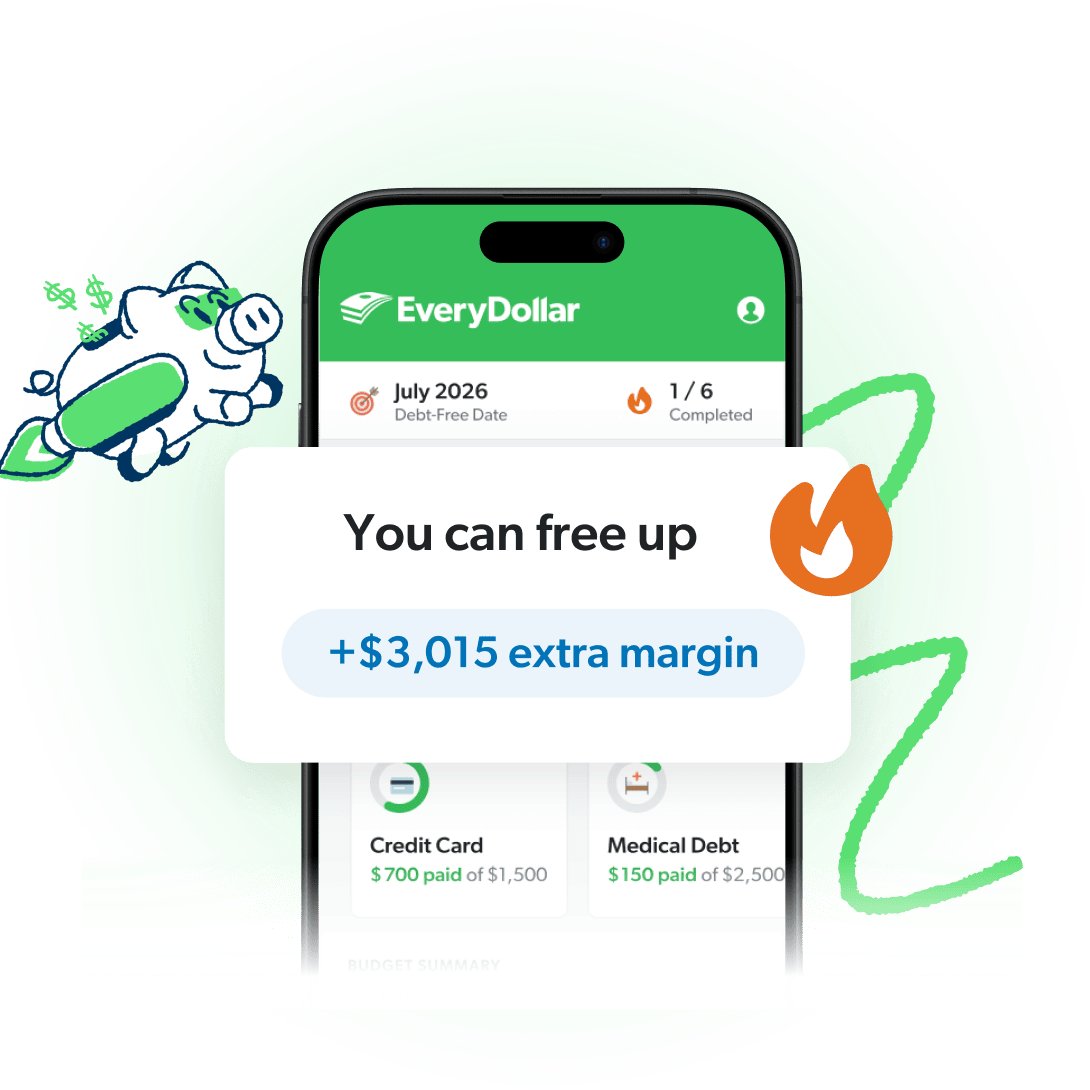
Ditch Debt Faster With EveryDollar
Before you can throw extra money at your debt, you need to know where your money is going. That's where a budget comes in. EveryDollar makes it easy to find the extra margin in your monthly spending—so you have more to put toward that smallest debt every month.
Debt Payment Methods to Avoid
When you’re ready to start attacking your debt, there will inevitably be some bad guys who try to distract you from your mission. These methods may seem innocent at first, but be aware—they’ll send all your motivation and momentum back to square one.
Balance Transfer
A balance transfer is when you transfer all your debt from one high-interest loan or credit card to another with a lower interest rate. At first, this seems like a great idea. But it’s a trap!
A balance transfer might give you a lower interest rate or even a lower monthly payment, but that also pumps the brakes on your motivation to pay off your debt. Oh, and that lower interest rate? It’s usually an introductory rate that only lasts for a little while before shooting up sky-high. Yeah, they’re real sneaky like that.
When you do a balance transfer, you’re tricked into believing you’ve done something with your debt . . . when you haven’t. You’ve just moved it somewhere else. It’s like shoving everything into a closet—you’ll just have to deal with it later. Trust me, you’re better off working a plan that actually helps you get rid of your debt.
Debt Consolidation
Another debt payoff method to watch out for is debt consolidation. The only time I might suggest consolidating your debt is if you’ve got student loans—but even then, it’s not always the right choice.
With debt consolidation, the goal is to combine all your loans or debts into one single loan with one interest rate. Instead of paying five monthly payments on five different debts, you’ll have one big payment on one big debt. That doesn’t sound bad, right? But don’t get it twisted.
With debt consolidation, the hope is that you’ll land a low interest rate. But that’s not always the case. And on top of that, the repayment terms get pushed back—which means you’ll be paying on that one debt for a long, long time. No, thank you.
Oh, and did I mention this is not a free service? Please believe you’re paying these companies good money to do what you can easily do yourself.
The Best Way to Pay Off Debt
Hear me when I say this: The best way to pay off debt is with the debt snowball method—aka paying off the smallest debt first.
Remember, the best plan of attack is the one that allows you to build momentum. When you pay off that smallest debt, there’s no stopping you from racing to pay off the next . . . and the next . . . and the next. Don’t get sidetracked by the other methods out there. They’ll have you going at a snail’s pace and distract you from your goal.
Sam and I worked the debt snowball method the entire time we were paying off our debt, and it made all the difference. But it only works if you have a budget backing it up. You can't throw extra money at your debt if you don't know where your money’s going.
That’s where EveryDollar comes in. It’s Ramsey’s free budgeting app that helps you pay off debt with the debt snowball method and find margin in your monthly spending. That way, you can attack your debt with everything you’ve got and become debt-free as quickly as possible.
Start your free EveryDollar budget today and find money you didn't know you had.
Next Steps
- List all your nonmortgage debts from smallest to largest balance—ignore the interest rates.
- Make minimum payments on everything except the smallest debt, and throw every extra dollar at that one.
- Use EveryDollar to build the debt snowball method into your budget and find the extra margin you can put toward debt each month.
- Once your smallest debt is gone, roll everything you were paying on it into the next one and keep the snowball rolling.
- Repeat until you're completely debt-free—and don't stop until you get there.
Frequently Asked Questions
-
What is the debt snowball method?
-
The debt snowball method is a debt payoff strategy where you list your debts from smallest to largest balance and pay them off in that order, regardless of interest rate. You make minimum payments on everything except the smallest debt, which you attack aggressively. Once it's gone, you roll that payment into the next smallest. The momentum from quick wins keeps you motivated.
-
Should I pay off debt with the highest interest rate first?
-
Not necessarily. While paying the highest interest rate first (a method known as the debt avalanche) makes sense mathematically, people often lose motivation before seeing real progress. The debt snowball method, which prioritizes the smallest balance first, produces faster psychological wins that keep you committed to the plan. For most people, behavior and motivation matter more than math.
-
What debts should I pay off first?
-
Start with your smallest debt balance, regardless of interest rate—with one exception: If you owe the IRS, pay that first. The government can garnish your wages and make your life miserable until you do. After any tax debt is handled, line up your remaining debts smallest to largest and work through them one at a time using the debt snowball method.
-
Is debt consolidation a good idea?
-
Usually not. Debt consolidation rolls multiple debts into one loan, which can feel like progress—but it often extends your repayment timeline and may not lower your interest rate as much as you'd hope. You're also paying fees for a service you could do yourself. The one exception worth considering is student loan consolidation, though even that isn't always the right call.
-
How long does it take to pay off debt using the debt snowball?
-
It depends on how much debt you have and how aggressively you attack it. Ramsey Solutions data shows the average household following the Ramsey plan pays off $5,300 in debt within the first 90 days. The key is intensity—throwing every extra dollar at your smallest debt while making minimum payments on everything else, then rolling that payment forward as each debt is eliminated.
Get Weekly Insights Delivered Straight to Your Inbox
Did you find this article helpful? Share it!

About the author
Jade Warshaw