
How to Hire Employees: The 12 Components of a Good Hire

12 Components of a Good Hire
- Pray.
- Get referrals.
- Do a 30-minute drive-by interview.
- Check the resumés and references.
- Use testing tools.
- Ask yourself, do you like them?
- Look for passion. (Do they light up?)
- Review their personal budget.
- Discuss compensation.
- Create a Key Results Area (KRA).
- Do a final in-person interview and go on a spousal dinner.
- Implement a 90-day onboarding and probation plan.
Leading your business is easy . . . until people get involved. They're your greatest asset and greatest challenge. That's why investing the time and energy to hire well is so important—and so freaking hard.
We’ve all been tempted to cut corners, especially when time and good candidates are in short supply. Maybe you’ve even used the mirror system (if the candidate can fog up a mirror, they’re hired). But the only way to build a strong team with high morale and low turnover is to take more time.
Learn how to hire employees the thoroughbred way by following the components and tips listed below.
Why Is Time Powerful When You Hire?
Before you explore the details of the 12 Components to a Good Hire, it’s worth repeating: Take. More. Time. Here’s why:
- Hiring affects everything in your organization: your brand, culture, product delivery, customer care—everything.
- You don’t want crazy, incompetent, toxic gossips in your building!
- Time reveals gold—and also brings junk to the surface. Invest in the process to get the results you want.
- A bad hire doesn’t just cost you money. It costs you momentum, drains your energy, and frustrates your best team members. Bad hires also chip away at the culture you worked so hard to build.
How Do You Write a Job Description?
Take plenty of time to create the job posting for your open position. A well-crafted description will attract the personality, skills and character traits you want.
What should you include? Start with results. What does winning look like in this role? This is where a clear Key Results Area (KRA) is essential. You'll refine your KRAs further in the hiring process, but having a working one as you write your job description will streamline the process. If you can’t define the outcomes the role is responsible for, you’re not ready to hire.
Give enough detail to help candidates rule you out if you’re not a fit for them. Be specific about expectations, responsibilities and standards. Vague job posts attract all the wrong candidates.
Check out this example post for a copy editor position that’s clear on what the company wants and doesn’t want:
Attention, grammar geeks! We’re looking for a highly skilled, detail-obsessed, professional copy editor with a great attitude and high work ethic. We want someone who has at least three years of experience in professional copy editing (i.e., not just editing your college roommate’s papers). We’re not looking for a writer who can edit. We’re looking for a copy editor who loves to edit copy—period. Is that you?
Wondering if you should post salary ranges? In many states, you’re legally required to include this. Even when you’re not, transparency builds trust. Consider providing a clear range to help filter out candidates whose expectations don’t fit your budget.
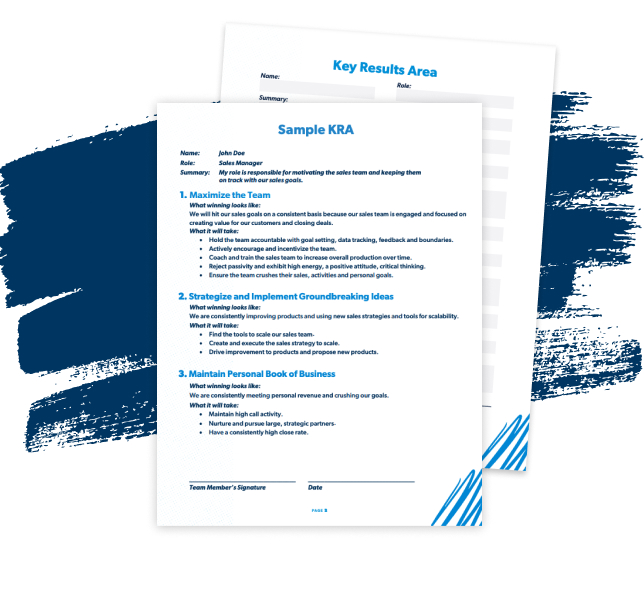
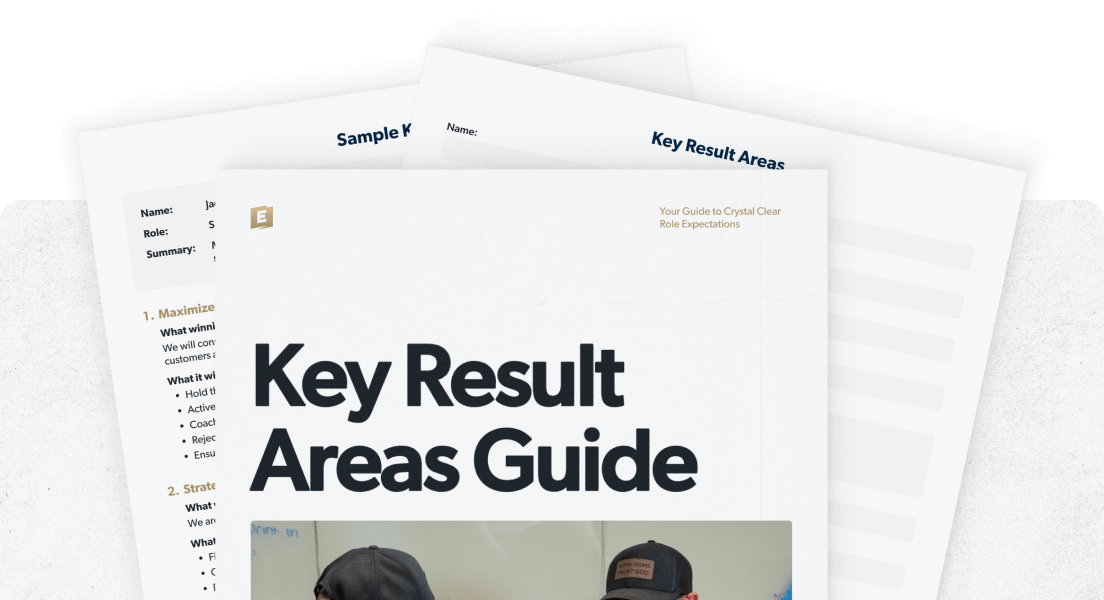
Free KRA (Key Results Area) Template
Want an easy way to create KRAs for your team members? Grab our free template, plus get a couple examples of completed KRAs for reference!
What Are the 12 Hiring Components?
Once you’re clear on what you’re looking for and have a strong job description, you’re ready to build out your hiring process for your small business. These 12 steps will help you keep out the donkeys and bring in the thoroughbreds.
1. Pray.
Ask God to send the team members you need to do the work He’s given you to do and keep out the crazy. If that’s not your thing, at least take some time to nail down the type of person you want (and don’t want) to work with every day. Reflection brings clarity.
2. Get referrals.
Thoroughbreds run with thoroughbreds, so ask your team members to refer people from their circles that they’d want to work with. If their referral is hired and completes the 90-day probation period, give the referring team member a cash bounty—and hand it out in front of the whole team. Nothing like a little cash to inspire great leads!
3. Do a 30-minute drive-by interview.
Never ever hire someone after just one interview. Start with a 30-minute get-to-know-you conversation where they do most of the talking while you ask questions and listen. And be sure not to go over the 30 minutes. You’ll be amazed at what you learn on that call, and you’ll be clear on whether to set up a second interview.
4. Check the resumés and references.
A resumé gives you an overview of the candidate’s formal training, skills and certifications. Use it as a conversation starter, but don’t lean on it (or on their references) too much. People can say anything. Occasionally when you check a reference, you’ll find a candidate didn’t tell them to expect a call or email. The candidate may even include someone who doesn’t have nice things to say. These are often signals to run in the opposite direction.
5. Use testing tools.
You need enough relational intelligence to know who to bring on, but the right tools can also help you figure out if someone would be a good fit in the role. You might give assessments with hard deadlines in writing, copy editing, presenting or web development to test the chops of candidates whose roles require those skills. Another fit indicator is the DISC personality assessment. It’ll give you a quick look at how the candidate’s personality fits the team and the work you need done. For example, if you need someone great at crunching numbers, you should see high scores in organization and details on their assessment.
6. Ask yourself, do you like them?
Hire people you like. It’s that simple. You run a small business and probably spend a lot of time with your team. Skills matter, but relationships, character and culture fit matter more. If someone’s good at the task but they’re a jerk or have a vastly different value system, you won’t like working with them (and they won’t like working with you either).
Culture fit means alignment with your values and the way your team operates. Do they take ownership, care about excellence in the ordinary, and handle conflict well? Are they humble, serious about working hard, and relationally smart? Think about what’s essential to your company’s success and probe for that.
Here are some interview questions that’ll help:
- Can you tell me about a past conflict and how you handled it?
- What kind of leader brings out your best work?
- Have you ever made a mistake and had to own up to it?
During the interview process, watch how they treat support staff and junior team members.
You can train for skill, but you can’t train character. So make work ethic, integrity and attitude nonnegotiables. But allow room for strong candidates to grow into technical ability that’s not quite where you need it to be yet.
7. Look for passion. (Do they light up?)
Look for passion when they talk about the position and your company’s mission. And if you can’t clearly communicate your mission and why it matters, fix that before you make your next hire. When your mission and vision are clear, it becomes obvious who’s genuinely excited about them and who isn’t.
Lack of passion is the easiest way to spot someone who is just looking for a J-O-B. If all they want is a paycheck, you’ll never keep them happy. You want employees who are excited about what they’re doing—construction workers who want to build homes where families can make memories, writers who want to inspire hope, web developers who want to create an easier experience for customers.
Look for fired-up people who love their work and own the why behind it.
8. Review their personal budget.
This component happens right alongside the next (discuss compensation). It surprises people, but it shouldn’t. When people are worried about their bills, they’re distracted and can’t give their best. So serve your top candidates by making sure they can care for their families and meet their obligations with what you pay.
Why should you review a budget?
Because it shows you care if the candidate can realistically afford to live on the salary you provide. If they can’t, sooner or later, they’ll blame you for “not paying enough” even though they accepted your offer and should know what they can and can’t live on. This isn’t about controlling someone’s life but making sure the opportunity works for their family and sets everyone up for long-term success.
What is the budget exercise evaluating?
Put simply, it evaluates if the compensation aligns with their basic monthly reality. You’re not digging into their wealth, judging spending choices, or looking for perfection. You’re simply asking, “Does this job make sense financially?”
When is it okay to skip this step?
For part-time roles or short-term contracts, it may not be necessary. But for most full-time roles, this conversation matters.
We get that it may feel uncomfortable at first. The best approach is to be direct and caring. Explain that you want to set the candidate up to win. Then ask them to complete a simple monthly budget to confirm the compensation you’re offering works.
9. Discuss compensation.
It makes sense for people to want to know what the compensation package is, so share it with them a few steps into the hiring process. But if their first question is about what you’re going to do for them, they’ll leave you for 50 cents more an hour. They’re takers, not givers. You want people who are excited to add to your organization. If they’re preoccupied by the benefits, don’t hire them.
10. Create (or Refine) the Key Results Area (KRA).
A KRA spells out what results a team member is responsible for and what winning looks like in the role you’re filling. A KRA can be as simple as defining the number of calls and the sales volume required of a sales position or the maximum time a customer should be on hold. You may have a working one you used for the job description. Now it's time to get crystal clear.
Operating without a KRA is like taking people bowling and turning out the lights. They’ll make a lot of noise but won’t really know what they’re doing. That’s why you need to be specific about the role you’re hiring for. Otherwise, the person you hire could leave when they find out what their job really is.
11. Do a final in-person interview and go on a spousal dinner.
This may be the best advice on the list. When you’re pretty certain the candidate is a strong fit, bring them on site to meet your team and see how things work in your company. That evening, take them to a casual restaurant to get to know them better and share your company story. If they’re married, include their spouse and yours. Yes, really. It’s a game changer.
Why should you involve their spouse?
Because no one makes a big career decision in isolation. If their spouse doesn’t understand or support the opportunity, it’ll eventually cause problems for the candidate at work. As the spouse hears about your culture and the role, they’re usually eager to share whether they think the position is a good fit or not.
Are you evaluating the spouse?
No. But you want them to understand what the role requires so you can discover any red flags or hesitations now. If concerns come up, that’s a good thing. Clarity today prevents pain tomorrow.
What if the candidate is single?
Still bring your spouse or another trusted leader and focus simply on the candidate’s culture fit and alignment.
The right candidates will appreciate this step because it signals that you care about their whole life, not just their output. It also shows you take culture seriously. When done well, this step builds trust before day one ever begins.
12. Implement a 90-day onboarding and probation plan
Once a person is hired, set them up for success with a good orientation and onboarding plan. And put them on probation so everyone can make sure the fit is right. This is a low-obligation period where they can walk away if they choose. But if they decide to leave, discuss what went wrong and try to fix it first. You’ve invested a lot to get here. Every quarter or so, celebrate all your new team members who made it through their first 90 days. This is the perfect time for you and your leaders to pass the baton to them as protectors of culture.
Bad hiring processes create revolving doors, so resist the urge to keep doing what you’re doing if it’s not working. That’s the definition of insanity.
And remember, the cost of churning through team members is high. You’ll pay the equivalent of six to nine months’ salary to replace one team member alone. So have the courage to do the right thing the right way, and if you do have to let someone go, be sure you fire them the right way.
Here's a Tip
5 Bonus Tips: How to Hire Employees for Your Small Business
These tips will guide you in how to hire employees for your small business.
Tip 1: Decide who owns hiring (and the decision to let someone go).
Your job isn’t to make every hiring and firing decision forever. It’s to build a team that’s able to make those decisions. Stay involved in key leadership hires, though. These roles shape your future and shouldn’t be handed over.
Once your leaders understand your values and expectations, let them hire for their teams. You’ll need to be involved at key checkpoints, but don’t micromanage.
Tip 2: Get serious about the hiring process for your small business.
When it comes to hiring employees for a small business, leaders tend to ask the same three questions about the interview process:
What questions should you ask?
Ask questions that reveal patterns, not rehearsed answers. Go beyond what they did and ask what they learned from failure and why they made certain decisions. You’re looking for humility, hunger and relational intelligence.
How many interviews is too many?
One or two is never enough. Three or more is wise for every role. Yes, extra interviews cost you time, but a bad hire costs you months of salary and momentum.
Should you test skills?
If the job requires a skill, test it. Writers should write. Salespeople should sell. Engineers should code. Keep assessments relevant and time bound. And don’t assume the candidate is at a certain skill level. Verify.
Tip 3: Look for team members who are motivated by opportunities and your company’s philosophy.
You want excellence plus integrity. If someone only cares about opportunity, sure, they’ll grow and add to the bottom line, but they’ll miss the greater mission of serving people. If they only care about your company philosophy, they’ll care about mission and culture but potentially miss business objectives and fail to operate at the speed of your business.
Tip 4: Never sell a J-O-B.
Sell the idea of doing work that matters and invite candidates who are the right fit to climb on board. People want to be part of something bigger than themselves. Help them see how your mission offers that.
Tip 5: Don’t forget the paperwork.
Hiring employees means compliance. Common forms of compliance include:
- An I-9 form and supporting documents to make sure the candidate is eligible to work in the United States
- A background check once you’ve made the job offer to keep you, your team and your customers safe (once the applicant authorizes this, you’re free to use a third-party agency to run the check)
- A W-4 form for federal income tax withholding
- A W-2 form you’ll complete to detail their earnings and taxes withheld (if your state has a state withholding form, you’ll need to complete that too)
- Reporting new hires to your state employment agency, getting the right insurances, and setting up payroll
When Is It Time to Hire?
Now that you understand the components of a good hire, let’s talk about timing. Hiring too early strains your cash flow. Hiring too late strains your sanity. So how do you know when to hire employees for your small business? Use these questions as a guide.
1. Can you afford it?
Before adding to your headcount, look at your numbers. Do you have consistent revenue? Healthy profit margins? A cash reserve? A good rule of thumb is, don’t hire based on hope. Hire based on proven capacity and clear financial visibility.
2. Is the role tied to revenue or relief?
Revenue-generating roles (like sales) can often justify themselves more quickly. Support roles should free you or another leader up to focus on high-value work. If you’re hiring, it should either increase revenue or increase your capacity to lead.
3. Are you overwhelmed or just disorganized?
Don’t hire to fix poor systems. Fix inefficiency first. But if you’re consistently turning down opportunities, missing growth targets, or stuck doing $20/hour tasks as a CEO, it may be time.
The goal isn’t to wait until you’re drowning. It’s to hire when the data and your leadership capacity both say it’s time.
How Do You Keep the A-Team You Build?
Hands down, your largest business investment is your people. So once you’ve got the right people in the right seats, you’ll want them to keep thriving. Unity and trust don’t happen by accident. They’re built through clarity, accountability and consistent connection.
One way Ramsey Solutions leaders stay connected with their team members regularly is through Weekly Reports—a tool in EntreLeadership Elite™. Weekly Reports give you a one-page snapshot of every team member’s morale, stress, workload, weekly high and weekly low.
Building in regular rhythms like weekly one-on-ones and leadership meetings also helps keep team members moving together in the right direction.
Now that you know how to hire employees the right way, go build your A-team.
What’s Next: Get Crystal Clear Before You Fill the Seat
When you know exactly what success looks like, you increase your odds of hiring a thoroughbred.
Before you post the job or schedule the first interview, download our free Key Results Area (KRAs) template. You’ll learn how to define the specific results your next hire will own and how to measure if they’re winning in their role.
Get Weekly Insights Delivered Straight to Your Inbox
Did you find this article helpful? Share it!

About the author
EntreLeadership

Get proven Ramsey answers fast.