

Long-Term Care Insurance vs. Hybrid LTC

Talking about long-term care sounds about as fun as deep-cleaning your bathroom (hey, both involve a lot of gloves and scrubbing). But if you (or maybe your parents) are advancing in age, long-term care (LTC) insurance is an important topic to understand!
Relax, though. Figuring out LTC insurance (unlike detailing your commode) will feel a lot less messy after a quick breakdown of the two main types: traditional and hybrid. Let’s compare both!
Long-Term Care Insurance Basics
- Long-term care is any care lasting longer than three months and involving help with routine daily activities like bathing or dressing.
- We tend to think of nursing homes for care like that, but you can also receive LTC at home and in places like adult day care centers.
- Most people will need LTC eventually, but it’s expensive (the median cost of one month in a nursing home is $9,277!).1 This means planning ahead is a must.
- LTC insurance protects your savings and your family from an overwhelming caregiving burden.
- Buying LTC insurance around age 60 gives you the best balance of affordability and insurability before health or age disqualify you.
Hybrid LTC Insurance Facts
What’s the deal with hybrid LTC insurance? Here are the basics.
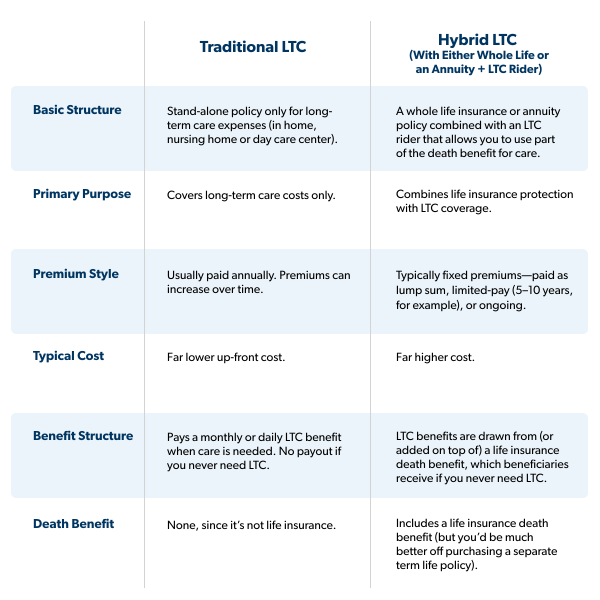
- Hybrid long-term care policies include a life insurance policy and let you use your death benefit to pay for care while you’re still alive, while allowing your heirs to receive the full payout if you never need care.
- Premiums are fixed for life, but hybrid policies usually cost thousands more than traditional LTC policies because you’re also buying life insurance you may not need.
- Hybrids offer poor investment returns in the whole life savings part—often barely beating inflation—making them a terrible option for both LTC and investing.
What Are the Differences Between Traditional LTC and Hybrid LTC Insurance?
Cost of Traditional LTC vs. Hybrid LTC Insurance
Hybrids typically cost tens of thousands more overall than traditional LTC insurance. Let’s compare possible costs for traditional versus hybrid plans.
Estimated Traditional LTC Premiums (Annual)
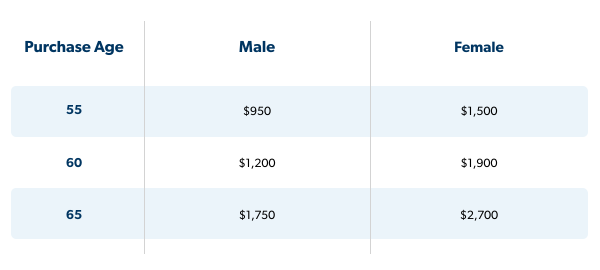
These premiums will be higher if you choose to add inflation protection. Data from the American Association for Long-Term Care Insurance2
Estimated Hybrid LTC Premiums
Hybrid plan premiums have a lot more variables because they include life insurance. But here are some sample hybrid costs for a 55-year-old with a policy combining LTC and life insurance:
- A single 55-year-old male could pay $3,540 per year for a linked-benefit policy that includes an LTC benefit pool of $180,000 and a minimum death benefit of $120,000.
- A single 55-year-old female could pay $3,265 per year for a comparable LTC policy.
- Some hybrid policies are sold as a lump sum (meaning you pay the premium up front). For a 55-year-old male, the same $180,000 LTC benefit pool and $120,000 death benefit mix above would cost $52,753 as a single premium. For a female, the lump-sum cost would be $54,022.3
According to the American Association for Long-Term Care Insurance, hybrid LTC policies typically cost two to four times more than traditional LTC policies.4
A Few Reasons Ramsey Recommends Traditional LTC Insurance
- It’s always way more affordable than hybrid LTC insurance, even if its premiums increase over time (which is possible).
- It gives the most coverage for far less money than hybrid LTC insurance.
- It’s much simpler and easier to understand than complex hybrid policies.
A Few Reasons Ramsey Hates Hybrid LTC Insurance
- Hybrids typically cost thousands more than traditional LTC insurance.
- You’re often buying lousy whole life insurance you don’t need and inflating your LTC price.
- Returns on the life insurance component are going to be pathetic, barely outpacing inflation.
- The money committed to premiums could often earn more if invested elsewhere.
Bottom Line
- Stay away from any kind of hybrid LTC insurance.
- Simply buy a traditional LTC policy and buy a term life insurance policy separately.
- Anytime companies bundle insurance with investing, they’re doing it to make more money off you.
Learn the Smarter Way to Do Long-Term Care Insurance
The best long-term care insurance policy is one that fits your budget, covers your future needs, and provides enough benefits to protect your retirement savings. To ensure you choose wisely, consider options like a longer elimination period (the waiting period between when you qualify for LTC and when the insurance company starts paying for your care) only if you can afford the up-front costs. And consult an independent agent who can compare multiple companies and find the best value.
Next Steps to Long-Term Care Insurance
Our RamseyTrusted® insurance pros are ready to guide you toward a plan that gives you confidence in your financial future. They’ll walk you through what your policy will cost and when the right time is to get it.