
“Just Wait Till Life Happens.”
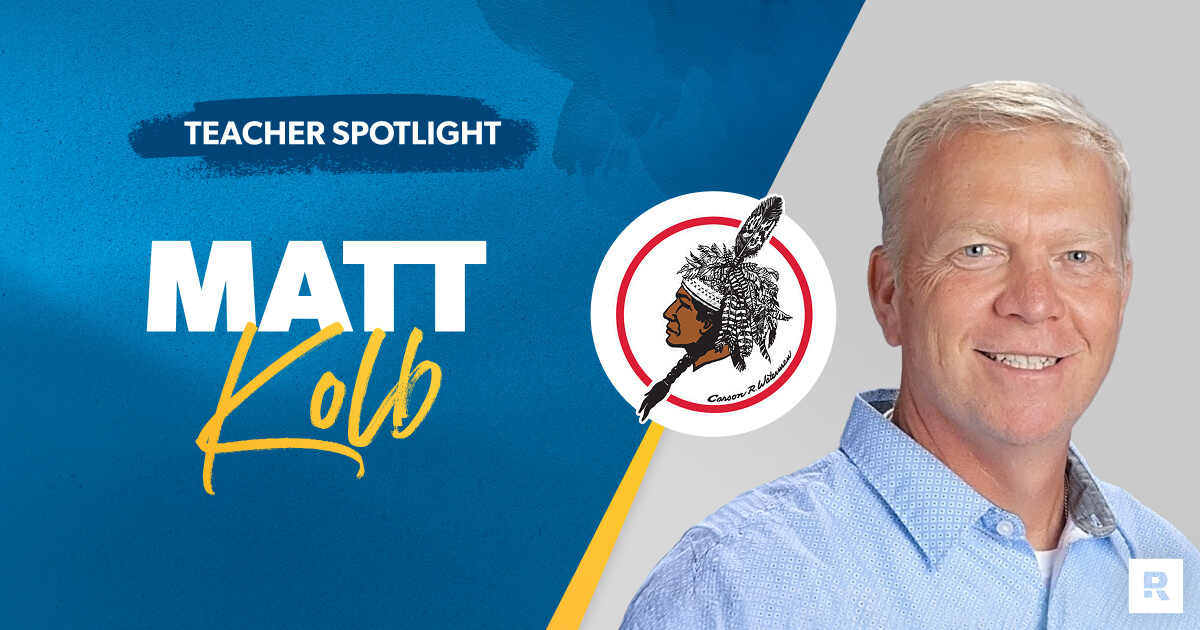
How One Teacher Prepares Students for the Financial Reality Ahead
One of the challenges of teaching personal finance to teens is that it doesn't feel real yet.
Most students aren't paying rent. They're not managing insurance. They haven't faced a financial emergency.
Those real-life scenarios are hard for students to relate to, and having a plan for their money feels like something they can figure out later.
But Salamanca High School teacher Matt Kolb knows “later” comes faster than they think. So he reminds them: “Just wait till life happens.”
He's lived through the moments that make money stressful and unpredictable, so he teaches with a level of honesty his students haven't heard yet. He knows what it looks like when there isn't a plan—and what it takes to rebuild when things go wrong.
Teaching From Experience
Before he started teaching personal finance, Matt spent years in real estate and built a business that eventually collapsed during the 2007–2009 economic crisis. “I lost 18 houses. My business went under,” he said.
But after being introduced to Ramsey’s principles, Matt and his wife changed how they managed money. They paid off debt and started following a budget.
Over time, those small consistent decisions added up. Today, Matt and his wife are completely debt-free! They own two homes outright and make major purchases—like vehicles—with cash.
“I’m living proof that this plan works,” Matt said. “Even though it might be boring and not flashy.”
Turning Pushback Into Progress
Matt’s students don’t walk into his class as a blank slate just waiting to learn about finances. They come with a preconceived view of money shaped by what they’ve seen at home and in their community.
“It’s a very depressed area,” Matt explained. “My students just don’t really have many good role models . . . setting the way for them.”
For many students, what they’ve seen becomes what feels normal. And a lot of that “normal” includes financial stress—living paycheck to paycheck, relying on debt, or barely getting by.
“They go home and talk to their parents about it,” he said. “And then they come in the next day and they’re like, ‘Mr. K., there’s just no way you can get through life without a credit card.’”
That kind of pushback opens the door for honest conversations. Managing money wisely isn’t always easy, and it’s not always what people around them are doing. In fact, it can feel like going against the grain.
“Putting things on a credit card is way easier than not having a car because you have a flat tire . . . or dealing with something unexpected,” he tells his students. “That’s why people do it, but it’s also how you end up stuck.”
Because Matt has lived both sides of that story, he knows what it looks like to follow the “normal” path—and what it costs. And he knows what’s possible when you choose something different. That’s why Matt’s so passionate about teacing his students a better way.
Giving Students Hope
In a community like Salamanca, where financial stress can feel like a normal way of life, information alone isn’t enough. Students need to see that success with money isn't just for people who inherit a fortune or make six figures straight out of college—it's something they can build for themselves.
That’s why student feedback matters so much to him.
He gets to hear, “Mr. K., I just got my first job,” or “Mr. K., I just saved up 500 bucks!”
Those moments are proof that students are listening to Matt’s story and believing that change is possible.
“If even a little seed of hope gets planted,” he said, “and they get it . . . it’s so rewarding to see.”
When students start to believe they can handle money differently, they start to act differently. And that belief—paired with the right habits—is what gives them a real chance at a better future.
Get Weekly Insights Delivered Straight to Your Inbox
Did you find this article helpful? Share it!

About the author
Ramsey Education

Get proven Ramsey answers fast.