
What to Do if You’re Drowning in Debt
 By
By 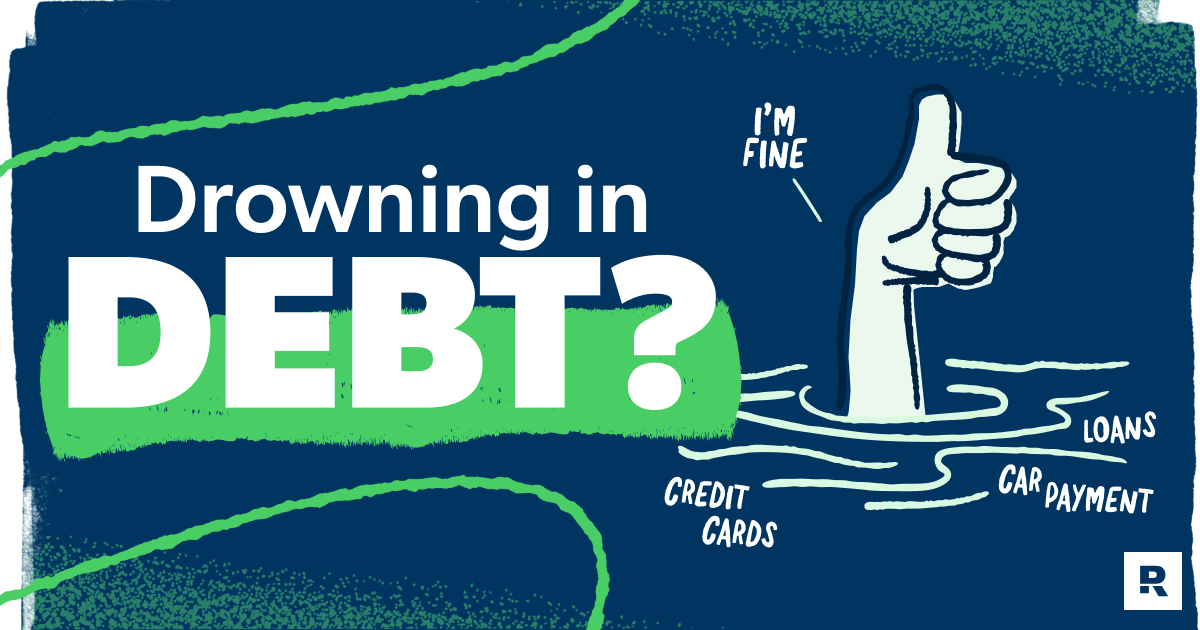
Key Takeaways
- Start by creating a zero-based budget that gives every dollar a job and covers your essentials first.
- Cut unnecessary expenses, pause investing, avoid new debt, and boost your income so you can free up as much cash as possible to attack your debt.
- Use the debt snowball method—paying off debts from smallest to largest—to build momentum and stay motivated as you work toward becoming debt-free.
- Follow the Baby Steps plan to move from getting out of debt to building wealth, one intentional step at a time.
When you’re drowning in debt, it can feel like the world is caving in around you. The questions won’t stop: How will I make ends meet? Will these debt collectors call my boss? How did I get here?
Here's a Tip
If you’re drowning in debt, stop borrowing money, build a zero-based budget, and make sure your Four Walls (food, utilities, shelter and transportation) are covered. Then start attacking your debt with the debt snowball, paying off balances from smallest to largest so you build the momentum to get out for good.
Personal finance is 80% behavior and only 20% head knowledge. That means with a plan—and a lot of hard work—you can be standing on solid ground in no time. And who knows? You could even become a Baby Steps Millionaire.
Take a breath. You can do this. Here’s exactly how to get out of debt, step by step.
Steps to Take if You’re Drowning in Debt
There’s a famous proverb that goes something like this: How do you eat an elephant? One bite at a time.
Your debt might look overwhelming now, but small, focused steps add up over time. Each time you make a bit of headway on your balance, you build confidence and momentum.
It’s about changing your behavior—one step at a time—not just doing complicated math. You’ll savor each victory, no matter how small. Before you know it, you’ll look back and realize all those small choices were moving you forward, turning your mountain of debt into a molehill.
So here are some steps you can take today to kick that debt to the curb.
1. Get on a budget.
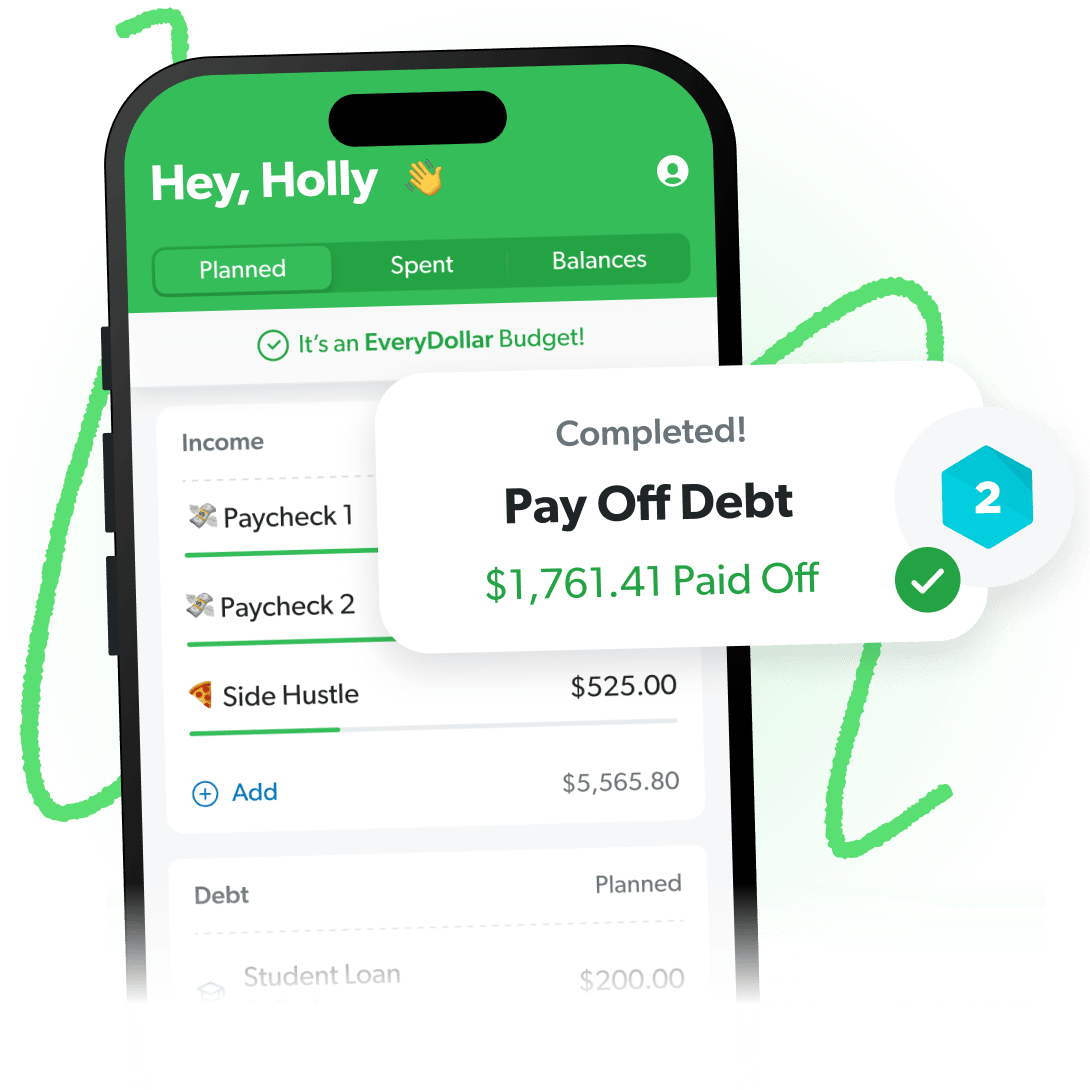
EveryDollar is the budgeting app built by Ramsey to help you take control of your money. If you’re drowning in debt, creating a budget is the first and most important step you can take. It’ll show you where all your money is going and why you feel overwhelmed.
We recommend using a zero-based budget, where your income minus your expenses equals zero. Start by budgeting for your Four Walls—food, utilities, shelter and transportation. Once those essentials are covered, assign every remaining dollar to the rest of your expenses.
Do you have student loans or a car payment? Are those hospital bills piling up? Or maybe your dad’s birthday is next month and you at least need to send a card. Whether it’s $50 or $500, all expenses have to go in the budget. Remember: In your zero-based budget, income minus expenses should equal zero!
What Are the Four Walls?
The Four Walls are the four categories of expenses you have to cover before anything else:
- Food
- Utilities
- Shelter
- Transportation
If money’s tight, these get paid first—every time—before a single dollar goes to debt, subscriptions or extras. Covering your Four Walls first helps protect your household while you work your way out of debt.
Find More Margin. Beat Debt Faster.
Paying off debt doesn’t have to take forever. With the EveryDollar budgeting app, you’ll find extra margin every month so you can pay off debt faster.
2. Cut back on the extras.
Now that every dollar has been given a job to do, it’s time to see where you can cut back.
Start by reviewing your recent bank transactions. Where does your money actually go each month? Are you stopping for coffee every morning? Did that “treat yourself” online order turn into a weekly habit? By looking back at what you’ve really spent, you’ll spot patterns and find those sneaky expenses hiding in plain sight.
Take inventory of any automatic payments that might be draining your bank account. Maybe you have a $7 subscription to the Clean Beard Club. We’re not knocking beards (especially clean beards), but these kinds of expenses add up quickly. Plus, that free gift they offered you when you signed up is probably long gone, leaving you with a subscription you keep forgetting to cancel every single month—and more beard oil than you know what to do with.
Don’t get us wrong. We love a good Amazon haul as much as the next person. But if you’re drowning in student loan debt, credit card debt or just-plain-debt debt, you’ve got to make some pretty big changes. You guessed it. We’re talking about cutting back on nonessential items and getting your wants under control. Here are some tips:
- Make coffee at home (skip the $10 lattes until you’re not drowning in debt).
- Cut back on your grocery bill by clipping coupons and going without the kids so you’re not tempted to overspend on Oreos (leftovers are your friend).
- Don’t even step foot in a restaurant (unless you’re working there).
- Sell everything that’s not nailed down (so much that the kids think they’re next).
Tracking your spending helps you shine a light on places where you can cut back. And those extra dollars you find can be put straight toward your debt payments, helping you move toward debt freedom faster.
3. Pause all investing.
Really? Yep. Saving for your future when you’re living paycheck to paycheck (or worse) isn’t the best idea. At least, not yet. If you’re still trying to pay off credit cards, an upside-down car loan, or a huge pile of student loan debt, it’s time to press pause on investing—temporarily. This frees up extra cash you can use to pay down your debt.
Here’s another idea: Instead of putting money in investments right now, save $1,000 as fast as you can for a starter emergency fund. It’s just a little more security as you dig yourself out of that hole of debt.
Right now, every extra dollar should go toward your starter emergency fund. And once you have that $1,000 saved, put all your extra dollars toward paying off debt. That’s what it means to be gazelle intense—staying focused on one goal until you're out of debt. Once you’ve finished Baby Step 2, you'll be in a much stronger position to invest later.
4. Don’t take on any new debt.
None. We know it’s hard (and maybe not what you’re used to), but trust us—taking on debt robs you and your family of a secure financial future. The choices you make right now will impact future generations of your family tree. So don’t take on even another penny of debt.
To start with, it’s time to get out your favorite pair of scissors and do a plasectomy. Yup—we’re talking about cutting up those credit cards! The best part? No medical experience required.
You may feel your heart start to race and your hands begin to sweat. But hear us out: Having a credit card for emergencies seems like a good idea until your next “emergency” looks like your next afternoon coffee run. When you cut up those cards, you’re choosing to put an end to that awful cycle of debt for good.
5. Stay current on all your debts.
While you’re working your way out of debt, it’s crucial to keep your accounts in good standing. That means making at least the minimum payments on all your debts each month to keep those scummy debt collectors at bay.
Once you’ve covered those minimums, you can focus on tackling your balances with a solid debt repayment strategy (more on that later). The key here is consistency: Don’t skip minimums in the rush to pay down other balances, no matter how pumped up you are to kick debt to the curb. Keeping everything current keeps your financial game strong and your stress level lower.
6. Increase your income.
Now that you’re on a budget and you’ve decided to stop taking on new debt, it’s time to figure out how to increase your income. Take a second job or pursue a side hustle to bring in the extra money you need (as quickly as possible) to throw at your debt. Whether that’s working at your local coffee shop, mowing lawns, or driving for Uber or Lyft, you’ve got to bring in more cash.
We get it. No one wants to work around the clock. But to see that mountain of debt turn into a valley, you’ve got to start doing something different. Remember: This isn’t forever. You won’t be skipping out on time with family and friends for the long haul. But to get on the right track, you’ve got to make some sacrifices now.
7. Start working the debt snowball.
The debt snowball is a debt payoff method where you list your debts from smallest to largest and attack them in that order, regardless of interest rate. Here’s how it works:
- List your debts from smallest to largest—no matter the interest rate. Keep making minimum payments on all of them except the one with the smallest balance.
- Attack your smallest debt with everything you have. Did you sell the couch? Great! Throw your earnings at this debt. Keep putting anything extra you make toward it until it’s gone.
- Once that debt is paid, take what you were paying on it and throw it at the next-largest debt while making minimum payments on the rest.
- Keep this snowball rolling until you’re debt-free!
Debt Snowball vs. Debt Avalanche
You may have also heard of the debt avalanche, another popular debt payoff method that prioritizes the debt with the highest interest rate first. Here's how the two approaches compare:
|
Debt Snowball |
Debt Avalanche |
|
Pays off debts from smallest balance to largest balance |
Pays off debts from highest interest rate to lowest interest rate |
|
Creates quick wins that build momentum |
Maximizes interest savings over time |
|
Helps more people stay motivated and finish |
Saves more in interest, but many people lose momentum before they finish |
On paper, the debt avalanche math wins by a few dollars. But debt payoff is a behavior problem, not a math problem. The snowball’s quick wins keep you motivated long enough to actually finish. Behavior beats math every time.
Debt-Free Date Calculator
When you toss your extra money at all your different debts at once, it barely makes a dent anywhere. It’s like trying to bail water out of a sinking boat with a thimble—you just won’t see real progress, and you’ll probably give up before you ever reach dry land.
When you zero in and attack one debt with everything you’ve got, you start to feel some serious traction. Knocking out that first debt (no matter how small) gives you a big emotional win. Suddenly, you’re motivated. You see the progress happening, and you get fired up to tackle the next one. That momentum builds, helping you crush each balance one by one.
Nick, a member of THE Ramsey Baby Steps Community on Facebook, knows exactly what that feels like: “Over the weekend, I paid off our credit cards, I made the last $800 payment on my truck, and our personal loans are finished! We now own both of our vehicles outright, have a fully funded emergency fund, savings started for our daughter’s future, and money set aside for a down payment. Honestly, I didn’t know if this day would ever happen, but it’s here!”
Want to see when you’ll make your last payment? Our Debt Snowball Calculator can estimate your debt-free date once you plug in your numbers.
8. Stop the comparison trap.
Comparison is one of the worst things you can do while you’re getting out of debt, and social media is one of the biggest triggers. If you’re scrolling through your news feed and see your friend (who you haven’t talked to in years) on a European vacation with her mom, that doesn’t give you permission to plan a fancy vacation too. Nope. Europe will still be there when you’re completely debt-free.
When you’re in debt and going after it with gazelle intensity, it’s hard not to compare your financial situation to someone else’s. But you don’t actually know their situation. You don’t know if your friend put her fancy vacation on a credit card. But you do know that once you’re out of debt, you’ll be able to plan exciting (and paid-for) trips of your own. Listen: The Joneses are broke. If you’re falling into the comparison trap, it might be time to take a much-needed break from social media.
9. Start (or keep) working the Baby Steps.
The tips we’ve gone through here are part of a proven and practical plan to change your financial future. They’re called the Baby Steps—seven steps to help you pull yourself out of the debt quicksand and onto more stable ground.
Baby Step 1: Save $1,000 for your starter emergency fund.
Baby Step 2: Pay off all debt (except the house) using the debt snowball.
Baby Step 3: Save 3–6 months of expenses in a fully funded emergency fund.
Baby Step 4: Invest 15% of your household income in retirement.
Baby Step 5: Save for your children’s college fund.
Baby Step 6: Pay off your home early.
Baby Step 7: Build wealth and give.
We’ve already covered Baby Steps 1 and 2 in this article. Once you’re out of debt, you can go even further and really change things for yourself and your family!
Get Started With EveryDollar
It may feel like you’re drowning in debt right now. But like we said earlier, you can change that—starting today. Once you’ve had it with debt (and we hope you have), you can climb your way out of it. Remember: One bite at a time.
Want a tool that will help you make your debt-free dreams come true? Try EveryDollar. This one-stop shop will help you create a budget, give you a customized plan to reach your goals, and provide resources to keep you motivated.
Next Steps
- Build a zero-based budget in EveryDollar and prioritize your Four Walls.
- Save your $1,000 starter emergency fund as quickly as possible.
- Start your debt snowball by listing your debts from smallest to largest and attacking the smallest balance first.
Frequently Asked Questions
-
How do I stop drowning in debt?
-
First, stop borrowing money. Then create a zero-based budget and cover your Four Walls—food, utilities, shelter and transportation—before anything else. Once your essentials are covered, start the debt snowball by paying off your debts from smallest to largest. That’s how you’ll begin making real progress and work your way out of debt for good.
-
Should I use debt consolidation if I’m overwhelmed?
-
No. Debt consolidation treats the symptom—your interest rate—instead of the cause, which is behavior. It may feel like relief, but it often keeps you in debt longer. The debt snowball is a proven way to change your behavior and get out of debt for good.
-
What should I pay first if I can’t afford all my bills?
-
Always pay your Four Walls first: food, utilities, shelter and transportation. Once those essentials are covered, stay current on your debts by making at least the minimum payments on each account.
Get Weekly Insights Delivered Straight to Your Inbox
Did you find this article helpful? Share it!

About the author
Ramsey Solutions

Get proven Ramsey answers fast.