
What Is Hazard Insurance and Do You Need It?
 By
By 
Key Takeaways
- Hazard insurance isn’t a separate policy—it’s the part of your homeowners insurance that covers damage to your house’s structure.
- If you have a mortgage, your lender requires hazard insurance (along with a whole homeowners insurance policy).
- Your dwelling coverage (hazard insurance) should match your home’s full replacement cost, not just its purchase price.
- Standard hazard insurance won’t cover earthquakes, hurricanes or floods—those need separate policies.
- Even a paid-off home needs hazard insurance since it’s still your biggest financial investment.
Wind, hail, freak turkey-frying accidents—hazard insurance protects your home financially from life’s emergencies. And while you’ll sometimes see the term hazard insurance used in place of homeowners insurance, they are different.
Quick Answer
Hazard insurance and homeowners insurance aren’t the same thing. Hazard insurance is one part of a homeowners policy—specifically, the coverage that pays to repair or rebuild your home’s structure after damage from a covered disaster like fire, wind or theft. Homeowners insurance is the full package, also covering personal property, liability and additional living expenses. You can’t buy one without the other.Let’s get into the nitty-gritty of hazard insurance and whether you need it.
Is Hazard Insurance the Same as Homeowners Insurance?
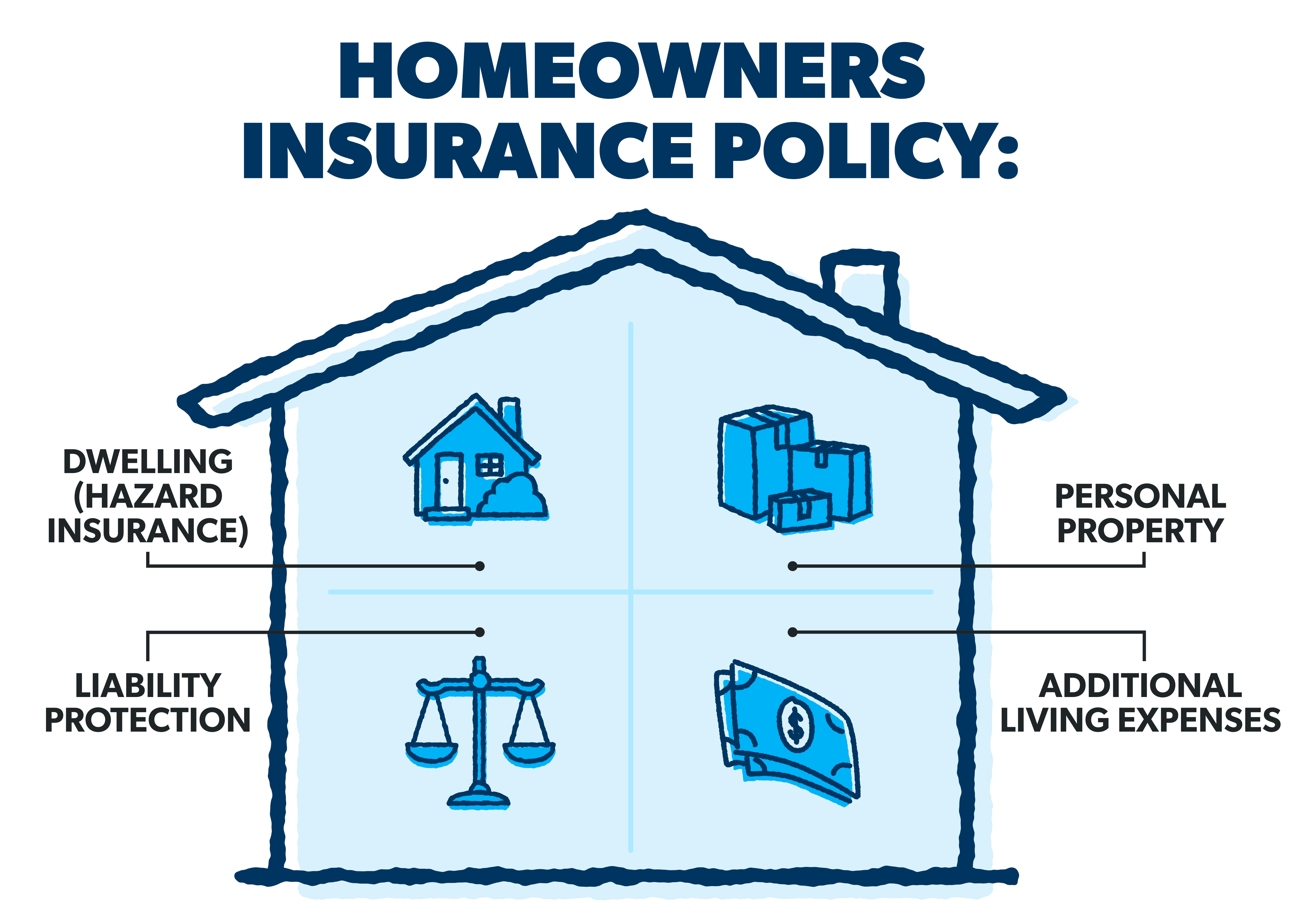
Short answer: No. Hazard insurance isn’t the same as homeowners insurance—it’s a piece of it. Hazard insurance is the part of your homeowners policy that pays to repair or rebuild your home after damage from a covered disaster like fire, wind or theft. Homeowners insurance is the full package: It also covers your personal property, liability and additional living expenses if you’re displaced.
On your policy’s declarations page, hazard insurance is usually listed as Coverage A: Dwelling (some insurers bundle in Coverage B: Other Structures too).
Here’s how hazard insurance fits inside a homeowners policy:
Homeowners Insurance Policy
- Coverage A: Dwelling—this is hazard insurance
- Coverage B: Other Structures—also often covered for hazards
- Coverage C: Personal Property
- Coverage D: Loss of Use
- Coverage E: Personal Liability
- Coverage F: Medical Payments
Hazard insurance and homeowners insurance go hand in hand. You can’t have one without the other because covering hazards is part of the job of a homeowners policy.
What Does Hazard Insurance Cover?
Hazard insurance covers tons of things that can damage or destroy your home. These include fire and smoke, wind, snow, hail, lightning, water (from a broken pipe), theft, vandalism, riots, fallen trees or other objects (watch out for falling space junk!), and explosions (usually caused by gas leaks).
If someone knocks back a big dose of grandpa’s ol’ cough medicine and rams their Buick into your house, that’s covered too.
But a standard homeowners policy doesn’t cover every type of hazard. Earthquakes, hurricanes and floods (of the natural type, not the broken-pipe type) usually aren’t covered. If you live in a place at risk for those types of natural disasters, you’ll have to buy separate flood insurance, earthquake insurance or hurricane insurance.
How Does Hazard Insurance Work?
If a covered event occurs (say your roof is damaged by hail), you file a claim with your insurance company. If the claim is approved, the insurance company will pay for the costs to repair or replace your damaged property, up to the policy amount.
When you purchase a homeowners insurance policy, you can choose to have the insurance company base the amount of your home’s coverage on either the actual cash value or the replacement cost. If your insurer offers it, replacement cost is best.
Before signing up for a homeowners policy, take some time to figure out exactly how much homeowners insurance you need. You don’t want the moment you find out you don’t have enough coverage to be the moment you actually need it to replace your hail-damaged roof, for example.
Do You Need Hazard Insurance?
Yes, if you own a home, you need hazard insurance. Homeownership is a good financial move—but it comes with risks. And the point of hazard insurance is to transfer that risk from you to your insurance company. So you definitely need it. In fact, if you have a mortgage, your lender will require you to have hazard insurance for your home.
But what if your home is paid off—do you still need insurance? Yes, 100% yes! No one expects a gas leak to make their home go up in flames like the Hindenburg, but stuff happens. Your home is your biggest investment, and you need to make sure it’s protected.
Imagine this scenario: You come home from vacation, open the front door, and water gushes out, soaking your tanned feet. A water line burst while you were at the beach and flooded your house! Now imagine having to pony up thousands of dollars to repair your house. Yikes! (Say goodbye to your emergency fund.)
But that’s where home hazard insurance comes in to save the day. It covers the cost of home repairs, minus your deductible, which is the amount of money you’re responsible to pay when you make a claim.
Now, if you’re wondering about the couch or other things that got ruined by water inside your house, your homeowners insurance will cover those things as part of your personal property coverage.
Homeowners insurance includes several types of coverage. Three protect your property: dwelling (the house itself), other structures (like detached garages, sheds and fences), and personal property (all the stuff inside your house). Hazard insurance refers specifically to your dwelling and other structures.
Interested in learning more about homeowners insurance?
Sign up to receive helpful guidance and tools.
How Much Hazard Insurance Do You Need?
Your dwelling coverage should equal the replacement cost of your house, which is how much money it would take to build a replica of your home (minus the coffee stains on your carpet, of course). When you’re buying hazard insurance, it’s never good to skimp.
Erin from Utah almost found that out the hard way. She told THE Ramsey Baby Steps Community on Facebook just how thankful she was that she took the advice of a RamseyTrusted® insurance pro and got a replacement cost rider. Her home burned to the ground, but thanks to the rider, she was able to rebuild without paying anything out of pocket—even as building costs skyrocketed. In fact, rebuilding the home cost three times what it had been insured for before she added the rider.
“When making decisions about insurance, you never think the unthinkable will happen to you . . . but guess what, it might!” Erin said.
"When making decisions about insurance, you never think the unthinkable will happen to you . . . but guess what, it might!”
— Erin from Utah
How Much Does Hazard Insurance Cost?
The average homeowners insurance premium (including hazard insurance) is $2,490 a year, according to data from Quadrant Information Services, as reported by NerdWallet.
Depending on what state you live in and how much your house is worth, your premium could be higher or lower than the national average. Your cost also will depend on your deductible and how much insurance you choose to have. If you select a higher deductible, your premium will be lower.
So, how much is a homeowners insurance deductible? You can usually choose either a percentage of your home’s value (typically 1–5%) or a set amount (often $500–2,500).
Say your home is worth $400,000. If you have a 1% deductible, that means you’ll have to pay the first $4,000 of a claim before the insurance company pays.
How Do You Pay for Hazard Insurance?
Homeowners insurance—including hazard coverage—is a pretty big expense. If your mortgage includes an escrow account, your lender will collect part of your annual homeowners insurance premium with each monthly mortgage payment and deposit it into escrow. Then they’ll use that money to pay your insurance bill when it’s due.
If your home is paid off, you might have the option of paying your insurance monthly, quarterly or annually, depending on your insurance company.
How Do You Get Hazard Insurance?
Working with the right independent insurance agent is the easiest way to get the right hazard coverage. When it comes to your biggest investment—your home—you can’t afford to be underinsured. Our network of RamseyTrusted pros will walk you through exactly how much home insurance you need and help you choose the right coverage—from dwelling to personal property all the way to liability and additional living expenses. They can even check if you can save any money by bundling home and auto insurance together.
And by the way, the value of your insurance policy will not automatically increase along with the value of your home, so it’s important to check up on your policy with your agent every year to make sure you have enough coverage.
If you want to be sure you have the right amount of homeowners insurance, talk with a RamseyTrusted pro. Each one is also an independent insurance agent—that means they work for you, not the insurance company. They’ll find coverage to meet your needs and budget, and you can feel confident you’re working with an agent who has your best interests at heart.
Next Steps
- Check your policy’s declarations page to confirm your dwelling coverage (Coverage A) matches your home’s full replacement cost and not just what you paid for it.
- Ask your insurer what perils you’re actually covered for. If you’re in a flood, earthquake or hurricane zone, get quotes for any endorsements or separate policies you need to fill the gaps.
- Talk to a RamseyTrusted independent insurance agent. They work for you, not the insurance company, and they’ll walk through your coverage line by line so you’re not underinsured or overpaying.
-
Is hazard insurance the same as homeowners insurance?
-
No. Hazard insurance is one part of a homeowners policy—specifically, the coverage that pays for damage to your home’s structure. A full homeowners policy also includes personal property, liability and loss-of-use coverage.
-
Does my mortgage lender require hazard insurance?
-
Yes. If you have a mortgage, your lender will require homeowners insurance that includes hazard coverage to protect its financial stake in your home. Once your mortgage is paid off, it’s no longer required, but it’s still a smart move to keep it.
-
What’s the difference between hazard insurance and flood insurance?
-
Hazard insurance covers damage from covered events like fire, wind, hail and theft, but it doesn’t cover flood damage. If you live in a flood-prone area, you’ll need a separate flood insurance policy.
-
Is hazard insurance included in my mortgage payment?
-
If you have an escrow account, yes. To make sure their financial stake in the home is protected, your lender collects a portion of your annual homeowners insurance premium (which includes hazard insurance) with each mortgage payment and pays the bill on your behalf when it’s due.
Get Weekly Insights Delivered Straight to Your Inbox
Did you find this article helpful? Share it!

About the author
Ramsey Solutions

Get proven Ramsey answers fast.