
How to Use Budget Reports
 By
Key Takeaways
- EveryDollar premium includes four custom budget reports plus a CSV download of your tracked transactions.
- The Spending Totals report shows which budget categories take the biggest share of your money so you can find ways to cut back.
- If your income changes each month, use the Monthly Income report to find your lowest month and budget around that number.
- The Income vs. Spent report helps you see if you're living on less than you make.
- Use your reports to spot spending habits and make adjustments before next month begins.
If you want to move forward financially, your current money habits need to line up with your future money goals. But it can be hard to know if you’re on the right track.
Quick Answer
EveryDollar budget reports are charts inside EveryDollar premium that show where your money went and how your spending compares to your income. Reviewing these reports each month can help you spot overspending and figure out what to change in your next budget so you can make progress toward your goals.We built custom budget reports into EveryDollar premium to help you see exactly what's happening with your money. Let’s look at what each report shows you—and what to do with what you find.
What Budget Reports Does EveryDollar Offer?
EveryDollar premium includes four custom budget reports that help you track your spending and income over time. You can also download your transactions to take a closer look at your numbers.
|
Report Name |
What It Shows |
When to Use It |
|
Spending Totals |
A pie chart of your total spending by budget category over the last year |
When you want to see which categories take the most money and where you could cut back |
|
Spending Details |
Your spending in each category, month by month |
When you want to catch categories and budget lines you consistently overspend in or spot seasonal spikes like Christmas |
|
Monthly Income |
How much income came in each month, including your high and low months |
When your income changes month to month and you need to figure out how much to budget |
|
Income vs. Spent |
What you earned compared to what you spent each month (savings and sinking funds don’t count as spent) |
When you want to check if you’re living on less than you make |
|
Transaction History |
A CSV file of your tracked transactions that you can download from everydollar.com |
When you want your monthly transactions downloaded into a spreadsheet so you can dig into them yourself |
Why Do You Need Budget Reports?
Budget reports show you what actually happened with your money so you can figure out what to change moving forward. Budgeting is how you go from where you are to where you want to be with money. And reporting can help you get there faster.
With personal budget reports, you can:
- Spot spending trends
- Know where to cut back
- Track your income over time
- Build better money habits
- Hit your financial goals
So, let’s dive into the budget insights you get with the premium version of EveryDollar and how they take your budgeting to the next level.
How Do I See My Total Spending?
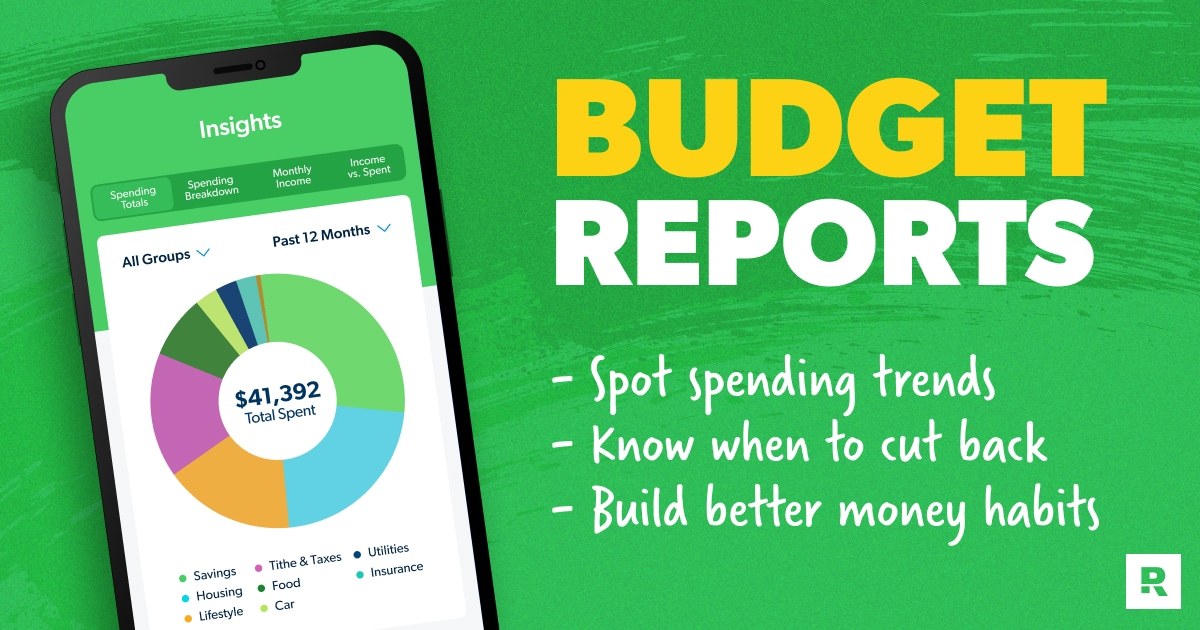
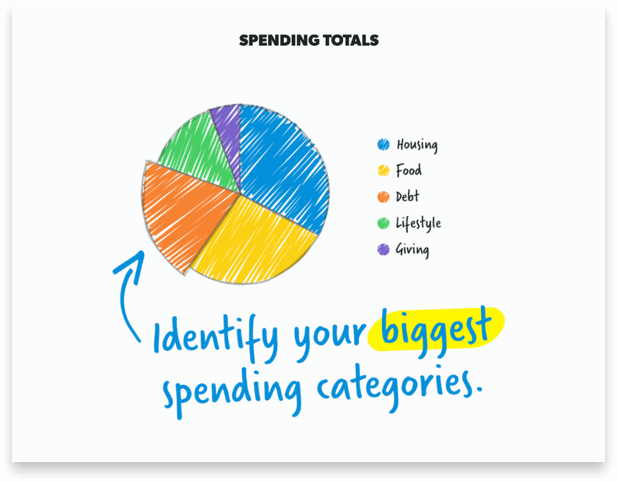
The Spending Totals report uses a pie chart to show you exactly what percentage of your spending went to each budget category over the past year. Want to know how much you spent on transportation? One quick glance will tell you!
You’ll see everything from housing and food (probably the biggest slices) to transportation and personal expenses. But what do you do with all these numbers?
Well, let’s say you’re a little shocked by your food spending total. You can then dive a little deeper into that category and see how much you’ve spent in each budget line for the year.
Maybe you’re doing okay in the groceries budget line but eating out has gotten out of control. Time to make some adjustments to get that number down. Do you need to start meal planning and making grocery lists? Stop giving in to those drive-thru temptations? This is the time to make changes to your budget so you can get your spending—and your goals—back on track!
Here's a Tip
Seeing your spending totals for the first time can be a little shocking. But don't let that discourage you! Now you know where your money went, and you can do something about it. Pick the category that surprised you most and give it a lower amount in next month's budget. Then, think about what spending habits you need to change to actually stick to that new amount.
How Do I Compare Spending Month to Month?
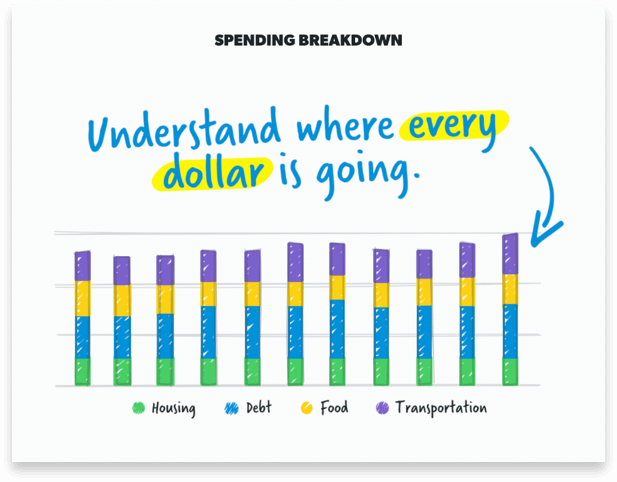
Use the Spending Details report. It shows your spending in every category month by month so you can see exactly where your money is going over time. That way you know where you need to tighten the reins on your spending. You’ll see if you’re consistently overspending in certain budget lines or if your spending spikes in certain months.
Consider yourself a budget archeologist—dig into those categories that seem too high and find ways to spend less so you can save more!
Seasonal spikes are pretty easy to spot. If December towers over every other month, maybe you spent more than you planned on Christmas. If July jumps, that could be your family vacation. Since you know those expenses are coming, go ahead and plan for them!
Look at what you spent last time, divide that amount by the number of months until the expense is due, and start setting aside money each month in a sinking fund. That way, you'll be ready when those expenses roll around again.
How Do I Track My Income Trends?
The Monthly Income report shows how much money came in each month so you can spot your high and low months at a glance.
Maybe you don’t make the same amount of money on every paycheck. Plenty of people work hourly or have side gigs that change up their income every month.
If you have an irregular income, the best thing you can do is set your budget based on your lowest monthly income, not an average. If you budget for the smallest amount, you can always go up from there!
Figuring out your lowest monthly income usually means searching through bank statements or looking at your past budgets month by month. But once you get a couple EveryDollar budgets under your belt, the Monthly Income section will start to show you your high and low earning months all in one spot.
Use that lowest month as your starting point when planning next month's budget. And when you bring home more than expected, give those extra dollars a job and put them toward your current Baby Step!
This chart also helps you see how any side hustles you have are stacking up month over month. Plus, the Monthly Income feature works really well with other premium features in EveryDollar—like paycheck planning, which helps you set up your budget around when you get paid and when bills are due.

Save more. Spend better. Budget confidently.
Get custom budget reports (and more amazing budgeting features!) with the premium version of EveryDollar.
Am I Spending More Than I Earn?
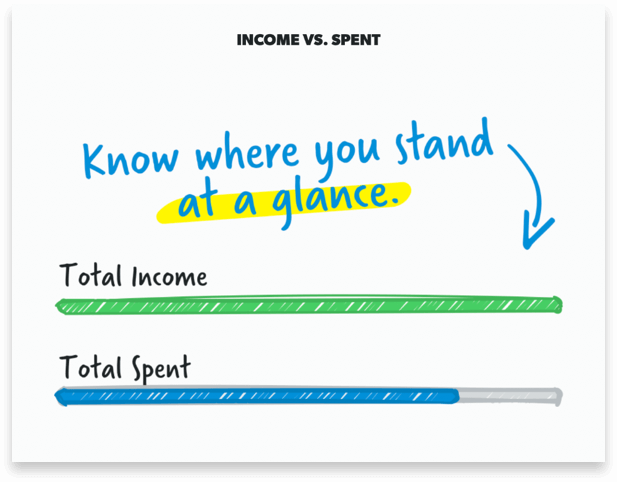
The Income vs. Spent report shows you, month by month, whether you're spending more or less than you earn. Spoiler alert: The way to crush any money goal is to live on less than you make.
Now, this chart doesn’t include money you’ve budgeted for savings or sinking funds—it’s only money you’ve actually spent. That means your Spent category will usually be lower than your Income category.
If you’re on Baby Step 2 (paying off all your debt), you’re working the debt snowball, which means you’ve paused saving and you’re throwing everything extra at those debt payments. In that case, your Income category might be equal to your Spent category. And that’s okay!
But if your Spent category is higher than your Income, it’s time to have a good heart-to-heart with the person in the mirror (and/or your spouse) and figure out some ways to decrease your expenses or increase your income.
Start by cutting back in the budget lines you have the most control over, like restaurants and entertainment. Then, adjust your spending habits so you can stay within your budget moving forward. Sticking to a budget isn’t always easy, but you can do it!
Can I Export My EveryDollar Data?
Yes! With EveryDollar premium, you can download each month's tracked transactions as a CSV file on everydollar.com. For all you budgeting nerds out there, this one’s for you (if you know, you know).
Here’s how:
- Sign in to your budget at everydollar.com.
- Scroll to the bottom of your budget and click Download CSV.
- Pick what you want to download (this month’s budget or the transactions tracked to it), then click Download CSV again.
To download an earlier month, just switch months with the drop-down at the top left of your budget and repeat the steps. Once your file downloads, you can open it in a spreadsheet and dig into those numbers as much as you want!
Are Budget Reports Worth It?
Yes! Budget reports are worth using because they show you how well you're sticking to your budget and where you might need to make changes.
Budget reports are a chance for you to get real. With yourself. With your spending. You’ll know where to give yourself a high five and where you can improve.
So, take what you've learned from your reports and put it to work in next month's budget. That's how you make progress toward your money goals!
Next Steps
- Open your budget reports in EveryDollar premium. Take a look at where your money went this month.
- Review your Spending Totals. See which categories took the biggest share of your money and where you could cut back.
- Adjust next month's budget. Pick one category to spend less in and make a plan to stick to that new amount.
Frequently Asked Questions
-
Do I need EveryDollar premium to see budget reports?
-
Yes! Custom budget reports are part of EveryDollar premium. These reports help you see where your money is going and how your spending changes over time. You can use that information to spot areas where you need to cut back and make adjustments to your budget moving forward.
-
How often should I check my budget reports?
-
You should review your budget reports at least once a month, before you make next month's budget. But don't forget to track your transactions throughout the month too! That way, you'll know where your money stands and can make adjustments before overspending gets out of hand.
-
Can I see budget reports on the EveryDollar mobile app?
-
Yes! You can view your budget reports, including Spending Totals and Spending Details, right in the EveryDollar mobile app with premium. But if you want to download your transaction history as a CSV file, you'll need to sign in at everydollar.com. That feature isn't available in the mobile app.
Get Weekly Insights Delivered Straight to Your Inbox
Did you find this article helpful? Share it!

About the author
Ramsey Solutions

Get proven Ramsey answers fast.